You look in the mirror, stick out your tongue, and suddenly notice a white or pale coating covering part—or almost all—of its surface.
It can look alarming, especially when social-media posts claim that a white tongue is a “clear sign” of one particular disease.
The reality is very different.
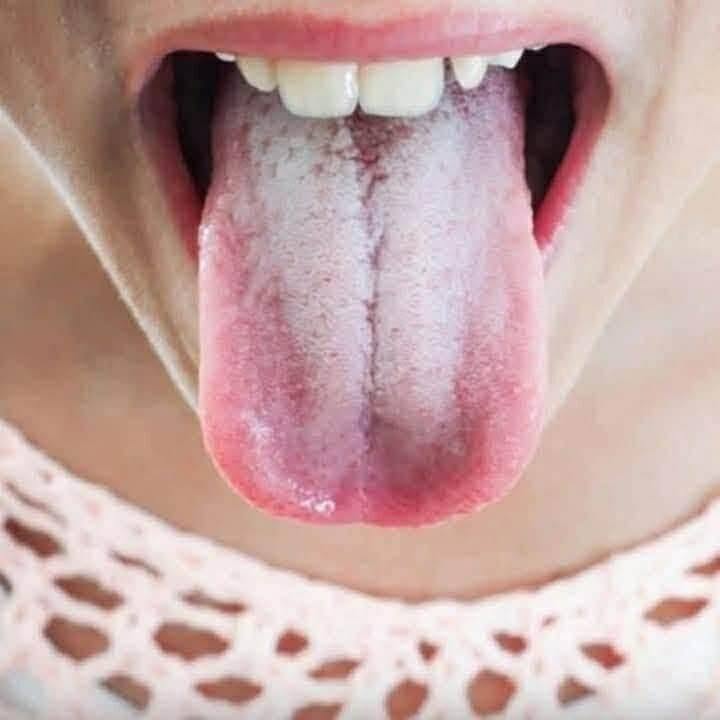
A white tongue is not a diagnosis by itself.
In many cases, it happens because bacteria, dead cells, food debris, and other material become trapped between the tiny projections on the tongue called papillae. Dehydration, dry mouth, mouth breathing, tobacco use, and oral hygiene can contribute. Less commonly, distinct white patches may be associated with conditions such as oral thrush, oral lichen planus, or leukoplakia.
What matters most is how the white area looks, whether it can be gently removed, how long it lasts, and whether you have other symptoms.
Why Can Your Tongue Turn White?
Your tongue isn’t actually smooth.
Its surface contains thousands of tiny structures called papillae. When these become enlarged or irritated, material can accumulate between them.
That buildup can include:
- Dead cells
- Bacteria
- Food particles
- Other debris
The result may be a whitish coating that makes the tongue look dramatically different from its usual pink color.
For many people, this type of coating is temporary and harmless.
1. Dry Mouth and Dehydration 💧
One surprisingly common contributor is dryness.
Saliva does much more than keep your mouth comfortable. It helps wash away food particles and other material.
When your mouth becomes unusually dry, debris can accumulate more easily.
This can make the tongue appear coated, particularly after sleeping.
That’s why some people notice their tongue looks much whiter first thing in the morning.
Mouth Breathing Can Contribute
Do you frequently wake up with a very dry mouth?
Sleeping with your mouth open can contribute to oral dryness.
The same thing can happen when nasal congestion forces you to breathe through your mouth.
A dry oral environment can make a tongue coating more noticeable.
If you’re constantly waking with severe dry mouth, especially with other symptoms such as significant snoring or breathing problems during sleep, it’s worth discussing with a healthcare professional.
2. Oral Hygiene Can Make a Difference 🪥
Bacteria and debris naturally accumulate inside the mouth.
Brushing your teeth while completely ignoring your tongue can allow more coating to remain.
A simple routine can help:
Brush your teeth twice daily.
Floss regularly.
Gently clean your tongue.
Drink adequate fluids.
A soft toothbrush can be used gently on the tongue, or you can use a tongue scraper designed for this purpose.
The important word is gently.
Don’t Scrape Your Tongue Aggressively
Some viral videos show people scraping their tongues extremely hard until they look bright pink.
That’s unnecessary.
Your goal isn’t to remove the surface of your tongue.
Aggressive scraping can irritate delicate tissue and cause soreness or bleeding.
Use gentle pressure.
If something looks like a fixed white patch rather than an ordinary removable coating, repeatedly scraping it isn’t the solution.
3. Oral Thrush Can Cause White Patches
A white tongue can sometimes be caused by oral thrush, also known as oral candidiasis.
This is a fungal infection caused by an overgrowth of Candida.
Thrush often produces creamy, raised white lesions that can appear on:
The tongue
Inner cheeks
Roof of the mouth
and sometimes other areas.
They may have a cottage-cheese-like appearance.
Trying to wipe or scrape these lesions may reveal irritated tissue underneath and can sometimes cause bleeding.
Who Is More Likely to Develop Oral Thrush?
Thrush can affect anyone, but certain situations make it more likely.
Risk can be higher in:
Babies
Older adults
People with weakened immune systems
People using certain medications
and some people with particular health conditions.
Antibiotic use can also disturb the normal microbial balance in the mouth, allowing yeast to multiply.
People using inhaled corticosteroids may also develop oral thrush, particularly when appropriate mouth-rinsing instructions aren’t followed.
If you suspect thrush, don’t simply keep scraping the white material away.
A healthcare professional can determine whether antifungal treatment is appropriate.
4. Smoking and Tobacco Can Affect Your Tongue 🚬
Smoking and other tobacco use can irritate the mouth and contribute to tongue changes.
Tobacco use is also associated with more concerning persistent oral lesions.
If you use tobacco and develop a persistent white patch that doesn’t disappear, it’s particularly important to have it evaluated by a dentist or healthcare professional.
Don’t assume it’s simply a dirty tongue.
5. Could It Be Leukoplakia?
This is one reason persistent white patches shouldn’t automatically be treated as ordinary coating.
Leukoplakia causes white or gray patches inside the mouth.
Unlike a typical tongue coating, these patches generally cannot simply be wiped or scraped away.
They may appear on:
- The tongue
- Gums
- Inside the cheeks
- Other areas of the mouth
Chronic irritation and tobacco use are among the factors associated with leukoplakia.
Most people with leukoplakia do not automatically have oral cancer.
However, some leukoplakic lesions can contain abnormal cells or potentially develop into cancer, which is why persistent patches need professional evaluation.
A White Patch That Won’t Come Off Deserves Attention
This distinction is useful.
A general coating that improves with gentle cleaning and hydration is different from a persistent, fixed patch.
If you notice a white or gray area that:
Doesn’t wipe away
Keeps returning in exactly the same place
Changes in appearance
Becomes thick or hard
Develops red areas
Ulcerates or bleeds
have it examined professionally.
Don’t try to diagnose it from internet photos.
6. Oral Lichen Planus
Another condition associated with white areas inside the mouth is oral lichen planus.
Its appearance can be quite different from an ordinary coated tongue.
It may produce delicate, lacy or web-like white patterns on the tongue or inside the cheeks.
Some people have little or no discomfort.
Others can develop:
Burning
Tenderness
Redness
or
Painful sores.
Oral lichen planus requires proper diagnosis because it can resemble other oral conditions.
7. Geographic Tongue Can Look Strange Too 🗺️
Geographic tongue is another condition that can make people worry when they first see it.
It often creates smooth reddish patches surrounded by lighter or whitish borders.
The pattern can look somewhat like a map—and it may change location over time.
Despite its unusual appearance, geographic tongue is generally harmless and isn’t contagious.
Some people experience sensitivity to spicy or acidic foods, while others have no symptoms at all.
Does a White Tongue Mean You Have a Stomach Problem?
Not necessarily.
Social media is filled with tongue charts claiming that every part of your tongue corresponds directly to a particular internal organ.
For example:
White tongue = stomach disease
Yellow tongue = liver problem
Red tip = heart problem
These simplistic charts aren’t a reliable diagnostic method.
Doctors don’t diagnose liver, kidney, stomach, or heart disease simply by matching tongue colors to an online diagram.
Your tongue can sometimes provide useful health clues, but it needs to be interpreted alongside your symptoms, medical history, and examination.
Does a White Tongue Mean “Toxins” Are Leaving Your Body?
No reliable medical evidence supports the idea that a white tongue means your body is releasing stored “toxins.”
Your liver and kidneys already perform major roles in processing and eliminating waste products.
A coated tongue doesn’t mean you need a juice cleanse, detox tea, or aggressive mouth treatment.
Don’t Try to “Detox” Your Tongue
Be particularly cautious with DIY remedies involving:
Undiluted vinegar
Lemon juice
Hydrogen peroxide in inappropriate concentrations
Essential oils
Harsh baking-soda mixtures
or other irritating substances.
Your tongue and oral tissues are delicate.
A treatment that causes burning isn’t “killing toxins.”
It may simply be irritating or injuring your mouth.
What About Baking Soda?
Baking soda appears in countless online remedies for white tongue.
While certain professionally recommended oral products may contain bicarbonate, aggressively rubbing concentrated baking soda directly onto the tongue isn’t necessary for most people.
Basic oral hygiene and hydration are usually better starting points for an ordinary tongue coating.
If the white appearance persists, identify the cause instead of repeatedly trying stronger DIY treatments.
Can Antibiotics Cause a White Tongue?
They can sometimes contribute indirectly.
Antibiotics alter bacterial populations in the body.
In some people, this can make it easier for Candida yeast to overgrow, potentially resulting in oral thrush.
If white creamy patches develop during or after antibiotics—particularly with mouth discomfort—talk to a healthcare professional.
Don’t stop a prescribed antibiotic without medical advice.
Can a White Tongue Cause Bad Breath?
A heavily coated tongue can contribute to unpleasant breath.
Bacteria and food debris can accumulate on the tongue’s surface and produce odor.
That’s why tongue cleaning can be a useful addition to:
Brushing
Flossing
Dental care
and
Adequate hydration.
However, persistent bad breath can have several causes, including gum disease and other dental problems.
A Simple Daily Tongue-Care Routine 👅✨
For an ordinary removable tongue coating, try this straightforward routine:
Step 1: Drink Water
Keep yourself adequately hydrated throughout the day.
Step 2: Brush Your Teeth
Use a soft toothbrush and fluoride toothpaste.
Step 3: Clean Your Tongue Gently
Use your toothbrush or a tongue scraper.
Start farther back as comfortably possible and gently move forward.
Don’t apply excessive pressure.
Step 4: Floss
Cleaning between the teeth helps remove material that brushing alone doesn’t reach.
Step 5: Clean Dental Appliances
If you wear removable dentures or other dental appliances, follow appropriate cleaning instructions.
Step 6: Avoid Tobacco
Tobacco affects far more than tongue appearance and is a major risk factor for oral disease.
How Quickly Should a Simple White Coating Improve?
A mild coating related to dehydration or oral hygiene may improve relatively quickly after hydration and better mouth care.
But there isn’t a universal timeline because the cause matters.
A persistent white tongue should not simply be scraped indefinitely.
If the appearance doesn’t improve, the next step is figuring out why.
When Should You See a Dentist or Doctor? ⚠️
Consider professional evaluation if your white tongue or white patches:
Persist for more than about two weeks
Cannot be wiped away
Are painful
Frequently bleed
Are accompanied by sores
Keep getting worse
Make swallowing difficult
or are associated with other persistent changes inside the mouth.
A dentist is often an excellent first person to evaluate persistent oral changes.
Persistent Mouth Changes Matter
White tongue is usually harmless, but persistent oral lesions shouldn’t be ignored.
Pay particular attention to a sore or patch that doesn’t heal, especially if accompanied by:
- A lump
- Persistent pain
- Difficulty swallowing
- Unexplained bleeding
- Red and white areas together
- Changes that progressively worsen
These symptoms don’t automatically mean cancer.
There are many benign explanations.
But they deserve professional examination rather than internet diagnosis.
Can You Diagnose a White Tongue From a Photo?
Usually not reliably.
Different conditions can look surprisingly similar in photographs.
Lighting can also dramatically change tongue color.
A flash can make a mild coating appear intensely white, while shadows can make normal areas look dark.
A clinician can consider factors a photograph cannot show clearly, including:
Texture
Tenderness
Whether the coating wipes away
Exact location
Duration
Medical history
and other oral findings.
The Biggest Myth About White Tongue
The biggest mistake is believing:
“A white tongue is a clear sign that you have one specific disease.”
It isn’t.
White tongue is a description of an appearance, not a diagnosis.
For many people, the explanation is relatively simple:
Dry mouth
Dehydration
Mouth breathing
Accumulated debris and bacteria
or
Oral hygiene habits.
For others, distinct white patches may result from conditions such as thrush, geographic tongue, oral lichen planus, or leukoplakia.
The pattern and persistence matter.
The Bottom Line 👅
If you wake up one morning and notice a light white coating over your tongue, don’t immediately assume something serious is wrong.
Start with the basics:
Drink enough water.
Brush and floss regularly.
Gently clean your tongue.
Avoid tobacco.
Don’t use harsh DIY “detox” remedies.
Then watch what happens.
If the coating improves, it may have been something relatively simple.
But if you have a fixed white patch that won’t wipe away, significant pain, bleeding, difficulty swallowing, a persistent sore, or a change that lasts for weeks, have your mouth examined by a dentist or healthcare professional.
Your tongue can provide useful clues about your health—but one color alone can never tell the whole story.