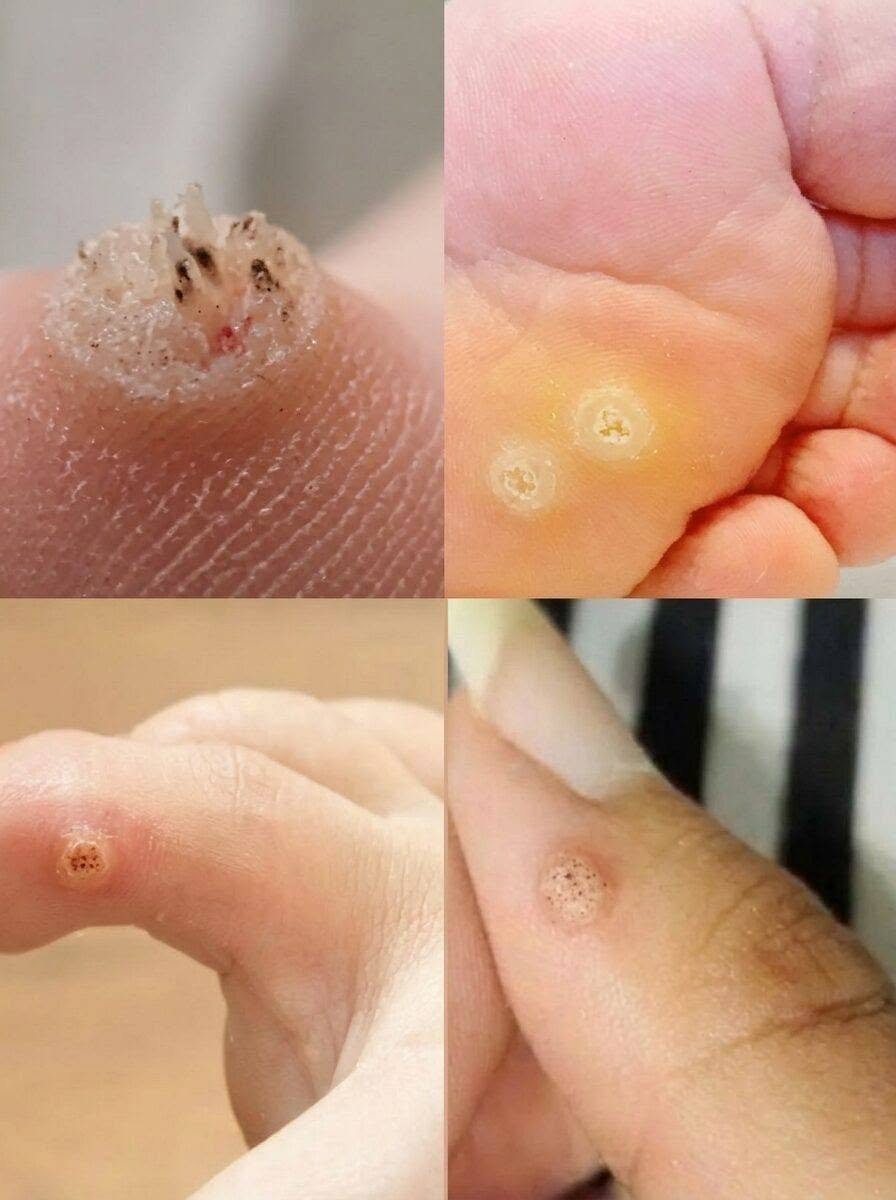
Have you ever noticed a small, rough bump on your finger or the bottom of your foot, perhaps with tiny black dots in the center? It may look like a harmless callus, but in some cases, it could be a wart caused by a common skin virus.
These unusual skin growths can appear almost anywhere on the body, but they are especially common on the hands, fingers, and feet.
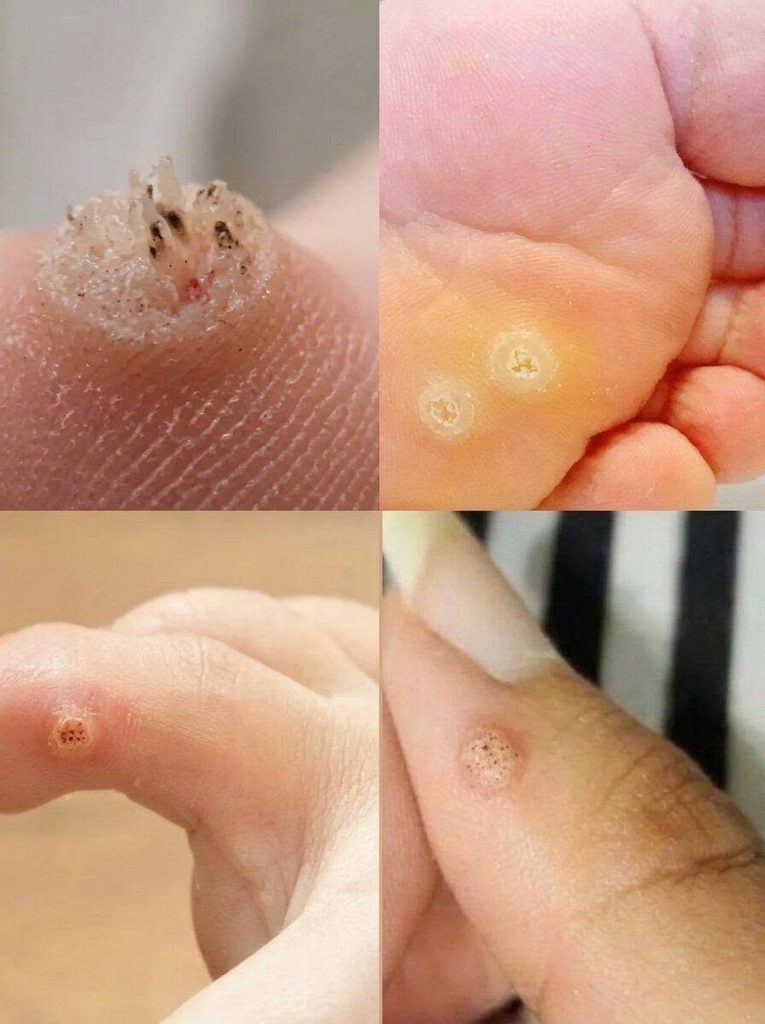
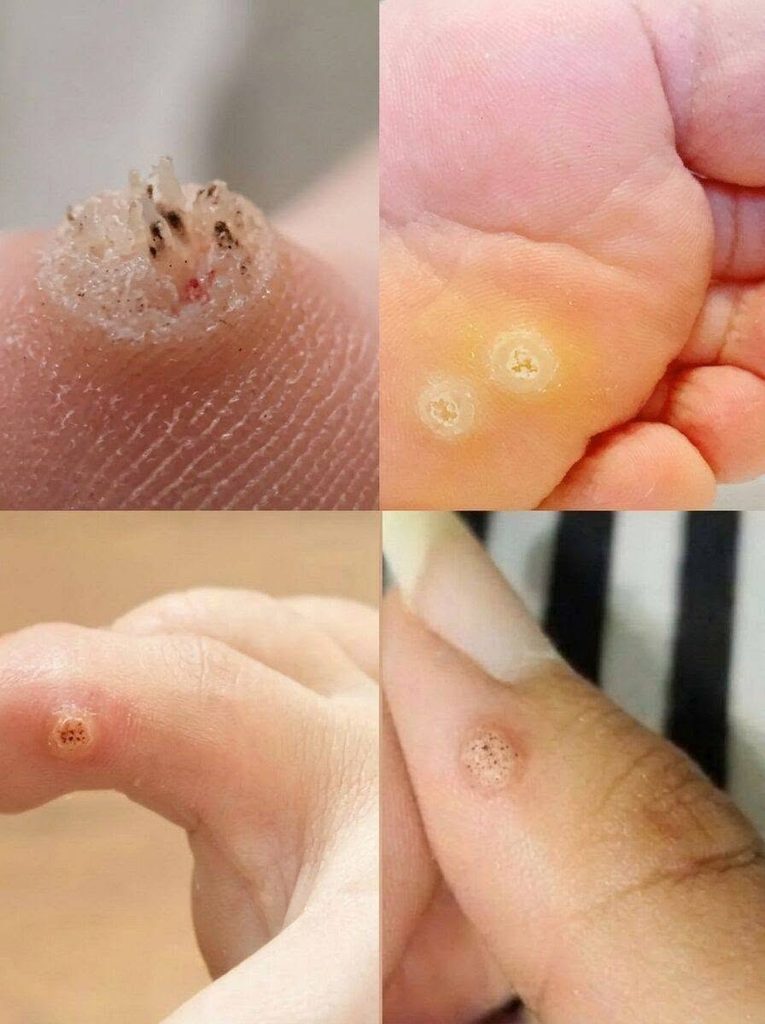
Some look like tiny cauliflower-shaped bumps. Others appear flat, yellowish, or surrounded by thick skin.
And some have little black specks that make them look particularly alarming.
A viral social media image showing several rough skin bumps has sparked a familiar warning: if you notice something like this, you may have an infection.
There is some truth behind that claim, but the full explanation is much less frightening than it sounds.
Many common warts are caused by certain types of human papillomavirus (HPV). However, not every bump is a wart, and most ordinary skin warts are harmless.
Understanding what these growths look like, how they spread, and when they require medical attention can help you avoid unnecessary worry.
Let’s explore the signs, causes, treatments, and prevention methods.
What Are Skin Warts?
Warts are small growths that develop when certain types of HPV infect the outer layer of the skin.
HPV is a large family of viruses.
Different types affect different parts of the body.
The types that commonly cause ordinary hand and foot warts are generally different from the high-risk HPV types associated with certain cancers.
This distinction is important because the term HPV can sound alarming.
Having a common wart on your finger does not mean you have cancer or a sexually transmitted infection.
Ordinary cutaneous warts are very common, especially among children and young adults.
They can also occur in older adults.
Some disappear without treatment, while others persist or spread.
1. Rough, Cauliflower-Like Bumps on the Fingers
One of the most recognizable forms is the common wart, medically known as verruca vulgaris.
These warts often develop on the fingers, backs of the hands, and around the nails.
They may appear as small, raised bumps with an uneven surface.
What Do They Look Like?
Common characteristics include:
- Rough or grainy texture.
- Rounded or irregular shape.
- Skin-colored, grayish, pinkish, or brown appearance.
- Tiny dark dots in some lesions.
- A surface resembling a miniature cauliflower.
They may appear alone or in groups.
Some are very small, while others become more noticeable over time.
Are They Painful?
Common warts are often painless.
However, they can become uncomfortable if they develop in areas exposed to frequent pressure or friction.
Warts around the nails can be particularly bothersome.
2. Tiny Black Dots Inside a Wart
One of the most surprising features of some warts is the presence of tiny black or dark brown dots.
People sometimes mistake these for insect eggs, dirt, or parasites.
But that is not what they usually are.
The dark dots commonly seen inside a wart are tiny blood vessels containing clotted blood.
These are sometimes called thrombosed capillaries.
They can become visible because the wart disrupts the normal structure of the skin.
Why Is This Important?
The dots can help healthcare professionals distinguish certain warts from other skin conditions.
However, not every wart has visible black dots.
And dark spots can have causes unrelated to warts.
Therefore, appearance alone is not always enough to make a reliable diagnosis.
3. Hard, Yellowish Growths on the Soles of Your Feet
Warts that develop on the soles of the feet are called plantar warts.
They can look different from warts on the hands.
Because the feet support body weight, pressure may push the growth inward rather than allowing it to rise prominently above the skin.
This can make plantar warts resemble corns or calluses.
Common Signs of Plantar Warts
You may notice:
- A rough patch on the sole.
- A small circular lesion.
- Thickened yellowish skin.
- Tiny dark dots.
- Pain when walking or standing.
- Disruption of the normal skin lines.
Plantar warts commonly occur on weight-bearing areas, such as the heel or ball of the foot.
Why Do They Hurt?
Pressure from standing and walking can push the wart into the surrounding tissue.
This may cause tenderness.
Some plantar warts are painless, while others make walking uncomfortable.
4. Several Small Warts Growing Together
Sometimes plantar warts appear in clusters.
These are commonly called mosaic warts.
Instead of one isolated lesion, several smaller warts develop close together.
The cluster may create a broad, rough patch on the foot.
Are Mosaic Warts More Dangerous?
Not necessarily.
However, they can be more difficult to treat because multiple lesions are involved.
They may also cause discomfort when located on weight-bearing areas.
Persistent clusters should be evaluated by a healthcare professional.
5. Small Bumps Around the Fingernails
Warts can also develop around or underneath the nails.
These are called periungual and subungual warts.
They may appear as rough, irregular growths near the nail edges.
Why Are They Important?
Warts around the nails can interfere with nail growth.
They may also be difficult to treat without affecting surrounding tissue.
People who bite their nails or pick at the skin around their fingers may be more likely to develop these lesions.
Avoid cutting or digging into growths near the nail.
A dermatologist can recommend an appropriate treatment.
What Causes Warts?
Warts are caused by infection with certain types of human papillomavirus.
The virus enters the outer skin through tiny breaks or damaged areas.
These openings may be so small that you cannot see them.
Once the virus infects skin cells, it can cause them to multiply abnormally, producing a wart.
However, exposure to HPV does not always result in a visible wart.
The immune system often controls the infection.
Some people develop warts after exposure, while others do not.
How Does HPV Spread?
The types of HPV responsible for common skin warts can spread through contact with infected skin.
Transmission may occur through:
- Direct skin-to-skin contact.
- Touching or picking at an existing wart and then touching another area.
- Sharing certain personal items.
- Contact with contaminated surfaces, particularly when skin is moist or damaged.
The virus can sometimes survive on surfaces, but transmission risk varies.
Not every contact leads to infection.
Can You Catch Warts From Someone Else?
Yes, common warts can be contagious.
However, they do not spread as easily as many respiratory infections.
Transmission usually requires the virus to reach susceptible skin.
People with damaged skin may be more vulnerable.
For example, small cuts, scratches, or irritated skin may make infection easier.
Common Situations Where Exposure May Occur
Public swimming pools and communal showers are sometimes associated with plantar wart transmission.
Walking barefoot in shared wet areas may increase exposure.
Sharing nail tools or repeatedly picking at a wart may also contribute to spread.
Wearing footwear in communal showers and avoiding shared personal grooming tools are reasonable precautions.
Are Warts Dangerous?
Most ordinary hand and foot warts are benign.
They are not generally life-threatening.
However, they can be uncomfortable, persistent, or cosmetically bothersome.
They can also spread to other areas of the skin.
When Should You Be Concerned?
A skin growth deserves medical evaluation if it:
- Bleeds without an obvious injury.
- Changes rapidly in size, shape, or color.
- Becomes unusually painful.
- Develops an open sore.
- Looks significantly different from nearby lesions.
- Persists despite appropriate treatment.
- Appears in someone with a weakened immune system.
Not every suspicious growth is a wart.
Some skin cancers and other conditions can resemble warts.
That is why uncertain lesions should be assessed rather than treated blindly.
Warts vs. Corns vs. Calluses: How Can You Tell the Difference?
These three conditions can look remarkably similar.
However, their causes are different.
Warts
Warts are caused by HPV infection.
They may have rough surfaces and tiny dark dots.
The normal skin lines may be interrupted.
Corns
Corns develop because of repeated pressure or friction.
They often have a hard central core.
They commonly appear on toes or other pressure points.
Calluses
Calluses are broader areas of thickened skin caused by repeated friction or pressure.
They often develop on the feet or hands.
Why Does the Difference Matter?
A treatment that works for a wart may not be appropriate for a corn or callus.
And using strong wart-removal products on an incorrectly identified lesion can damage healthy skin.
If you are unsure what the growth is, ask a healthcare professional.
Can Warts Disappear Without Treatment?
Yes.
Many warts eventually disappear as the immune system controls the infection.
This is especially common in children.
However, the process can take months or even years.
Some warts persist longer.
Others spread or become uncomfortable.
Treatment may be appropriate when a wart is painful, growing, spreading, or causing significant distress.
7 Ways Warts May Be Treated
There is no single treatment that works perfectly for every wart.
The best approach depends on the location, size, number of lesions, and the person’s medical history.
1. Salicylic Acid
Salicylic acid is a common over-the-counter treatment for ordinary warts.
It works by gradually removing layers of thickened skin.
Treatment usually requires repeated application over several weeks.
Follow product instructions carefully.
Avoid applying wart-removal acids to normal skin.
People with diabetes, poor circulation, or reduced sensation should not self-treat foot lesions with acid products without professional guidance.
2. Cryotherapy
Cryotherapy involves freezing the wart, commonly with liquid nitrogen.
It is often performed by a healthcare professional.
The treated area may blister or become temporarily sore.
Several sessions may be necessary.
3. Prescription Topical Treatments
A dermatologist may recommend prescription therapies for certain warts.
Treatment selection depends on the type and location.
4. Cantharidin
In some clinical settings, cantharidin may be applied by a trained healthcare professional.
It causes blistering that can help remove the wart.
It should not be used as an unsupervised home remedy.
5. Immunotherapy
For stubborn warts, dermatologists may use treatments designed to stimulate an immune response.
These are not appropriate for every patient.
6. Laser or Other Procedures
Selected persistent warts may be treated with laser therapy or other procedures.
Potential risks include pain, scarring, and recurrence.
7. Watchful Waiting
If a wart is small, painless, and clearly diagnosed, a healthcare professional may recommend observing it.
Some disappear spontaneously.
Why You Should Never Cut a Wart Off at Home
Trying to remove a wart with scissors, a razor, or another sharp object can cause complications.
These include:
- Bleeding.
- Infection.
- Scarring.
- Damage to surrounding tissue.
- Possible spread of the virus.
A wart can also extend deeper into the outer skin than it appears.
Cutting the visible portion does not guarantee removal.
And if the growth is not actually a wart, home cutting may delay diagnosis of another condition.
Never attempt to cut or burn an unidentified skin growth at home.
Do Home Remedies Like Garlic, Vinegar, or Toothpaste Work?
Many viral videos recommend applying household substances to warts.
Popular suggestions include apple cider vinegar, garlic, toothpaste, lemon juice, and other products.
However, evidence supporting these methods is limited or unreliable.
Some can cause significant irritation or chemical burns.
Apple cider vinegar, for example, is acidic and may damage healthy skin.
Garlic can also cause contact irritation and burns when applied directly for prolonged periods.
These methods should not be considered safer simply because they are natural.
Use evidence-based treatments and seek medical guidance when necessary.
Can You Spread a Wart by Scratching It?
Yes, scratching or picking at a wart may help spread the virus to nearby skin.
This process is called autoinoculation.
Tiny breaks in the skin can provide additional entry points.
To reduce the risk:
- Avoid picking at warts.
- Wash your hands after touching them.
- Keep affected areas clean.
- Avoid sharing nail clippers or files used on warts.
- Do not shave directly over a wart.
These measures cannot guarantee prevention, but they may reduce opportunities for spread.
Are Warts Related to Poor Hygiene?
Not necessarily.
Warts are caused by viral infection, not simply by being unclean.
People with good hygiene can develop warts.
The risk depends on exposure, skin condition, immune response, and other factors.
Excessive washing or aggressive scrubbing will not eliminate an established wart.
In fact, damaging the skin may make irritation worse.
Can Stress Cause Warts?
Stress does not directly create HPV.
However, immune function can be influenced by several factors, including health conditions and prolonged stress.
There is not enough evidence to conclude that everyday stress alone causes common warts.
The virus is the underlying cause.
Can Children Get Warts?
Yes.
Common skin warts frequently occur in children and adolescents.
They may develop on fingers, hands, knees, or feet.
Children sometimes spread warts by scratching or picking at them.
Many childhood warts eventually resolve without treatment.
However, painful, spreading, or uncertain lesions should be evaluated.
Parents should avoid using strong wart-removal products without checking age recommendations and the lesion’s location.
Can Adults Get Warts for the First Time?
Yes.
Although warts are particularly common in younger people, adults can develop them too.
A new wart does not necessarily indicate a serious immune problem.
However, numerous unusually large, widespread, or treatment-resistant warts may justify further medical evaluation.
Are All HPV Infections the Same?
No.
HPV includes many different viral types.
Some primarily infect ordinary skin and cause common or plantar warts.
Others affect mucosal tissues, including the genital area.
Certain high-risk mucosal HPV types are associated with cancers.
Common hand and foot warts are generally caused by different HPV types from those responsible for most HPV-related cancers.
This is an important distinction.
A wart on your finger does not mean you have a high-risk HPV infection.
Does the HPV Vaccine Prevent Ordinary Hand and Foot Warts?
Current HPV vaccines primarily target specific types associated with cervical and other cancers, as well as certain types that cause genital warts.
They are not designed to prevent most common hand and plantar warts.
Vaccination remains important for preventing the HPV-related diseases covered by the vaccine.
Ask your healthcare professional about recommendations for your age and circumstances.
Can Warts Return After Treatment?
Yes.
Warts can recur after treatment.
A visible wart may disappear while infection remains in nearby skin, or a person may be exposed to HPV again.
Recurrence does not automatically mean that treatment was performed incorrectly.
Some people require multiple treatments.
Persistent or recurring warts should be discussed with a dermatologist.
How to Help Prevent Warts
Although prevention is not always possible, several habits may reduce exposure and spread.
1. Avoid Picking at Existing Warts
This can reduce the chance of transferring the virus to other areas.
2. Keep Your Skin Healthy
Protect cuts and irritated skin when practical.
3. Wear Footwear in Communal Wet Areas
Use sandals or shower shoes in shared changing rooms and showers.
4. Avoid Sharing Personal Grooming Tools
Do not share nail clippers, razors, or files that have contacted a wart.
5. Wash Your Hands
Clean your hands after touching or treating a wart.
6. Keep Feet Clean and Dry
Change damp socks and allow footwear to dry.
7. Use Appropriate Treatments
Avoid damaging surrounding skin with harsh home remedies.
8. Seek Professional Advice for Persistent Lesions
Early assessment can prevent unnecessary self-treatment and help establish the correct diagnosis.
When Should You See a Dermatologist?
Most ordinary warts are not emergencies.
However, professional assessment is recommended when:
- You are unsure whether the growth is a wart.
- The lesion changes rapidly.
- It bleeds repeatedly.
- It is painful or interferes with walking.
- It appears on the face or genital area.
- Multiple warts spread quickly.
- Home treatment has not worked.
- You have a weakened immune system.
- You have diabetes or poor circulation and develop a foot lesion.
A dermatologist can examine the growth and determine whether treatment or further testing is needed.
Special Warning for People With Diabetes
People with diabetes need to be especially careful with skin lesions on the feet.
Reduced sensation and impaired circulation can make injuries more difficult to detect and heal.
A lesion that resembles a plantar wart might instead be a callus, pressure injury, or another condition.
Using acid-based wart removers or cutting thickened skin at home can cause serious complications.
If you have diabetes and notice a new growth, blister, sore, or painful area on your foot, seek advice from an appropriate healthcare professional before attempting treatment.
Frequently Asked Questions About Warts
What Are the Small Black Dots in a Wart?
They are commonly tiny blood vessels containing clotted blood, not insect eggs or parasites.
Are Warts Contagious?
Yes. Certain HPV types can spread through skin contact and, in some circumstances, contaminated surfaces.
Can Warts Spread From One Finger to Another?
Yes, particularly if a person scratches or picks at a wart and damages nearby skin.
Are Warts a Sign of Cancer?
Most common hand and foot warts are benign and are caused by HPV types generally different from high-risk cancer-associated types.
Can a Wart Be Mistaken for Skin Cancer?
Yes. Some other skin conditions, including certain cancers, can resemble warts. Unusual or changing lesions require assessment.
Why Does My Wart Have a Cauliflower Appearance?
HPV can cause localized overgrowth of skin cells, creating an irregular surface.
Why Is My Plantar Wart Painful?
Pressure from walking or standing may push the lesion inward and irritate surrounding tissue.
Do Warts Go Away Naturally?
Many do, particularly in children, but some persist for months or years.
Can I Remove a Wart Overnight?
There is no reliably safe, proven overnight cure for ordinary warts.
Does Apple Cider Vinegar Kill Warts?
Reliable evidence is lacking, and vinegar can cause chemical burns.
Does Garlic Remove Warts?
Evidence is limited, and direct application can irritate or burn the skin.
Can I Cut a Wart Off Myself?
No. Cutting can cause bleeding, infection, scarring, and possible spread.
Do Warts Mean I Have a Weak Immune System?
Not necessarily. Healthy people commonly develop warts.
Can Warts Appear on the Feet?
Yes. Plantar warts develop on the soles and may resemble calluses.
Are Warts More Common in Children?
They are common in children and adolescents, but adults can develop them as well.
Can Warts Return After Freezing?
Yes. Recurrence is possible, and multiple treatments may be needed.
Should I Cover a Wart?
Covering a wart may help reduce direct contact and picking in some circumstances. Follow treatment instructions and keep the surrounding skin healthy.
Can You Get Warts From a Swimming Pool?
Exposure may occur in shared wet environments, particularly when walking barefoot, although not everyone exposed develops a wart.
Is Every Rough Bump a Wart?
No. Corns, calluses, skin tags, and other lesions can resemble warts.
When Is a Wart Dangerous?
A growth that changes rapidly, bleeds, becomes unusually painful, or has an uncertain diagnosis should be assessed by a healthcare professional.
Final Thoughts: Don’t Panic, but Don’t Ignore Unusual Skin Growths
A small rough bump on your finger or foot may not seem important.
But understanding what it represents can help you choose the right response.
Common and plantar warts are frequently caused by certain types of HPV.
They may appear as rough bumps, thickened patches, or lesions containing tiny dark dots.
Most are harmless.
Some disappear naturally.
Others require treatment, especially when they become painful, persistent, or widespread.
The key is not to panic when you see an unusual skin growth—and not to assume that every bump is a wart.
Avoid cutting, burning, or aggressively treating unidentified lesions.
If you are unsure about a growth, or if it changes or causes discomfort, consult a healthcare professional.
Early recognition and appropriate care can prevent unnecessary complications.
Have You Ever Seen a Skin Bump Like This?
Have you noticed tiny black dots inside a rough bump on your finger?
Did you know that some plantar warts can look almost identical to calluses?
Share what surprised you most in the comments, and help others understand the difference between common skin warts and other skin conditions.
Medical disclaimer: This article is intended for general educational purposes. It does not diagnose skin conditions or replace an examination by a qualified healthcare professional.