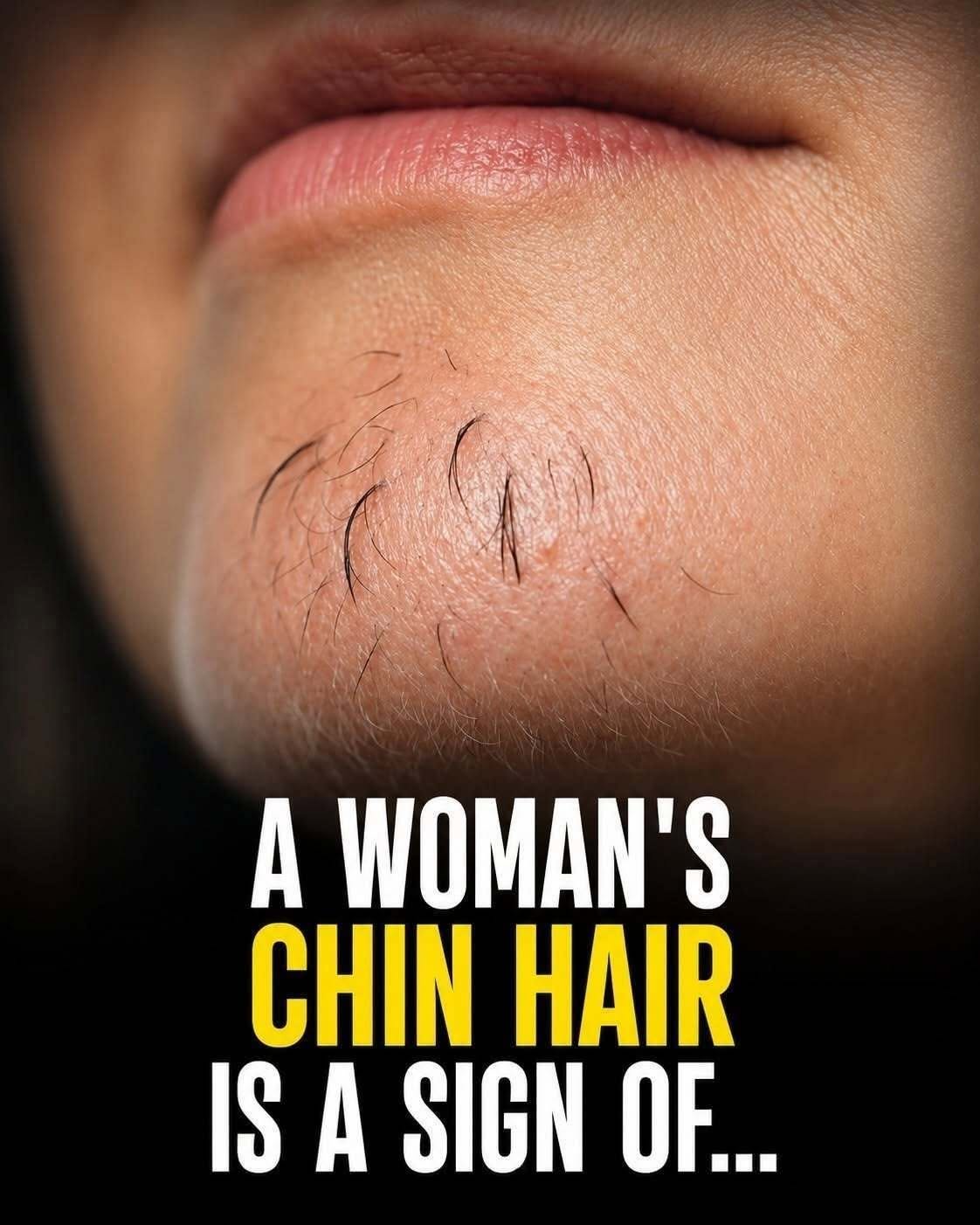
You look in the mirror and suddenly notice a dark, coarse hair growing from your chin. You remove it, only to discover another one a few weeks later.
For many women, this is completely normal.
A few isolated chin hairs do not automatically mean there is something wrong with your hormones or your health. Hair growth varies naturally between women and can change with age.
However, when facial hair becomes noticeably coarser, darker, more widespread, or rapidly increases, it can sometimes be related to hormonal changes or an underlying medical condition.
The key is knowing the difference.
Why Do Women Grow Hair on Their Chins?
Almost everyone has hair follicles across the face.
Much of women’s facial hair is normally very fine, soft, and light. This type of hair is sometimes called vellus hair.
Hormones—particularly hormones known as androgens—can influence some follicles and cause them to produce thicker, darker terminal hairs.
Androgens include testosterone.
Women naturally produce androgens too. They aren’t exclusively “male hormones.”
The difference lies partly in hormone levels and how sensitive individual hair follicles are to them.
A Few Chin Hairs Can Be Completely Normal
Finding one, two, or several coarse hairs on your chin isn’t necessarily a sign of disease.
Hair growth differs according to:
- Genetics
- Age
- Hormonal changes
- Family traits
- Individual follicle sensitivity
Some women naturally have considerably more facial or body hair than others.
The amount of hair considered normal can also differ among populations and families.
So a viral claim saying that “chin hair always means you have a hormonal disorder” is misleading.
When Does Facial Hair Become Hirsutism?
Doctors use the term hirsutism for excessive growth of coarse, dark hair in women in areas where androgen-sensitive hair commonly develops.
These areas can include:
Chin
Upper lip
Chest
Lower abdomen
Back
Inner thighs
Having one stubborn chin hair isn’t necessarily hirsutism.
The overall pattern and amount of hair matter.
Hormones Can Play a Major Role
Androgens can cause fine hairs to become thicker, darker, and more noticeable.
Sometimes blood androgen levels are elevated.
In other women, androgen levels may not be dramatically abnormal, but the hair follicles can be particularly sensitive to them.
This explains why facial hair isn’t always a simple reflection of a single hormone test.
One Common Cause: PCOS
One of the best-known conditions associated with increased facial hair is polycystic ovary syndrome, commonly called PCOS.
PCOS is a hormonal and metabolic condition that can affect women during their reproductive years.
In addition to increased facial or body hair, women with PCOS may experience:
Irregular menstrual periods
Infrequent periods
Acne
Difficulty becoming pregnant
Thinning scalp hair
and other hormonal or metabolic changes.
However, chin hair alone does not diagnose PCOS.
A proper medical evaluation considers the complete pattern of symptoms.
Irregular Periods Plus Facial Hair Deserve Attention
If increased coarse facial hair appears together with significantly irregular menstrual cycles, it’s worth discussing with a healthcare professional.
The combination can provide an important clue about androgen activity and ovulation.
Your doctor may ask:
When did the hair growth begin?
Has it increased quickly?
Are your periods regular?
Do you have acne?
Has your scalp hair changed?
Are you taking medications or supplements?
These details can be more informative than the presence of a few hairs alone.
What If Your Periods Are Completely Normal?
It’s still possible to have noticeable facial hair.
Some women develop hirsutism without an identifiable hormonal disorder.
Genetics and individual follicle sensitivity can play important roles.
That’s why doctors don’t diagnose hormonal disease simply by looking at someone’s chin.
Facial Hair Can Change With Age
Hair distribution can change throughout a woman’s life.
Hormonal shifts occurring with aging, including around perimenopause and menopause, may make certain facial hairs more noticeable.
At the same time, scalp hair may become thinner.
This doesn’t automatically indicate disease.
However, major or sudden changes are still worth discussing with a healthcare professional.
Menopause Can Make Chin Hair More Noticeable
As women approach menopause, the balance between estrogen and androgen activity changes.
Some women begin noticing:
More coarse hairs on the chin
Hair around the upper lip
or
Changes in scalp hair density.
That can be frustrating, but it isn’t unusual.
A few new hairs developing gradually with age are very different from suddenly developing extensive coarse facial hair over several months.
Sudden Hair Growth Is More Important ⚠️
The speed of change can provide an important clue.
Gradual development over years may have a very different explanation from dramatic facial or body hair appearing within a few months.
Rapid, severe hair growth deserves medical evaluation, particularly if other hormonal changes appear at the same time.
Watch for Other Signs of High Androgen Activity
If increased facial hair occurs alongside other noticeable changes, don’t ignore the combination.
Possible accompanying signs can include:
Severe or new acne
Thinning scalp hair
Rapidly increasing body hair
A deeper voice
Increasing muscle mass
or other significant changes.
A process involving more pronounced androgen effects is sometimes called virilization.
Rapid-onset hirsutism combined with signs of virilization should be medically assessed.
Rare Causes Exist Too
PCOS is much more familiar, but it isn’t the only possible hormonal explanation for excessive facial hair.
Other causes can include certain adrenal gland disorders, Cushing syndrome, congenital adrenal hyperplasia, and, rarely, tumors that produce androgens.
The word rarely is important.
Seeing several chin hairs should not make someone assume they have a tumor.
Doctors become more concerned about unusual causes when hair growth is severe, progresses rapidly, or appears with significant signs of virilization.
Certain Medications Can Affect Hair Growth 💊
Medication history can also matter.
Some medicines or hormonal products can influence hair growth.
That’s why a healthcare professional evaluating hirsutism may ask about:
Prescription medicines
Hormonal treatments
Supplements
and other products.
Don’t stop prescribed medication simply because you notice facial hair.
Discuss the change with your healthcare professional first.
Does Shaving Make Chin Hair Grow Back Thicker?
No.
This is one of the most persistent beauty myths.
Shaving doesn’t increase the number of hair follicles.
It also doesn’t change the hair’s underlying growth rate, thickness, or color.
So why does shaved hair sometimes seem thicker?
A razor cuts the hair across its shaft, leaving a blunt end.
As that blunt tip grows above the skin, it can temporarily feel rougher and appear more noticeable than an untouched hair with a naturally tapered tip.
But shaving hasn’t transformed the follicle underneath your skin.
Is Plucking Chin Hair Safe?
For occasional hairs, many women simply use tweezers.
This can work well, but frequent plucking may sometimes irritate the skin or contribute to ingrown hairs.
Always use clean tweezers.
Avoid repeatedly digging into the skin for a hair that hasn’t emerged.
That can create irritation and increase the risk of inflammation or infection.
What About Waxing?
Waxing removes hair from the root and can treat a larger area than tweezing.
However, it can cause temporary:
Redness
Irritation
Sensitivity
and sometimes
Ingrown hairs.
People using certain skin treatments may also need to be particularly careful because waxing can injure sensitive skin.
Hair-Removal Creams
Depilatory creams dissolve hair near the skin surface.
They can be convenient, but they may also irritate facial skin.
Only use products specifically intended for the area you’re treating.
Performing a small patch test first can help identify irritation.
Never leave a depilatory product on longer than instructed in an attempt to get better results.
What About Laser Hair Removal? ✨
Laser treatment can reduce unwanted dark hair over time.
It works by targeting pigment in the hair follicle.
Multiple sessions are generally required because hair grows in cycles.
Results depend on factors including:
Hair color
Skin tone
Treatment technology
Hormonal influences
Laser hair reduction may be less effective on very light, gray, white, or red hair because these hairs contain less of the pigment targeted by many laser systems.
Professional evaluation is particularly important for choosing equipment appropriate for different skin tones.
Electrolysis
Electrolysis is another option for unwanted facial hair.
Instead of relying on hair pigment, a very small probe is used to treat individual follicles.
Because each follicle is treated individually, the process can take time.
It can be useful for small facial areas or hairs that aren’t good candidates for laser treatment.
Hair Removal Doesn’t Treat the Underlying Cause
This is an important distinction.
Tweezing, shaving, waxing, laser treatment, and electrolysis can address the hair itself.
But if excessive hair growth is being driven by a hormonal condition, removing the hair doesn’t correct that condition.
That’s why women with significant or increasing hirsutism may benefit from both:
Medical evaluation
and
Cosmetic hair management.
How Might a Doctor Evaluate Excess Facial Hair?
The evaluation usually begins with your medical history and symptoms.
Your healthcare professional may ask about:
- Menstrual cycles
- When the hair growth started
- How quickly it developed
- Family history
- Acne
- Scalp hair loss
- Weight changes
- Medications and supplements
- Fertility concerns
- Other hormonal symptoms
A physical examination may also help determine the distribution and severity of hair growth.
Are Hormone Tests Always Necessary?
Not necessarily for every woman who finds a few hairs on her chin.
But when hirsutism is significant or accompanied by other symptoms, blood tests may be considered.
Testing can include measurements related to androgen activity, such as testosterone, depending on the clinical situation.
Additional testing depends on the symptoms and what the healthcare professional suspects.
There isn’t one universal “chin hair blood test” that everyone needs.
Don’t Self-Diagnose PCOS From Facial Hair
This is particularly important because PCOS has become a popular subject on social media.
A video may say:
“If you have chin hair, you definitely have PCOS.”
That’s false.
PCOS can cause increased facial hair, but many women with chin hair don’t have PCOS.
Likewise, not everyone with PCOS develops obvious facial hair.
Diagnosis requires looking at the broader clinical picture.
Can Stress Cause Chin Hair?
Stress can affect the body in many ways, but finding several coarse chin hairs shouldn’t automatically be blamed on stress.
Hair growth is influenced by a complicated interaction of hormones, genetics, follicle sensitivity, age, and health conditions.
If there’s a significant change, investigate the pattern rather than assuming one lifestyle factor is responsible.
Does Being Overweight Cause Facial Hair?
The relationship is more complicated than that.
Body weight alone doesn’t determine whether someone develops hirsutism.
However, metabolic and hormonal changes associated with obesity can increase androgen activity in some women and may worsen hirsutism, particularly when PCOS is present.
That doesn’t mean every woman with facial hair needs to lose weight.
The underlying cause matters.
Don’t Use Dangerous DIY Remedies 🚫
The internet contains countless recipes claiming to “permanently remove facial hair” using:
Lemon juice
Baking soda
Garlic
Toothpaste
Undiluted vinegar
or other household substances.
Be cautious.
Facial skin is sensitive.
Acidic, alkaline, or irritating mixtures can cause:
Redness
Dermatitis
Chemical irritation
and sometimes
Dark marks after inflammation.
A burning sensation doesn’t mean the hair follicle is being safely destroyed.
When Should You See a Doctor?
Consider talking with a healthcare professional if facial hair:
Suddenly increases significantly
Becomes rapidly thicker or more widespread
Appears together with irregular periods
Occurs with severe acne
Occurs with noticeable scalp hair thinning
or is accompanied by other significant hormonal changes.
Rapid facial/body hair growth combined with a deepening voice or other signs of virilization deserves prompt evaluation.
Who Can Help?
Depending on your symptoms, evaluation may begin with a:
Primary-care doctor
Gynecologist
Dermatologist
or
Endocrinologist.
The appropriate specialist depends on whether the main concern appears dermatological, reproductive, or hormonal.
What If Tests Are Normal?
Sometimes evaluation doesn’t reveal a significant hormonal abnormality.
That doesn’t mean the hair isn’t real or bothersome.
Some women naturally have greater follicle sensitivity to androgens or familial patterns of facial hair.
In these cases, treatment may focus primarily on managing unwanted hair according to personal preference.
Facial Hair Isn’t a Measure of Femininity
Hair growth is a biological characteristic.
Some women naturally grow more facial and body hair than others.
Having chin hair doesn’t make someone unhealthy, unhygienic, or less feminine.
The medical question isn’t whether a woman has any facial hair.
The more useful questions are:
Has it changed significantly?
Is it becoming unusually coarse or widespread?
Did it appear rapidly?
Are there other symptoms?
Those details provide much more information.
The Bottom Line 👩✨
A few coarse chin hairs in a woman can be completely normal and may simply reflect genetics, age, or normal hormonal variation.
More extensive dark, coarse facial or body hair is known as hirsutism, and increased androgen activity is one possible explanation. PCOS is a common condition associated with hirsutism, particularly when facial hair occurs alongside irregular menstrual cycles, acne, or scalp hair thinning.
But chin hair alone does not diagnose PCOS or any other disease.
The most important warning sign is a significant change.
If coarse facial hair suddenly increases over a few months or appears alongside menstrual changes, severe acne, scalp hair loss, a deeper voice, or other unusual symptoms, it’s worth getting a medical evaluation.
And remember one reassuring fact:
Shaving your chin does not make the hair grow back thicker.
Sometimes a stubborn chin hair is simply a stubborn chin hair.
What matters is recognizing when the overall pattern changes enough to deserve a closer look.