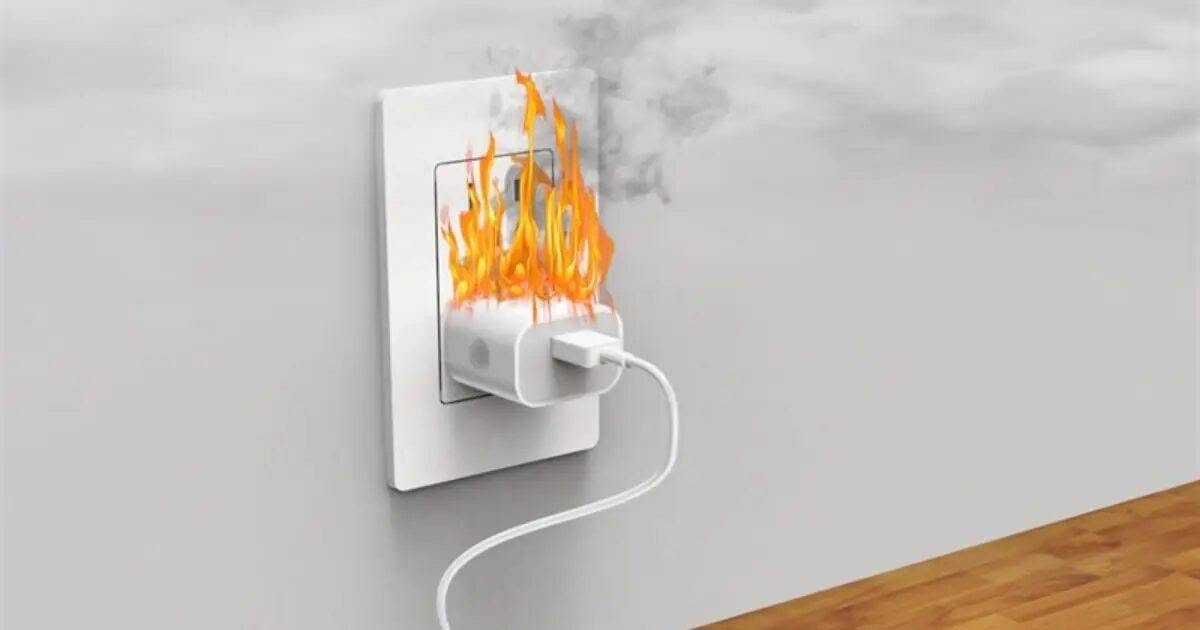
Using the Wrong Charger? The Hidden Electrical Risks You Should Know About 🔌⚡
Most of us charge our phones every day without thinking twice about the charger. When the battery is low, we simply find a cable that fits, plug it in, and continue with our day.
But is every charger with the right connector actually safe?
The answer is more nuanced than many viral warnings suggest. Using a different charger does not automatically damage your phone or cause a fire. Modern devices and compatible chargers are generally designed to control how much power is delivered.
The bigger concerns are poor-quality or counterfeit chargers, damaged cables, incompatible equipment, excessive heat, faulty electrical outlets, and unsafe charging habits.
Here’s what you should know.
Does a Different Charger Automatically Damage Your Phone?
Usually, no.
Many modern smartphones, tablets, and laptops communicate with compatible chargers to determine an appropriate charging level.
With technologies such as USB Power Delivery, the charger and device can negotiate how much power should be supplied.
This means that simply seeing a higher wattage number on a charger does not necessarily make that charger dangerous.
What If the Charger Has More Watts?
Imagine your phone supports charging at 20 watts, but you connect it to a reputable 65-watt USB-C charger.
A common misconception is that the charger will automatically force all 65 watts into the phone.
With properly designed compatible charging systems, that generally isn’t how it works.
The 65-watt rating represents the maximum power the charger can provide under appropriate conditions. The connected device determines what it can accept according to the supported charging protocol.
So a higher-wattage charger isn’t automatically dangerous.
Compatibility and quality matter much more.
What About a Lower-Wattage Charger?
A compatible charger that provides less power may simply charge your device more slowly.
With laptops and other power-hungry electronics, an underpowered charger may not provide enough energy to charge the battery efficiently while the device is being used.
You might notice:
- Very slow charging
- The battery percentage remaining almost unchanged
- The battery continuing to decrease while plugged in
That doesn’t necessarily mean the charger is dangerous. It may simply be inadequate for that particular device.
The Real Danger: Poor-Quality Chargers ⚠️
This is where charger safety becomes much more important.
A charger isn’t simply a plastic box with two wires inside.
A properly designed charger contains components that regulate electrical power and provide important protections against electrical faults.
Poorly manufactured or counterfeit chargers may not provide the same level of protection.
Potential consequences can include:
Overheating
Electrical shock
Damage to the connected device
and, in serious cases,
Fire.
That’s why buying charging equipment from reputable manufacturers and retailers is important.
A Fake Charger Can Look Completely Normal
One of the biggest problems with counterfeit electronics is that appearance isn’t always enough to identify them.
A counterfeit charger may imitate:
- The manufacturer’s logo
- Packaging
- Shape
- Printed specifications
- Safety markings
From the outside, it might look almost identical to a legitimate product.
The important differences may be hidden inside.
Poor insulation, inadequate spacing between electrical components, weak materials, and missing protective components can create serious risks.
Warning Signs You Should Never Ignore 🚨
Your charging equipment can sometimes provide clues that something is wrong.
Stop using a charger or cable if you notice unusual signs such as:
Burn Marks
Brown or black discoloration around the charger, plug, cable, or electrical outlet may indicate overheating.
Burning Smell
A smell resembling burning plastic or electrical components should never be considered normal.
Disconnect the equipment safely and stop using it.
Smoke
Any smoke coming from a charger, cable, phone, or electrical outlet requires immediate attention.
Significant Sparking
A tiny momentary spark can sometimes occur when making an electrical connection.
But repeated or significant sparking—particularly when combined with heat, noise, or damage—should be investigated.
Buzzing or Crackling
Unusual electrical sounds can indicate arcing or another electrical problem.
Excessive Heat
Chargers naturally produce some heat during operation.
Warm can be normal.
Extremely hot is not something to ignore.
If the charger suddenly becomes much hotter than usual, disconnect it and stop using it until you understand why.
Check Your Charging Cable Too
Sometimes the charger itself isn’t the problem.
The cable may be damaged.
Regularly inspect cables for:
- Frayed insulation
- Exposed wires
- Cracks
- Bent connectors
- Loose connections
- Melted areas
- Discoloration
If you have to bend the cable into a particular position to make your phone charge, it’s probably time to replace it.
Don’t continue using severely damaged cables simply because they still work.
Never Charge Your Phone Under a Pillow 🛏️🔥
This is one of the easiest safety mistakes to avoid.
Phones, batteries, and chargers generate heat while operating.
When your phone is placed on a hard, open surface, heat can dissipate more easily.
Putting the phone underneath:
A pillow
A blanket
A mattress
or other thick fabric can trap heat.
A bedside table or another hard, stable surface is a much better location for charging.
Don’t Cover the Charger
The same principle applies to the charging adapter itself.
Don’t bury it underneath:
- Clothing
- Blankets
- Pillows
- Paper
- Towels
Allow air to circulate around charging equipment.
What About Charging Overnight?
Modern smartphones include sophisticated charging and battery-management systems.
That means a functioning modern phone doesn’t simply continue receiving unlimited charging power after reaching full charge.
However, good charging habits still matter.
Avoid damaged or suspicious chargers, keep the device uncovered, and charge it somewhere with adequate ventilation.
If a charger repeatedly becomes unusually hot, don’t continue using it simply because it hasn’t failed yet.
Check the Wall Outlet 🔌
Sometimes people blame the charger when the real problem is the electrical outlet.
Look for:
Black or brown marks
Melting
Loose plugs
Crackling
Buzzing
Burning smells
Excessive heat
If the outlet appears damaged, stop using it and have it checked by a qualified electrician.
Changing the phone charger won’t fix a faulty wall socket.
Don’t Overload Extension Leads
Power strips and extension leads have electrical limits.
Connecting too many high-power devices can overload equipment.
Avoid connecting multiple extension leads together simply to create more outlets.
This can increase electrical risk, particularly when high-power appliances are involved.
Keep Chargers Away From Water 💧⚡
Electricity and water are a dangerous combination.
Keep chargers away from:
Bathtubs
Showers
Sinks
Wet countertops
Spilled drinks
and
Outdoor rain.
Never handle plugged-in charging equipment with wet hands.
If a charger has been exposed to water, stop using it until you know it is safe.
Why Quality Matters
Good chargers contain protection systems designed to manage electrical problems.
Depending on the charger, these may include protection against:
- Excess current
- Excess voltage
- Short circuits
- Excessive temperature
You cannot necessarily see these components from outside.
That’s one reason an extremely cheap charger from an unknown manufacturer shouldn’t automatically be considered equivalent to a reputable compatible product.
“I’ve Used This Cheap Charger for Years and Nothing Happened”
This isn’t proof that the charger is safe.
Electrical equipment can operate normally until a component eventually fails.
The same is true for damaged cables.
A cable may continue charging your phone despite cracked insulation, but that doesn’t make continuing to use it a good idea.
Inspect your charging equipment periodically rather than waiting for complete failure.
Can the Wrong Charger Damage Your Battery? 🔋
Potentially, especially if the charging equipment is incompatible, poorly regulated, or defective.
Heat is also an important consideration.
Lithium-ion batteries don’t benefit from excessive heat.
If your phone becomes abnormally hot every time you use one particular charger but remains at a normal temperature with another compatible charger, stop using the suspicious equipment.
Watch for a Swollen Battery
The phone itself can also show warning signs.
Take unusual battery swelling seriously.
Signs may include:
The back of the phone lifting
The screen separating from the frame
A visible bulge
Unexpected cracking or separation
Unusual heat
A swollen battery shouldn’t be punctured, crushed, squeezed, or forced back into the device.
Seek professional assistance.
Is Fast Charging Dangerous?
Not automatically.
Fast charging is a normal feature of many modern smartphones.
Compatible devices and chargers are designed to communicate and manage charging power.
The phone can also reduce charging power as necessary.
The important thing is using compatible, properly designed equipment.
USB-C Doesn’t Mean Everything Is Identical
USB-C has made charging much more convenient.
One connector can now be used for phones, tablets, headphones, laptops, and many other devices.
But identical-looking USB-C connectors don’t necessarily mean every cable and charger has identical capabilities.
Different products can support different:
Power levels
Charging standards
Data speeds
and other functions.
Use equipment appropriate for your device.
Don’t Automatically Fear a High-Wattage Charger
A common viral warning says:
“Never connect your phone to a charger with more watts than the original.”
That’s too simplistic.
With a reputable, compatible modern charging system, a higher maximum wattage doesn’t necessarily mean the charger will force that amount of power into the phone.
Compatibility, supported charging standards, construction quality, and the condition of the charger are more meaningful considerations.
Be Careful With Extremely Cheap Chargers
A charger can seem like a simple accessory, but it connects your expensive electronic device directly to mains electricity.
Saving a small amount of money isn’t worth buying an obviously questionable adapter.
Prefer products from reputable manufacturers or retailers.
Be cautious with chargers that have:
Suspicious packaging
Misspelled branding
Missing specifications
Poor construction
Loose components
Unusually low prices
or
No identifiable manufacturer.
None of these signs alone can perfectly prove whether a charger is safe, but they can be reasons for caution.
Keep Chargers Away From Small Children 👶
Children may pull cables, chew them, touch connectors, or play with electrical outlets.
Keep charging equipment positioned appropriately.
Replace damaged cables rather than attempting temporary repairs that leave electrical components exposed.
What Temperature Is Normal?
A charger becoming slightly warm doesn’t automatically mean something is wrong.
Electrical conversion generates heat.
Fast charging can generate noticeable warmth as well.
The warning signs are unusual or excessive heat, particularly when accompanied by:
Burning smells
Discoloration
Melting
Crackling
or
Smoke.
If you cannot comfortably touch the charger because it has become extremely hot, stop using it.
What Should You Do If a Charger Starts Smoking? 🔥
Don’t grab burning electrical equipment with your bare hands.
If it is safe to do so, disconnect the electrical power.
Move people away from danger and contact emergency services if there is a fire.
Don’t put yourself at risk trying to save a phone or charger.
10 Simple Rules for Safer Charging
You can reduce unnecessary electrical risks with a few basic habits:
1. Use compatible charging equipment from reputable sources.
2. Avoid suspicious counterfeit chargers.
3. Replace damaged cables.
4. Charge devices on hard, stable surfaces.
5. Never bury charging devices under pillows or blankets.
6. Keep chargers away from water.
7. Stop using chargers that smell burnt, spark, crackle, smoke, or become abnormally hot.
8. Don’t overload outlets and extension leads.
9. Check wall sockets for burn marks or unusual heat.
10. Follow the charging recommendations for your specific device.
The Biggest Myth About Using the “Wrong Charger”
The viral version of this warning often makes it look as though plugging your phone into any charger other than its original charger could immediately start a fire.
That’s misleading.
Modern compatible charging systems are designed to manage how much power is delivered.
Using another reputable compatible charger is therefore not automatically dangerous.
The more important dangers involve:
Counterfeit chargers
Poor-quality electronics
Damaged cables
Incompatible equipment
Overheating
Damaged outlets
and
Unsafe charging environments.
The Bottom Line 🔌⚡
You don’t need to panic every time you use a charger that didn’t come in your phone’s original box.
A properly designed, reputable, compatible charger can generally charge a device safely.
What you should never ignore are warning signs such as:
Burn marks
Excessive heat
Frayed cables
Buzzing or crackling
Burning smells
Smoke
Loose outlets
or
Battery swelling.
And one of the easiest changes you can make is also one of the simplest:
Charge your phone on a hard, open, well-ventilated surface instead of underneath a pillow or blanket.
Your charger should refill your battery—not introduce an unnecessary electrical risk into your home.