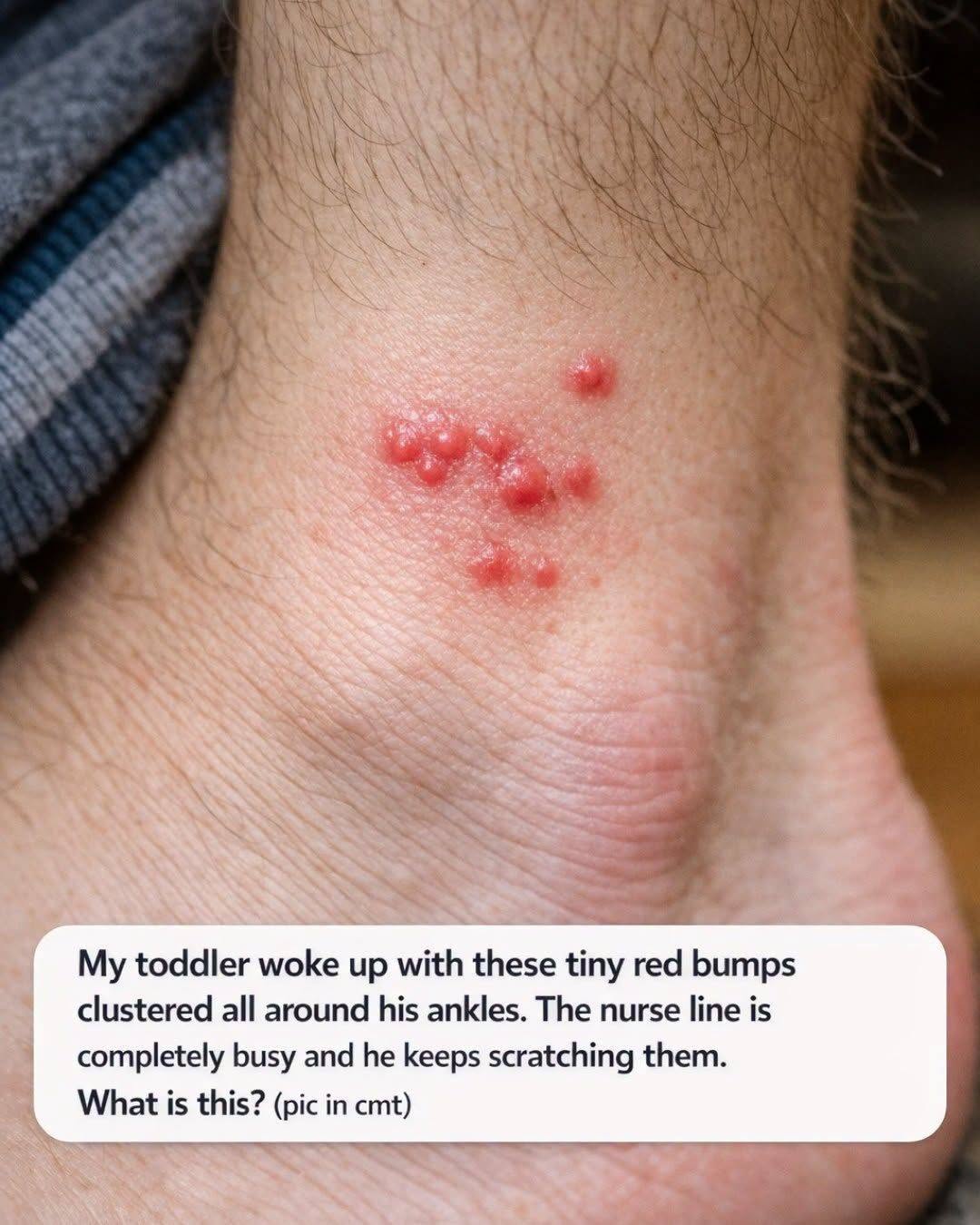
A child wakes up scratching their ankles, and you notice several tiny red bumps clustered around the skin. Your first thought might be mosquitoes, an allergy, or even a new skin condition.
But when multiple itchy bumps appear around the ankles or lower legs, another possibility is worth investigating: insect bites, including fleas.
That doesn’t mean every cluster of ankle bumps is caused by fleas. Bed bugs, mosquitoes, mites, contact dermatitis, eczema, and other skin conditions can sometimes produce similar-looking reactions. In children especially, different rashes can be difficult to distinguish by appearance alone.
So rather than trying to diagnose the cause from a photograph, look at the location, timing, other symptoms, pets, and environment.
Why Are the Ankles a Common Place for Flea Bites?
Fleas are tiny insects that feed on blood. They usually prefer animal hosts, but they can bite people as well.
When fleas are present around floors, carpets, pet bedding, or furniture, the ankles and lower legs are conveniently close to where the insects are.
That’s one reason flea bites often occur around the feet and lower legs.
They can appear as:
- Small red bumps
- Several bites close together
- Intensely itchy spots
- Small clusters
- Bumps with a tiny central point
Children may develop more noticeable skin reactions than adults.
However, appearance alone cannot confirm flea bites.
Why Children May Scratch So Much
The bumps themselves aren’t simply caused by the insect making a hole in the skin.
When an insect feeds, the body can react to substances introduced during the bite.
That immune reaction produces:
Redness
Itching
Swelling
and sometimes
Small blisters
Some children react much more strongly than others.
One child might have a tiny red dot, while another develops a much larger itchy bump from a similar bite.
Could Fleas Be Hiding in Your Home?
Yes, particularly if you have pets.
Fleas can be associated with:
Dogs
Cats
Pet bedding
Carpets
Rugs
Upholstered furniture
Floor cracks
A common misconception is that fleas stay permanently on an animal.
In reality, the flea life cycle involves the environment too. Eggs and immature stages can be present in areas where pets spend time.
So repeatedly finding bites may require looking beyond the child’s skin.
Check Your Pets First 🐕🐈
If you have a dog or cat, inspect them carefully.
Look particularly around:
- Neck
- Back
- Base of the tail
- Belly
- Inner legs
You may notice actual fleas moving through the fur.
Another clue is tiny dark material sometimes called flea dirt, which consists largely of flea feces containing digested blood.
A veterinarian can help determine whether your pet has fleas and recommend appropriate treatment.
What If You Don’t Have Pets?
Don’t immediately rule out fleas.
Pets are common hosts, but fleas can sometimes be associated with rodents, wildlife, previous animals in a home, or an environment that was already infested.
For example, fleas can sometimes remain in a property even after an animal is no longer present.
That’s why unexplained recurring ankle bites may justify inspecting the home even when there isn’t currently a dog or cat.
Flea Bites vs. Bed Bug Bites 🛏️
This is where identification becomes tricky.
Both fleas and bed bugs can produce multiple itchy red bumps.
Fleas
Bites commonly involve the lower legs, feet, and ankles.
Bed bugs
Bites may occur on exposed skin while someone sleeps, including the arms, legs, neck, and face.
Bed bug bites can sometimes appear in clusters or lines.
But neither location nor pattern provides a guaranteed diagnosis.
The more useful evidence is often found in the environment.
Signs of Bed Bugs
Inspect:
Mattress seams
Bed frame
Headboard
Nearby furniture
Look for:
- Actual insects
- Dark spotting
- Rust-colored stains
- Shed skins
- Tiny eggs
Don’t assume you have bed bugs simply because three bites appear in a row.
Several skin conditions and insect bites can create clusters.
Could It Be Mosquitoes? 🦟
Absolutely.
Mosquito bites commonly produce itchy red bumps, and young children can sometimes develop larger local reactions.
Think about whether:
Windows were open
Mosquitoes have been seen indoors
The child recently played outside
Other exposed areas also have bites
A few ankle bumps aren’t enough to distinguish mosquitoes from fleas.
Could It Be Eczema?
Eczema is extremely common in children and can cause intense itching.
Scratching can make the skin:
- Red
- Irritated
- Bumpy
- Raw
- Crusted
However, eczema often has a different distribution and history from sudden isolated insect bites.
Children with recurrent dry, itchy patches may need evaluation by their pediatrician or dermatologist.
Could It Be Contact Dermatitis?
Contact dermatitis happens when something touching the skin causes irritation or an allergic reaction.
Potential triggers around the ankles include:
Socks
Shoes
Laundry products
Plants
Skin-care products
Cleaning products
If the rash closely follows an area exposed to a particular material, contact dermatitis becomes another possibility.
What About Scabies?
Scabies is another cause of intensely itchy bumps.
It is caused by tiny mites that burrow into the skin.
Scabies can affect different areas of the body and often causes severe itching, which may be especially noticeable at night.
Other household members may eventually develop symptoms because scabies can spread through close contact.
In infants and young children, the distribution can differ from that seen in adults.
Scabies requires appropriate medical treatment, so don’t try to diagnose or treat it based only on a social-media photograph.
The Number of Bumps Doesn’t Identify the Cause
You may see viral posts saying:
“5 bites means fleas.”
“10 bites means bed bugs.”
“20 bites means your house is infested.”
That’s not medically reliable.
The number of bumps cannot identify which insect caused them.
One insect can bite multiple times.
Several insects can also bite the same person.
And a rash that looks like bites may not have been caused by insects at all.
The environment and symptoms provide much better clues.
What Should You Do for Itchy Bumps?
For mild suspected insect bites, the main goal is controlling itching and preventing scratching.
Start With a Cool Compress ❄️
Apply a cool, damp cloth to the irritated area.
This may help reduce itching and swelling.
Avoid placing ice directly against a child’s skin.
Keep the Area Clean
Gently wash the skin with mild soap and water.
Avoid aggressive scrubbing.
Scrubbing won’t remove the reaction because the inflammation is occurring within the skin.
Stop the Scratching
This is particularly important with toddlers.
Scratching may damage the skin and create small wounds.
Once the skin barrier is broken, bacteria can enter more easily and cause a secondary infection.
Keep your child’s fingernails short and clean.
For very young children who scratch while sleeping, appropriate sleep clothing may help limit damage.
What About Anti-Itch Cream?
Some over-the-counter anti-itch treatments can help with insect bites, but children require age-appropriate products and dosing.
Ask your child’s pediatrician or pharmacist if you’re unsure which product is appropriate.
Don’t automatically apply adult medication to a toddler.
And don’t use prescription creams belonging to another family member.
Be Careful With Essential Oils
Social media often recommends essential oils for children’s insect bites.
Be cautious.
“Natural” doesn’t automatically mean safe for young skin.
Concentrated essential oils can irritate the skin and some products can be harmful if swallowed.
Toddlers frequently put their hands in their mouths, making unnecessary topical products an additional concern.
Don’t Use Vinegar, Bleach, or Harsh Chemicals on the Skin 🚫
A child’s irritated skin doesn’t need household cleaning chemicals.
Avoid applying:
Bleach
Strong vinegar
Disinfectants
Household insecticides
Undiluted essential oils
Random homemade chemical mixtures
These substances may worsen irritation or cause chemical burns.
If You Suspect Fleas, Treat the Source
Treating the bumps alone won’t stop new bites if fleas remain in the environment.
The solution requires breaking the cycle.
Start by investigating pets and the areas where they spend the most time.
Vacuum Thoroughly 🧹
Vacuum:
Carpets
Rugs
Floor edges
Under furniture
Sofas and cushions
Pet resting areas
Frequent vacuuming can help remove fleas and immature stages from the environment.
Dispose of vacuum contents carefully afterward.
Wash Bedding
Wash washable:
Pet bedding
Blankets
Removable furniture covers
and other frequently used fabrics according to their care instructions.
Dry them thoroughly.
If your child has unexplained bites, washing their bedding can also be sensible while you investigate the source.
Treat Your Pets Properly
If a pet has fleas, veterinary treatment is important.
A veterinarian can recommend an appropriate flea-control product based on the animal’s:
Species
Age
Weight
Health
Never assume that flea medication designed for dogs is safe for cats.
Some ingredients used in dog products can be dangerous to cats.
Don’t Spray Your Child With Household Flea Killer
Household insecticides are intended for the environment according to their labels—not children’s skin.
Never apply a home pesticide directly to a child.
Follow all product instructions carefully and keep children and pets away from treated areas for the required amount of time.
Why Killing Adult Fleas May Not Be Enough
This is one reason flea problems can be frustrating.
The fleas you see represent only part of the life cycle.
Eggs can fall from an animal into the environment.
Those eggs eventually develop through immature stages before becoming adult fleas.
That’s why you may kill several fleas and then notice more later.
Successful control often requires addressing both:
The animal
and
The environment.
Don’t Forget the Yard
If pets frequently go outside, fleas may be associated with outdoor areas as well.
Keeping outdoor spaces maintained and discouraging rodents and unwanted wildlife around the home can help reduce some sources of fleas.
Focus particularly on areas where pets rest.
When Should You Call Pest Control?
Professional help may be appropriate if:
Bites continue despite cleaning
You repeatedly find fleas indoors
Several household members are being bitten
The infestation appears extensive
Pet treatment and environmental cleaning haven’t solved the problem
A professional can identify the pest before treating it.
That’s much better than repeatedly spraying random pesticides throughout the house.
Watch for Infection ⚠️
The bite itself may be minor, but excessive scratching can create another problem.
Contact your child’s healthcare professional if you notice:
Increasing redness
Increasing warmth
Significant swelling
Pus or drainage
Increasing pain
Crusting or sores that are worsening
Fever
These can be signs that medical evaluation is needed.
When Is It an Emergency?
A severe allergic reaction after a bite or sting requires urgent medical attention.
Seek emergency help if a child develops symptoms such as:
Difficulty breathing
Swelling of the lips, tongue, or face
Throat tightness
Severe dizziness
or other signs of a serious systemic reaction.
Fortunately, most ordinary insect bites don’t cause this type of reaction.
What If the Bumps Keep Appearing Every Morning?
This is an important clue.
If new bumps repeatedly appear after sleeping, inspect the child’s sleeping environment carefully.
Check:
Mattress seams
Bed frame
Headboard
Nearby furniture
Carpet around the bed
But don’t immediately conclude that the problem is bed bugs.
Fleas, mosquitoes, mites, and non-insect skin conditions can also cause nighttime or morning symptoms.
Recurring unexplained bumps are a good reason to involve your pediatrician while also investigating the environment.
Keep a Simple Record
If the problem continues, take clear photographs when new bumps appear.
Write down:
When they appeared
Where they appeared
Whether they itch
Whether anyone else has them
Whether pets are scratching
Whether new bumps appear after sleeping
This information can be much more useful to a doctor than trying to remember everything later.
A Quick Home Investigation Checklist 🔍
If your child suddenly develops clusters of itchy ankle bumps:
1. Check your child’s entire skin.
Look for similar bumps elsewhere.
2. Inspect pets.
Look for fleas or flea dirt.
3. Check pet bedding.
Pay attention to areas where animals sleep.
4. Inspect the child’s bed.
Look for environmental signs of bed bugs rather than relying only on bite patterns.
5. Think about recent outdoor activity.
Grass, parks, gardens, and travel can provide useful clues.
6. Consider new products.
New shoes, socks, laundry detergent, soap, or skin products may point toward contact dermatitis.
7. Monitor symptoms.
Watch for spreading redness, fever, severe swelling, or infection.
The Biggest Mistake Parents Can Make
The biggest mistake is assuming that a photograph provides a definite diagnosis.
A cluster of red bumps can resemble flea bites.
But it can also resemble:
Bed bug bites
Mosquito bites
Mite bites
Eczema
Contact dermatitis
Scabies
and other conditions.
Even healthcare professionals sometimes need additional history or examination to distinguish similar rashes.
So the correct question isn’t simply:
“What insect made these bumps?”
It’s:
“What other clues tell us what’s actually happening?”
How to Reduce Future Flea Bites
If fleas are confirmed, prevention becomes important.
Maintain a veterinarian-recommended flea prevention plan for pets.
Vacuum regularly.
Wash pet bedding.
Keep the home environment clean.
Inspect pets after outdoor activity.
Address rodents or wildlife problems around the property when necessary.
And don’t wait until dozens of fleas are visible before acting.
The Bottom Line 👣
Tiny itchy red bumps clustered around a child’s ankles can be consistent with insect bites, and fleas are one possible explanation, particularly when pets or an affected home environment are involved. Flea bites commonly involve the lower legs and feet.
But the appearance and number of bumps alone cannot tell you exactly what caused them. Several insect bites and childhood skin conditions can look remarkably similar.
If the symptoms are mild, keep the area clean, discourage scratching, and use a cool compress for comfort while investigating possible environmental causes.
If new bumps continue appearing, inspect pets, pet bedding, carpets, and sleeping areas.
And if your child develops fever, worsening redness, pus, significant swelling, severe pain, a spreading rash, or any breathing difficulty, seek appropriate medical care.
Most importantly, don’t let a viral photograph convince you that “5, 10, or 20 bumps” automatically identifies a particular household pest.
The pattern is a clue—not a diagnosis.