Getting older doesn’t automatically mean becoming weak.
However, aging is associated with a gradual decline in muscle mass, strength, and physical performance. This process can become more noticeable later in life and may eventually contribute to a condition known as sarcopenia.
Sarcopenia can make everyday activities—such as getting out of a chair, climbing stairs, carrying groceries, or maintaining balance—more difficult.
The encouraging news is that muscle loss isn’t something you simply have to accept without doing anything about it.
Two habits are particularly important:
Eating enough high-quality protein and other essential nutrients
and
regularly challenging your muscles through physical activity, especially resistance exercise.
And no, there isn’t one magical food that prevents muscle loss. The best approach combines several nutritious foods with an active lifestyle.
Why Do We Lose Muscle as We Get Older?
Muscle mass and strength naturally change throughout life.
Muscle performance generally reaches its highest levels during early adulthood and then gradually declines with age. The decline in strength and power can become faster in later adulthood.
Several factors may contribute, including:
- Reduced physical activity
- Inadequate protein intake
- Changes in how muscles respond to dietary protein
- Illness
- Long periods of bed rest
- Poor appetite
- Unintentional weight loss
- Hormonal and metabolic changes
For some older adults, these factors can combine and accelerate muscle loss.
That’s why both nutrition and exercise become increasingly important as we age.
What Is Sarcopenia?
Sarcopenia refers to age-associated loss of muscle strength, muscle mass, and physical function.
Possible signs can include:
Increasing weakness
Difficulty getting out of a chair
Slower walking
Difficulty climbing stairs
Reduced ability to carry everyday objects
Frequent falls
But weakness shouldn’t automatically be blamed on aging.
Many medical conditions can cause fatigue, weakness, or mobility problems, so significant or rapidly worsening weakness deserves medical evaluation.
Why Protein Becomes So Important
Protein provides amino acids—the building blocks the body uses to maintain and repair tissues, including muscle.
As people get older, maintaining adequate protein intake becomes especially important.
But that doesn’t mean you need enormous protein shakes at every meal.
The goal should be to include nutritious protein sources regularly throughout the day.
Let’s look at some of the best options.
1. Eggs 🥚
Eggs are an easy and versatile source of high-quality protein.
One large egg provides roughly 6 grams of protein, although the exact amount varies slightly with size.
Eggs also provide nutrients such as:
- Vitamin B12
- Choline
- Selenium
- Riboflavin
They can be especially convenient for older adults because they’re relatively easy to prepare and can be incorporated into many meals.
Try:
Boiled eggs
Scrambled eggs
Vegetable omelets
Eggs with whole-grain toast
Rather than focusing on a single food, combine eggs with vegetables, whole grains, fruit, or other nutritious foods.
2. Greek Yogurt
Greek yogurt can provide considerably more protein than many traditional yogurts.
It also provides calcium and other nutrients important for overall health.
Try combining plain Greek yogurt with:
- Berries
- Nuts
- Seeds
- Oats
- Sliced fruit
This creates a convenient breakfast or snack containing protein plus other valuable nutrients.
Choose options with little or no added sugar when possible.
3. Fish 🐟
Fish is an excellent protein source.
Options include:
Salmon
Sardines
Tuna
Trout
Cod
Mackerel
Fatty fish such as salmon, sardines, and mackerel also provide omega-3 fatty acids.
Fish can therefore fit nicely into an overall heart-healthy and muscle-supporting diet.
4. Chicken and Turkey
Lean poultry is another concentrated source of high-quality protein.
Chicken or turkey can easily be added to:
Salads
Soups
Sandwiches
Rice dishes
Vegetable meals
For people with reduced appetite, smaller portions of nutrient-dense protein foods can sometimes be easier than trying to eat one very large meal.
5. Beans and Lentils 🌱
You don’t need to get all your protein from meat.
Beans, lentils, peas, and other legumes provide plant protein along with fiber and numerous vitamins and minerals.
Excellent choices include:
- Lentils
- Chickpeas
- Black beans
- Kidney beans
- Split peas
They’re also extremely versatile.
Add them to soups, stews, salads, curries, and grain bowls.
6. Soy Foods
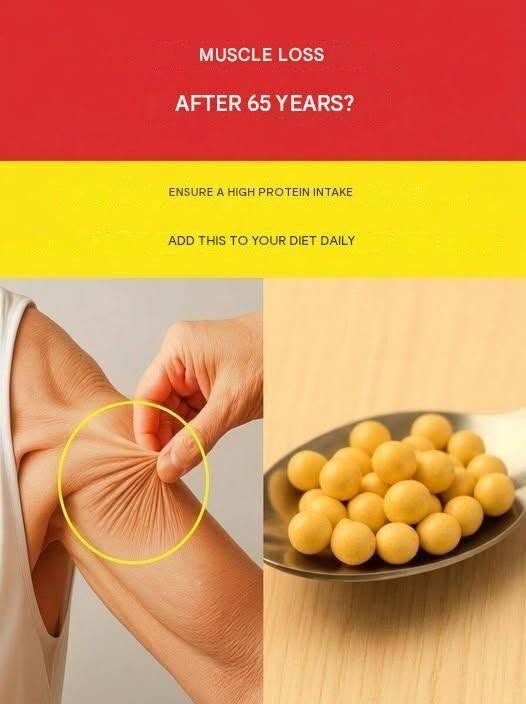
The viral image shows what appears to be soybeans, and there’s a good reason soy often appears in discussions about plant-based protein.
Soy foods provide useful amounts of protein.
Options include:
Tofu
Tempeh
Edamame
Soybeans
Fortified soy beverages
Soy can be particularly useful for people who eat little or no meat.
But soy isn’t a magical cure for age-related muscle loss.
It’s simply one good protein source among many.
7. Cottage Cheese
Cottage cheese is another convenient high-protein food.
It can be eaten alone or combined with:
Fruit
Tomatoes
Whole-grain crackers
Nuts or seeds
It can be especially useful as a snack when someone is trying to distribute protein-containing foods throughout the day.
8. Milk
Milk provides protein as well as calcium and, depending on the product, vitamin D.
For people who tolerate dairy, it can be an easy way to add protein to meals.
You can use milk in:
Oatmeal
Smoothies
Breakfast cereals
or simply drink it with a meal.
Fortified soy beverages can be another option for people who avoid dairy.
9. Nuts and Seeds 🥜
Nuts and seeds provide some protein along with healthy fats and other nutrients.
Good choices include:
- Almonds
- Walnuts
- Peanuts
- Pistachios
- Pumpkin seeds
- Sunflower seeds
- Chia seeds
Nut butter can also be useful.
For example, peanut or almond butter can be spread on whole-grain toast or added to oatmeal.
Because nuts are calorie-dense, portion size may matter for people who need to manage their calorie intake.
10. Lean Meat
Lean beef and other lean meats provide high-quality protein along with nutrients such as iron, zinc, and vitamin B12.
Choose leaner cuts and moderate portions as part of an overall balanced diet.
Protein doesn’t need to come from the same food every day.
Variety is beneficial.
Don’t Forget Vitamin D
Protein gets most of the attention when discussing muscle, but vitamin D is also important for normal muscle and bone function.
Sources can include:
Fatty fish
Egg yolks
Fortified milk
Fortified foods
Vitamin D can also be produced by the body when skin is exposed to sunlight.
However, vitamin D deficiency is relatively common in some populations.
If you’re concerned about your vitamin D level, a healthcare professional can determine whether testing or supplementation is appropriate.
Don’t automatically take very high-dose vitamin D supplements without professional advice.
Calcium Matters Too 🥛
Strong muscles are only part of maintaining mobility.
Bone health is also extremely important as we age.
Calcium-rich foods include:
- Milk
- Yogurt
- Cheese
- Calcium-fortified alternatives
- Certain leafy vegetables
- Some fish eaten with edible bones
Maintaining both muscle and bone health can help support mobility and independence.
Is Protein Alone Enough to Prevent Muscle Loss?
No.
This is one of the most important points in this article.
Eating protein while remaining completely inactive isn’t the best strategy for maintaining strength.
Muscles respond to being used.
That’s why resistance training is so valuable.
Resistance Training May Be the Missing Piece 🏋️
Resistance training means making your muscles work against resistance.
That doesn’t necessarily mean lifting extremely heavy weights at a gym.
Depending on someone’s ability and health, resistance exercise can include:
Resistance bands
Light dumbbells
Weight machines
Body-weight exercises
Chair-based strength exercises
The goal is to challenge the muscles appropriately and progressively.
For older adults, muscle-strengthening activities can help maintain strength, physical function, and independence.
Even After 65, Muscles Can Become Stronger
One of the most encouraging facts about aging is that older muscles can still respond to exercise.
Aging may change how quickly the body adapts, but that doesn’t mean improvement is impossible.
People can improve strength at advanced ages when exercise is appropriate for their health and ability.
So:
“I’m too old to start exercising”
is generally not a useful assumption.
The key is starting at an appropriate level.
Walking Is Excellent — But Don’t Forget Strength Training 🚶
Walking has many benefits.
It supports cardiovascular health, mobility, endurance, and general physical activity.
But walking and resistance training don’t do exactly the same thing.
For maintaining muscle strength, include some form of muscle-strengthening activity when medically appropriate.
A good overall routine can combine:
Walking or other aerobic exercise
Resistance exercise
Balance exercises
Regular daily movement
How Often Should Older Adults Strength Train?
General physical-activity recommendations encourage adults, including older adults who are able, to perform muscle-strengthening activities involving the major muscle groups at least two days per week.
That doesn’t mean everyone should immediately start lifting heavy weights.
Someone who has been inactive for years should begin gradually.
Exercise may need to be modified for people with:
- Heart conditions
- Severe arthritis
- Balance problems
- Recent surgery
- Significant osteoporosis
- Chronic pain
- Other medical conditions
A doctor or physical therapist can help determine an appropriate starting point.
Protein at Every Meal Can Make Things Easier
Some people eat very little protein during breakfast and lunch and then consume almost all their protein at dinner.
Instead, it can be practical to include a protein source throughout the day.
For example:
Breakfast
Eggs or Greek yogurt.
Lunch
Lentil soup, tuna, chicken, or beans.
Snack
Yogurt, nuts, or cottage cheese.
Dinner
Fish, poultry, tofu, beans, or another protein-rich food.
This naturally creates multiple opportunities to consume protein.
A Simple Muscle-Supporting Breakfast
Try:
Greek yogurt bowl
Add:
- Plain Greek yogurt
- Berries
- Oats
- Chopped nuts
- Chia seeds
Or choose:
Eggs with whole-grain toast and vegetables.
Both meals provide protein alongside other important nutrients.
A Simple Lunch
Try a lentil and chicken bowl.
Combine:
Cooked lentils
Grilled chicken
Tomatoes
Cucumber
Leafy greens
Olive oil
Herbs
This provides protein from both animal and plant sources along with fiber and vegetables.
A Simple Dinner
A balanced dinner might include:
Grilled salmon + vegetables + potatoes or whole grains.
You get protein from the fish along with carbohydrates and vegetables for a more complete meal.
The exact portion should depend on individual nutritional needs.
What If You Don’t Eat Meat?
It’s entirely possible to obtain protein from plant foods.
Useful options include:
Soy
Tofu
Tempeh
Lentils
Beans
Chickpeas
Peas
Nuts
Seeds
People following vegetarian or vegan diets should pay attention to overall dietary quality and nutrients that can sometimes be harder to obtain.
A registered dietitian can be helpful when dietary needs are complicated.
Be Careful With Extreme Weight-Loss Diets After 65
Rapid weight loss can sometimes include loss of muscle as well as fat.
For older adults, preserving muscle becomes particularly important.
Someone who needs to lose weight may benefit from an approach that includes:
Adequate nutrition
Sufficient protein
Resistance exercise
rather than simply eating as little as possible.
If significant weight loss is needed, professional guidance can be particularly valuable for older adults.
Unintentional Weight Loss Shouldn’t Be Ignored
Losing weight without trying isn’t always a positive sign.
If an older adult is unexpectedly losing weight, eating much less than usual, or becoming progressively weaker, medical evaluation may be appropriate.
Possible causes can range from dental problems and medication effects to digestive disorders and other medical conditions.
Don’t simply assume that unexplained weight loss is a normal part of aging.
What About Protein Powders?
Protein powders can be convenient, but they aren’t mandatory.
Many people can meet their protein needs through regular foods.
A protein supplement may sometimes be useful for someone who:
- Has difficulty eating enough
- Has a poor appetite
- Has increased nutritional needs
- Has been advised to use one by a healthcare professional
But more protein isn’t automatically better.
People with certain medical conditions, particularly some kidney diseases, may require individualized advice regarding protein intake.
Hydration Is Important Too 💧
Older adults can sometimes become dehydrated more easily because the sensation of thirst may become less noticeable with age.
Water supports normal body function and physical performance.
Try to drink regularly throughout the day unless you’ve been medically advised to restrict fluids.
People with certain kidney or heart conditions may have specific fluid recommendations and should follow their healthcare professional’s instructions.
Watch for Signs of Significant Muscle Loss
Some changes deserve attention.
Talk with a healthcare professional if you or an older family member experiences:
Increasing difficulty standing from a chair
Frequent falls
Progressively slower walking
Difficulty climbing stairs
Unexpected weight loss
Significant weakness
Difficulty carrying everyday objects
These symptoms don’t automatically mean sarcopenia.
Several medical conditions can produce similar problems, which is why proper evaluation matters.
The Best Strategy Isn’t One “Miracle Food”
A viral image might show soybeans, eggs, or another high-protein food and suggest:
“Eat this every day after 65 and stop muscle loss.”
Unfortunately, biology isn’t that simple.
No single food can guarantee that you’ll maintain all your muscle.
The strongest strategy combines:
Adequate protein
A varied, nutritious diet
Resistance exercise
Regular physical activity
Adequate sleep
Management of medical conditions
Avoiding prolonged inactivity whenever possible
That’s much more powerful than searching for one secret ingredient.
10 Foods Worth Adding to Your Diet
If you’re trying to support muscle health later in life, consider regularly including a variety of:
- Eggs
- Greek yogurt
- Fish
- Chicken or turkey
- Beans
- Lentils
- Soy foods
- Cottage cheese
- Nuts and seeds
- Lean meat
You don’t need to eat all of them every day.
Choose foods that fit your preferences, culture, health needs, and budget.
A Simple Daily Formula
Instead of worrying about complicated diets, remember:
PROTEIN + MOVEMENT + STRENGTH TRAINING
Include a nutritious protein source at meals.
Move your body regularly.
Challenge your muscles safely several times each week.
And maintain a varied diet that also includes vegetables, fruits, whole grains, and healthy fats.
The Bottom Line 💪
Muscle loss can become more noticeable as we grow older, particularly later in life, but significant weakness shouldn’t simply be dismissed as an unavoidable consequence of aging.
Nutrition matters.
Foods such as eggs, fish, Greek yogurt, chicken, beans, lentils, soy, cottage cheese, nuts, and seeds can provide the protein and nutrients needed to support muscle maintenance.
But protein isn’t the entire solution.
Resistance training and regular physical activity are among the most important tools for preserving strength, mobility, and independence as we age.
So rather than searching for one miraculous food to “stop muscle loss after 65,” focus on the combination that matters most:
Eat well. Get enough protein. Stay active. Keep challenging your muscles.
Your muscles still need a reason to stay strong—at 65, 75, 85, and beyond.