You look in the mirror, stick out your tongue, and suddenly notice something unusual: instead of looking pink, your tongue has developed a white or pale coating.
It can look alarming, especially after seeing viral posts claiming that a white tongue is a “clear sign” of a particular disease.
But the truth is much more nuanced.
A white tongue is often temporary and harmless, and it can happen simply because bacteria, food debris, and dead cells have accumulated between the tiny structures on the surface of the tongue. However, persistent white patches can sometimes be associated with conditions that deserve medical or dental attention.
The appearance alone usually isn’t enough to determine the cause.
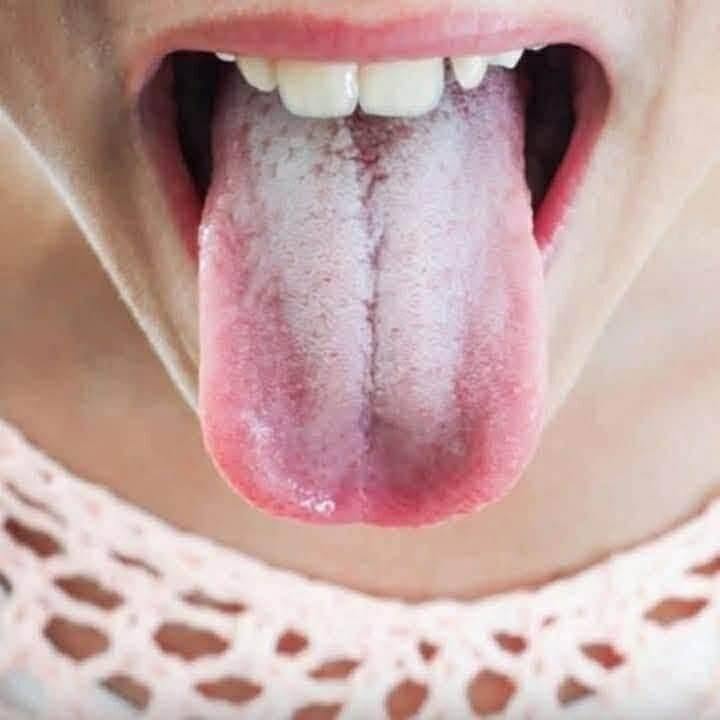
Why Does Your Tongue Turn White?
Your tongue isn’t completely smooth.
Its surface contains tiny projections called papillae. When these become enlarged or irritated, bacteria, dead cells, and food debris can become trapped between them.
The result can be a whitish coating covering part or most of the tongue.
Several things can contribute to this.
1. Poor Oral Hygiene 🪥
One of the simplest explanations is inadequate oral hygiene.
Most people remember to brush their teeth but completely forget about their tongue.
Over time, debris and bacteria can accumulate on its surface.
You may also notice:
- Bad breath
- An unpleasant taste
- A thicker coating in the morning
Gently cleaning the tongue can help reduce this buildup.
You don’t need to scrub aggressively.
A soft toothbrush or tongue scraper can be used gently.
2. Dry Mouth
Saliva plays an important role in keeping the mouth clean.
When your mouth becomes unusually dry, debris and bacteria may accumulate more easily.
Dry mouth can happen because of:
Dehydration
Certain medications
Mouth breathing
Sleeping with your mouth open
Some medical conditions
A white coating may therefore become more noticeable when your mouth is dry.
3. Dehydration 💧
Not drinking enough fluids can contribute to a dry mouth and may make a coated tongue more noticeable.
Other possible signs of dehydration can include:
- Increased thirst
- Dry mouth
- Darker urine
- Reduced urination
- Fatigue
Drinking enough fluids throughout the day may help when mild dehydration is contributing to the problem.
However, people who have been advised to restrict fluids because of a medical condition should follow their healthcare professional’s recommendations.
4. Mouth Breathing
Do you frequently wake up with an extremely dry mouth?
You may be breathing through your mouth while sleeping.
When air continuously passes over the tongue, it can dry the oral tissues and contribute to a coated appearance.
Mouth breathing may occur with:
Nasal congestion
Allergies
Certain sleep-related breathing problems
or simply as a habit.
Persistent mouth breathing may be worth discussing with a healthcare professional, particularly if it is accompanied by loud snoring, breathing interruptions during sleep, or significant daytime sleepiness.
5. Smoking and Tobacco 🚬
Tobacco can irritate tissues inside the mouth.
Smoking, vaping, chewing tobacco, and other tobacco exposure can contribute to changes in the tongue and oral tissues.
More importantly, persistent white patches in people who use tobacco shouldn’t automatically be dismissed as simple buildup.
Any unusual mouth lesion that doesn’t disappear deserves professional evaluation.
6. Oral Thrush
Another possible cause is oral thrush, also called oral candidiasis.
Thrush occurs when a type of yeast called Candida grows excessively inside the mouth.
It can produce creamy white patches on areas such as:
- Tongue
- Inner cheeks
- Roof of the mouth
- Throat
The patches can sometimes resemble cottage cheese.
Unlike a simple thin tongue coating, thrush may leave irritated or reddened tissue underneath when the surface material is wiped away.
Some areas may even bleed slightly when disturbed.
Who Is More Likely to Develop Oral Thrush?
Anyone can develop thrush, but it may be more common in certain situations.
Risk can be higher in:
Babies
Older adults
People with weakened immune systems
People taking certain antibiotics
People using certain inhaled medications
People with poorly controlled diabetes
People with dry mouth
People wearing dentures
This doesn’t mean that having a white tongue automatically means you have thrush.
A healthcare professional can determine whether an antifungal treatment is actually needed.
Antibiotics Can Sometimes Play a Role
Antibiotics treat bacterial infections, but they can also alter the normal balance of microorganisms in the body.
In some people, this can allow Candida to multiply excessively and contribute to oral thrush.
If you develop unusual creamy white patches after taking antibiotics, especially if your mouth is sore or irritated, discuss it with a healthcare professional.
Don’t automatically start antifungal medication without knowing the cause.
What About Inhalers?
Certain inhaled medicines, particularly inhaled corticosteroids used for conditions such as asthma, can increase the risk of oral thrush.
People using these medications may be advised to rinse their mouth after use.
If you regularly use an inhaler and develop persistent white patches, discuss the symptoms with your doctor or pharmacist.
Don’t stop prescribed medication on your own.
7. Geographic Tongue 🗺️
Geographic tongue can produce unusual patterns on the tongue.
It typically causes smooth red areas surrounded by lighter or whitish borders.
The pattern may change location over time, giving the tongue a map-like appearance.
Despite how unusual it can look, geographic tongue is generally harmless and isn’t contagious.
Some people experience sensitivity to spicy, acidic, or very hot foods, while others experience no discomfort at all.
8. Oral Lichen Planus
Oral lichen planus is an inflammatory condition that can produce white markings inside the mouth.
Instead of a simple uniform coating, it may appear as delicate white lines or lace-like patches.
It can affect the:
Tongue
Gums
Inside of the cheeks
Some people develop soreness or burning.
Persistent unusual mouth changes should be evaluated by a dentist or healthcare professional rather than diagnosed from an internet photograph.
9. Leukoplakia
This is one reason persistent white patches shouldn’t simply be ignored.
Leukoplakia causes white or gray patches inside the mouth that generally cannot simply be wiped or scraped away.
The patches may appear on:
- Tongue
- Gums
- Inside of the cheeks
- Floor of the mouth
Many leukoplakia patches are not cancerous.
However, some can contain abnormal cells or changes that may eventually develop into oral cancer.
Tobacco use is an important risk factor.
Persistent patches therefore deserve professional examination.
How Can You Tell a Simple Coating From a White Patch?
A general coating often covers a broader portion of the tongue and may improve with hydration and gentle cleaning.
A distinct white patch can behave differently.
Pay attention to whether the area:
Can be gently removed
or
Remains firmly attached
A white or gray patch that doesn’t disappear and cannot be wiped away deserves more attention, especially if it persists.
However, don’t repeatedly scrape your tongue aggressively to test this.
That can damage the tissue.
Is a White Tongue a Sign of Cancer?
Usually, no.
Most cases of white tongue are not cancer.
Common causes such as oral debris, dry mouth, irritation, and other benign conditions are much more likely.
However, persistent white or red patches, unexplained sores, lumps, or other lasting changes inside the mouth should be evaluated because some oral lesions can be precancerous or cancerous.
The goal isn’t to panic.
It’s simply not to ignore persistent changes.
Warning Signs You Shouldn’t Ignore ⚠️
Consider seeing a dentist or healthcare professional if you notice:
- A persistent white patch
- A mouth sore that doesn’t heal
- A white patch that cannot be wiped away
- Unexplained bleeding
- Significant tongue pain
- A lump inside the mouth
- Persistent red or dark patches
- Difficulty swallowing
- Persistent changes in the mouth
- Increasing or unexplained symptoms
If something looks unusual and doesn’t improve, getting it examined is safer than repeatedly experimenting with home remedies.
What Can You Do at Home?
If you simply have a mild coated tongue without other concerning symptoms, basic oral care may help.
Brush Your Teeth Regularly
Good dental hygiene reduces bacteria and food debris inside the mouth.
Brush gently at least twice daily.
Clean Your Tongue 👅
You can gently clean your tongue using:
A soft toothbrush
or
A tongue scraper
Start toward the back and gently move forward.
Don’t press so hard that the tongue becomes painful or bleeds.
The goal is to remove superficial buildup—not scrape away the surface of your tongue.
Drink Enough Water 💧
Staying adequately hydrated helps maintain normal saliva production and can reduce dryness.
Keep water available throughout the day and drink according to your needs.
Maintain Good Dental Hygiene
Brushing alone isn’t enough.
Regular flossing or appropriate cleaning between the teeth helps reduce plaque and food debris in areas a toothbrush cannot easily reach.
Regular dental examinations can also help identify oral problems early.
Avoid Tobacco
Avoiding tobacco benefits much more than your tongue.
Tobacco use is associated with numerous oral health problems and significantly increases the risk of serious diseases.
Persistent oral changes in someone who smokes or uses smokeless tobacco should be taken seriously.
Don’t Scrape Your Tongue Aggressively
Seeing a thick white coating can make people want to scrub until the tongue becomes completely pink.
Don’t do that.
Aggressive scraping can:
- Irritate the tongue
- Cause pain
- Create small injuries
- Cause bleeding
Gentle cleaning is enough.
If the coating doesn’t improve, investigate the cause rather than scrubbing harder.
Be Careful With Viral Home Remedies
Social media contains countless “white tongue cures.”
Common recommendations include:
Lemon juice
Vinegar
Strong salt mixtures
Baking soda pastes
Essential oils
Harsh mouthwashes
But stronger isn’t necessarily better.
Acidic or concentrated substances may irritate delicate oral tissues.
If you don’t know why your tongue is white, trying to burn or scrub the coating away isn’t a sensible solution.
Can Food Temporarily Change Your Tongue Color?
Absolutely.
Certain foods, beverages, candies, and other products can temporarily change the appearance of the tongue.
Milk products and other pale foods may make an existing coating more noticeable.
Coffee and tea can produce darker discoloration.
Colored candy can dramatically change tongue color for a short period.
So don’t panic over a temporary change immediately after eating or drinking something strongly colored.
What Does a Healthy Tongue Normally Look Like?
A healthy tongue is generally pink, although normal color varies naturally between people.
The surface isn’t perfectly smooth.
Small bumps are normal because your tongue naturally contains papillae.
A thin coating can also sometimes be present without indicating disease.
The key is noticing significant or persistent changes from what is normal for you.
Your Tongue Doesn’t Diagnose Your Entire Body
Another popular internet trend claims that every section or color of the tongue corresponds to a specific internal organ.
For example, viral charts may claim:
A white tongue means one specific disease.
A red tip means another organ is unhealthy.
A coating at the back means your digestive system is “toxic.”
These claims can oversimplify how medical diagnosis works.
Doctors don’t diagnose complex diseases based solely on tongue color.
Your medical history, symptoms, examination, and sometimes testing are needed to determine what’s actually happening.
Don’t Assume White Tongue Means Poor Hygiene
Although oral hygiene can contribute, it’s not always the explanation.
Someone can maintain excellent oral hygiene and still develop:
Thrush
Dry mouth
Geographic tongue
Lichen planus
Leukoplakia
or another oral condition.
So there’s no reason to feel embarrassed about asking a dentist or doctor.
What If the White Coating Comes Back Every Morning?
Morning coating can sometimes be more noticeable because saliva production decreases during sleep.
Mouth breathing can make this even more obvious.
Try:
Drinking enough water during the day
Maintaining good oral hygiene
Gently cleaning your tongue
Addressing persistent nasal congestion
If the coating is thick, painful, persistent, or repeatedly returns despite good oral care, consider professional evaluation.
White Tongue With Bad Breath
A coated tongue can contribute to bad breath because bacteria and debris may accumulate on its surface.
Cleaning the tongue gently may therefore improve breath for some people.
However, persistent bad breath can also come from:
- Gum disease
- Tooth decay
- Dry mouth
- Tonsil problems
- Other oral or medical conditions
If bad breath continues despite good oral hygiene, a dental evaluation can help identify the cause.
White Tongue With Pain or Burning
A simple tongue coating often isn’t very painful.
If you develop significant:
Burning
Soreness
Bleeding
Swelling
or
Difficulty eating
the cause may be something other than ordinary surface buildup.
That’s a good reason to seek professional advice.
When Should You Worry?
You don’t need to panic every time your tongue looks slightly white.
A temporary coating can be completely harmless.
But you should pay more attention when the change:
Doesn’t improve
Becomes painful
Cannot be wiped away
Appears as a distinct persistent patch
Is associated with sores or bleeding
Makes swallowing difficult
Is accompanied by other unexplained oral changes
Persistent symptoms deserve evaluation by a dentist or healthcare professional.
The Bottom Line 👅
A white tongue is not a diagnosis.
In many cases, it simply results from bacteria, dead cells, and debris becoming trapped between the tiny structures on the tongue.
Dry mouth, dehydration, mouth breathing, tobacco use, and oral hygiene can all contribute.
But white patches can also occur with conditions such as oral thrush, geographic tongue, oral lichen planus, and leukoplakia.
The most important distinction is persistence.
If a mild coating improves with hydration and gentle oral hygiene, it is often nothing serious.
But if you have persistent white patches that won’t wipe away, significant pain, bleeding, sores, difficulty swallowing, or other lasting changes, don’t rely on viral diagnoses or home remedies.
Have your mouth examined by a healthcare professional or dentist.
Your tongue can sometimes provide useful clues about your oral health—but a white tongue doesn’t automatically mean you’re suffering from one particular disease.