A stroke can happen suddenly, and recognizing the warning signs quickly can make a major difference. When blood flow to part of the brain is blocked or a blood vessel in the brain ruptures, brain tissue can be damaged rapidly.
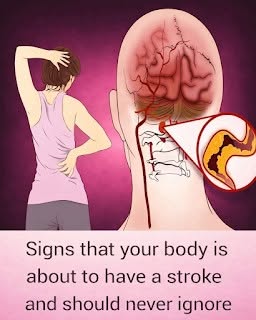
One important correction to many viral posts is that these symptoms aren’t necessarily signs that your body is “about to have a stroke.” In many cases, sudden neurological symptoms can mean that a stroke is already happening.
That’s why you should never wait to see whether symptoms become worse before seeking emergency medical help.
Here are 10 important warning signs everyone should recognize.
1. Sudden Numbness on One Side of the Body
One of the most recognizable stroke symptoms is sudden numbness affecting the:
- Face
- Arm
- Hand
- Leg
It commonly affects one side of the body.
For example, someone may suddenly notice that their left hand feels strangely numb while their right hand feels completely normal.
Sudden unexplained numbness—particularly when combined with another neurological symptom—should be taken seriously.
2. Sudden Weakness in an Arm or Leg
Stroke can interfere with the brain’s ability to control muscles.
A person may suddenly struggle to lift one arm, hold an object, or walk normally.
A simple test is to ask the person to raise both arms.
If one arm unexpectedly drifts downward or can’t be lifted properly, this can be an important warning sign.
Don’t assume the person is simply tired.
Sudden weakness deserves immediate attention.
3. One Side of the Face Begins to Droop
Facial weakness is another classic stroke symptom.
Ask the person to smile.
Look carefully at both sides of their face.
Does one side appear lower?
Does the smile suddenly look uneven?
Does one side of the mouth droop?
Sudden facial weakness or numbness can be a sign that part of the brain isn’t functioning normally.
4. Sudden Trouble Speaking 🗣️
Someone experiencing a stroke may suddenly have difficulty speaking clearly.
Their speech might become:
- Slurred
- Strange
- Confused
- Difficult to understand
They may know what they want to say but be unable to form the words correctly.
Ask the person to repeat a simple sentence.
If they suddenly can’t repeat it normally, treat the situation as an emergency.
5. Sudden Difficulty Understanding Speech
Stroke doesn’t only affect someone’s ability to speak.
It can also interfere with their ability to understand language.
Someone may suddenly seem confused by simple questions.
For example, you might ask:
“What is your name?”
or
“Where are you?”
and they may struggle to understand or answer appropriately.
A sudden change in someone’s ability to communicate should never be ignored.
6. Sudden Vision Changes 👁️
Stroke can sometimes affect the parts of the brain responsible for vision.
A person may suddenly experience:
- Blurred vision
- Double vision
- Partial vision loss
- Difficulty seeing from one eye
- Difficulty seeing from both eyes
These changes may occur without pain.
Sudden unexplained changes in vision require urgent medical assessment, particularly when they occur alongside weakness, numbness, dizziness, or speech problems.
7. Sudden Loss of Balance
Imagine someone walking normally and then suddenly becoming extremely unsteady.
They may:
Stagger
Lean to one side
Have trouble standing
Struggle to walk straight
Lose coordination
Sudden balance problems can be a stroke warning sign.
Of course, balance problems can have many other causes.
But when the change is sudden and unexplained—especially with other neurological symptoms—it shouldn’t be dismissed.
8. Sudden Severe Dizziness
Dizziness is extremely common and doesn’t automatically mean someone is experiencing a stroke.
Dehydration, low blood pressure, inner-ear problems, medications, and many other conditions can cause dizziness.
However, sudden severe dizziness becomes more concerning when accompanied by symptoms such as:
- Difficulty walking
- Loss of coordination
- Double vision
- Weakness
- Numbness
- Speech problems
It’s the sudden onset and combination of symptoms that can be particularly important.
9. Sudden Severe Headache 🤕
Most headaches are not strokes.
But a sudden, severe headache with no obvious explanation can sometimes occur during a stroke, particularly certain types involving bleeding.
Someone may describe the headache as extremely intense or very different from headaches they’ve experienced before.
A sudden severe headache accompanied by neurological symptoms requires emergency evaluation.
Don’t simply take a painkiller and wait to see what happens.
10. Sudden Loss of Coordination
A person experiencing a stroke may suddenly become unusually clumsy.
They might have difficulty:
- Reaching for something
- Holding objects
- Walking normally
- Coordinating an arm or leg
- Maintaining balance
Someone who appeared completely normal minutes earlier may suddenly struggle with basic movements.
That abrupt change is important.
Remember B.E. F.A.S.T.
You don’t need to memorize dozens of medical symptoms.
One of the easiest ways to remember major stroke warning signs is:
B — Balance
Is there a sudden loss of balance or coordination?
E — Eyes
Has the person’s vision suddenly changed?
F — Face
Ask them to smile.
Does one side of their face droop?
A — Arms
Ask them to raise both arms.
Is one arm weak or drifting downward?
S — Speech
Ask them to repeat a simple sentence.
Is their speech suddenly slurred, strange, or difficult to understand?
T — Time
It’s time to seek emergency medical help immediately.
Stroke is extremely time-sensitive.
You Don’t Need to Have All 10 Symptoms
This is one of the most important things to understand.
A stroke doesn’t necessarily produce every symptom listed above.
Someone might experience only:
Facial drooping and speech difficulty.
Another person might suddenly develop:
Arm weakness and numbness.
Someone else might experience:
Vision problems and severe loss of balance.
Even one sudden, recognizable stroke symptom can justify emergency action.
Don’t wait for more symptoms to appear.
What If the Symptoms Disappear?
This can be particularly dangerous because people often assume they’re safe once they start feeling normal again.
Imagine someone suddenly develops:
- Arm weakness
- Facial drooping
- Speech problems
Ten minutes later, everything seems normal.
They may say:
“I’m fine now. There’s no reason to go to the hospital.”
But temporary stroke-like symptoms can occur during a transient ischemic attack, or TIA.
A TIA is sometimes called a “mini-stroke.”
The symptoms can disappear, but that doesn’t mean the event should be ignored.
A TIA requires urgent medical evaluation because it can signal an increased risk of a subsequent stroke.
Why Time Matters So Much ⏱️
When a stroke occurs, part of the brain may not be receiving normal blood flow or may be affected by bleeding.
Treatment options depend on factors including:
- The type of stroke
- When symptoms began
- The location of the problem
- The person’s medical history
Some treatments are extremely time-sensitive.
That’s why recognizing symptoms early is so important.
Waiting several hours to see whether someone improves can waste valuable treatment time.
Remember When the Symptoms Started
If you’re with someone who suddenly develops stroke symptoms, try to remember or write down when the symptoms first appeared.
Medical professionals may ask:
“When was this person last known to be normal?”
That information can help determine appropriate treatment.
If you’re unsure of the exact time, provide the most accurate information you can.
Don’t Let Someone “Sleep It Off”
Someone experiencing sudden neurological symptoms shouldn’t simply be put to bed to rest.
Stroke symptoms aren’t something you should monitor overnight to see whether they improve.
If you suspect a stroke, seek emergency medical assistance.
Don’t Let the Person Drive
Someone experiencing possible stroke symptoms shouldn’t drive themselves to the hospital.
Weakness, vision problems, confusion, or loss of coordination can suddenly worsen.
Whenever possible, use emergency medical services so trained professionals can begin assessing the patient before arrival at the hospital.
Don’t Automatically Give Aspirin
Some people immediately think of aspirin when they hear “stroke.”
But there are different types of stroke.
An ischemic stroke occurs when blood flow is blocked.
A hemorrhagic stroke involves bleeding.
Because you cannot reliably determine the type of stroke at home, don’t automatically give medications unless instructed by an appropriate medical professional.
The priority is getting emergency medical assistance.
Stroke Doesn’t Only Affect Older People
Stroke becomes more common with age, but younger adults can experience strokes too.
Someone shouldn’t ignore sudden neurological symptoms simply because they’re:
“Too young for a stroke.”
Age alone cannot rule it out.
Sudden facial drooping, weakness, numbness, speech difficulty, vision changes, or severe balance problems need appropriate medical attention regardless of age.
Important Stroke Risk Factors
Certain conditions and lifestyle factors can increase stroke risk.
These include:
- High blood pressure
- Smoking
- Diabetes
- High cholesterol
- Physical inactivity
- Obesity
- Certain heart conditions
- Atrial fibrillation
- Previous stroke
- Previous TIA
- Family history
Some risk factors can be modified while others cannot.
Managing conditions such as hypertension, diabetes, and high cholesterol with appropriate medical care can play an important role in reducing risk.
High Blood Pressure Deserves Special Attention
High blood pressure is an important stroke risk factor.
The difficult part is that someone can have hypertension without feeling sick.
That’s why blood pressure is sometimes described as a condition that can remain unnoticed without measurement.
Regular blood-pressure checks are therefore important, especially for people with additional cardiovascular risk factors.
And if your doctor has prescribed blood-pressure medication, don’t stop taking it simply because you feel well.
A Quick Stroke Test Anyone Can Remember
If someone suddenly seems confused or physically different, perform this simple check while arranging emergency help.
Ask them to smile.
Look for facial drooping.
Ask them to raise both arms.
Look for weakness or one arm drifting downward.
Ask them to repeat a simple sentence.
Listen for slurred or unusual speech.
Check their balance and vision.
Ask whether they suddenly feel extremely unsteady or are experiencing new vision problems.
If something is suddenly abnormal, don’t wait.
Symptoms Can Sometimes Be Subtle
Not every stroke looks dramatic.
A person doesn’t necessarily collapse or lose consciousness.
Sometimes the first clue may simply be:
“My hand suddenly feels strange.”
or:
“Why can’t I get the words out?”
or:
“Why am I suddenly seeing double?”
That’s why knowing the warning signs is so valuable.
The person experiencing the stroke may also be confused and may not recognize that something is wrong.
Family members, friends, coworkers, and even strangers can sometimes be the ones who notice the change.
Can You Prevent Every Stroke?
No prevention strategy can guarantee that someone will never experience a stroke.
However, many important risk factors can be addressed.
Helpful measures can include:
Controlling blood pressure
Managing diabetes
Managing cholesterol
Avoiding smoking
Staying physically active
Following a balanced diet
Taking prescribed medication appropriately
Managing certain heart conditions
Discuss your individual risk factors with a healthcare professional rather than relying on supplements or “natural” remedies advertised online.
Be Careful With Viral “Pre-Stroke” Symptoms
Social media posts sometimes claim that your body gives very specific warnings days or weeks before every stroke.
That’s misleading.
Stroke symptoms characteristically appear suddenly, and the symptoms themselves can indicate that a stroke or TIA is occurring.
Don’t wait for a supposed second stage.
And don’t assume that headaches, neck pain, tiredness, or dizziness automatically mean a stroke is coming.
Many common conditions can cause these symptoms.
The key is recognizing sudden neurological changes, especially when they affect movement, speech, vision, balance, sensation, or coordination.
What You Should Never Do During a Suspected Stroke
Don’t wait for every symptom to appear.
Don’t wait until tomorrow.
Don’t assume the person is simply tired.
Don’t tell them to sleep.
Don’t rely on home remedies.
Don’t waste valuable time trying to diagnose the exact type of stroke yourself.
Don’t automatically give medication.
And don’t ignore symptoms simply because they disappear.
Instead, seek emergency medical care.
The Most Important Signs to Remember
If you forget everything else in this article, remember these five changes:
Sudden balance problems.
Sudden vision changes.
Sudden facial drooping.
Sudden arm weakness.
Sudden speech difficulty.
Think:
B.E. F.A.S.T.
Balance — Eyes — Face — Arms — Speech — Time.
The Bottom Line
A stroke can develop suddenly, and recognizing the symptoms quickly can save precious time.
The most important warning signs include sudden:
Numbness or weakness, particularly on one side
Facial drooping
Difficulty speaking or understanding speech
Vision problems
Loss of balance or coordination
Severe dizziness associated with neurological symptoms
Severe unexplained headache
Most importantly, these shouldn’t be viewed merely as signs that a stroke might happen later.
They can indicate that a stroke is happening right now.
Even if symptoms disappear after a few minutes, urgent medical assessment is still important because the episode could be a TIA.