Constipation is something almost everyone experiences at some point, yet it can be uncomfortable, frustrating, and sometimes painful.
You may feel bloated, heavy, or as though you haven’t completely emptied your bowels. Your stool may become hard and difficult to pass, and you might find yourself spending much longer than usual in the bathroom.
Social media is full of supposed remedies promising to “empty your colon instantly” or “clean your intestines overnight.”
But your digestive system doesn’t normally need to be “cleaned.” And aggressive remedies can sometimes cause more problems than they solve.
The good news is that several simple habits can genuinely help with occasional constipation.
What Is Constipation?
Constipation doesn’t simply mean that you didn’t have a bowel movement today.
People naturally have different bowel habits.
In general, constipation can involve:
- Fewer than three bowel movements per week
- Hard, dry, or lumpy stools
- Difficulty or pain when passing stool
- Straining
- Feeling as though you haven’t completely emptied your bowels
Occasional constipation is very common.
But when it happens repeatedly or lasts a long time, it’s worth looking for the underlying reason.
Why Does Constipation Happen?
There isn’t one single cause.
Common factors include:
- Not eating enough fiber
- Not drinking enough fluids
- Being physically inactive
- Ignoring the urge to use the bathroom
- Changes in routine
- Travel
- Pregnancy
- Stress
- Certain medications or supplements
Iron supplements, some pain medications, certain antacids, and several other medicines can contribute to constipation.
Never stop a prescribed medication simply because you think it’s causing constipation. Discuss it with your doctor or pharmacist instead.
1. Increase Fiber — But Do It Gradually 🥝🥦
Fiber is one of the most important dietary tools for preventing and managing constipation.
It helps add bulk to stool and can make bowel movements easier.
Good sources include:
Oatmeal
Whole grains
Lentils
Beans
Chickpeas
Pears
Apples with the skin
Berries
Broccoli
Carrots
Peas
Nuts and seeds
Adults generally need roughly 22–34 grams of fiber per day, depending on age and sex.
But there’s an important catch.
Don’t suddenly double your fiber intake overnight.
Increasing fiber too quickly can lead to gas, abdominal discomfort, and bloating.
Instead, increase it gradually and give your digestive system time to adjust.
2. Drink Enough Fluids 💧
Increasing fiber without adequate fluid isn’t particularly helpful.
Fiber works better when you’re properly hydrated.
Water helps keep stool softer and easier to pass.
There’s no single perfect number of glasses that works for everyone because fluid requirements vary depending on body size, activity, climate, diet, pregnancy, health conditions, and other factors.
A practical approach is to drink regularly throughout the day rather than waiting until you’re extremely thirsty.
If a healthcare professional has told you to restrict fluids because of a heart or kidney condition, follow that advice instead.
3. Try Certain Fruits 🍐🥝
Some fruits can be particularly useful because they combine fiber with water and naturally occurring carbohydrates.
Options include:
- Pears
- Apples
- Berries
- Kiwi
- Prunes
- Raisins
- Apricots
Prunes are especially famous as a traditional constipation remedy.
They provide fiber and contain sorbitol, a naturally occurring sugar alcohol that can help draw water into the bowel in some people.
But more isn’t always better.
Eating a huge quantity of prunes may cause gas, cramps, or diarrhea.
Start with a modest portion and see how your body responds.
4. Move Your Body 🚶
Your digestive system can benefit from movement too.
Regular physical activity may help support normal bowel function.
You don’t necessarily need an intense workout.
Even a daily walk can be helpful.
If you spend most of your day sitting, try standing up and moving around periodically.
A short walk after meals can be a simple habit that benefits your overall health as well as digestion.
5. Change Your Toilet Position 🚽
Sometimes the problem isn’t only the stool itself.
Your position on the toilet can make bowel movements more difficult.
Try placing your feet on a small footstool while sitting on the toilet.
Ideally, your knees should be slightly higher than your hips.
Lean forward comfortably and relax rather than aggressively straining.
This position may make it easier to empty your bowels.
Don’t Ignore the Urge
This is another surprisingly important habit.
When your body tells you that you need to go, try not to repeatedly postpone it.
Ignoring the urge can contribute to constipation.
Give yourself enough time in the bathroom and avoid feeling rushed.
Some people find that trying to use the bathroom at a similar time each day helps establish a routine.
The period after breakfast can be particularly useful because eating naturally stimulates activity in the colon.
What About Olive Oil? 🫒
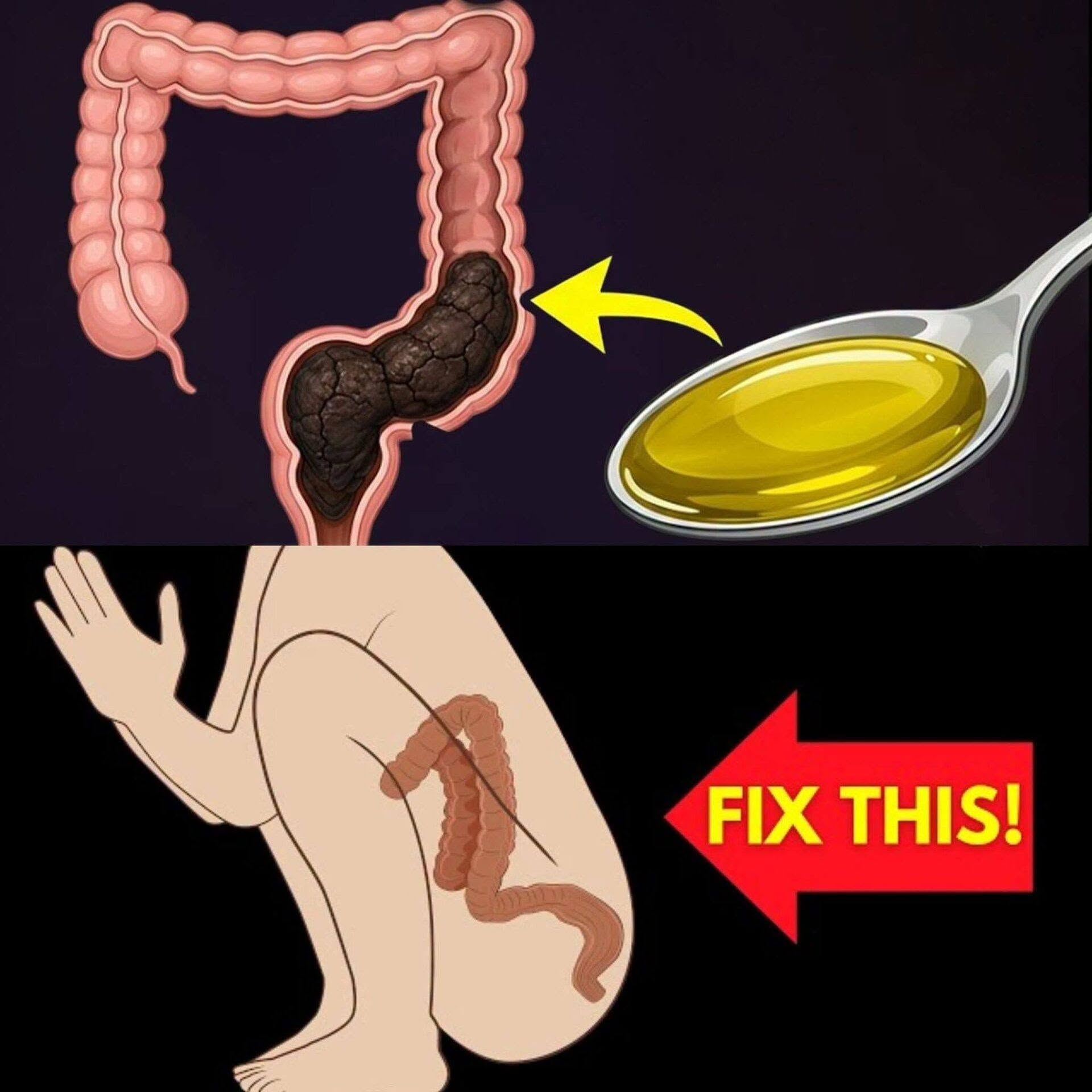
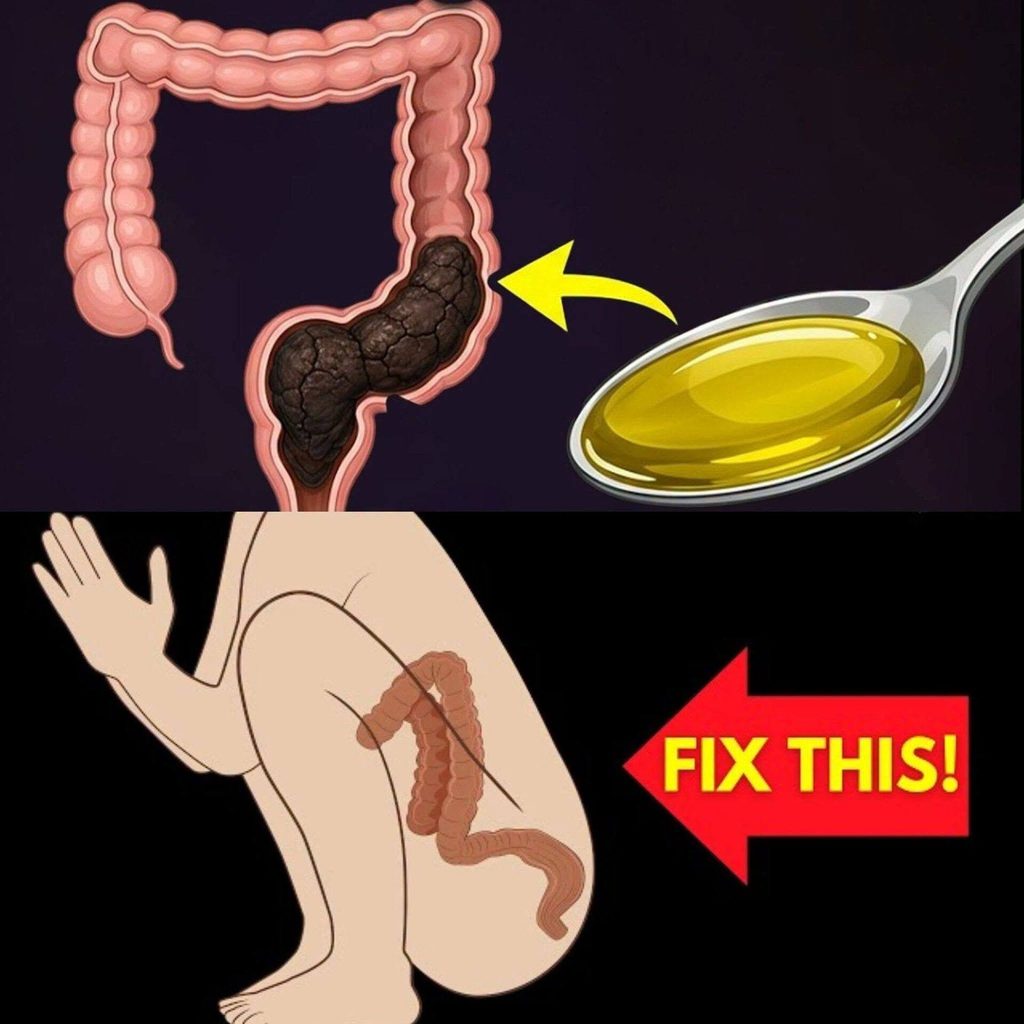
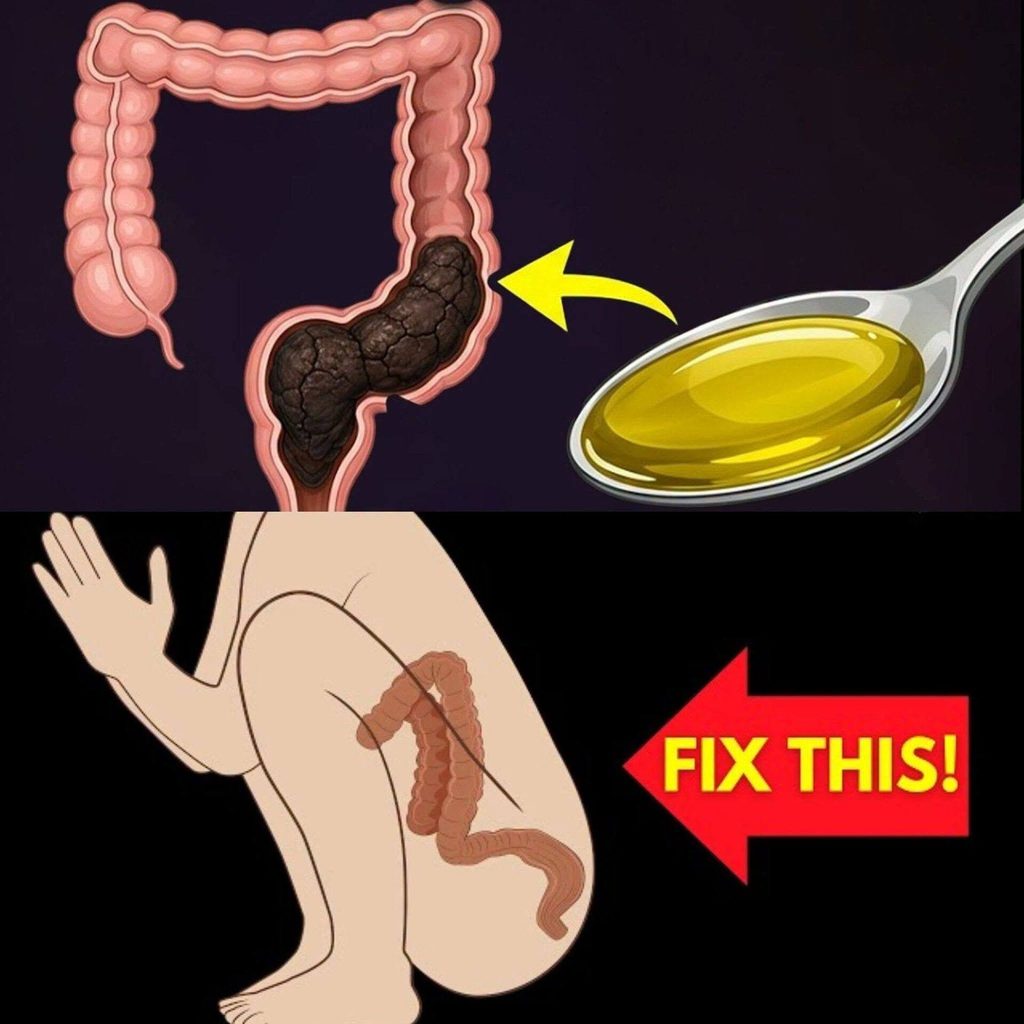
Viral posts often show a spoonful of olive oil next to an illustration of a blocked colon, implying that the oil will immediately “lubricate” the intestines and push everything out.
That’s an oversimplification.
Olive oil can certainly be part of a healthy diet, particularly when it replaces fats high in saturated fat.
But it shouldn’t be promoted as a guaranteed method for rapidly emptying the rectum or “cleaning the colon.”
Drinking large amounts of oil can also cause nausea, abdominal discomfort, or diarrhea.
You don’t need to drink spoonfuls of oil to detox your intestines.
Your Colon Doesn’t Need a Daily “Detox”
This is one of the biggest misconceptions surrounding constipation.
Your colon isn’t a dirty pipe that needs to be flushed.
Your digestive system naturally processes food and eliminates waste.
Products advertised as:
“Colon cleanses”
“Intestinal detoxes”
“Overnight bowel flushes”
or
“Complete colon emptying remedies”
should be approached cautiously.
Producing dramatic diarrhea isn’t the same thing as improving digestive health.
Be Careful With Salt-Water Flushes
Some internet remedies recommend drinking large amounts of salty water to force bowel movements.
This isn’t a routine constipation treatment.
Excessive salt intake can be dangerous for some people and may cause problems with hydration and electrolyte balance.
Avoid aggressive DIY bowel-cleansing methods.
What About Coffee? ☕
Coffee can stimulate bowel activity in some people.
That’s why some people feel the urge to use the bathroom shortly after their morning coffee.
But coffee isn’t a universal constipation treatment.
Some people experience no effect at all, while others may develop stomach discomfort.
If coffee already works comfortably for you, that’s fine.
But there’s no need to drink excessive amounts just to force a bowel movement.
What About Warm Water With Lemon? 🍋
Warm water can contribute to your overall fluid intake.
But adding lemon doesn’t magically flush stool from your intestines.
If you enjoy lemon water, drink it.
Just think of it primarily as a pleasant way to consume fluids rather than a colon-cleansing treatment.
What About Chia Seeds?
Chia seeds contain plenty of fiber and can absorb significant amounts of water.
They can therefore be useful as part of a fiber-rich diet.
But they should be consumed with adequate fluids.
You can add them to:
- Yogurt
- Oatmeal
- Smoothies
- Overnight oats
As with other high-fiber foods, increase the amount gradually.
Flaxseed Can Help Increase Fiber
Ground flaxseed is another convenient source of dietary fiber.
Try adding a small amount to:
Oatmeal
Yogurt
Smoothies
Breakfast bowls
Again, drink enough fluids and don’t suddenly consume huge quantities.
A Simple Morning Routine for Constipation 🌅
Instead of trying an aggressive “instant colon cleanse,” try a gentler routine.
After waking:
Drink some water.
At breakfast:
Choose a fiber-rich meal such as oatmeal with fruit.
After breakfast:
Walk for 10–20 minutes if you’re able.
Then:
Give yourself enough time to use the bathroom.
Put your feet on a small stool and relax.
Don’t force or aggressively strain.
Repeating a routine like this may help your body establish more regular bowel habits.
A Simple High-Fiber Breakfast
Try this:
Oatmeal Bowl
Ingredients:
- Oats
- Berries
- Kiwi or pear
- Ground flaxseed or chia seeds
- Plain yogurt, if desired
- A few nuts
This combination provides several sources of fiber without relying on a harsh laxative drink.
When Lifestyle Changes Aren’t Enough
Sometimes diet, fluids, exercise, and toilet habits aren’t sufficient.
Short-term laxatives may be appropriate.
Different laxatives work differently.
Some increase stool bulk.
Others draw water into the bowel.
Some soften stool.
Others stimulate intestinal movement.
The right option depends on the situation.
A pharmacist or healthcare professional can help you choose appropriately, particularly if you’re pregnant, breastfeeding, taking medication, or living with another medical condition.
Don’t Overuse Stimulant Laxatives
Some laxatives stimulate the muscles of the bowel and can work relatively quickly.
That doesn’t mean they should automatically become part of your everyday routine.
Using laxatives too frequently or incorrectly can cause:
- Abdominal cramps
- Diarrhea
- Dehydration
- Electrolyte disturbances
Follow the instructions carefully and seek professional advice if you find yourself repeatedly needing laxatives.
What Is Fecal Impaction?
Severe or prolonged constipation can sometimes lead to fecal impaction.
This happens when a large amount of hard, dry stool becomes stuck in the rectum or bowel.
It isn’t something you should try to manually remove yourself.
Medical treatment may involve specific laxatives, suppositories, enemas, or other procedures depending on the situation.
Interestingly, watery stool or diarrhea can sometimes leak around impacted stool, so apparent diarrhea doesn’t always rule out severe constipation.
When Constipation Shouldn’t Be Ignored ⚠️
Most occasional constipation isn’t an emergency.
But certain symptoms deserve medical attention.
Seek medical advice if constipation is persistent, keeps returning, or doesn’t improve despite appropriate self-care.
More urgent assessment may be needed if constipation occurs with:
- Blood in your stool
- Rectal bleeding
- Constant or severe abdominal pain
- Vomiting
- Fever
- Inability to pass gas
- Unexplained weight loss
- Significant abdominal swelling
A sudden major change in bowel habits should also be discussed with a healthcare professional.
Constipation During Pregnancy
Constipation is particularly common during pregnancy.
Hormonal changes can slow digestion, and iron supplements can sometimes contribute as well.
Simple measures such as appropriate fluid intake, fiber-rich foods, gentle physical activity, and good toilet habits can often help.
However, pregnant women should check with their doctor, midwife, or pharmacist before starting laxatives, herbal preparations, or concentrated “natural” remedies.
Natural doesn’t automatically mean pregnancy-safe.
Don’t Stop Iron Just Because You’re Constipated
Iron supplements are a common cause of constipation.
But if you’ve been prescribed iron because you have iron deficiency or anemia, don’t simply stop taking it.
Instead, speak with your healthcare professional.
Depending on your situation, they may recommend adjusting the preparation, dose, timing, or constipation treatment.
Five Simple Habits to Remember
If you’re dealing with occasional constipation, start with these five basics:
1. Gradually increase fiber.
Choose fruits, vegetables, whole grains, legumes, nuts, and seeds.
2. Drink enough fluids.
Fiber needs water to work effectively.
3. Stay physically active.
Even regular walking may help.
4. Don’t ignore the urge.
Go when your body tells you it’s time.
5. Improve your toilet position.
Use a small footstool and try to keep your knees above your hips.
These habits aren’t as dramatic as an “instant colon cleanse,” but they’re much more sensible for supporting regular bowel function.
The Bottom Line
Constipation can be extremely uncomfortable, but you usually don’t need an aggressive remedy to “empty your rectum” or “clean your colon.”
Start with the basics:
Fiber + fluids + movement + regular toilet habits + a better toilet position.
Fruits such as pears, kiwi, berries, and prunes can also be useful additions to your diet.
And remember that olive oil, lemon drinks, detox teas, and other viral remedies don’t magically remove accumulated waste from your intestines.
If constipation persists, repeatedly returns, or comes with bleeding, severe pain, vomiting, inability to pass gas, unexplained weight loss, or other worrying symptoms, don’t keep experimenting with home remedies.