Have you ever looked closely at your lips and noticed tiny white, pale, or yellowish bumps that seem to become more visible when you stretch the skin?
For many people, the first reaction is worry. They may wonder whether the bumps are pimples, an infection, an allergic reaction, or something contagious.
But there is a very common explanation that many people have never heard of.
These small bumps may be Fordyce spots, a harmless and very common variation of normal skin.
Here’s what you should know before trying to squeeze, scratch, or treat them yourself.
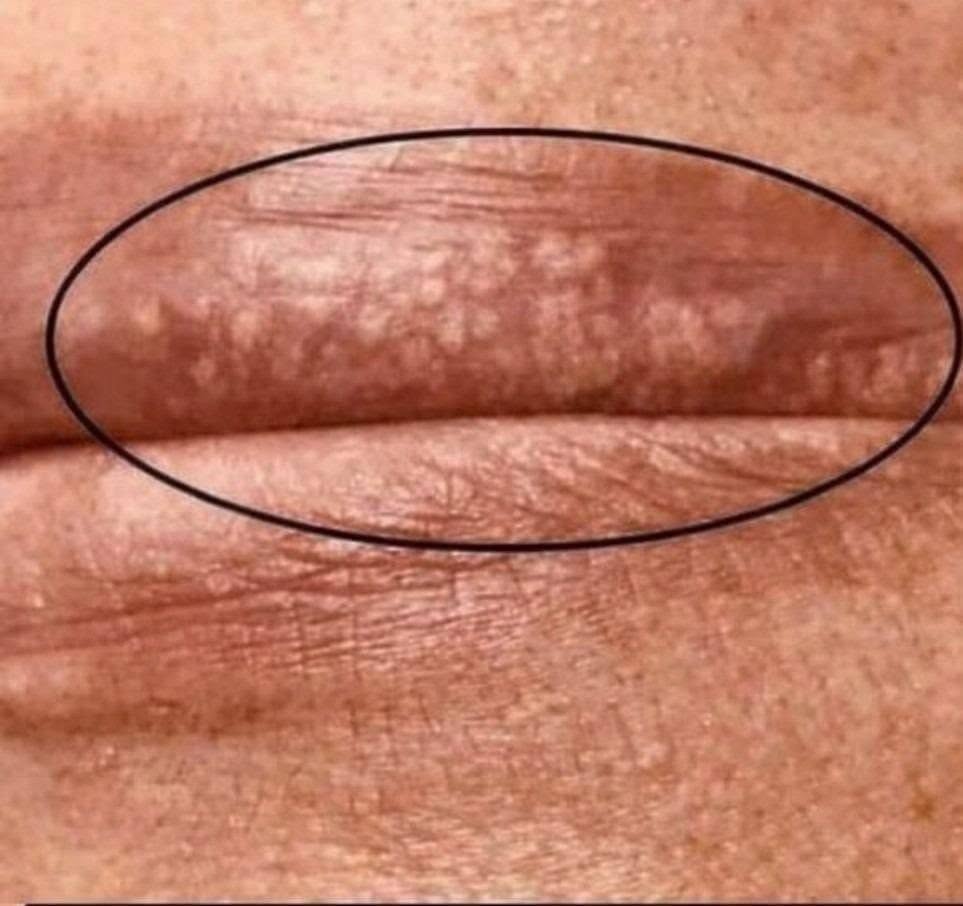
What Are Fordyce Spots?
Fordyce spots are small, visible sebaceous glands, also known as oil glands.
Sebaceous glands normally produce sebum, an oily substance that helps protect the skin. Fordyce spots occur when these glands are particularly visible in areas such as the lips or inside the cheeks.
They aren’t usually considered a disease.
In fact, they’re extremely common in adults.
What Do They Look Like?
Fordyce spots usually appear as very small bumps.
They may be:
- White
- Pale yellow
- Cream-colored
- Skin-colored
- Slightly raised
Sometimes there are only a few.
Other people may notice dozens of tiny spots clustered together.
One characteristic that can make them easier to notice is that they often become more visible when the surrounding skin is stretched.
That’s why someone may suddenly discover them while examining their lips closely in the mirror.
Are These Bumps Dangerous?
If the bumps are truly Fordyce spots, they’re generally benign and harmless.
They aren’t cancer.
They usually don’t cause pain.
And most people don’t need any treatment.
Having these spots doesn’t mean that something dangerous is happening inside your body.
Are They Contagious?
No.
Fordyce spots aren’t caused by bacteria or a virus.
That means they don’t spread from one person to another through ordinary contact.
You don’t “catch” Fordyce spots from someone else.
They’re simply part of the natural structure of the skin.
Are They a Sexually Transmitted Infection?
No.
Fordyce spots themselves aren’t sexually transmitted infections.
This is particularly important because similar-looking bumps can sometimes cause unnecessary anxiety.
However, appearance alone isn’t always enough to distinguish one skin condition from another.
If you’re unsure about new or unusual bumps—particularly in the genital area—a healthcare professional can provide a proper diagnosis.
Fordyce Spots vs. Cold Sores
One common fear when someone notices bumps around the lips is herpes.
But Fordyce spots and cold sores are different.
Fordyce spots generally:
Remain small.
Are pale, white, or yellowish.
Are usually painless.
Don’t normally turn into fluid-filled blisters.
Can remain visible for long periods.
Cold sores can:
Cause tingling or burning.
Become painful.
Develop into fluid-filled blisters.
Break open and crust.
Heal and sometimes return later.
If your bumps suddenly become painful, blistered, or crusted, don’t simply assume they’re Fordyce spots.
Why Do Fordyce Spots Appear?
Fordyce spots are related to sebaceous glands that naturally occur in the skin.
They often become more noticeable around puberty and adulthood.
Hormonal changes may contribute to the glands becoming more visible.
This means they aren’t caused by poor hygiene.
Having them doesn’t mean your lips are dirty.
And washing your face more aggressively won’t necessarily make them disappear.
Why Did I Suddenly Notice Them?
This is an interesting question.
Sometimes the spots aren’t actually new.
You simply never noticed them before.
Think about how closely most people normally examine their lips.
Probably not very closely.
Then one day you stand in bright bathroom lighting, stretch your lip, look into a magnifying mirror and suddenly notice dozens of tiny dots.
They may have been there for years.
Dry Lips Can Make Everything More Noticeable
When your lips are dry, cracked, or irritated, their texture becomes more obvious.
This can make normal skin features seem more prominent.
Keeping your lips moisturized may improve their overall appearance, although moisturizer won’t necessarily eliminate Fordyce spots themselves.
Should You Squeeze Them?
Definitely avoid squeezing them.
They may resemble tiny whiteheads, but Fordyce spots aren’t ordinary acne pimples.
Trying to pop them may cause:
- Redness
- Irritation
- Swelling
- Inflammation
- Small wounds
- Possible scarring
You could turn a harmless cosmetic issue into a painful skin problem.
If you notice small bumps, resist the temptation to squeeze them.
Don’t Try to Remove Them With a Needle
This deserves special attention.
Some viral videos encourage people to puncture tiny skin bumps using needles or other sharp objects.
Don’t do this.
The lips contain delicate tissue and blood vessels.
Attempting DIY removal can cause bleeding, infection, inflammation, and scarring.
If you truly want a cosmetic skin lesion removed, a dermatologist is the appropriate person to discuss it with.
What About Toothpaste?
Toothpaste belongs on your teeth—not on unexplained lip bumps.
Some toothpaste ingredients can irritate sensitive skin.
Applying toothpaste repeatedly may cause:
- Dryness
- Burning
- Redness
- Irritation
There’s no need to aggressively dry out Fordyce spots because they aren’t ordinary pimples.
What About Lemon Juice?
Lemon juice is another popular internet remedy.
But acidic ingredients can irritate sensitive lip tissue.
Repeatedly applying lemon juice may make your lips more irritated rather than improving their appearance.
The same caution applies to vinegar and other strong acidic substances.
What About Baking Soda?
Baking soda is sometimes promoted as a universal skin treatment.
But aggressively rubbing abrasive ingredients against your lips can damage the skin barrier.
Your lips don’t need to be scrubbed aggressively to remove Fordyce spots.
Gentle care is usually the better option.
Do Fordyce Spots Need Treatment?
Usually, no.
Because they’re harmless, treatment generally isn’t medically necessary.
Many people simply leave them alone.
However, some people feel self-conscious about their appearance.
If the spots bother you cosmetically, a dermatologist can first confirm that they really are Fordyce spots.
After that, professional cosmetic options may be discussed.
The important point is that treatment should be based on a proper diagnosis—not on a viral picture.
Can They Disappear Naturally?
Their visibility can change.
Sometimes they may appear more or less noticeable depending on the condition of your skin, lighting, age, and how closely you’re looking.
But there’s no guaranteed home remedy that permanently makes them disappear.
And because they’re generally harmless, removing them isn’t medically necessary.
Can Lip Balm Help?
Lip balm won’t remove sebaceous glands.
However, keeping your lips properly moisturized can help prevent dryness and irritation.
Choose a gentle lip product and avoid anything that causes burning or persistent irritation.
Simple skin care is often better than experimenting with numerous homemade remedies.
Could the Bumps Be Something Else?
Yes.
This is extremely important.
You cannot diagnose every lip bump from a photograph.
Several conditions can cause bumps, spots, blisters, or changes around the mouth.
Possible explanations can include:
- Fordyce spots
- Cold sores
- Irritation
- Allergic reactions
- Acne-like lesions
- Small cysts
- Other dermatological conditions
That’s why symptoms and changes over time are important.
Pay Attention to Pain
Fordyce spots are typically painless.
If a bump suddenly becomes very painful, that’s a reason to consider that something else may be happening.
Pain doesn’t automatically mean something serious.
But it makes proper evaluation more important.
What If the Bumps Itch?
Persistent itching isn’t something you should automatically attribute to Fordyce spots.
Itching may occur with irritation, allergies, dermatitis, infections, and other skin conditions.
If itching persists or gets worse, consider having the area examined.
What If They Bleed?
A normal Fordyce spot shouldn’t repeatedly bleed for no reason.
Bleeding after you’ve picked or squeezed the area is different—you may simply have injured the skin.
However, a lesion that repeatedly bleeds without being touched deserves medical attention.
What If One Spot Keeps Growing?
A stable collection of tiny spots is different from one lesion that progressively becomes larger.
If a bump:
- Continues growing
- Changes significantly in appearance
- Becomes irregular
- Changes color
- Bleeds
- Forms an ulcer
- Doesn’t heal
it’s a good idea to have it examined by a healthcare professional.
What About Dark Spots on the Lips?
Dark spots are different from the pale bumps typically associated with Fordyce spots.
Pigmentation can develop on the lips for several reasons.
Many pigmented spots are harmless, but any spot that is new and rapidly changing deserves attention.
Monitor changes rather than assuming every mark has the same cause.
A Simple Way to Examine Your Lips
Stand in front of a mirror with good lighting.
First, look at your lips normally.
Then gently stretch the area.
If you notice numerous tiny pale or yellowish dots that become much more visible when stretched, their appearance may resemble Fordyce spots.
But remember:
This isn’t a medical diagnostic test.
Only a qualified healthcare professional can properly evaluate an uncertain lesion.
How Common Are Fordyce Spots?
Very common.
Many adults have them somewhere on their bodies, even if they’ve never noticed them.
This is why discovering tiny pale bumps doesn’t automatically mean something has suddenly gone wrong.
Sometimes you’re simply noticing a normal anatomical feature for the first time.
Can Teenagers Have Them?
Yes.
Fordyce spots can become more noticeable around puberty.
Changes in hormones and sebaceous glands during adolescence may make them easier to see.
A teenager noticing them shouldn’t automatically assume they’re developing acne or an infection.
Can Adults Suddenly Develop Them?
Adults may notice them at any age.
Again, “noticing” something doesn’t necessarily mean it suddenly appeared.
Changes in lighting, skin condition, dryness, and attention can all make previously unnoticed spots much more obvious.
Are They Caused by Eating Certain Foods?
There isn’t good evidence that a specific food suddenly creates Fordyce spots on your lips.
You don’t need to eliminate random foods from your diet simply because you’ve noticed these bumps.
If you notice swelling, itching, or irritation immediately after eating a particular food, that’s a different situation and may require evaluation for an allergic reaction.
Are They Caused by Poor Hygiene?
No.
This misconception can make people unnecessarily embarrassed.
Fordyce spots aren’t a sign that someone doesn’t wash properly.
Excessive washing may actually irritate the delicate skin around the mouth.
Gentle cleansing is enough.
A Simple Lip-Care Routine
You don’t need a complicated routine.
Keep things gentle.
Use a mild cleanser around the mouth.
Keep your lips moisturized.
Avoid repeatedly licking or biting your lips.
Don’t pick at small bumps.
Avoid harsh exfoliation.
Use sun protection appropriate for the lips when exposed to strong sunlight.
And don’t apply random irritating ingredients simply because a social-media video promises instant results.
When Should You See a Doctor?
Consider having a lip lesion evaluated if you notice:
- Significant or persistent pain
- Fluid-filled blisters
- Repeated bleeding
- Rapid growth
- Significant swelling
- Pus or discharge
- Persistent crusting
- A sore that doesn’t heal
- Major changes in color
- A bump that continues changing
- Spreading lesions accompanied by other symptoms
These signs don’t automatically mean something serious is happening.
They simply mean it’s better to get a proper diagnosis rather than relying on internet photographs.
Why Viral Posts About Lip Bumps Can Be Misleading
Social-media posts often use headlines such as:
“If you have these bumps, your body is warning you!”
That makes people curious—and sometimes frightened.
But the truth can be much less dramatic.
If the bumps are Fordyce spots, they’re generally just visible oil glands and a normal variation of human skin.
They don’t automatically mean you have:
An infection.
Poor hygiene.
A sexually transmitted infection.
A vitamin deficiency.
A serious internal disease.
Sometimes the most surprising explanation is also the simplest one.
The Bottom Line 👄
If you notice tiny white or yellowish bumps on your lips, especially ones that are painless and become easier to see when you stretch the skin, they may be Fordyce spots.
Fordyce spots are common, generally harmless, and not contagious.
Most don’t require treatment.
Avoid squeezing, puncturing, or aggressively treating them with harsh home remedies.
And remember that not every lip bump is a Fordyce spot.
If your bumps are painful, blistering, bleeding, rapidly changing, growing, or simply worrying you, have them examined by a doctor or dermatologist.
So before panicking about those mysterious little dots in the mirror, remember:
What looks unusual may actually be a completely normal feature of your skin.