Black seed oil has been used for centuries in traditional remedies, and recently it has become extremely popular on social media.
One viral claim in particular gets a lot of attention:
“A spoonful of black seed oil can protect your heart and clear your blood vessels.”
It sounds impressive—but is it actually true?
Black seed, scientifically known as Nigella sativa, has been studied for its possible effects on cholesterol, blood pressure, blood sugar, inflammation, and other cardiovascular risk factors. Some research is promising, but that is very different from saying that black seed oil can physically “clean” clogged arteries.
Here’s what we actually know.
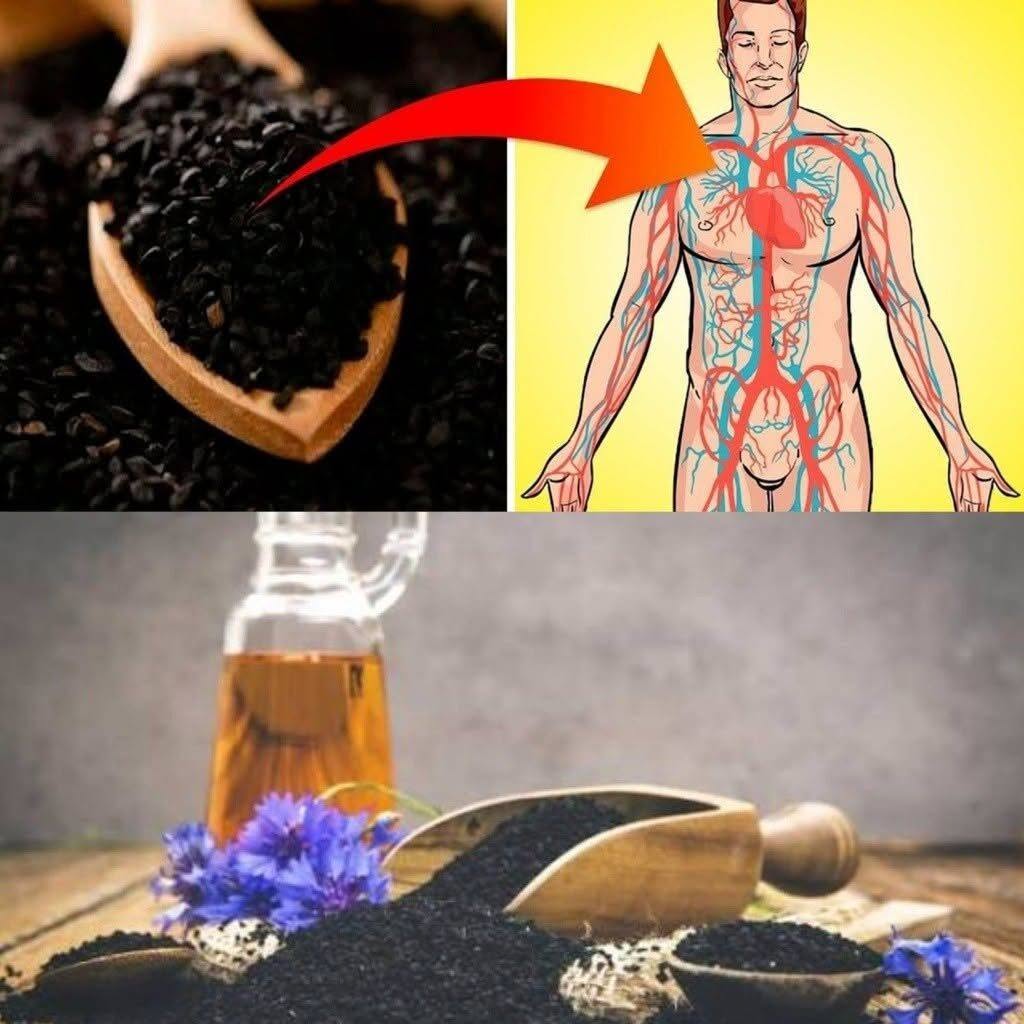
What Is Black Seed Oil?
Black seed oil is extracted from the seeds of Nigella sativa, a flowering plant also known as:
- Black seed
- Black cumin
- Kalonji
- Nigella
It contains several naturally occurring compounds, including thymoquinone, which has attracted scientific interest because of its antioxidant and anti-inflammatory properties.
Black seed can be consumed as whole or ground seeds, while concentrated oils and supplements are also widely sold.
Can Black Seed Oil Really “Clean” Your Arteries?
This is where the viral claim becomes misleading.
Black seed oil has not been proven to literally clean plaque out of arteries.
Arterial plaque is a complex buildup involving cholesterol, fats, calcium, inflammatory cells, and other substances within artery walls.
You cannot simply wash it away with a food, drink, herb, tea, or oil.
Research on Nigella sativa instead looks at whether it can influence risk factors associated with cardiovascular disease, such as LDL cholesterol and blood pressure.
That’s a much more accurate way to describe its potential benefits.
1. It May Affect Cholesterol Levels
This is one of the more interesting areas of research.
An updated meta-analysis involving 34 studies and 2,278 adults found that Nigella sativa supplementation was associated with reductions in total cholesterol, triglycerides, and LDL cholesterol compared with control groups.
Earlier randomized-trial evidence also reported reductions in total cholesterol, LDL cholesterol, and triglycerides, although effects differed depending on the preparation and study.
That’s promising.
But it doesn’t mean:
“Black seed oil removes cholesterol deposits from your arteries.”
Lowering LDL cholesterol and physically removing established arterial plaque are not the same thing.
2. What About Blood Pressure?
There is also evidence suggesting a modest effect on blood pressure.
A 2026 systematic review and meta-analysis of 31 trials involving 2,145 participants with metabolic diseases found average reductions of about 3.25 mmHg in systolic blood pressure and 2.75 mmHg in diastolic blood pressure following Nigella sativa supplementation.
Those are interesting results, but they’re relatively modest.
The researchers also cautioned that study quality and results varied considerably.
So black seed should not be viewed as a substitute for prescribed blood-pressure medication.
3. Black Seed and Blood Sugar
Researchers have also studied Nigella sativa in people with diabetes and other metabolic conditions.
A meta-analysis of randomized controlled trials involving people with prediabetes or type 2 diabetes found improvements in fasting glucose and HbA1c, along with some improvements in cholesterol-related measures. However, not every metabolic marker improved.
A newer 2026 review similarly found reductions in fasting blood glucose and HbA1c among participants with metabolic diseases, while some measures of insulin resistance did not significantly improve.
This highlights an important point:
Natural products can have measurable biological effects without being miracle treatments.
4. Does It Protect Your Heart?
Possibly helping certain cardiovascular risk factors is not the same as proving that something prevents heart attacks.
Researchers have studied markers related to cardiovascular health, but direct evidence for major cardiovascular outcomes remains much less established.
For example, a systematic review examining endothelial-function markers found no significant improvement in the measured markers and concluded that larger studies were needed.
So saying:
“Black seed may have favorable effects on some cardiovascular risk factors”
is reasonable.
Saying:
“Black seed oil protects you from heart attacks”
goes beyond what current evidence can establish.
5. What Makes Black Seed Interesting?
Much of the attention centers on compounds naturally found in the seeds, particularly thymoquinone.
Laboratory research has investigated antioxidant and anti-inflammatory mechanisms that might help explain some of the results seen in human studies.
But laboratory effects don’t automatically translate into dramatic health benefits in people.
That’s why randomized human trials remain so important.
6. Is One Spoonful Every Morning the Secret?
You’ll frequently see social-media recipes recommending:
“Take one spoonful of black seed oil every morning on an empty stomach.”
There isn’t a scientifically established universal rule saying everyone should take exactly one spoonful every morning.
Clinical studies have used different:
- Doses
- Preparations
- Oils
- Powders
- Extracts
- Treatment durations
- Participant populations
One large 2025 meta-analysis included trials using doses ranging from 200 to 4,600 mg per day, illustrating just how much study protocols vary.
This is why translating research into a viral “one spoon every morning” prescription isn’t straightforward.
7. More Isn’t Necessarily Better
Natural doesn’t automatically mean risk-free.
Black seed products have generally been tolerated in studies, and safety reviews have examined a variety of preparations. But concentrated supplements can still produce unwanted effects or interact with a person’s medical treatment.
Don’t assume that taking several tablespoons will produce better cardiovascular results.
Supplements should be treated like biologically active products rather than ordinary miracle foods.
8. Be Careful If You Take Medication
Because Nigella sativa has been studied for potential effects on blood pressure and blood sugar, people taking medication for those conditions should be particularly cautious about concentrated supplements.
The same principle applies if you take multiple medications or have chronic medical conditions.
Discussing regular supplement use with a doctor or pharmacist is sensible, especially if you’re considering concentrated black seed oil rather than simply using small amounts of the seeds in food.
9. Pregnancy and Breastfeeding Require Extra Caution
Using black seed as a normal culinary ingredient is different from taking concentrated oils, extracts, or high-dose supplements.
During pregnancy or breastfeeding, avoid starting concentrated herbal supplements without discussing them with your healthcare professional.
“Natural” doesn’t guarantee that a concentrated product has been proven safe for every stage of pregnancy or breastfeeding.
10. What Actually Helps Protect Your Arteries?
If your goal is cardiovascular health, don’t rely on a single supplement.
The fundamentals remain much more important:
Don’t smoke.
Keep blood pressure controlled.
Manage LDL cholesterol.
Stay physically active.
Maintain a balanced dietary pattern.
Manage diabetes when present.
Take prescribed medication as directed.
Black seed can potentially be part of a healthy diet, but it shouldn’t replace proven cardiovascular treatment.
Black Seed vs. Cholesterol Medication
This comparison is especially important.
If you’ve been prescribed a cholesterol-lowering medicine, don’t stop taking it because you’ve started using black seed oil.
Research suggesting that Nigella sativa may improve cholesterol measurements does not establish it as an equivalent replacement for proven cholesterol-lowering therapies.
Your doctor may be treating your cardiovascular risk based on much more than one cholesterol number.
What About the Viral Before-and-After Claims?
Social media frequently presents natural remedies using dramatic language:
“Unclogs arteries!”
“Cleans your blood vessels overnight!”
“Melts cholesterol!”
“One spoon prevents heart disease!”
Those statements oversimplify cardiovascular biology.
Human blood vessels aren’t plumbing pipes that can be flushed clean with a spoonful of oil.
Atherosclerosis develops over years and is influenced by many factors, including cholesterol, blood pressure, smoking, diabetes, genetics, inflammation, diet, and physical activity.
So Is Black Seed Oil Worth Taking?
The evidence is more interesting than either extreme suggests.
It would be inaccurate to say black seed has no potential health effects.
Multiple clinical trials and meta-analyses have found improvements in certain cardiometabolic measurements, including LDL cholesterol, blood pressure, and blood-sugar markers in some populations.
But it would be equally inaccurate to turn those findings into a claim that black seed oil:
clears blocked arteries, reverses heart disease, prevents heart attacks, or replaces medication.
Those claims have not been established.
Black Seeds or Black Seed Oil?
Both have been studied, and results can vary by formulation.
An earlier meta-analysis found that black seed oil and seed powder didn’t produce identical effects on lipid measurements.
This is another reason you can’t assume that every bottle of black seed oil will reproduce the results of a clinical trial.
Supplement concentration and quality can also differ considerably between products.
A Sensible Way to Think About Black Seed
Instead of thinking:
“This oil will clean my arteries.”
Think:
“Black seed is a food and traditional herbal product being studied for possible effects on several cardiovascular risk factors.”
That might sound less dramatic, but it’s far closer to what the research actually shows.
The Bottom Line 🖤🌿
Black seed oil is interesting, and the science behind Nigella sativa shouldn’t simply be dismissed.
Research suggests supplementation may modestly improve certain cardiovascular and metabolic risk factors, including LDL cholesterol, blood pressure, and blood-sugar measurements in some groups.
However, there is no good evidence that drinking black seed oil literally “cleans” or “unclogs” your blood vessels.
If you enjoy black seed as part of your diet, that’s one thing. If you’re considering concentrated black seed oil specifically to treat high cholesterol, diabetes, hypertension, or cardiovascular disease, discuss it with your healthcare professional—especially if you’re already taking medication.
The real story is more nuanced than the viral headline:
Black seed may influence some heart-health risk factors, but it isn’t a magic artery cleanser.