Social media is full of unusual beauty and health tricks, but this one is particularly surprising:
Using garlic to whiten yellow teeth.
Viral photos often show several cloves of garlic beside dramatically yellow teeth, followed by a second image showing a perfectly white smile. The implication is simple: rub garlic on your teeth and watch the stains disappear.
It sounds like an inexpensive natural alternative to professional whitening.
But there’s an important problem:
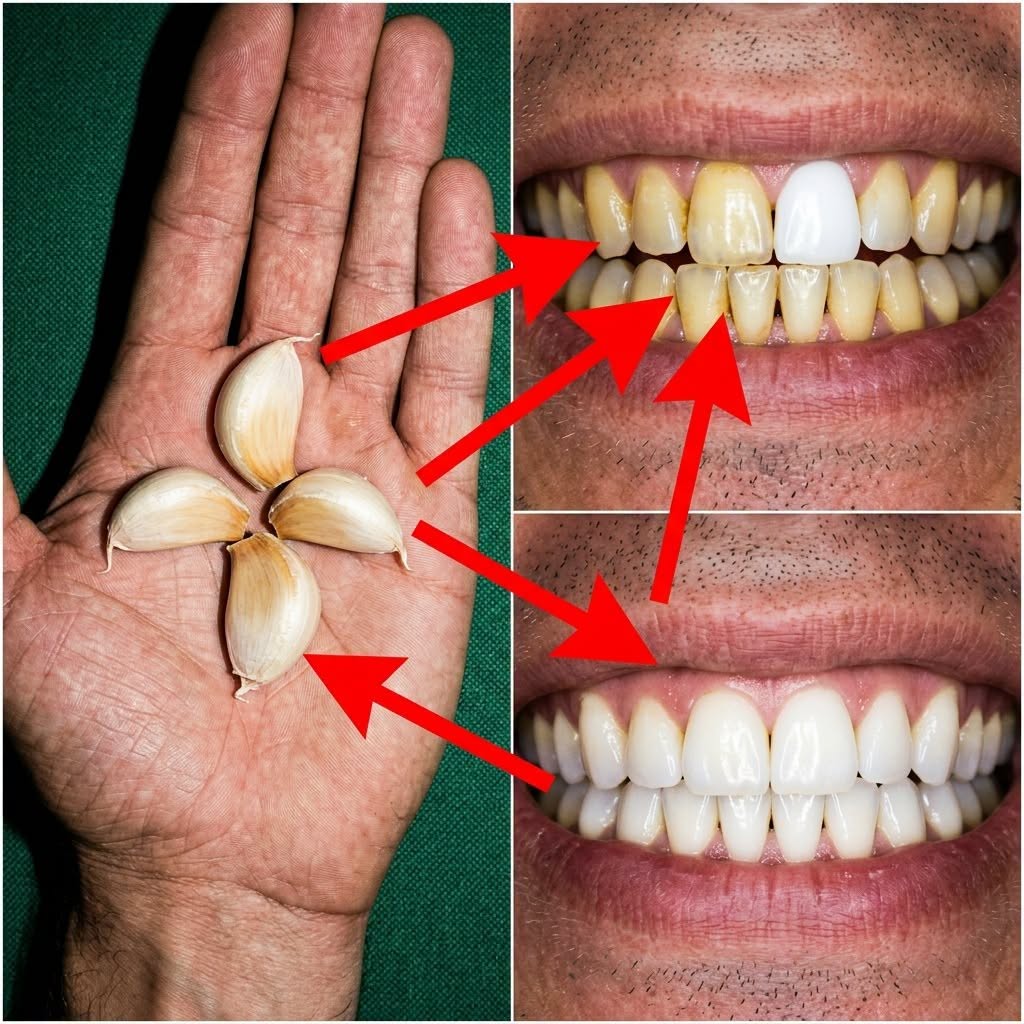
There is no good scientific evidence that rubbing raw garlic on your teeth will whiten them.
Garlic does contain biologically active compounds and has been studied for antimicrobial properties, including potential applications in oral health. But antimicrobial activity and teeth whitening are two completely different things. Research on garlic extracts does not establish raw garlic as an effective tooth-bleaching treatment.
So before trying this viral trick, here’s what you need to know.
Why Do Teeth Become Yellow?
First, yellow teeth aren’t necessarily unhealthy teeth.
Natural tooth color varies from person to person. Underneath the enamel is a tissue called dentin, which naturally has a more yellowish color.
Teeth can also become darker or stained because of:
- Coffee
- Tea
- Red wine
- Cola
- Tobacco
- Certain foods
- Aging
- Plaque and tartar buildup
- Some medications
- Changes within the tooth
This matters because different types of discoloration require different approaches.
A home remedy that removes a little surface buildup won’t necessarily change the natural color inside the tooth.
Where Did the Garlic Whitening Trick Come From?
Garlic has a long history as both a food and traditional remedy.
When garlic is crushed, compounds are formed that have attracted scientific interest for potential antimicrobial effects.
Some studies have investigated specially prepared garlic extracts or garlic-containing mouth rinses against oral microorganisms.
This may be one reason people began assuming:
“If garlic can affect bacteria in the mouth, maybe it can whiten teeth too.”
But that’s a big leap.
Reducing certain microorganisms isn’t the same biological process as bleaching tooth pigments.
Can Garlic Actually Bleach Teeth?
There’s no established evidence that applying ordinary raw garlic to your teeth provides genuine bleaching comparable with recognized whitening agents.
Evidence-based whitening products typically rely on bleaching agents such as hydrogen peroxide or carbamide peroxide, which work chemically on colored compounds within teeth.
Garlic doesn’t work through that established whitening mechanism.
So if you see a photograph where someone’s teeth go from deeply yellow to brilliant white after applying garlic, be skeptical.
Why Do the Before-and-After Photos Look So Convincing?
A photograph alone doesn’t prove that a remedy works.
Several things can dramatically change how white teeth appear in a picture:
- Lighting
- Camera exposure
- Filters
- Contrast
- White balance
- Photo editing
- Different angles
Even professional whitening generally isn’t represented accurately by an instant social-media transformation.
If a post promises perfectly white teeth after rubbing a kitchen ingredient on them for a minute, that’s a reason to investigate before trying it.
Is Raw Garlic Safe to Rub on Your Gums?
This is where the viral trick becomes more concerning.
Garlic may be perfectly normal to eat as part of your diet, but concentrated raw garlic can irritate tissues.
The U.S. National Center for Complementary and Integrative Health notes that fresh raw garlic applied topically can cause severe irritation and chemical burns to skin.
Your gums and other tissues inside your mouth are delicate.
So holding crushed raw garlic directly against your gums for extended periods isn’t something I’d recommend as a DIY whitening treatment.
What If You Mix Garlic With Toothpaste?
Another version of the viral recipe suggests crushing garlic and mixing it with toothpaste.
That doesn’t transform garlic into a proven whitening agent.
If the toothpaste itself is formulated to remove surface stains, you may notice some improvement over time—but that doesn’t mean the garlic caused it.
If you want a whitening toothpaste, it’s much simpler to use a product specifically designed and tested for that purpose.
The ADA recommends choosing whitening products that have been evaluated for safety and effectiveness.
What About Garlic and Baking Soda?
You’ll also find recipes combining:
Garlic + baking soda + toothpaste.
Be careful with DIY abrasive mixtures.
The idea is usually that more scrubbing will remove more yellow staining.
But teeth don’t work like stained kitchen tiles.
Enamel is precious.
Once excessive abrasion wears enamel away, the more yellow dentin underneath can become increasingly visible—which may actually make teeth look more yellow. The ADA specifically warns against overly abrasive DIY whitening approaches for this reason.
Never Assume “Natural” Means Harmless
This is one of the biggest mistakes surrounding homemade dental remedies.
Garlic is natural.
Lemon is natural.
Vinegar is natural.
Baking soda is natural.
That doesn’t automatically make every possible way of putting them on your teeth safe.
The ADA cautions that DIY dental trends involving ordinary household ingredients can range from ineffective to potentially harmful.
What About Garlic and Lemon? 🍋
This combination appears frequently online.
It’s especially questionable for teeth because lemon juice is acidic.
Repeatedly exposing enamel to acids can contribute to erosion.
Ironically, as enamel becomes thinner, more yellow dentin may show through.
So you might be attempting to make your teeth whiter while gradually doing something that can make them look yellower.
The ADA specifically warns about prolonged tooth exposure to acidic ingredients such as lemons and vinegar in DIY whitening methods.
Does Garlic Have Any Benefits for Oral Health?
This is where the story becomes more interesting.
Garlic itself isn’t useless.
Researchers have investigated garlic extracts for their antimicrobial properties.
Some small studies have found reductions in certain oral microorganisms when specially formulated garlic extracts were used.
Other research has explored aged garlic extract in relation to periodontal health.
But this doesn’t mean you should start rubbing raw garlic on your gums.
The studies use particular preparations, concentrations, and protocols.
A clinical preparation studied by researchers isn’t automatically equivalent to crushing a clove from your refrigerator and leaving it against your gums.
And most importantly:
Potential oral-health effects don’t prove teeth-whitening effects.
So What Actually Works for Whiter Teeth?
If your goal is genuinely brighter teeth, there are much better-supported options.
Whitening Toothpaste
Whitening toothpastes can help remove certain external stains.
They’re particularly useful for stains from coffee, tea, and food.
But don’t expect them to dramatically change your natural tooth color overnight.
Whitening Strips
Many whitening strips use peroxide-based bleaching ingredients.
Evidence supports their ability to lighten teeth when appropriately formulated and used as directed.
Dentist-Supervised Whitening
Dentists can recommend whitening products based on the condition of your teeth and gums.
This is especially useful if you have sensitive teeth, restorations, cavities, or significant discoloration.
Professional Whitening
In-office treatments can provide faster results because dentists can use controlled concentrations of whitening agents while protecting surrounding tissues.
Professional and home whitening can sometimes cause temporary sensitivity or gum irritation, so stronger doesn’t always mean better.
Sometimes You Need a Cleaning, Not Whitening
Here’s another possibility.
Your teeth may look darker because of external staining, plaque, or tartar.
In that case, professional cleaning may make a surprisingly noticeable difference.
And unlike a viral garlic trick, a dentist can also check whether discoloration is being caused by something that requires treatment.
Don’t Forget the Basics
If you want your teeth to stay naturally bright, boring habits are often the most effective:
Brush twice daily with fluoride toothpaste.
Clean between your teeth daily.
Limit tobacco use.
Be mindful of heavily staining drinks such as coffee, tea, and red wine.
And have regular dental checkups and cleanings.
These are among the habits recommended by the ADA for maintaining a healthy, brighter smile.
Can Teeth Become Perfectly White?
Another important reality:
Natural healthy teeth aren’t necessarily paper-white.
Social media filters, veneers, professional photography, and editing have changed people’s expectations of what normal teeth should look like.
Some perfectly healthy teeth naturally have an ivory or slightly yellow shade.
Whitening can lighten natural teeth, but chasing an unnaturally white result isn’t worth damaging enamel or irritating your gums.
What If You’ve Already Tried Garlic?
Don’t panic if you’ve briefly tried the trick.
Rinse your mouth with water and return to your normal oral-hygiene routine.
However, if raw garlic causes significant burning, persistent pain, swelling, sores, or other unusual symptoms in your mouth, stop using it and contact a dentist or healthcare professional.
And definitely don’t keep applying it because an online post says the burning sensation means “it’s working.”
Pain and irritation aren’t signs that your teeth are becoming whiter.
Garlic Whitening: Viral Claim vs. Reality
Claim: Garlic can instantly turn yellow teeth white.
There isn’t reliable evidence supporting this.
Claim: Garlic has antimicrobial properties.
Certain garlic extracts have demonstrated antimicrobial activity in research, but that doesn’t prove a whitening effect.
Claim: Natural ingredients can’t damage your mouth.
False. Raw garlic can cause significant tissue irritation when used topically.
Claim: More scrubbing makes teeth whiter.
Not necessarily. Excessive abrasion can damage enamel and expose yellower dentin underneath.
The Bottom Line 🧄🦷
The viral image may make it look as though a few garlic cloves can transform yellow teeth into a Hollywood-white smile, but there’s no good evidence supporting raw garlic as a teeth-whitening treatment.
Garlic contains interesting compounds and garlic extracts have been researched for some potential oral-health applications.
But:
Antimicrobial activity ≠ teeth whitening.
If your goal is whiter teeth, established whitening toothpastes, appropriately formulated peroxide-based products, whitening strips, or dentist-supervised treatment have much better evidence behind them.
And most importantly, don’t sacrifice healthy enamel or irritate your gums for a dramatic viral before-and-after photo.
Sometimes the real “secret” behind an incredible 60-second transformation isn’t garlic at all—it’s simply a misleading image. 🦷✨