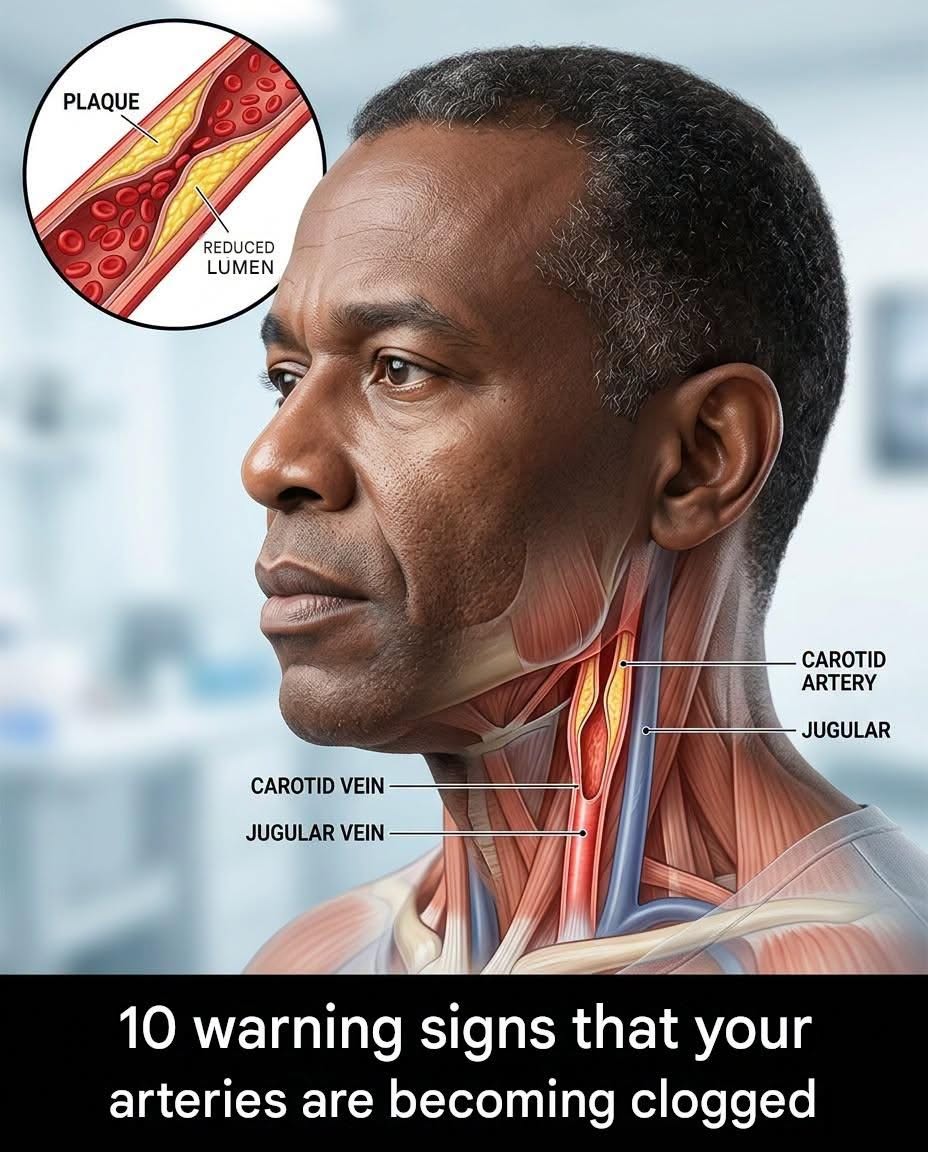
Blocked arteries can develop quietly for years.
A person may feel completely normal while fatty deposits, known as plaque, gradually accumulate inside artery walls. This process is called atherosclerosis. Over time, plaque can narrow an artery and reduce blood flow—or contribute to a clot that suddenly blocks it.
One important point is often missing from viral posts: there is no reliable list of symptoms that can tell you at home that an artery is “90% blocked.” Some people have significant atherosclerosis without obvious symptoms, and the symptoms depend heavily on which arteries are affected.
Still, there are warning signs worth knowing.
1. Chest Pain, Pressure or Tightness
One of the best-known warning signs of reduced blood flow to the heart is angina.
It may feel like pressure, squeezing, heaviness, burning or discomfort in the chest, particularly during physical activity or emotional stress.
Coronary artery disease occurs when plaque builds up in arteries supplying the heart, reducing blood flow. Chest discomfort is its most common symptom.
New, severe or unexplained chest pain—especially with shortness of breath, sweating, nausea or pain spreading to the arm or shoulder—can indicate a heart attack and requires emergency medical attention.
2. Shortness of Breath
Feeling unusually breathless during activities that previously caused no difficulty shouldn’t automatically be dismissed as aging.
Shortness of breath can occur with cardiovascular disease, although it has many other possible causes.
When it occurs suddenly or alongside chest discomfort, weakness, sweating or nausea, emergency evaluation may be necessary.
3. Leg Pain When Walking That Improves With Rest
This is a particularly important symptom that many people overlook.
Peripheral artery disease (PAD) occurs when arteries carrying blood to the limbs—most commonly the legs—become narrowed or blocked.
Its classic symptom is aching, cramping, burning, heaviness or discomfort in the calf, thigh, hip or buttock during walking or exercise.
The characteristic clue?
The discomfort improves after you stop and rest.
It can then return when you start walking again.
People sometimes mistake this for arthritis, sciatica or simply getting older.
4. One Foot or Leg Feels Colder
Compare your feet.
Does one consistently feel noticeably colder than the other?
Reduced arterial blood flow can sometimes cause one foot or lower leg to feel cooler than the opposite side.
Cold feet alone don’t prove that your arteries are blocked—there are many possible explanations.
But persistent temperature differences, particularly alongside leg pain or skin changes, deserve medical attention.
5. Wounds on the Feet That Heal Very Slowly
A small cut on your foot would normally heal.
But when circulation is significantly reduced, tissues may not receive enough oxygen-rich blood to heal normally.
PAD can therefore cause sores or wounds on the feet and toes that heal very slowly or fail to heal.
This warning sign is especially important for people with diabetes.
Don’t ignore a persistent foot wound.
6. Changes in the Color or Appearance of Your Legs
Poor arterial circulation can sometimes produce visible changes.
The skin may become unusually pale or develop other color changes.
Other possible signs include:
- Smooth or shiny skin
- Reduced hair growth on the legs
- Slow-growing toenails
- Loss of calf muscle
- Cold or numb toes
These changes don’t automatically mean you have PAD, but they can occur when blood flow to the legs is impaired.
7. Weakness or Numbness in the Legs
Reduced circulation may also be associated with weakness or numbness.
But this symptom is particularly easy to misinterpret.
Numbness can result from many other conditions, including nerve problems, diabetes and musculoskeletal disorders.
That’s why symptoms alone can’t diagnose blocked arteries.
A healthcare professional needs to consider the entire picture.
8. Unexplained Weakness, Dizziness or Cold Sweating
These symptoms become particularly concerning when they appear suddenly alongside chest discomfort, shortness of breath or nausea.
The CDC lists weakness, light-headedness, nausea and cold sweating among possible symptoms of heart attack.
Don’t wait for dramatic chest pain before taking possible heart-attack symptoms seriously.
Heart attacks don’t always look like they do in movies.
9. Pain or Discomfort in the Arm or Shoulder
A heart problem doesn’t always produce pain exclusively in the center of the chest.
Heart-attack symptoms can include pain or discomfort involving the arms or shoulder, along with other symptoms such as chest discomfort, shortness of breath, weakness or nausea.
Sudden unexplained symptoms should be treated seriously, especially in someone with cardiovascular risk factors.
10. Sometimes There Are No Warning Signs at All
Perhaps the most important “warning sign” is actually the absence of one.
Atherosclerosis can progress without obvious symptoms.
Many people with PAD have no classic leg pain. The CDC reports that up to 4 in 10 people with PAD don’t have leg pain, while the American Heart Association also emphasizes that many people with PAD have no symptoms.
Similarly, for some people, the first obvious sign of coronary artery disease can be a heart attack.
That’s why prevention and routine medical care matter.
Who Is More Likely to Develop Artery Disease?
Your risk increases with several factors.
Important ones include:
Smoking: Tobacco substantially increases cardiovascular and PAD risk.
High blood pressure: Over time, hypertension damages blood vessels.
High cholesterol: Elevated cholesterol contributes to plaque formation.
Diabetes: Diabetes is an especially important risk factor for PAD.
Older age: PAD becomes more common with increasing age.
Family history: A family history of cardiovascular disease can increase risk.
Physical inactivity and excess weight: These can contribute to cardiovascular risk through several pathways.
Having one risk factor doesn’t mean your arteries are blocked.
But multiple risk factors make preventive care increasingly important.
How Do Doctors Actually Check for Blocked Arteries?
Symptoms aren’t enough.
For suspected PAD in the legs, one common test is the ankle-brachial index (ABI).
It’s a relatively simple, noninvasive test that compares blood pressure measured at the ankle with blood pressure measured in the arm.
Depending on the situation, doctors may also use:
- Ultrasound
- CT angiography
- MR angiography
- Catheter angiography
For suspected coronary artery disease, testing can include an ECG, echocardiogram, exercise stress testing and, when appropriate, cardiac catheterization or other imaging.
The appropriate test depends on your symptoms and risk factors.
Can You “Unclog” Your Arteries Naturally?
Be very cautious with claims such as:
“Drink this every morning and unclog your arteries.”
No garlic drink, lemon mixture, herbal tea or other home remedy can be relied upon to remove a dangerous arterial blockage.
What can make a major difference is controlling cardiovascular risk.
The American Heart Association recommends habits such as eating a heart-healthy diet, staying physically active, avoiding tobacco, maintaining a healthy weight, getting adequate sleep and managing cholesterol, blood pressure and blood sugar.
Some people also need medications, and severe blockages sometimes require procedures to restore blood flow.
When Is It an Emergency?
Seek emergency medical help for symptoms suggesting a heart attack or stroke, or for sudden severe loss of circulation to a limb.
Possible heart-attack symptoms include chest pain or discomfort, shortness of breath, weakness, light-headedness, nausea, cold sweating, or discomfort in the arm or shoulder.
Don’t spend time trying home remedies if severe or sudden symptoms are occurring.
The Bottom Line
“Blocked arteries” aren’t something you can diagnose by looking in the mirror or checking off ten symptoms online.
But certain changes deserve attention—especially chest discomfort, unexplained shortness of breath, recurring leg pain while walking, wounds that won’t heal, one unusually cold foot, or noticeable changes in the skin of the legs and feet.
And remember: atherosclerosis can exist without obvious symptoms.
If you have major risk factors such as smoking, diabetes, high cholesterol or high blood pressure, discussing your cardiovascular risk with a healthcare professional can be valuable even when you feel perfectly well.
Early recognition matters because artery disease isn’t limited to the legs or heart. PAD is associated with an increased risk of coronary artery disease, heart attack and stroke.
Knowing the warning signs isn’t about being frightened by every ache or pain.
It’s about knowing which changes shouldn’t be ignored.