Garlic has been used in kitchens around the world for centuries. But online, its reputation goes much further.
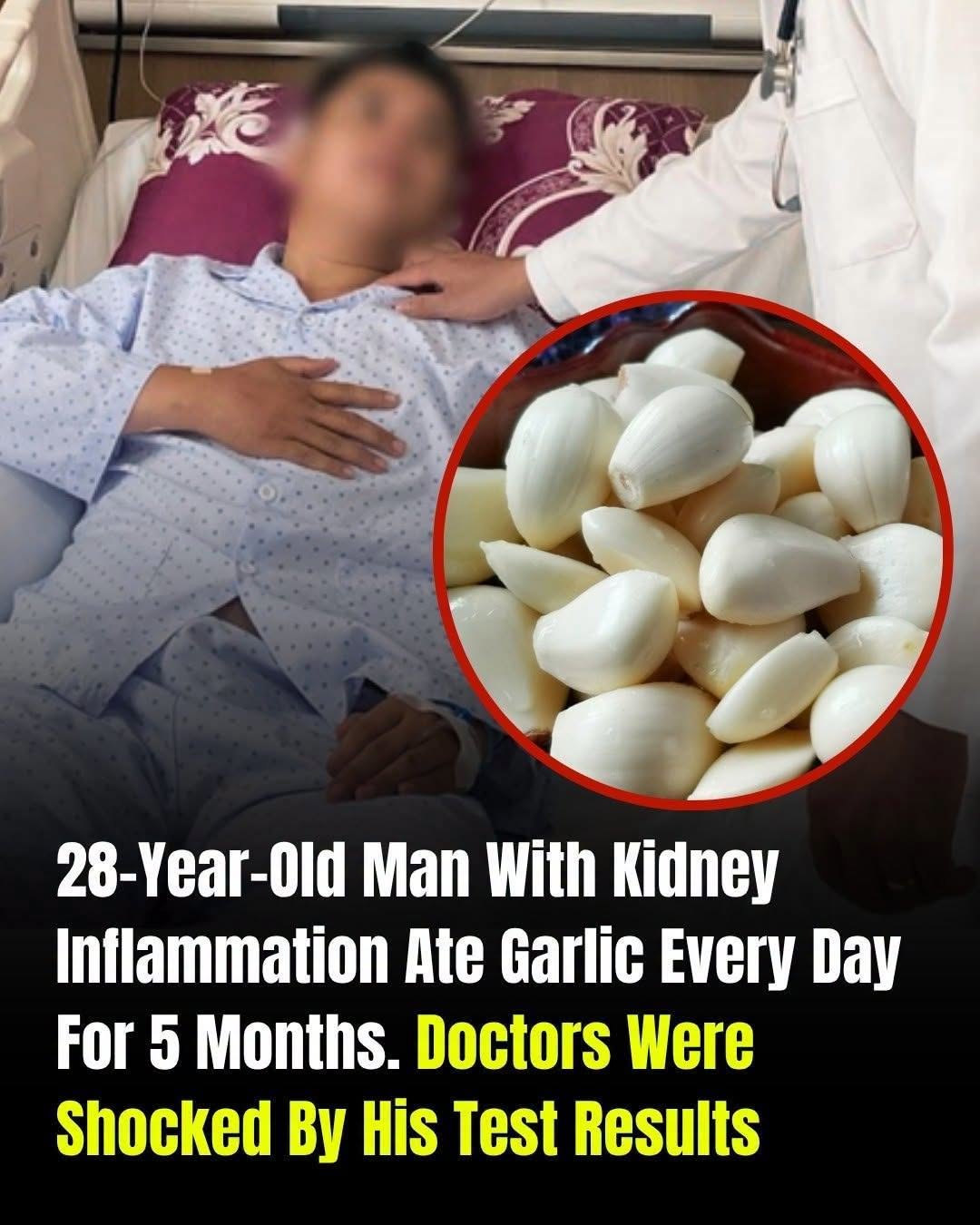
You may have seen dramatic posts claiming that a young man ate garlic every day for five months, developed “kidney inflammation,” and left doctors shocked by his test results.
It certainly makes an attention-grabbing headline.
But can eating garlic every day really damage your kidneys?
The answer is more nuanced than the viral post suggests. There is no solid evidence that eating normal culinary amounts of garlic for five months routinely causes kidney inflammation in healthy adults. Garlic is generally considered safe when eaten as food, while concentrated supplements and very large amounts deserve more caution.
So let’s separate the viral story from what we actually know.
First: Garlic Is Not Normally Considered Toxic to the Kidneys
For most healthy people, adding garlic to meals is considered a normal part of a balanced diet.
In fact, the National Kidney Foundation includes garlic among spices that can add flavor without adding large amounts of sodium—something that can be useful when people are trying to reduce salt intake.
That doesn’t mean garlic is medicine.
And it certainly doesn’t mean eating huge amounts provides huge benefits.
But there’s an important distinction between:
Using garlic regularly in cooking
and
Taking large quantities of raw garlic or concentrated garlic supplements every day.
Those aren’t necessarily equivalent.
What Happens If You Eat Garlic Every Day?
For many people, probably nothing dramatic.
Garlic contains sulfur-containing compounds that give it its characteristic smell and flavor.
Researchers have studied garlic extensively, particularly for possible effects on cholesterol and blood pressure.
Evidence suggests garlic supplements may produce modest reductions in LDL cholesterol in people with elevated cholesterol, while limited evidence suggests they may also slightly lower blood pressure in people with hypertension.
But those potential effects don’t turn garlic into a cure-all.
Your body isn’t going to suddenly “detox” because you ate a clove of garlic every morning.
What About the Kidneys?
Your kidneys perform several essential functions.
They help:
- Filter waste from the blood
- Maintain fluid balance
- Regulate electrolytes
- Help control blood pressure
- Remove certain waste products through urine
Because kidneys are so important, dramatic social-media stories about foods “destroying” or “cleansing” them attract enormous attention.
Unfortunately, those claims are often oversimplified.
There isn’t good evidence showing that ordinary dietary garlic causes kidney inflammation in otherwise healthy people simply because it’s consumed daily.
Could Too Much Garlic Cause Problems?
Yes—but the problems we know about aren’t usually described as “kidney inflammation.”
Garlic can cause side effects, particularly when consumed raw or in concentrated forms.
Possible effects include:
- Abdominal discomfort
- Heartburn
- Gas
- Nausea
- Strong breath
- Body odor
- Allergic reactions
These effects can be more noticeable with raw garlic.
So if someone decides:
“One clove is healthy, therefore ten cloves must be ten times healthier,”
that’s not how nutrition works.
More isn’t automatically better.
The Bigger Concern: Garlic Supplements
This is where people should pay closer attention.
Garlic supplements can contain concentrated amounts of garlic-derived compounds.
They’re different from sprinkling chopped garlic into dinner.
Supplements may also interact with medications.
One of the best-established concerns is bleeding risk.
Garlic supplements may affect blood clotting, so people taking anticoagulants or medicines such as aspirin should discuss their use with a healthcare professional.
That’s particularly important before surgery.
Can Garlic Interact With Medication?
Yes.
“Natural” doesn’t mean “incapable of interacting with medicine.”
Herbal products can affect how medications work, and garlic supplements have been associated with clinically relevant interaction concerns.
If you take regular medication—especially anticoagulants—or have a chronic medical condition, don’t assume that a concentrated supplement is automatically safe because its main ingredient grows in the ground.
Talk to your doctor or pharmacist.
What If You Already Have Kidney Disease?
This requires a little more caution.
People with chronic kidney disease may need individualized advice about diet, sodium, potassium, phosphorus, fluids, medications, and supplements depending on their stage of disease and treatment.
The National Kidney Foundation notes that spices can be useful for flavoring food without salt, but also recommends caution with supplements and large quantities.
In other words:
Using garlic to flavor your dinner and taking concentrated garlic capsules every day are two very different decisions.
If you have kidney disease, your healthcare team should know about any supplements you’re using.
Could Garlic Actually Be Good for Kidney Health?
This is another area where viral posts often go too far in the opposite direction.
Search online and you’ll find claims such as:
“Garlic cleans your kidneys.”
“Garlic repairs kidney damage.”
“Eat garlic every morning to detox your kidneys.”
These statements aren’t supported strongly enough to treat garlic as a kidney therapy.
Garlic may fit perfectly well into a healthy diet.
But that’s not the same as saying it treats kidney disease.
If someone’s kidney function is abnormal, eating garlic isn’t a substitute for determining why.
Your Kidneys Don’t Need a Garlic “Detox”
This is worth emphasizing.
Your kidneys themselves are part of your body’s waste-removal system.
You don’t need to “flush toxins” from them every morning using garlic, lemon water, special teas, or mysterious homemade drinks.
Protecting kidney health is much less exciting than viral detox posts make it sound.
It generally means taking care of your overall health.
Better Ways to Protect Your Kidneys
Instead of searching for a miracle food, focus on the fundamentals.
Stay Appropriately Hydrated
Drink enough fluids for your individual needs unless a healthcare professional has instructed you to restrict fluids.
You don’t need to force enormous quantities of water.
Keep Blood Pressure Under Control
Long-term high blood pressure can damage the kidneys.
Manage Blood Sugar
Diabetes is an important cause of chronic kidney disease.
Be Careful With Medications and Supplements
Some medicines and supplements can affect kidney function, especially when misused or taken inappropriately.
Don’t Smoke
Smoking affects blood vessels throughout the body, including those supplying the kidneys.
Eat a Balanced Diet
Vegetables, fruits, appropriate protein sources, whole foods, and reasonable sodium intake matter far more than any single “superfood.”
What Are Signs of Kidney Problems?
One dangerous thing about kidney disease is that early stages may cause few noticeable symptoms.
As kidney problems become more significant, possible symptoms can include:
- Swelling in the legs or ankles
- Changes in urination
- Unusual fatigue
- Nausea
- Loss of appetite
- Shortness of breath
- Persistent itching
But these symptoms can have many different causes.
You cannot diagnose kidney disease based on symptoms alone.
Blood and urine tests are commonly needed to evaluate kidney function.
What Does “Kidney Inflammation” Actually Mean?
This phrase is frequently used online without explanation.
Kidney inflammation isn’t one single condition.
Different diseases can involve inflammation in different structures of the kidney, and causes may include infections, autoimmune disorders, medications, and other medical problems.
So when a viral post says:
“Doctors discovered his kidneys were inflamed because he ate garlic,”
you should immediately ask:
What was the diagnosis?
What tests were performed?
Were there other medical conditions?
Was he taking supplements?
How much garlic was he consuming?
Were other medications involved?
Without those details, a dramatic photograph and caption aren’t enough to establish that garlic caused the medical problem.
Correlation Doesn’t Prove Cause
Imagine someone eats garlic every morning for five months.
Then a blood test reveals kidney disease.
Does that prove garlic caused it?
No.
The kidney problem might have existed beforehand.
Another medication could be responsible.
There might be an infection.
The person could have another underlying condition.
Or the two events could simply be unrelated.
This is why doctors don’t normally determine causation from:
“I ate this food, and later this happened.”
They consider the full medical picture.
Is Raw Garlic Better Than Cooked Garlic?
Not necessarily.
Raw garlic contains compounds that change when garlic is chopped, crushed, heated, or processed.
But “raw” doesn’t automatically mean healthier.
Raw garlic is also more likely to cause digestive irritation in some people.
If you enjoy garlic, there’s nothing wrong with incorporating it naturally into meals.
You don’t need to swallow whole raw cloves every morning to obtain some mysterious benefit.
How Much Garlic Should You Eat?
There’s no universal number of cloves everyone needs to consume daily.
Your diet should be looked at as a whole.
For most people, garlic can simply be used as a seasoning:
Add it to vegetables.
Use it in soups.
Mix it into sauces.
Cook it with fish or chicken.
Add it to beans.
Use it in marinades.
You get flavor without turning your meal into a medical experiment.
When Should You Be Careful?
Extra caution makes sense if you:
- Take blood-thinning medication
- Take aspirin regularly
- Have a bleeding disorder
- Are preparing for surgery
- Have significant gastrointestinal problems
- Have chronic kidney disease
- Take multiple prescription medications
- Want to start high-dose garlic supplements
Garlic supplements may increase bleeding risk, and garlic can interact with some medicines.
In those situations, asking your healthcare professional is much smarter than following a viral challenge.
Food Is Different From Supplements
This point can’t be repeated enough.
Someone might safely eat garlic in pasta several times a week.
That doesn’t automatically mean they should take a concentrated garlic extract every morning.
Concentration changes exposure.
Dose matters.
Form matters.
Your health conditions matter.
Your medications matter.
That’s why statements like:
“Garlic is natural, so there’s no limit”
aren’t good health advice.
So What About the Man in the Viral Post?
The image claims that a 28-year-old man ate garlic every day for five months and developed kidney inflammation, supposedly leaving doctors “shocked.”
Without reliable medical documentation identifying the case, diagnosis, amount consumed, medical history, and test results, that specific story shouldn’t be presented as established medical fact.
The photograph itself doesn’t prove that garlic caused kidney damage.
It works extremely well as a dramatic social-media headline.
That’s different from medical evidence.
What Science Actually Supports
Here’s a much more realistic summary.
Garlic can be part of a healthy diet.
Research suggests garlic supplements may have modest effects on cholesterol and possibly blood pressure in certain people.
Garlic isn’t a proven kidney detox.
There’s no need to eat raw garlic every morning to “clean” your kidneys.
Ordinary culinary garlic isn’t known to routinely cause kidney inflammation in healthy adults.
But supplements and excessive amounts deserve more caution.
Garlic can have side effects and drug interactions.
Particularly important is its potential effect on bleeding.
The Bottom Line
The viral headline is frightening:
“He ate garlic every day for five months—and doctors were shocked by what happened to his kidneys.”
But the evidence doesn’t support turning that story into a general warning that eating garlic damages healthy kidneys.
For most people, garlic is simply a flavorful food that can comfortably fit into a balanced diet.
You don’t need to fear it.
But you also shouldn’t treat it like medicine.
Use garlic in reasonable culinary amounts, be cautious with concentrated supplements, and talk with a healthcare professional if you have kidney disease, take regular medication, or plan to consume unusually large amounts.
And most importantly:
Don’t diagnose—or “detox”—your kidneys based on a viral Facebook post. 🧄
Sometimes the most surprising part of a viral health story isn’t what doctors supposedly discovered.
It’s how different the real evidence is from the headline.