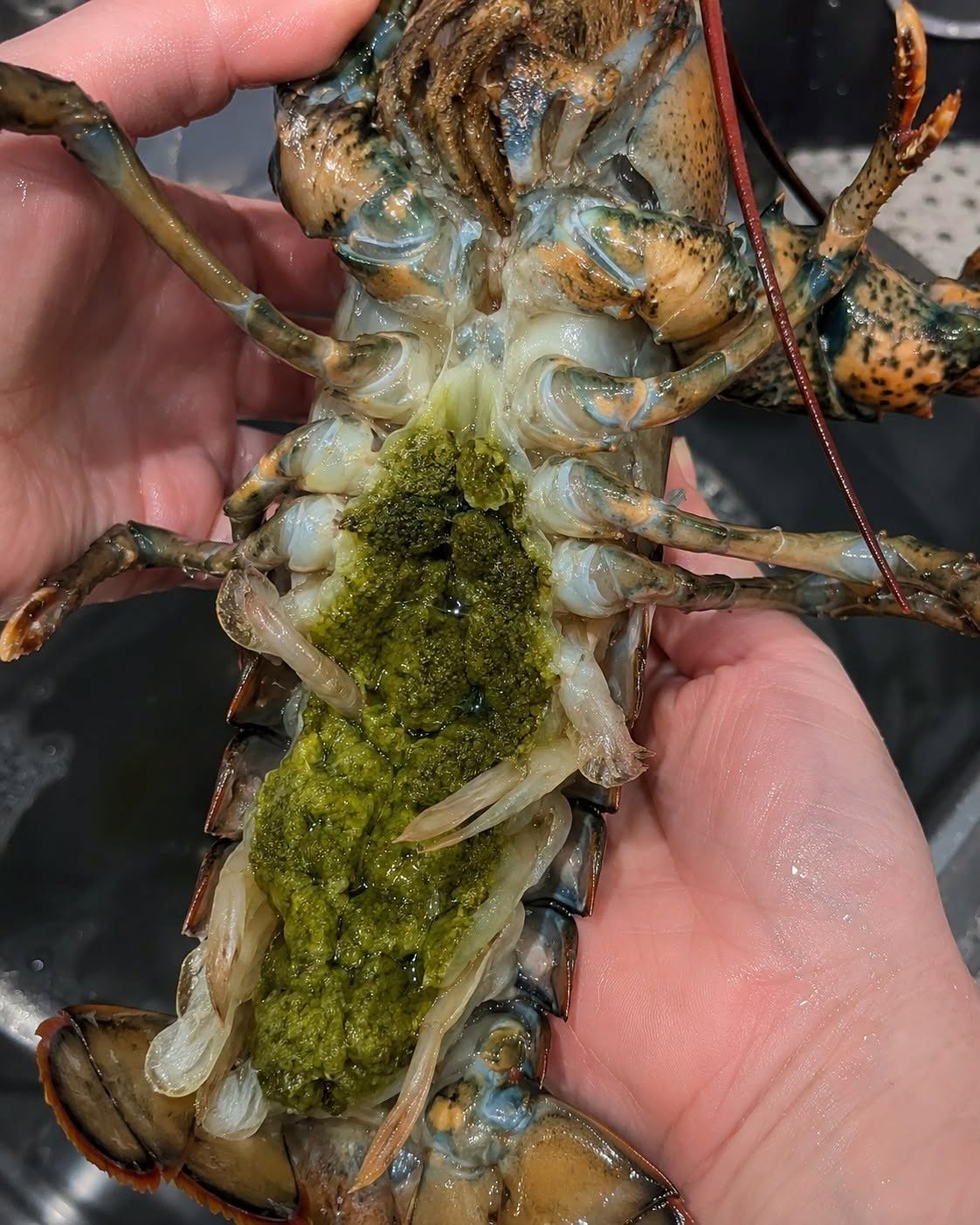
You’re preparing lobster for dinner, crack open the shell, and suddenly notice something unexpected:
A thick green or greenish-brown paste inside the lobster.
For anyone seeing it for the first time, the reaction is usually immediate:
“What on earth is THAT?” 😳
Some people assume the lobster has gone bad. Others think it’s waste, while longtime lobster lovers may tell you it’s actually a delicacy.
The green substance has a name: tomalley.
And while finding it inside a lobster can be completely normal, there’s an important food-safety detail you should know before deciding whether to eat it.
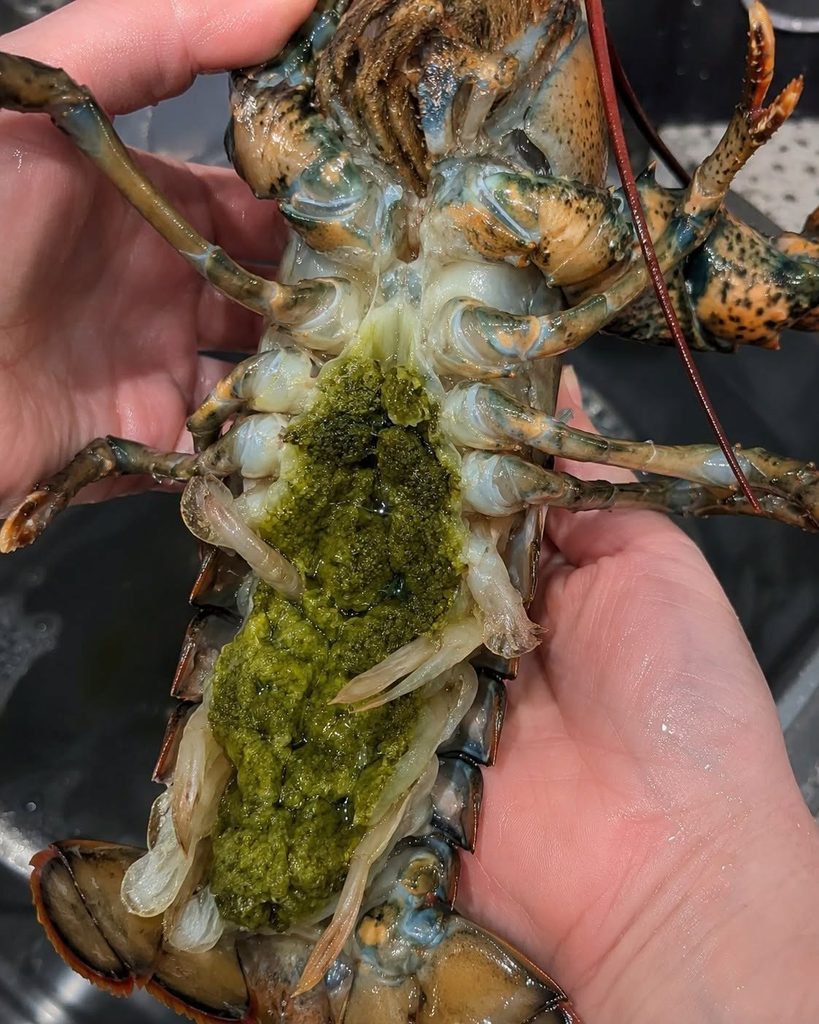
What Is the Green Stuff Inside a Lobster?
The green substance is called tomalley.
Tomalley is part of the lobster’s digestive system. More specifically, it’s the hepatopancreas, an organ that performs functions somewhat comparable to the liver and pancreas in other animals.
Its appearance can vary.
It may look:
- Green
- Olive green
- Greenish-brown
- Yellow-green
- Thick and creamy
- Soft and paste-like
So simply seeing green material inside your cooked lobster doesn’t automatically mean there’s anything wrong with it.
No, It Doesn’t Automatically Mean the Lobster Is Spoiled
This is probably the biggest misconception.
Someone opens a lobster, sees green paste and immediately thinks:
“This lobster has gone bad!”
Not necessarily.
Tomalley is a normal anatomical part of a lobster.
Its unusual appearance simply surprises people who aren’t familiar with whole lobster.
However, whether something is naturally present and whether you should eat it are two different questions.
And that’s where things become interesting.
Some People Actually Consider It a Delicacy
Believe it or not, some lobster lovers deliberately eat tomalley.
It has traditionally been valued for its strong, concentrated lobster flavor and creamy texture.
Some people eat a small amount directly with the lobster meat.
Others have traditionally mixed it into:
- Seafood sauces
- Butter
- Bisques
- Chowders
- Spreads
For people who enjoy it, the rich flavor can be one of their favorite parts of the lobster.
For others?
One look at that green paste is enough to make them put down the fork. 😅
But taste isn’t the main issue you should consider.
Here’s the Important Food-Safety Question
The lobster’s hepatopancreas has a filtering function.
Because of this, environmental contaminants and naturally occurring marine toxins can accumulate in tomalley.
That’s why public-health authorities have issued advice against eating lobster tomalley in certain regions.
For example, Maine public-health guidance advises people not to consume lobster tomalley, noting that contaminants can accumulate in this organ.
This advice is specifically about the tomalley—not necessarily the lobster meat itself.
What About the Lobster Meat?
Here’s the reassuring part.
Finding tomalley doesn’t automatically mean you need to throw away the entire lobster.
Public-health guidance distinguishes between the tomalley and the meat. Maine’s guidance, for example, says consumers should avoid the tomalley while noting that the same safety concern does not apply to the lobster meat in that advisory.
So don’t automatically assume:
“Green stuff = entire lobster is unsafe.”
That’s not what the guidance says.
Why Can Tomalley Accumulate Toxins?
Lobsters live and feed in marine environments.
Under certain environmental conditions, microscopic algae can produce natural toxins.
Marine animals can encounter these toxins through their food and environment.
Because tomalley functions as a digestive and filtering organ, some contaminants may become concentrated there.
That’s one reason food-safety advice for tomalley can be more cautious than advice for ordinary lobster muscle meat.
What Is Paralytic Shellfish Poisoning?
One concern associated with marine biotoxins is paralytic shellfish poisoning, often abbreviated PSP.
The toxins responsible can cause potentially serious symptoms.
Possible symptoms can include:
- Tingling
- Numbness around the mouth or face
- Nausea
- Headache
- Muscle weakness
Severe poisoning can become a medical emergency.
The FDA previously warned consumers to avoid American lobster tomalley because dangerous levels of PSP toxins could potentially accumulate there.
But Doesn’t Cooking Destroy the Toxin?
This is another important misconception.
You might assume:
“The lobster was thoroughly cooked, so everything inside must be safe.”
Unfortunately, cooking isn’t guaranteed to eliminate certain marine biotoxins.
The FDA has specifically noted that cooking does not eliminate PSP toxins that may be present in contaminated tomalley.
So cooking the lobster longer isn’t a reliable solution to this particular concern.
What Should You Do When You Find Green Tomalley?
If you’re following cautious public-health guidance, the simplest approach is:
Remove it and discard it.
Then enjoy the properly handled and cooked lobster meat.
You don’t need to panic.
You don’t need to assume the lobster is rotten solely because you found green material.
And you don’t necessarily need to throw the whole dinner away simply because tomalley is present.
How Can You Tell Tomalley From Spoilage?
This is an important distinction.
Green tomalley itself can be normal.
But seafood can still spoil if it has been improperly stored or handled.
Don’t rely on the color of the tomalley alone when judging freshness.
Pay attention to the entire lobster.
Warning signs may include:
- Strong unpleasant or rotten odor
- Unusual decomposition
- Questionable storage history
- Lobster left at unsafe temperatures
- Other obvious signs that the seafood has deteriorated
If you’re uncertain whether seafood was stored or handled safely, it’s better to be cautious.
Tomalley explains the green material.
It doesn’t guarantee that everything else about the lobster’s handling was appropriate.
What About the Red Stuff Inside a Female Lobster?
Green isn’t the only surprising color you may encounter.
Sometimes people open a lobster and discover bright red or coral-colored material.
This may be lobster roe, or eggs, from a female lobster.
Before cooking, roe can appear darker.
After cooking, it may turn a vivid reddish or coral color.
That’s why it’s sometimes called coral.
So depending on the lobster, you might encounter several different colors inside the shell.
Not everything unusual-looking is evidence of spoilage.
What About the White Material?
You may also notice white material inside or around cooked lobster.
Some white substances can simply be proteins released during cooking.
Again, context matters.
A strange-looking substance isn’t automatically dangerous simply because you haven’t seen it before.
When you’re dealing with seafood, proper sourcing, refrigeration, handling, and cooking are much more important than judging safety from one unusual color.
The Part Many First-Time Lobster Eaters Throw Away
It’s funny how differently people react to tomalley.
One person opens a lobster and says:
“Gross! Get rid of that!”
Another person at the same table might say:
“Wait! That’s the best part!”
Food traditions vary enormously.
Historically, some people have enjoyed tomalley specifically because of its concentrated flavor.
But modern food-safety recommendations are worth considering because contaminants may accumulate in this organ.
So even if someone tells you:
“My family has eaten it forever,”
that doesn’t invalidate current public-health guidance.
What If You Accidentally Ate a Small Amount?
Don’t immediately panic.
The presence of tomalley doesn’t mean it necessarily contains harmful levels of toxins.
Warnings exist because contamination can occur, not because every lobster contains dangerous tomalley.
If you’ve already eaten some and feel completely normal, there’s no reason to assume that something bad will happen.
However, if you develop concerning symptoms after eating shellfish—particularly numbness, tingling, significant weakness, breathing difficulty, or other severe symptoms—seek urgent medical attention.
Buying Lobster? Source Matters
Whenever possible, buy seafood from a reputable seller that follows appropriate food-safety and refrigeration practices.
Fresh seafood is highly perishable.
Whether you’re buying:
🦞 Lobster
🦀 Crab
🦐 Shrimp
🐟 Fish
🦪 Shellfish
proper handling matters from harvest to your kitchen.
Keep seafood appropriately refrigerated and follow safe preparation practices.
Don’t Leave Cooked Lobster Sitting Out for Hours
Sometimes the lobster itself is perfectly fine when served.
The problem happens afterward.
Dinner ends.
Everyone starts talking.
The dishes remain on the table.
Two or three hours pass.
Seafood shouldn’t be forgotten at room temperature for extended periods.
Refrigerate leftovers promptly and store them properly.
Food safety doesn’t stop when cooking ends.
Can You Save Leftover Lobster Meat?
Absolutely.
Properly stored cooked lobster meat can be delicious the next day.
You can use leftovers in:
- Lobster rolls
- Pasta
- Salads
- Omelets
- Seafood chowder
- Mac and cheese
- Sandwiches
Remove the meat from the shell if convenient, store it properly in the refrigerator, and use it promptly.
If the seafood develops a suspicious smell or you aren’t confident it was stored correctly, don’t take unnecessary risks.
Why Does This Question Go Viral So Often?
Because the photograph is shocking if you’ve never prepared a whole lobster.
Most people buy seafood already cleaned.
Shrimp arrive peeled.
Fish arrive filleted.
Crab may arrive prepared.
So when someone finally buys a whole lobster and opens the body cavity, they’re suddenly confronted with anatomy they normally never see.
Then comes the green paste.
And naturally:
“WHAT IS THIS?!”
It’s exactly the kind of kitchen mystery people immediately photograph and post online.
Let’s Clear Up the Biggest Myths
“Green stuff means the lobster is rotten.”
Not necessarily.
The green substance may simply be tomalley, a normal organ.
“It’s lobster poop.”
That’s an oversimplification.
Tomalley is the lobster’s hepatopancreas, an organ involved in digestion and filtering.
“Everyone eats it.”
No.
Some people consider it a delicacy, while others discard it.
“If it’s cooked, any toxins are destroyed.”
Not necessarily. Certain marine biotoxins associated with shellfish poisoning can survive cooking.
“If the tomalley might contain toxins, the lobster meat must be unsafe too.”
Not according to the cited advisories. The concern specifically focuses on tomalley, while lobster meat is treated separately.
So, Should You Eat the Green Stuff?
If you want the cautious answer:
Skip it.
Remove the tomalley and enjoy the lobster meat.
That’s particularly sensible when public-health authorities in the region where your lobster was harvested advise against consuming it.
Remember that seafood advisories can vary depending on species, harvest location, and environmental conditions.
The Bottom Line 🦞
That mysterious green paste inside your lobster has a name:
Tomalley.
It’s the lobster’s hepatopancreas and performs functions similar to a liver and pancreas.
Its greenish appearance can be completely normal and doesn’t automatically mean your lobster has spoiled.
Some people have traditionally considered tomalley a delicacy because of its rich flavor.
However, because this organ can accumulate environmental contaminants and marine toxins, public-health authorities have advised consumers against eating lobster tomalley in some regions.
So if you crack open your next lobster and suddenly discover a mysterious blob of green material, don’t panic.
You haven’t necessarily ruined dinner.
Remove the green material if you’re following the cautious approach, make sure the lobster has been properly handled and cooked, and enjoy the meat.
And now, when someone else at the table asks:
“Wait… what IS that green stuff?!”
You’ll know exactly what they’re looking at. 🦞😄