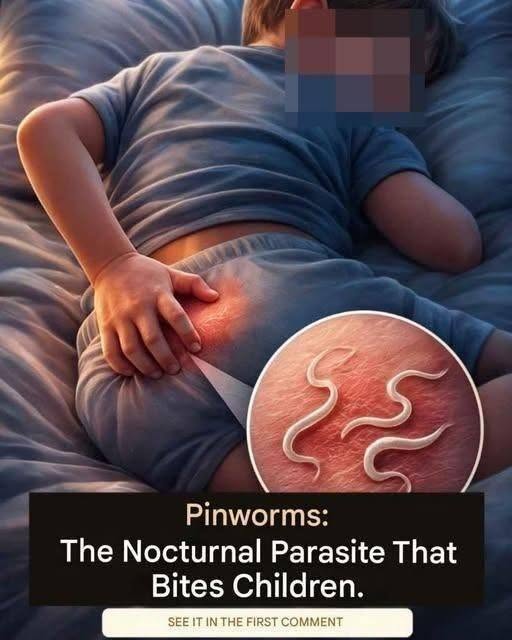
Your child goes to bed feeling perfectly fine, but a few hours later, the scratching begins. They toss and turn, wake up uncomfortable, and complain that their bottom feels itchy. If this happens repeatedly at night, there may be a surprising explanation: pinworms.
Pinworms are tiny intestinal parasites that commonly affect children. Although the thought of worms living inside the body can sound frightening, pinworm infections are usually treatable and rarely cause serious complications.
What makes these parasites particularly unusual is their nighttime behavior.
While a child sleeps, female pinworms can move out of the intestine and deposit microscopic eggs around the anus, triggering intense itching.
The resulting scratching can interfere with sleep and allow the infection to spread through a household.
But here’s something many parents don’t realize:
A child can have pinworms without showing obvious symptoms, and the infection can spread even in a very clean home.
Understanding how pinworms spread, what symptoms to watch for, and how treatment works can help families manage the problem effectively.
What Are Pinworms?
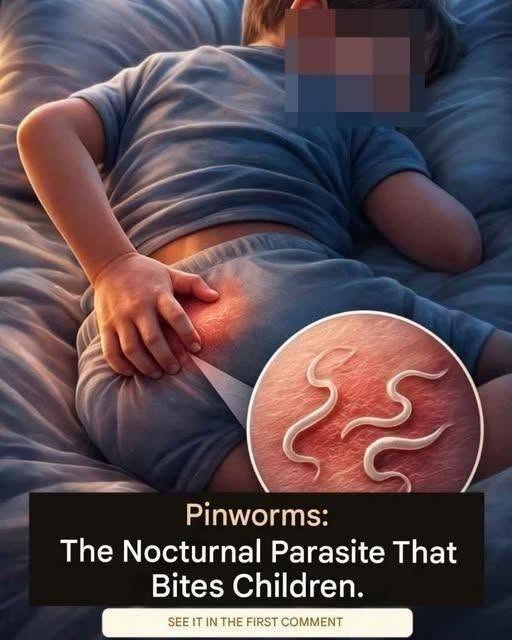
Pinworms are small, thin, white parasitic roundworms that live in the human intestine.
Their scientific name is Enterobius vermicularis.
The infection they cause is called enterobiasis, sometimes referred to as threadworm infection.
Adult female pinworms generally measure around 8–13 millimeters long, while males are smaller.
Their appearance resembles tiny pieces of white thread.
Unlike some intestinal parasites that require contaminated soil or animals to complete their life cycle, human pinworms spread primarily from person to person through microscopic eggs.
They are especially common among school-age children, although anyone can become infected.
Pinworms do not necessarily indicate poor hygiene or inadequate parenting.
They spread easily because their eggs are extremely small and can contaminate fingers, bedding, clothing, toys, and household surfaces.
Why Do Pinworms Cause Itching at Night?
This is one of the most distinctive features of pinworm infection.
During the day, adult pinworms live primarily in the large intestine.
At night, female worms may migrate outside the anus and deposit eggs on the surrounding skin.
The eggs and associated irritation can cause intense itching around the anal area.
This condition is known as perianal pruritus.
Children may scratch the affected area while sleeping, sometimes without realizing it.
Scratching can transfer microscopic eggs onto the fingers and beneath the fingernails.
If the child later touches their mouth, they may swallow the eggs and become reinfected.
Eggs may also spread to clothing, bedding, and shared surfaces.
This cycle explains why pinworm infections can persist or return after treatment if preventive measures are not followed.
Important: Pinworms do not bite children in the usual sense. The itching is mainly caused by the female worms depositing eggs and irritating the surrounding skin.
12 Signs and Symptoms of Pinworms in Children
Some children have no symptoms at all.
Others experience persistent discomfort, particularly at night.
Here are the most common signs parents should recognize.
1. Intense Itching Around the Anus
The hallmark symptom of pinworm infection is itching around the anal opening.
It often becomes more noticeable during the evening or overnight.
A child may repeatedly scratch their bottom, complain of discomfort, or seem unusually restless.
However, anal itching can also result from skin irritation, eczema, hygiene products, or other medical conditions.
Itching alone does not confirm pinworms.
2. Difficulty Sleeping
Nighttime itching can interrupt sleep.
Children may wake frequently, toss and turn, or struggle to settle.
Some become tired and irritable during the day because they haven’t slept well.
3. Frequent Scratching During the Night
Parents may notice their child reaching toward the anal area while sleeping.
This can happen unconsciously.
Repeated scratching may cause redness or irritation.
4. Small White Worms Near the Anus
In some cases, parents may see tiny white thread-like worms around the anal opening.
They are often easier to spot a few hours after the child falls asleep.
The worms may move.
Seeing an actual worm can strongly suggest pinworm infection, but a clinician can help confirm the diagnosis.
5. Tiny White Worms in Stool
Occasionally, pinworms may be visible in bowel movements.
However, many infections cannot be detected by simply looking at stool.
A normal-looking bowel movement does not rule out pinworms.
6. Redness or Irritation Around the Bottom
Persistent scratching can irritate delicate skin.
The affected area may become red, sore, or inflamed.
Severe scratching can occasionally break the skin and contribute to secondary bacterial infection.
7. Irritability or Mood Changes
Poor sleep can affect a child’s behavior.
They may become unusually irritable, distracted, or emotional.
These changes are nonspecific and can occur for many reasons.
8. Difficulty Concentrating
When nighttime itching repeatedly interrupts sleep, some children have trouble focusing at school.
Treating the underlying discomfort may help improve their rest.
9. Discomfort Around the Genital Area
In girls, pinworms may occasionally migrate toward the vulva or vaginal area.
This can cause irritation, itching, or inflammation.
Persistent genital symptoms should be evaluated by a healthcare professional rather than automatically attributed to pinworms.
10. Mild Abdominal Discomfort
Some children with pinworm infection report occasional abdominal discomfort.
However, many have no digestive symptoms.
Severe or persistent abdominal pain is not typical of uncomplicated pinworm infection and requires medical assessment.
11. Recurrent Nighttime Itching
If itching improves and then returns several weeks later, reinfection may be possible.
Pinworm eggs can spread within a household, making repeated exposure relatively common.
12. Other Household Members Develop Similar Symptoms
When siblings or caregivers begin experiencing nighttime anal itching, household transmission becomes a possibility.
Because some infected people have no symptoms, families may need coordinated treatment and hygiene measures.
How Do Children Get Pinworms?
Pinworms spread when a person swallows microscopic pinworm eggs.
This is known as fecal-oral transmission.
Although that sounds unpleasant, the process can happen easily during everyday activities.
For example, a child may scratch an itchy area, collect eggs beneath their fingernails, and later touch food or place their fingers in their mouth.
Eggs can also be transferred to surfaces and objects.
Common routes of exposure include:
- Unwashed hands.
- Fingernails.
- Shared toys.
- Contaminated bedding.
- Clothing and towels.
- Bathroom surfaces.
- Frequently touched household objects.
Pinworm eggs can survive on some indoor surfaces for approximately two to three weeks under favorable conditions.
This is one reason household hygiene is important during treatment.
Can Children Catch Pinworms at School?
Yes.
Schools, daycare centers, and other environments where children interact closely can facilitate transmission.
Young children frequently share toys and may not consistently wash their hands after using the bathroom.
Some also bite their nails or put their fingers in their mouths.
These behaviors can increase the likelihood of swallowing eggs.
However, pinworm infection is not proof that a school or daycare is dirty.
Even well-maintained environments can experience cases.
Can You Catch Pinworms From Dogs or Cats?
Human pinworms are not normally transmitted by household pets.
Dogs and cats do not serve as the usual hosts for Enterobius vermicularis.
A pet may have its own intestinal parasites, but these are different organisms.
Treating a dog or cat for worms will not eliminate a human pinworm infection.
The focus should remain on appropriate human treatment and hygiene.
The Pinworm Life Cycle Explained
Understanding the life cycle helps explain why infections can return.
Stage 1: Microscopic Eggs Are Swallowed
A person accidentally swallows pinworm eggs from contaminated hands, food, or objects.
Stage 2: Eggs Hatch
After ingestion, the eggs hatch in the intestine.
The young worms develop as they move through the digestive tract.
Stage 3: Adult Worms Live in the Intestine
The worms mature in the large intestine.
It generally takes several weeks for swallowed eggs to develop into egg-laying adults.
Stage 4: Female Worms Lay Eggs at Night
Gravid female worms migrate to the area around the anus and deposit eggs.
This can cause itching.
Stage 5: Eggs Spread Through Scratching
When a child scratches, eggs may contaminate the fingers and nails.
They can then spread to other surfaces or be swallowed again.
Stage 6: Reinfection Occurs
If eggs are swallowed again, the cycle can restart.
This is why treatment often includes a second medication dose and careful household hygiene.
How Can You Tell if Your Child Has Pinworms?
There are several ways pinworm infections may be identified.
The most appropriate method depends on the child’s symptoms and circumstances.
Looking for Worms at Night
A parent may occasionally see small white worms around the anal opening while the child sleeps.
They can resemble moving white threads.
If you notice something suspicious, contact your child’s healthcare professional.
A clear photograph may sometimes help with identification.
Avoid repeatedly disturbing the child or attempting invasive examinations.
The Tape Test
One commonly used diagnostic method is the adhesive tape test.
Pinworm eggs are deposited on the skin around the anus, so a stool sample often misses them.
The tape test collects eggs from the surrounding skin.
A clinician may recommend applying a piece of clear adhesive tape to the perianal skin first thing in the morning, before bathing or using the toilet.
The tape is then examined under a microscope.
Because egg laying can vary from night to night, samples may be collected on three consecutive mornings.
Follow the instructions provided by the healthcare professional or laboratory.
Why Stool Tests May Be Negative
Pinworm eggs are usually deposited outside the anus rather than passed consistently in stool.
For that reason, a routine stool examination is less useful than the tape test for detecting pinworms.
A negative stool test does not necessarily exclude infection.
How Are Pinworms Treated?
The good news is that pinworm infections are generally treatable.
Several antiparasitic medications can be used, depending on the country, the child’s age, and individual medical circumstances.
Common medicines include:
- Mebendazole.
- Albendazole.
- Pyrantel pamoate.
These medications work against the worms, but they do not reliably destroy all the eggs.
For this reason, treatment commonly involves a second dose approximately two weeks after the first.
The repeat dose helps address worms that may have hatched from eggs after initial treatment.
Medication selection and dosing should follow local guidance and the advice of a pharmacist or healthcare professional, especially for children younger than two years, pregnant individuals, or anyone with significant medical conditions.
Do not give multiple antiparasitic medicines together unless specifically instructed.
Why Is the Second Dose So Important?
One of the most common reasons pinworms return is that treatment was not completed as directed.
The initial medication targets existing worms.
However, eggs may remain in the environment or hatch afterward.
A second dose helps reduce the likelihood that newly developed worms will continue the infection.
Families should follow the full treatment schedule provided by their healthcare professional.
Should the Whole Family Be Treated?
Because pinworms spread easily among close contacts, treatment of household members at the same time is commonly recommended.
This may include people who do not have symptoms.
However, the exact approach can vary based on age, pregnancy status, medical conditions, and local recommendations.
A pharmacist or healthcare professional can advise on appropriate household treatment.
10 Hygiene Habits That Help Prevent Pinworms From Returning
Medication alone may not be enough if eggs continue circulating through the household.
These practical steps can help reduce reinfection.
1. Wash Hands Frequently
Handwashing is one of the most important preventive measures.
Encourage everyone to wash with soap and water after using the toilet, after changing diapers, and before preparing or eating food.
Supervise younger children when necessary.
2. Keep Fingernails Short and Clean
Pinworm eggs can collect beneath fingernails.
Keeping nails short makes them easier to clean.
Discourage nail biting and finger sucking.
3. Shower in the Morning
Morning bathing can help remove eggs deposited around the anus overnight.
A shower may be preferable to sharing bathwater during an active household infection.
Gently wash the affected area without harsh scrubbing.
4. Change Underwear Daily
Fresh underwear helps reduce the accumulation and transfer of eggs.
Change underwear each morning during treatment.
5. Wash Bedding and Sleepwear
Wash pajamas, underwear, towels, and bedding regularly during treatment.
Use an appropriate hot-water wash when the fabric allows, and dry items thoroughly.
Follow the garment care instructions.
6. Avoid Shaking Dirty Bedding
Shaking sheets or clothing can disperse particles into the surrounding environment.
Handle laundry carefully and place it directly into the wash.
7. Clean Frequently Touched Surfaces
Pay attention to bathroom fixtures, toilet seats, door handles, and other frequently touched objects.
Routine cleaning helps reduce environmental contamination.
8. Vacuum and Damp-Dust
Vacuum floors and use a damp cloth to remove dust from surfaces.
Avoid unnecessary dry sweeping that can spread dust.
9. Discourage Scratching
Explain to children that scratching can worsen irritation and spread eggs.
Comfortable, close-fitting underwear at night may help limit direct scratching.
10. Continue Hygiene Measures After Treatment
Maintain careful hygiene during the treatment period and for at least two weeks after the final medication dose, or as directed by a healthcare professional.
This helps interrupt the reinfection cycle.
Are There Natural Remedies That Kill Pinworms?
Many websites promote home remedies such as garlic, coconut oil, pumpkin seeds, apple cider vinegar, and herbal mixtures.
However, these methods have not been shown to reliably cure human pinworm infections.
Some may cause irritation or digestive side effects.
Others may delay effective treatment.
Let’s examine a few popular claims.
Garlic
Garlic is sometimes described as a natural antiparasitic treatment.
Although certain garlic compounds have been studied in laboratory settings, there is insufficient clinical evidence that eating garlic cures pinworm infection.
Never apply raw garlic to a child’s anal or genital area.
It can cause severe irritation or chemical burns.
Coconut Oil
Coconut oil is sometimes promoted as a way to kill intestinal worms.
There is no convincing evidence that it eliminates pinworms in humans.
Applying oils to irritated skin may also interfere with appropriate assessment or treatment.
Pumpkin Seeds
Pumpkin seeds are nutritious and can be part of a balanced diet.
However, they should not be relied upon as a treatment for pinworm infection.
Apple Cider Vinegar
There is no reliable evidence that drinking or applying apple cider vinegar cures pinworms.
Undiluted vinegar can irritate skin and mucous membranes.
Herbal Parasite Cleanses
Products advertised as parasite cleanses may contain concentrated herbs with uncertain effectiveness and safety.
Some can cause adverse reactions or interact with medications.
Children should not be given unproven parasite-cleansing supplements.
The most reliable approach is appropriate antiparasitic medication combined with household hygiene measures.
Can Pinworms Cause Serious Health Problems?
Most pinworm infections are mild.
The most common complications involve itching, disturbed sleep, and skin irritation.
However, some cases may cause additional problems.
Skin Infection From Scratching
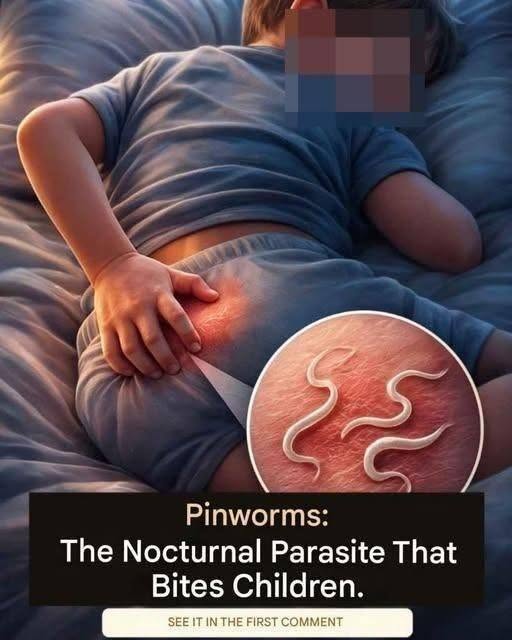
Repeated scratching can damage the skin.
Broken skin may become infected with bacteria.
Increasing redness, warmth, swelling, pain, or discharge should be assessed.
Vulvar or Vaginal Irritation
In girls, pinworms can occasionally migrate into the genital area.
This may cause irritation or inflammation.
Persistent symptoms need medical evaluation.
Sleep Disturbance
Repeated nighttime itching may interfere with sleep and affect daytime functioning.
Recurrent Infection
Reinfection is common when eggs remain in the environment or household members are not treated appropriately.
Fortunately, repeated infections can often be managed successfully with coordinated treatment and prevention.
Rare complications have been reported, but they are not typical of uncomplicated pinworm infection.
Can Adults Get Pinworms Too?
Yes.
Although pinworms are particularly common in children, adults can become infected.
Parents, caregivers, teachers, and other household members may be exposed through contaminated hands or surfaces.
Adults can experience the same nighttime anal itching.
Some adults have no symptoms.
This is why coordinated household treatment is often recommended when a family member is diagnosed.
How Long Can Pinworms Survive?
Adult pinworms generally live for several weeks in the human intestine.
Their eggs can remain viable on contaminated surfaces for roughly two to three weeks under favorable conditions.
This combination makes reinfection possible.
Even if treatment eliminates adult worms, exposure to remaining eggs may restart the cycle.
Completing medication as directed and maintaining hygiene measures helps reduce that risk.
Can Pinworms Go Away Without Treatment?
Pinworm infections may eventually resolve if reinfection is completely prevented.
However, avoiding reinfection can be difficult, especially in households with young children.
Appropriate medication is generally the more reliable approach.
Relying on untreated infection may prolong discomfort and allow transmission to others.
If you suspect pinworms, consult a healthcare professional or pharmacist about treatment.
Why Does My Child Still Itch After Pinworm Treatment?
There are several possible explanations.
First, irritated skin may take time to settle even after the worms have been treated.
Second, reinfection may have occurred.
Third, treatment may have been incomplete or incorrectly administered.
Finally, the itching may be caused by something other than pinworms.
Other possibilities include eczema, contact dermatitis, fungal irritation, or other skin conditions.
If symptoms continue despite appropriate treatment, your child’s healthcare professional can reassess the diagnosis.
Do not repeatedly administer antiparasitic medication without professional guidance.
Pinworms vs. Other Causes of Nighttime Itching
Not every child who scratches at night has a parasitic infection.
Other possible causes include:
Eczema
Dry, inflamed skin may become particularly itchy at night.
Contact Dermatitis
Scented wipes, soaps, detergents, and other products can irritate sensitive skin.
Poorly Tolerated Hygiene Products
Harsh cleaning products may cause redness or burning around the anal area.
Fungal or Bacterial Skin Conditions
Certain infections can cause localized irritation.
Constipation or Anal Fissures
Painful bowel movements and small tears in the anal skin may produce discomfort.
Other Dermatological Conditions
Persistent itching may require examination to identify the cause.
If the symptoms are unclear, a medical evaluation is more useful than assuming pinworms are responsible.
When Should You See a Doctor?
Contact a healthcare professional if:
- Your child has persistent nighttime anal itching.
- You see worms near the anus or in stool.
- Symptoms return after treatment.
- The skin becomes very red, painful, swollen, or infected.
- Your child has genital irritation or discharge.
- Your child is younger than two years old and you suspect pinworms.
- You are unsure which treatment is appropriate.
- Multiple household members have recurring symptoms.
Seek prompt medical care for severe abdominal pain, significant illness, or symptoms that do not fit a straightforward pinworm infection.
Frequently Asked Questions About Pinworms
What Is the Main Sign of Pinworms in Children?
The most characteristic symptom is itching around the anus, especially at night.
Can Pinworms Be Seen With the Naked Eye?
Yes. Adult pinworms may look like tiny white moving threads.
Why Are Pinworms More Active at Night?
Female pinworms commonly migrate to the skin around the anus at night to deposit eggs.
Do Pinworms Bite Children?
No. Pinworms do not cause itching through biting in the usual sense. The irritation is mainly associated with egg deposition around the anus.
Can a Child Have Pinworms Without Symptoms?
Yes. Some infected children have no noticeable symptoms.
Can Pinworms Spread Through Bedding?
Yes. Microscopic eggs may contaminate bedding, clothing, and household surfaces.
Can Pinworms Spread Through Hugging?
Ordinary hugging is not the primary transmission route. Infection occurs when eggs are swallowed, usually after contamination of hands or objects.
Can Pets Give Children Pinworms?
Human pinworms are not normally transmitted by dogs or cats.
Is Pinworm Infection a Sign of Poor Hygiene?
No. Pinworms can spread in any household, although good hygiene helps reduce transmission.
How Soon Does Treatment Work?
Antiparasitic medications target the worms, but itching may not disappear immediately. Follow the prescribed treatment schedule, including the repeat dose when recommended.
Why Do Pinworms Keep Coming Back?
Reinfection can occur when microscopic eggs remain on hands, bedding, clothing, or household surfaces.
Should My Child Stay Home From School?
Policies vary by location and school. Many children can return after beginning appropriate treatment, but follow local public-health or school guidance.
Can Pinworms Cause Weight Loss?
Significant weight loss is not typical of uncomplicated pinworm infection. Unexplained weight loss warrants medical evaluation.
Are Pinworms Dangerous During Pregnancy?
Pinworm infection itself is usually not serious, but medication choices during pregnancy require professional advice.
Can Garlic Cure Pinworms?
There is insufficient clinical evidence that garlic reliably treats human pinworm infections.
Do You Need to Disinfect the Entire House?
A complete chemical disinfection of every surface is generally unnecessary. Focus on handwashing, laundering, bathroom hygiene, and routine cleaning.
A Simple Family Routine During Pinworm Treatment
Managing pinworms can feel overwhelming, especially when several children share bedrooms and bathrooms.
A simple daily routine can make the process more manageable.
In the Morning
Have children shower or wash the anal area gently.
Change underwear and sleepwear.
Wash hands thoroughly.
Prepare clean clothes for the day.
During the Day
Encourage regular handwashing.
Keep fingernails short.
Discourage nail biting.
Clean frequently touched bathroom surfaces.
Avoid sharing towels.
In the Evening
Put on clean underwear and pajamas.
Encourage handwashing before bedtime.
Avoid unnecessary scratching.
Follow the medication schedule provided by your healthcare professional.
On Laundry Days
Wash bedding, towels, underwear, and pajamas according to appropriate fabric-care instructions.
Avoid shaking contaminated laundry.
Dry items thoroughly.
During the Following Weeks
Continue preventive hygiene.
Ensure the second medication dose is taken when recommended.
Monitor for recurring symptoms.
Contact a healthcare professional if itching persists or returns.
The Emotional Side of Pinworms: Helping Children Feel Comfortable
Discovering that your child has intestinal worms can be upsetting.
Some children may feel embarrassed or frightened when they learn what is causing the itching.
Parents can help by explaining the situation calmly.
Use simple, reassuring language.
For example:
“Sometimes tiny worms can get into our bodies and make our skin itchy. There is medicine that can help, and we’ll all work together to keep our hands and home clean.”
Avoid blaming children for scratching or forgetting to wash their hands.
Young children are still learning hygiene habits.
Shame and fear do not help prevent reinfection.
Clear explanations, practical routines, and appropriate treatment are much more effective.
Final Thoughts: The Tiny Nighttime Parasite Every Parent Should Know About
Pinworms may be small, but they can create significant discomfort for children and families.
The most recognizable symptom is persistent itching around the anus, particularly at night.
Because the worms lay eggs on the surrounding skin, scratching can transfer microscopic eggs to hands, fingernails, clothing, and bedding.
This makes reinfection and household transmission relatively easy.
Fortunately, pinworm infections are usually manageable.
Appropriate antiparasitic medication, a repeat dose when recommended, and consistent hygiene practices are the foundations of effective treatment.
Parents should also remember that pinworms are not a sign of neglect or an unclean home.
They are a common childhood infection.
If your child repeatedly wakes up scratching, complains of nighttime itching, or has visible tiny white worms near the anal area, consider pinworms as one possible explanation.
Seek professional advice for diagnosis and treatment rather than relying on unproven home remedies.
And perhaps most importantly, remember that early recognition can help restore your child’s comfort and sleep.
Sometimes, the reason a child cannot sleep isn’t a nightmare or an uncomfortable mattress. It may be a tiny parasite that becomes most noticeable after the lights go out.
A Question for Parents
Have you ever noticed your child scratching frequently at night without knowing why?
Did you know that pinworms can cause nighttime itching even when a child has no other obvious symptoms?
Share this information with other parents and caregivers. Understanding the signs, treatment, and prevention of pinworms can help families respond calmly and effectively.