Have your once-white pillows turned yellow, stained, or unpleasant-smelling? Before you throw them away, discover how to wash pillows properly, remove stubborn discoloration, and keep your bedding fresh, clean, and comfortable.
There’s something wonderful about climbing into a bed with fresh sheets and soft, clean pillows.
But what happens when you remove your pillowcases and discover something unpleasant underneath?
Your beautiful white pillows have turned yellow.
Some have brownish stains.
Others smell musty, even though you wash your pillowcases regularly.
And suddenly, you start wondering whether it’s time to buy new pillows.
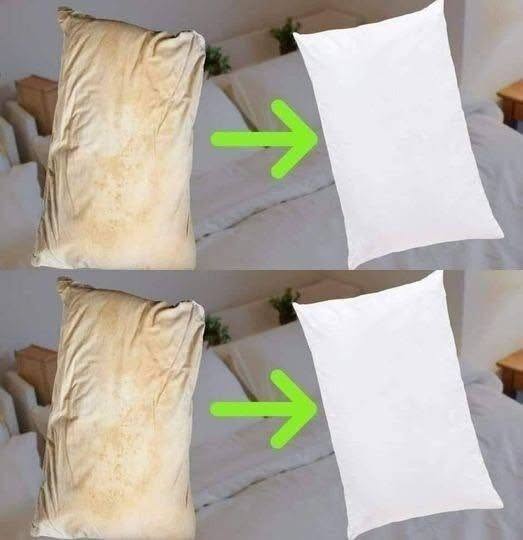
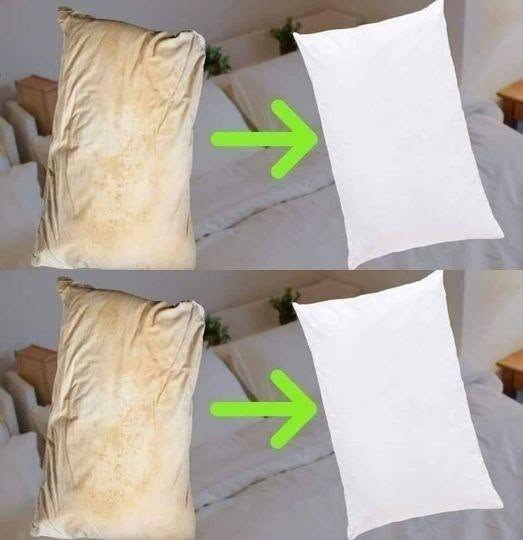
A viral social media image has been attracting attention with a simple before-and-after comparison.
On one side, there’s a heavily yellowed pillow.
On the other, a bright white pillow that looks almost brand new.
The accompanying caption promises:
“Here’s how to clean dirty bed pillows to leave them white and smelling sweet.”
It sounds almost too good to be true.
But can you really restore yellowed pillows without spending money on replacements?
The answer is encouraging: Many washable pillows can be cleaned successfully at home, and some yellow stains can become noticeably lighter with the right treatment.
However, the best cleaning method depends on the pillow’s material, the age of the stains, and the manufacturer’s care instructions.
Here are 15 practical cleaning tips to help refresh your pillows, reduce discoloration, and keep your bed feeling cleaner.
Why Do White Pillows Turn Yellow?
Before trying to remove stains, it’s helpful to understand what causes them.
Many people assume yellow pillows are simply dirty.
But the explanation is more complicated.
Over time, pillows absorb moisture and substances from your skin and hair.
Even when you use pillowcases, some of these substances can gradually reach the pillow itself.
1. Sweat
Sweat is one of the most common contributors to pillow discoloration.
During sleep, your body naturally releases moisture.
Some of that moisture can pass through the pillowcase and into the pillow.
Over time, accumulated sweat and other residues may contribute to yellow staining.
2. Natural Skin Oils
Your skin produces sebum, a natural oil that helps protect it.
When your face and head rest against a pillow, some of these oils can transfer to the fabric.
Repeated exposure can gradually discolor the surface.
3. Hair Products
Conditioners, leave-in treatments, styling creams, and hair oils may leave residues on pillowcases.
These substances can eventually affect the pillow underneath.
4. Saliva
Drooling during sleep is normal.
However, repeated moisture exposure may leave visible marks.
5. Skincare Products
Night creams, moisturizers, and other facial products can transfer onto bedding.
Some ingredients may leave oily residues or interact with fabrics.
6. Incomplete Drying
A pillow that remains damp after washing may develop unpleasant odors.
Persistent moisture can also encourage microbial growth.
That’s why proper drying is just as important as washing.
Can Yellow Pillows Really Become White Again?
Sometimes, yes.
Many stains caused by sweat, body oils, and ordinary use can become lighter after appropriate cleaning.
However, results vary.
Fresh stains are generally easier to remove than old, deeply embedded discoloration.
Some yellowing may be permanent because of fabric aging, oxidation, or changes in the filling.
And certain pillow materials cannot tolerate machine washing or soaking.
The goal should be a hygienically cleaned, thoroughly dried pillow—not necessarily a perfectly white one.
A pillow can be clean even if some discoloration remains.
1. Check the Care Label Before Washing
This is the most important first step.
Not every pillow can be washed the same way.
Different fillings react differently to water, detergent, agitation, and heat.
Some pillows can be machine-washed.
Others require gentle hand cleaning.
And some should never be submerged in water.
Common Pillow Types
| Pillow material | Typical cleaning approach |
|---|---|
| Polyester fiberfill | Often machine-washable |
| Down or feather | Some are machine-washable with special care |
| Memory foam | Usually spot-clean only |
| Solid latex foam | Usually spot-clean only |
| Shredded foam | Depends on construction and manufacturer |
| Specialty orthopedic pillows | Follow specific care instructions |
Always follow the actual product label.
If the care label is missing, identify the pillow material before attempting a full wash.
2. The Simple Washing Machine Method for Washable Pillows
If your pillow is machine-washable, a regular cleaning cycle may remove accumulated residues and improve its appearance.
What You’ll Need
- A washing machine.
- A suitable laundry detergent.
- Access to clean water.
- A dryer or another appropriate drying method.
Step-by-Step Instructions
Step 1: Remove the pillowcase and protector.
Wash these separately according to their care labels.
Step 2: Inspect the pillow.
Check for tears, damaged seams, or leaking filling.
Repairing a damaged pillow may be necessary before washing.
Step 3: Pre-treat visible stains.
Apply a small amount of appropriate liquid laundry detergent to the stained fabric.
Gently work it into the surface.
Follow the detergent manufacturer’s directions.
Step 4: Load the washing machine carefully.
For many conventional top-loading machines, washing two compatible pillows together can help balance the load.
However, the machine’s design and capacity matter.
Do not overload the washer.
Step 5: Select an appropriate cycle.
Use the temperature and cycle recommended on the care label.
A gentle cycle is often suitable for delicate fillings.
Step 6: Rinse thoroughly.
An additional rinse may help remove detergent residue if permitted by the manufacturer’s instructions.
Step 7: Dry completely.
This final step is essential.
Never return a damp pillow to your bed.
3. Use Oxygen Bleach for Stubborn Yellow Stains
One of the most useful laundry products for certain yellowed white pillows is oxygen-based bleach.
Unlike chlorine bleach, oxygen bleach typically relies on oxygen-releasing ingredients to help lift stains.
It is often used for laundry whitening and stain removal.
However, it is not suitable for every pillow.
How to Use It Safely
Check both the pillow’s care label and the oxygen bleach product instructions.
If compatible, add the recommended amount during washing or use it as directed for pre-treatment.
Never exceed the product’s instructions.
Do not assume that longer soaking or stronger concentrations will produce better results.
Important Precautions
Oxygen bleach may not be appropriate for:
- Certain delicate fabrics.
- Some feather or down products.
- Foam pillows.
- Specialty pillow materials.
- Items with incompatible dyes or finishes.
Always test products on an inconspicuous area when appropriate.
4. Pre-Treat Sweat and Body Oil Stains
Yellow pillow stains often contain oily residues.
A suitable liquid laundry detergent may help loosen them before washing.
What to Do
Apply a small amount of detergent to the stained area.
Gently rub the fabric with your fingers or a soft cloth.
Allow the product to sit for the time recommended on its label.
Then wash the pillow according to its care instructions.
Avoid aggressive scrubbing.
Excessive friction can damage the pillow’s outer fabric or filling.
This method works best on washable pillows.
5. Can Baking Soda Make Yellow Pillows White Again?
Baking soda is frequently recommended in viral pillow-cleaning hacks.
But what does it actually do?
Baking soda, also called sodium bicarbonate, can help with some household odors.
It may also have mild cleaning properties in certain situations.
However, it is not a powerful whitening agent.
Baking soda alone is unlikely to restore deeply yellowed pillows to bright white.
For machine-washable pillows, an appropriate detergent and a compatible laundry stain remover are usually more dependable choices.
A Better Way to Think About Baking Soda
It may help with certain odors, but it should not replace proper washing.
Avoid pouring large amounts into a pillow or using it on materials that cannot be thoroughly cleaned afterward.
Residue can remain inside the filling.
6. Should You Mix Baking Soda and Vinegar?
Many online cleaning videos recommend combining baking soda with white vinegar.
The mixture creates dramatic fizzing.
It looks powerful.
But the chemistry tells a different story.
Baking soda is alkaline.
Vinegar is acidic.
When mixed, they react and partially neutralize one another.
The fizzing is largely caused by carbon dioxide gas being released.
Although the bubbling can have limited mechanical cleaning effects in some situations, the mixture is not a magical stain remover.
For pillow cleaning, using a suitable detergent according to the care label is generally more reliable.
And never mix vinegar with chlorine bleach or other incompatible cleaning chemicals.
7. How to Wash Polyester Pillows
Polyester fiberfill pillows are among the easiest types to clean when the manufacturer allows machine washing.
Their synthetic filling can often tolerate water and gentle agitation.
Recommended Approach
Check the label.
Use a mild detergent.
Select the appropriate washing cycle.
Avoid excessive detergent.
Rinse thoroughly.
Dry according to the manufacturer’s instructions.
How to Keep Them Fluffy
During drying, periodically check whether the filling has clumped.
If the care label permits tumble drying, clean dryer balls may help separate the filling.
Remove the pillows occasionally and gently redistribute the filling by hand.
Continue drying until the center is completely dry.
8. How to Wash Feather and Down Pillows
Feather and down pillows require extra care.
Some can be machine-washed, but others have specific restrictions.
Water and detergent can affect the natural filling if the washing and drying process is not handled correctly.
Important Tips
Use the washing method recommended by the manufacturer.
Choose an appropriate detergent.
Avoid unnecessary harsh chemicals.
Rinse thoroughly.
Dry completely using the approved temperature.
Drying may take longer than expected.
Feathers and down can retain moisture deep inside the pillow.
If the filling remains damp, the pillow may develop an unpleasant odor.
Check the center carefully before returning it to use.
9. Never Put Solid Memory Foam Pillows in the Washing Machine Unless Specifically Allowed
Memory foam pillows are different from traditional fiberfill pillows.
Their internal structure can be damaged by excessive water and mechanical agitation.
Many manufacturers advise against machine washing solid memory foam.
How to Clean Memory Foam
Remove the washable cover if the pillow has one.
Wash the cover according to its label.
Use a lightly damp cloth and a suitable mild cleaning solution to spot-clean the foam surface, if permitted.
Avoid saturating the material.
Allow the pillow to air-dry completely in a well-ventilated area.
Do not expose it to high heat unless the manufacturer specifically allows it.
Why This Matters
A soaked memory foam pillow may take a very long time to dry.
Moisture trapped inside can create hygiene problems.
Excessive agitation may also damage the foam.
10. The Secret to Fresh-Smelling Pillows Is Proper Drying
Many people focus entirely on washing.
But drying is equally important.
A pillow may look clean on the outside while remaining damp inside.
That trapped moisture can contribute to musty odors and microbial growth.
How to Dry Pillows Properly
Follow the care label.
If tumble drying is allowed, use the recommended heat setting.
Check the pillow periodically.
Gently redistribute filling when appropriate.
Continue drying until there is no remaining dampness.
For pillows that require air drying, choose a clean, well-ventilated location.
Avoid returning the pillow to a pillowcase until it is completely dry.
A pillow that still feels cool and damp in the center is not ready for use.
11. Can Sunlight Help Freshen Pillows?
Fresh air and appropriate ventilation can help pillows dry and reduce lingering moisture.
Some people also place pillows outdoors on sunny days.
However, direct sunlight is not suitable for every material.
Certain foams and fabrics can deteriorate with prolonged exposure to ultraviolet light or heat.
Sunlight should not be considered a guaranteed disinfectant.
If your pillow’s manufacturer allows outdoor airing, choose a clean, dry environment and avoid leaving it outside where it may collect pollen, dust, or moisture.
12. Use Pillow Protectors to Prevent Future Yellowing
One of the simplest ways to keep pillows cleaner for longer is to use a washable pillow protector.
A pillow protector sits directly over the pillow, beneath the regular pillowcase.
It creates an additional barrier against:
- Sweat.
- Skin oils.
- Saliva.
- Hair products.
- Everyday dirt.
Some protectors are designed to resist moisture.
Others are made from breathable fabrics.
Why Pillow Protectors Are Worth Using
They are generally easier to wash than the pillow itself.
By reducing direct contact between the pillow and body oils or moisture, they can help slow staining.
For best results, wash the protector according to its label.
13. Wash Pillowcases Regularly
Even a freshly cleaned pillow can become stained again if its pillowcase is not washed often enough.
Pillowcases collect skin oils, sweat, and hair products.
Regular laundering helps reduce buildup.
For many households, washing pillowcases about once a week is a reasonable starting point.
More frequent washing may be useful if you sweat heavily, use oily hair products, or have particular hygiene needs.
Always follow fabric care instructions.
14. Don’t Overload the Washing Machine
One common laundry mistake is trying to wash too many bulky items at once.
Pillows absorb water and can become heavy.
An overloaded washer may not clean or rinse them effectively.
It can also become unbalanced.
What to Do Instead
Check the washing machine’s capacity.
Follow the manufacturer’s instructions for bulky items.
Wash only the number of pillows that the machine can accommodate safely.
For certain machine types, balancing the load with two similar pillows may help.
But do not force oversized pillows into a small machine.
If necessary, use a suitable larger-capacity washer.
15. Know When It’s Time to Replace a Pillow
Not every yellowed pillow can or should be restored.
Some pillows become permanently discolored.
Others lose their shape or develop persistent odors.
And over time, the filling may no longer provide adequate support.
Signs You May Need a New Pillow
Consider replacing your pillow if:
- It has persistent musty odors after proper cleaning and drying.
- Visible mold is present.
- The filling has become severely clumped.
- It no longer supports your head and neck comfortably.
- The outer fabric is badly damaged.
- The filling is breaking down.
- It remains damp or cannot be dried thoroughly.
A clean appearance is not the only factor.
Comfort, structural condition, and hygiene matter too.
The Viral Pillow Whitening Trick: Does It Really Work?
The dramatic before-and-after image suggests that a heavily stained pillow can become perfectly white with one simple cleaning trick.
But real results depend on several factors.
A relatively new polyester pillow with sweat stains may respond well to washing and stain treatment.
An older pillow with years of embedded discoloration may improve only slightly.
A foam pillow may not be suitable for soaking at all.
And some discoloration results from material aging rather than removable dirt.
What Actually Makes the Biggest Difference?
The most reliable approach involves:
- Identifying the pillow material.
- Following the care label.
- Pre-treating compatible stains.
- Using an appropriate detergent.
- Adding a suitable oxygen-based laundry product only when allowed.
- Rinsing thoroughly.
- Drying completely.
These steps are more dependable than copying an unverified mixture from a viral video.
How Often Should You Wash Your Pillows?
There is no universal schedule for every pillow type.
Cleaning frequency depends on the material, use, climate, and manufacturer’s recommendations.
For many washable pillows, cleaning approximately every three to six months may be reasonable.
However, the care label should take priority.
Pillows may need more frequent attention if they are exposed to heavy sweating, spills, or other contamination.
Memory foam and other non-washable pillows may require regular cover washing and occasional surface cleaning instead.
The key is to establish a routine that is suitable for your specific bedding.
Why Do Pillows Smell Bad Even After Washing?
If a pillow still smells unpleasant after laundering, several factors may be responsible.
Incomplete Drying
Moisture trapped inside the filling can create musty odors.
Detergent Residue
Using too much detergent can make rinsing difficult.
Old Body Oil Buildup
Deeply embedded oils may not be removed completely by one wash.
Filling Deterioration
An aging pillow may retain odors or lose its structure.
Mold or Mildew
Persistent moisture can contribute to fungal growth.
If you suspect mold inside the pillow, replacing it is generally safer than attempting repeated home cleaning.
Do not continue sleeping on a pillow with visible mold or persistent unexplained mustiness.
Can You Use Chlorine Bleach on Yellow Pillows?
Chlorine bleach may seem like the obvious choice for whitening.
However, it is not suitable for many pillow materials.
It can damage certain fibers, affect finishes, and degrade some fillings.
In some circumstances, improper use may even worsen discoloration.
Only use chlorine bleach if the pillow’s care label explicitly permits it and the product instructions are followed.
Never combine chlorine bleach with vinegar, ammonia, or other incompatible chemicals.
These mixtures can release dangerous gases.
When in doubt, choose the cleaning method recommended by the pillow manufacturer.
Does Hydrogen Peroxide Remove Yellow Pillow Stains?
Hydrogen peroxide is an oxidizing agent used in some laundry stain-removal products.
It may help lighten certain stains on compatible fabrics.
However, concentrated or improperly used hydrogen peroxide can damage materials or cause unwanted discoloration.
It should not be poured indiscriminately into pillows.
If using a peroxide-based laundry product, follow its label and confirm that the pillow material is compatible.
Avoid homemade mixtures with uncertain concentrations or chemical interactions.
How to Keep Pillows White for Longer
Once your pillows are clean, prevention becomes the most useful strategy.
Here are several everyday habits that can help.
Use a Pillow Protector
A washable protector creates an additional barrier against body oils and moisture.
Wash Bedding Regularly
Clean pillowcases and sheets help reduce residue transfer.
Avoid Going to Bed With Wet Hair
Excess moisture can soak into pillowcases and pillows.
Let Hair Products Absorb
Heavy oils and leave-in products may transfer onto bedding.
Address Night Sweating
If sweating is frequent, consider breathable bedding and a comfortable sleeping environment.
Persistent or unexplained night sweats should be discussed with a healthcare professional.
Air Out Bedding When Appropriate
Good ventilation helps reduce trapped moisture.
Replace Worn Pillows
A pillow that has lost its shape or developed persistent hygiene problems may no longer be worth restoring.
Are Yellow Pillows Unhealthy?
A yellow pillow is not automatically dangerous.
Discoloration alone does not prove the presence of harmful microorganisms.
Many stains result from ordinary body oils and sweat.
However, pillows can accumulate dust, skin particles, and other materials over time.
For people with allergies or asthma, bedding hygiene may be especially important.
Regular cleaning of compatible pillows and their covers can help reduce certain allergens.
If a pillow develops visible mold, persistent mustiness, or other signs of contamination, replacement may be appropriate.
Can Dirty Pillows Cause Acne?
Pillowcases can accumulate oils, skincare residues, and dirt.
These substances may contribute to skin irritation in some people.
However, acne is a complex condition influenced by hormones, skin biology, inflammation, and other factors.
Dirty pillowcases are not the sole cause.
Washing pillowcases regularly and using suitable skincare products may help support skin hygiene.
Persistent acne should be addressed with appropriate dermatological care.
Are Dust Mites Living Inside Your Pillow?
Dust mites are microscopic organisms that can live in household dust and bedding.
They feed primarily on shed skin particles.
Their allergens can trigger symptoms in some people with allergies or asthma.
Regular laundering of suitable bedding, use of appropriate allergen-resistant covers, and moisture control may help reduce exposure.
However, not every yellow stain is caused by dust mites.
Discoloration cannot reliably tell you whether dust mites are present.
Common Pillow-Cleaning Mistakes to Avoid
Even well-intentioned cleaning can damage a pillow.
Here are some mistakes worth avoiding.
Washing Memory Foam Like Polyester
Solid memory foam usually requires a different cleaning method.
Using Too Much Detergent
Excess detergent can be difficult to rinse from thick filling.
Mixing Random Cleaning Chemicals
Some combinations are ineffective, while others can be dangerous.
Using High Heat Without Checking the Label
Excessive heat can damage certain synthetic fibers and foams.
Putting Damp Pillows Back on the Bed
Trapped moisture can cause odor and hygiene problems.
Expecting Every Stain to Disappear
Some discoloration is permanent.
Ignoring Damaged Seams
A torn pillow may release filling during washing.
Keeping a Moldy Pillow
Visible mold or persistent contamination may justify replacement.
Frequently Asked Questions
How Do You Make Yellow Pillows White Again?
For machine-washable pillows, pre-treat stains with a suitable laundry detergent, wash according to the care label, and consider an oxygen-based stain remover if compatible. Some stains may remain permanently.
What Causes Yellow Stains on Pillows?
Common causes include sweat, body oils, saliva, hair products, skincare products, and material aging.
Can You Wash Pillows in a Washing Machine?
Many polyester and some down or feather pillows can be machine-washed. Solid memory foam and latex pillows generally require different care. Always check the label.
Does Baking Soda Whiten Pillows?
Baking soda may help with certain odors but is not a reliable solution for deeply yellowed stains.
Can Vinegar Remove Yellow Pillow Stains?
Vinegar is not a guaranteed whitening treatment and may not be suitable for every material. Use products recommended for the specific pillow.
Is Oxygen Bleach Safe for Pillows?
It can be suitable for some washable pillows, but compatibility depends on the fabric and filling. Follow all product and care-label instructions.
How Long Does It Take to Dry a Pillow?
Drying time varies widely depending on the filling, pillow size, drying method, and environmental conditions. The pillow must be completely dry throughout before use.
Can You Wash Two Pillows Together?
Sometimes. Washing two similar pillows can help balance certain machines, but only if the washer has sufficient capacity and the manufacturer allows it.
How Often Should You Replace Pillows?
There is no fixed replacement deadline for every pillow. Replace yours when it loses support, becomes damaged, or develops persistent odors or contamination that cannot be resolved safely.
Why Does My Pillow Still Look Yellow After Washing?
Old stains, oxidation, material aging, and deeply embedded residues may not be fully removable.
Final Thoughts: You May Not Need to Throw Away Your Yellow Pillows
The viral before-and-after photograph makes pillow cleaning look almost magical.
A heavily stained pillow appears to transform into a bright white one.
And while real-life results may not always be that dramatic, many washable pillows can benefit from proper cleaning.
The most important secret isn’t a mysterious homemade mixture—it’s using the right cleaning method for the pillow’s material.
Start by checking the care label.
Pre-treat compatible stains.
Wash with an appropriate detergent.
Use a suitable laundry whitening product only when permitted.
And most importantly, make sure the pillow is completely dry before using it again.
To prevent future discoloration, use washable pillow protectors and clean your bedding regularly.
Sometimes a pillow simply needs a good wash.
Other times, years of wear mean it’s ready to be replaced.
Either way, understanding how to care for your pillows can help keep your bedroom fresher, your bedding more comfortable, and your laundry routine more effective.
Have you ever removed your pillowcase and been shocked by how yellow your pillow had become?
Would you try cleaning it—or would you replace it immediately? Share your experience in the comments!