A snake suddenly appearing in your yard or house can be frightening. But does it mean something unusual is happening? From hidden rodents to seasonal changes, there are several important reasons snakes may visit your property—and knowing them can help protect your family.
Imagine stepping outside on a sunny afternoon and noticing something moving through the grass.
At first, you think it’s a garden hose.
Then it moves again.
You look closer and realize you’re staring at a snake.
Your heart starts racing.
You wonder where it came from, whether it’s dangerous, and why it chose your home.
For many homeowners, discovering a snake is an unforgettable experience.
A viral social media post has recently drawn attention to this exact situation with the mysterious headline:
“When this snake enters your house, it means you have…”
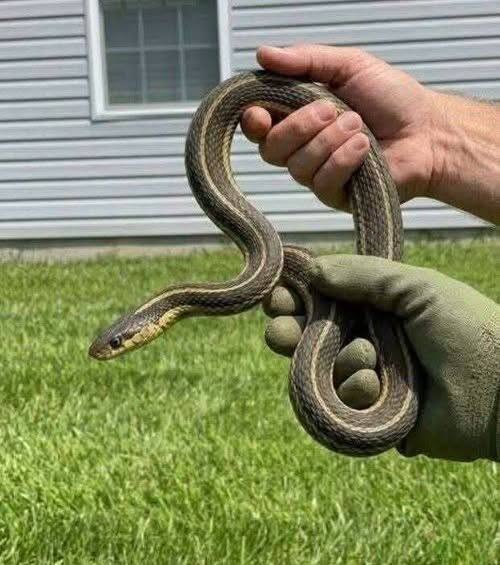
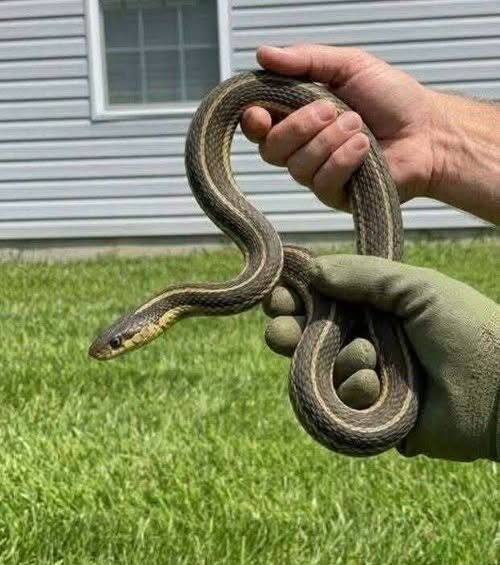
The photograph shows a long, striped snake being held outdoors near a residential building.
The unfinished caption suggests that the snake’s appearance reveals a hidden problem inside the home.
But what does science actually tell us?
The answer is less mysterious—and potentially more useful—than many people expect.
Snakes usually enter yards and buildings because they find food, shelter, suitable temperatures, or access through openings. Their presence does not automatically indicate danger, bad luck, or a serious infestation.
However, certain conditions around your property can make snake encounters more likely.
Here are the important things every homeowner should know.
1. A Snake Near Your House May Be Searching for Food
One of the most common reasons snakes enter residential areas is the availability of prey.
Snakes are predators.
Depending on their species, they may eat:
- Mice.
- Rats.
- Small birds.
- Frogs.
- Lizards.
- Insects.
- Other small animals.
If your yard provides a reliable food source, a snake may occasionally visit.
For example, rodents may be attracted to spilled birdseed, unsecured garbage, pet food, or cluttered storage areas.
Snakes that feed on rodents may follow them into the same environment.
Does Seeing a Snake Mean You Have Mice?
Not necessarily.
A snake’s presence can sometimes suggest that suitable prey is nearby, but it does not prove that rodents are living inside your home.
The snake might simply be passing through.
It may also be hunting frogs, lizards, or other animals rather than mice.
Still, if you notice frequent snake activity, checking for rodents and other attractants is a sensible precaution.
2. Your Yard May Offer the Perfect Hiding Places
Snakes generally prefer environments where they can find protection from predators and extreme weather.
A yard filled with sheltered spaces can be appealing.
Common hiding places include:
- Woodpiles.
- Dense vegetation.
- Tall grass.
- Rock piles.
- Stored construction materials.
- Gaps beneath sheds.
- Debris near fences.
- Openings around foundations.
These spaces can provide cover while snakes rest or search for prey.
How to Make Your Yard Less Attractive
Keep grass and vegetation maintained.
Store firewood neatly and away from the house when practical.
Remove unnecessary debris.
Avoid leaving piles of unused materials near entrances.
Inspect spaces beneath sheds and other outdoor structures.
These steps can reduce hiding opportunities without harming wildlife.
3. Snakes May Be Looking for Warmth or Cooler Shelter
Snakes are ectothermic animals.
This means their body temperature is strongly influenced by the surrounding environment.
They use environmental heat to regulate their temperature.
On cool days, snakes may seek warm surfaces.
During very hot weather, they may look for shaded, cooler places.
Residential areas can provide both.
Sun-warmed patios, walls, and pavement may attract snakes seeking warmth.
Shaded crawl spaces, garages, and vegetation may provide relief from excessive heat.
Why This Matters
A snake near your home may not be interested in entering the building at all.
It may simply have found a comfortable place to regulate its temperature.
Seasonal changes can influence how frequently snakes are seen.
4. Small Openings Can Allow Snakes to Enter Buildings
Snakes do not need doors to enter a home.
Depending on their size, they may move through openings around:
- Foundations.
- Garage doors.
- Utility pipes.
- Damaged vents.
- Crawl-space entrances.
- Exterior walls.
- Poorly sealed doors.
Their flexible bodies allow them to navigate narrow spaces.
However, snakes cannot pass through openings smaller than their body allows.
The size of an entry point matters.
What Homeowners Should Check
Inspect the exterior of your house for visible gaps.
Repair damaged weatherstripping.
Secure suitable vents with properly designed barriers.
Seal openings around utility penetrations using appropriate materials.
Do not block essential ventilation, drainage, or equipment access.
If you suspect a snake is already inside a wall or enclosed space, seek professional assistance before sealing the opening.
Trapping an animal inside can create additional problems.
5. A Snake May Have Entered by Accident
Not every snake encounter has a complicated explanation.
Sometimes a snake is simply moving through its environment.
It may cross a yard while traveling between feeding areas.
It may enter a garage through an open door.
Or it may accidentally move into a building while following a sheltered route.
This is especially possible in homes located near:
- Fields.
- Forests.
- Gardens.
- Streams.
- Rocky terrain.
- Undeveloped land.
A single sighting does not necessarily mean the snake intends to stay.
6. Water Sources Can Attract Snakes and Their Prey
Water can influence where snakes are found.
Some species live near ponds, streams, wetlands, or other aquatic habitats.
Others may visit areas with water because their prey is present.
Garden ponds, drainage areas, and irrigation systems can create environments that support frogs, insects, and small animals.
Those animals may attract snakes.
However, a snake near a water source is not automatically an aquatic species.
Different snakes have different habitat preferences.
Identifying the species and understanding the local environment are more useful than assuming all snakes behave the same way.
7. Seasonal Activity Can Explain Sudden Snake Sightings
Snake activity often changes with the seasons.
Temperature, rainfall, reproduction, and food availability can influence movement.
In many regions, snakes become more visible during warmer periods.
They may also move more frequently during certain breeding seasons.
In some climates, changes in rainfall can affect where snakes seek shelter.
Why You Might Suddenly See More Snakes
A sudden increase in sightings could reflect:
- Warmer temperatures.
- Changes in local habitat.
- Increased prey activity.
- Seasonal movement.
- Disturbance of nearby vegetation.
- Construction or landscaping work.
It does not necessarily mean that snakes are multiplying inside your property.
8. The Snake in the Viral Photo: Can We Identify It?
The viral photograph shows a slender snake with longitudinal stripes along its body.
It appears to have a relatively narrow head and an elongated tail.
These characteristics resemble several striped snake species, including certain garter snakes found in North America.
However, the photograph does not provide enough reliable information to confirm the exact species or geographic origin.
Many unrelated snake species can have similar patterns.
Lighting, camera angle, and image quality can also affect identification.
Never assume a snake is harmless based only on its stripes, head shape, or a resemblance to an online photograph.
Some dangerous species can resemble harmless snakes.
Accurate identification requires local expertise and, in some cases, additional photographs taken from a safe distance.
9. Are Snakes That Enter Houses Dangerous?
Some snakes are venomous.
Many are not.
The level of risk depends on the species, location, and circumstances.
Most snakes do not seek confrontations with humans.
They generally try to avoid large animals when possible.
However, any snake may defend itself if threatened, cornered, stepped on, or handled.
Venomous species can cause serious medical emergencies.
Important Safety Rule
If you encounter an unidentified snake, treat it as potentially dangerous.
Keep your distance.
Do not touch it.
Do not attempt to pick it up.
Keep children and pets away.
Contact a qualified local wildlife or snake-removal professional when necessary.
A photograph taken from a safe distance may help experts identify the species.
10. What Does It Mean When a Snake Enters Your House Repeatedly?
Seeing one snake may be an isolated event.
Repeated sightings deserve closer attention.
Frequent encounters can indicate that your property provides suitable habitat or that animals are using an accessible entry route.
Possible contributing factors include:
- Abundant prey.
- Dense vegetation.
- Persistent hiding places.
- Openings beneath doors.
- Gaps around foundations.
- Nearby natural habitat.
- Seasonal movement patterns.
A professional inspection can help identify conditions that increase encounters.
However, repeated sightings do not automatically mean there is a nest inside the house.
Do Snakes Actually Build Nests Inside Homes?
The word “nest” can be misleading when discussing snakes.
Different snake species reproduce in different ways.
Some lay eggs.
Others give birth to live young.
Certain species may use protected spaces for laying eggs or sheltering, but snakes do not generally build elaborate nests like birds.
An occasional snake in a basement does not prove that eggs or young snakes are present.
If multiple snakes appear in the same location, seek advice from a qualified local wildlife professional.
Avoid investigating enclosed spaces by hand.
Can Snakes Climb Walls?
Some snakes are capable climbers.
Their climbing ability depends on the species and the surface.
Rough walls, vegetation, pipes, and structural features may provide opportunities for certain snakes to move upward.
Smooth vertical surfaces are more difficult for many species.
This means snakes may occasionally reach elevated locations, including roofs or upper structures, depending on the environment.
Keeping vegetation from creating direct access to buildings may help reduce some encounters.
Can Snakes Enter Through Toilets or Drains?
Stories about snakes appearing in toilets are frightening and sometimes circulate widely online.
Although unusual incidents have been reported, they are not the typical way snakes enter houses.
Most residential snake encounters involve outdoor movement or access through structural openings.
Proper plumbing systems include features intended to prevent unwanted access.
If you suspect an animal is inside a plumbing fixture, do not attempt to remove it by hand.
Contact an appropriate professional.
What Should You Do if You Find a Snake Inside Your House?
Your first priority should be safety.
Step 1: Stay Calm and Move Away
Avoid sudden attempts to grab or strike the snake.
Give it space.
Step 2: Keep Children and Pets Away
Move everyone to a safe area.
Do not allow pets to approach or investigate.
Step 3: Avoid Handling the Snake
Even if you believe the species is harmless, identification can be mistaken.
Do not attempt to catch it with your bare hands.
Step 4: Isolate the Area if Safe
If possible without approaching the snake, close doors to limit access to other rooms.
Do not trap yourself in the same room.
Step 5: Contact a Professional
A trained wildlife professional can assess the situation and recommend safe removal.
Step 6: Inspect for Entry Points After Removal
Once the animal is safely removed, investigate how it may have entered.
Repair suitable openings to reduce future encounters.
What Should You Never Do When You See a Snake?
Some common reactions can increase the risk of injury.
Avoid the following mistakes.
Trying to Grab Its Tail
A snake may turn and bite when handled.
Attempting to Identify It by Touch
Never touch an unidentified snake.
Cornering It
A trapped snake may become defensive.
Trying to Kill It
Many bites occur when people attempt to capture or kill snakes.
Keeping your distance and seeking professional assistance is safer.
Using Random Chemicals
Pouring bleach, gasoline, pesticides, or other chemicals onto a snake can create serious hazards.
Relying on Viral Identification Tricks
Common claims about triangular heads, round pupils, or particular color patterns are not universally reliable.
What to Do if Someone Is Bitten by a Snake
A suspected venomous snakebite is a medical emergency.
Seek emergency medical help immediately.
While Waiting for Help
- Move away from the snake.
- Keep the affected person as calm and still as possible.
- Limit movement of the bitten limb.
- Remove rings, watches, or tight items before swelling develops.
- Follow instructions from emergency medical professionals.
Do Not
- Cut the wound.
- Attempt to suck out venom.
- Apply ice directly to the bite.
- Use an electric shock.
- Apply a tight tourniquet.
- Give alcohol.
- Attempt to capture the snake.
Do not delay medical treatment while trying to identify the species.
If a photograph can be taken safely from a distance, it may help clinicians, but it is not essential.
First-aid recommendations can vary by snake species and region, so follow local emergency medical guidance.
Can Snakes Be Beneficial Around Your Property?
Yes.
Snakes play important roles in many ecosystems.
They help regulate populations of prey animals.
Some species feed on rodents that can damage crops or contaminate stored food.
Others consume insects, amphibians, or other small animals.
Snakes are also prey for birds, mammals, and other wildlife.
Their presence can contribute to ecological balance.
However, their ecological benefits do not mean homeowners should tolerate dangerous snakes inside living spaces.
The goal is to reduce unsafe encounters while respecting wildlife.
How to Make Your Yard Less Attractive to Snakes
You cannot guarantee that snakes will never visit an outdoor property.
But you can reduce some of the conditions that attract them.
Keep Grass Maintained
Trim tall grass near paths, doors, and frequently used areas.
Remove Unnecessary Debris
Avoid piles of boards, scrap materials, and unused equipment.
Store Firewood Properly
Keep wood organized and away from building entrances when practical.
Manage Rodent Problems
Store food and animal feed securely.
Remove spilled birdseed.
Seal rodent entry points.
Repair Exterior Openings
Inspect door sweeps, vents, foundations, and utility connections.
Maintain Outdoor Lighting and Visibility
Good visibility can help people notice wildlife before approaching it.
Use Caution Around Hidden Spaces
Wear appropriate footwear when working outdoors.
Avoid placing hands into holes, rock piles, or dense vegetation where you cannot see.
Do Mothballs Repel Snakes?
Mothballs are sometimes promoted as a snake repellent.
However, they are not a reliable or appropriate method for keeping snakes away.
Mothballs contain pesticide chemicals intended for specific labeled uses.
Using them outdoors or around living areas as snake repellents can expose people, pets, and wildlife to harmful substances.
Such use may also violate pesticide labeling requirements.
Do not scatter mothballs around your property to deter snakes.
Does Garlic Keep Snakes Away?
Garlic is another popular ingredient in homemade snake-repellent recipes.
Some online posts suggest that snakes avoid strong odors.
However, there is no dependable evidence that placing garlic around a house provides reliable protection against snakes.
The same caution applies to many homemade mixtures involving vinegar, essential oils, or other strongly scented substances.
A scent-based remedy does not physically prevent a snake from entering through an opening.
Habitat management and exclusion are more practical prevention strategies.
Do Snakes Hate Certain Plants?
Some gardening websites claim that particular plants repel snakes.
Examples often include marigolds, lemongrass, and garlic plants.
However, scientific evidence supporting these plants as dependable snake repellents is limited.
A garden plant cannot guarantee that a snake will avoid your yard.
In fact, dense vegetation can sometimes provide cover for snakes and their prey.
When designing landscaping, focus on visibility, maintenance, and reducing hiding places rather than relying on supposedly magical repellent plants.
Do Snakes Come Into Clean Houses?
Yes.
A snake entering a house does not automatically mean the home is dirty.
Snakes may enter clean, well-maintained buildings if an accessible opening exists.
They may also be drawn to nearby prey or suitable shelter.
While proper sanitation helps reduce rodent activity, it cannot completely eliminate the possibility of a snake encounter.
The presence of a snake is not a judgment about household cleanliness.
What Does a Snake Symbolize in Different Cultures?
Beyond biology, snakes have appeared in myths, traditions, and religious symbolism for thousands of years.
Depending on the culture, snakes may represent:
- Transformation.
- Renewal.
- Wisdom.
- Healing.
- Danger.
- Protection.
- Fertility.
In some traditions, a snake near a home is interpreted as a sign of change or an important message.
In others, it may be associated with fear or misfortune.
These interpretations are cultural beliefs rather than scientific explanations for snake behavior.
From a biological perspective, snakes move in response to environmental conditions, food availability, shelter, and other natural factors.
There is no scientific evidence that a snake entering a home predicts future luck, wealth, illness, or tragedy.
Why Do People Fear Snakes So Much?
Fear of snakes is common.
Several factors may contribute.
Their movement can be difficult to predict.
They may remain hidden until someone approaches closely.
Some species are venomous.
And their appearance differs dramatically from familiar household animals.
Stories, movies, and social media can intensify these fears.
However, learning to recognize snake behavior and understanding basic safety precautions can help people respond more calmly.
Respecting snakes from a distance is safer than either approaching them recklessly or panicking.
Can a Snake Enter a Bedroom?
Yes, if it gains access to the house.
A snake may move through rooms while seeking shelter or an exit.
However, snakes do not normally enter bedrooms because they are attracted to sleeping humans.
People are not prey for the vast majority of snakes encountered around homes.
If you discover a snake in a bedroom, leave the area and seek professional assistance.
Do not attempt to handle it.
Are Baby Snakes More Dangerous Than Adults?
A common myth claims that baby snakes are always more dangerous because they cannot control their venom.
This is an oversimplification and is not a reliable general rule.
Venomous snakes of different ages can pose risks.
The severity of a bite depends on many factors, including species, venom quantity, bite circumstances, and medical response.
A small snake should never be assumed harmless.
Avoid handling any unidentified snake, regardless of size.
How to Tell Whether a Snake Is Venomous
There is no single visual rule that reliably distinguishes all venomous snakes from nonvenomous ones.
Head shape, pupil shape, color patterns, and tail appearance vary across species.
Some harmless snakes mimic dangerous species.
Some venomous snakes have appearances that do not match popular stereotypes.
The safest approach is to avoid close contact and consult a qualified local expert.
Do not attempt to identify a snake by examining its mouth, teeth, or head at close range.
Frequently Asked Questions
What Does It Mean When a Snake Enters Your House?
It usually means the snake found access to the building while searching for food, shelter, suitable temperatures, or a route through its environment.
Does a Snake in the House Mean You Have Mice?
Not necessarily. Rodents may attract some snake species, but one sighting does not prove a mouse infestation.
Is It Bad Luck When a Snake Enters Your Home?
There is no scientific evidence that a snake entering a home predicts bad luck or future events.
Should You Kill a Snake Found in Your House?
Attempting to kill a snake can increase the risk of being bitten. Keep your distance and contact a qualified professional for safe removal.
Can Snakes Enter Through Small Cracks?
Yes, depending on the size of the snake and opening.
Are All Snakes Dangerous?
No. Many species are nonvenomous, but unidentified snakes should be treated cautiously.
What Attracts Snakes to a Yard?
Food sources, shelter, suitable temperatures, water-related habitats, and access to hiding places may all contribute.
Can Snakes Climb Into Houses?
Some species can climb and may use rough surfaces, vegetation, or structural features to reach elevated areas.
Does Peppermint Oil Repel Snakes?
There is insufficient reliable evidence that peppermint oil provides dependable snake control.
How Do You Keep Snakes Away Naturally?
Maintain vegetation, remove unnecessary debris, reduce rodent attractants, seal suitable openings, and seek local wildlife guidance when necessary.
Final Thoughts: The Real Meaning Behind a Snake Entering Your Home
The viral claim that a snake entering your home reveals something mysterious is designed to spark curiosity.
And while the image may look alarming, the biological explanation is usually straightforward.
A snake near your home may be searching for food, shelter, warmth, cooler temperatures, or a safe route through its environment.
Its presence may sometimes be associated with rodents or other prey, but it does not automatically mean you have an infestation.
It also does not predict bad luck, hidden danger, or supernatural events.
The most important response is practical.
Stay calm.
Keep your distance.
Protect children and pets.
Avoid handling an unidentified snake.
And contact a trained professional if the animal needs to be removed.
Afterward, inspect your property for entry points and conditions that may attract wildlife.
Snakes are important members of many ecosystems, but encounters inside living spaces should always be handled carefully.
The biggest lesson is simple: Understanding why snakes appear is far more useful than believing every frightening claim shared online.
Have you ever discovered a snake in your yard, garage, or home?
What was your first reaction—and what did you do next? Share your experience in the comments!