A viral health post claims that your body can warn you a month before a stroke. But is that medically accurate? Learn the real warning signs of stroke, the symptoms that require emergency attention, and the steps that may help protect your brain.
Imagine waking up one morning and noticing something unusual.
Your arm feels strangely weak.
You struggle to find the right words during a conversation.
Or perhaps you suddenly experience dizziness, blurred vision, or an intense headache unlike anything you’ve felt before.
Would you recognize these symptoms as possible warning signs of a stroke?
Many people wouldn’t.
And that lack of awareness can have devastating consequences.
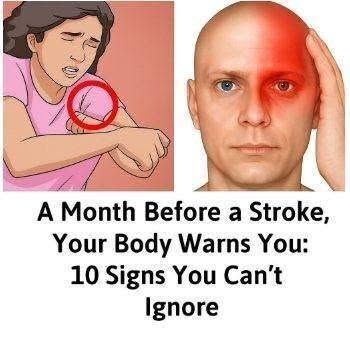
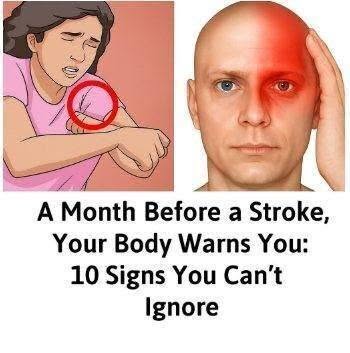
A viral social media post has attracted attention with a dramatic headline:
“A Month Before a Stroke, Your Body Warns You: 10 Signs You Can’t Ignore.”
The image shows a woman experiencing arm discomfort alongside a man holding his head, suggesting that certain physical symptoms may predict a stroke weeks before it happens.
The message is attention-grabbing, but it needs an important medical clarification.
There is no reliable set of 10 symptoms that consistently appears one month before a stroke. Many strokes occur suddenly, without recognizable warning symptoms.
However, some people experience a transient ischemic attack (TIA), sometimes called a mini-stroke, before a major stroke.
A TIA can cause the same symptoms as a stroke, even if they disappear after a few minutes.
That makes recognizing the warning signs incredibly important.
In this article, we’ll explore 10 possible stroke symptoms, explain which ones require immediate medical attention, and discuss how to reduce your risk.
What Exactly Is a Stroke?
A stroke occurs when blood flow to part of the brain is interrupted or when a blood vessel in the brain ruptures.
The brain requires a continuous supply of oxygen and nutrients.
When that supply is disrupted, brain cells can begin to suffer injury within minutes.
Without prompt treatment, a stroke may cause permanent disability or death.
There are two major types of stroke.
Ischemic Stroke
An ischemic stroke happens when a blood vessel supplying the brain becomes blocked.
The blockage may result from a blood clot or another obstruction.
Ischemic strokes account for the majority of strokes.
Hemorrhagic Stroke
A hemorrhagic stroke occurs when a blood vessel ruptures and causes bleeding in or around the brain.
This bleeding can damage brain tissue and increase pressure inside the skull.
Both types are medical emergencies.
The appropriate treatment depends on the type of stroke, which is why urgent medical evaluation and brain imaging are essential.
Can Your Body Really Warn You a Month Before a Stroke?
The idea that the body sends predictable warnings exactly one month before a stroke is misleading.
Stroke symptoms generally begin suddenly.
Some people experience a TIA before a stroke, but it may happen hours, days, weeks, or longer beforehand—or not at all.
A TIA occurs when blood flow to part of the brain is temporarily interrupted.
The symptoms may resolve completely.
For example, someone might suddenly develop weakness in one arm that disappears after several minutes.
Another person might temporarily lose vision in one eye.
Because the symptoms improve, people sometimes dismiss them as fatigue, stress, or a minor problem.
That can be a dangerous mistake.
A suspected TIA requires emergency medical assessment, even when the person feels completely normal afterward.
The risk of stroke can be particularly elevated in the hours and days following a TIA.
Early evaluation and treatment can help reduce that risk.
1. Sudden Weakness or Numbness on One Side of the Body
One of the most recognizable stroke warning signs is sudden weakness or numbness affecting one side of the body.
This may involve:
- One arm.
- One leg.
- One side of the face.
- An entire side of the body.
A person might suddenly struggle to lift an arm.
They may drop an object unexpectedly.
Or one leg may become difficult to move.
Why Does This Happen?
Different areas of the brain control movement and sensation.
When blood flow to one of these areas is disrupted, the person may experience weakness or numbness.
Because many motor pathways cross between the brain and body, a stroke affecting one cerebral hemisphere often causes symptoms on the opposite side.
What Should You Do?
If weakness or numbness develops suddenly, call emergency medical services immediately.
Do not wait to see whether the symptoms disappear.
Even temporary weakness may indicate a TIA.
2. Sudden Facial Drooping
Facial drooping is another classic sign of stroke.
One side of the face may appear lower than the other.
The person may have difficulty smiling evenly.
The corner of the mouth may droop.
A Simple Observation
Ask the person to smile.
Does one side of the face appear weaker?
Is the smile noticeably uneven?
Although facial asymmetry can have several causes, sudden facial weakness is a potential stroke symptom.
Seek emergency medical attention immediately if facial drooping appears suddenly.
Do not assume it is simply a facial nerve problem without medical evaluation.
3. Sudden Difficulty Speaking or Understanding Speech
Speech changes are particularly important warning signs.
A person experiencing a stroke may suddenly:
- Slur words.
- Struggle to form sentences.
- Use incorrect words.
- Have difficulty naming familiar objects.
- Become unable to speak.
- Have trouble understanding what others are saying.
These symptoms may reflect damage to brain regions involved in language or speech production.
Why It Can Be Confusing
Sometimes the person remains fully awake and aware.
They may know exactly what they want to say but cannot produce the words.
In other situations, they may speak fluently but use words that do not make sense.
Sudden speech or language difficulty should always be treated as an emergency.
4. Sudden Vision Problems
A stroke or TIA may affect vision.
Possible symptoms include:
- Sudden loss of vision in one eye.
- Sudden loss of part of the visual field.
- New double vision.
- Sudden difficulty seeing clearly.
One especially important warning sign is temporary vision loss in one eye.
Some people describe it as a curtain coming down over their vision.
This can occur when blood flow to the retina is temporarily interrupted.
Such episodes may signal a vascular problem requiring urgent evaluation.
Don’t Ignore Temporary Vision Loss
If vision suddenly disappears and then returns, it does not mean the problem is harmless.
Temporary visual symptoms can be associated with a TIA or other serious conditions.
Seek emergency medical assessment.
5. Sudden Dizziness or Loss of Balance
Dizziness is common and can have many causes.
Dehydration, inner-ear disorders, medications, and blood pressure changes are just a few possibilities.
But sudden dizziness can also occur during a stroke, particularly one affecting the brainstem or cerebellum.
Stroke-related symptoms may include:
- Sudden severe imbalance.
- Difficulty walking.
- Loss of coordination.
- New double vision.
- Slurred speech.
- Weakness or numbness.
Why This Symptom Is Sometimes Missed
Not every stroke causes obvious facial drooping or arm weakness.
Strokes involving the posterior circulation can present with balance, coordination, or visual problems.
This can make recognition more difficult.
Sudden severe dizziness accompanied by inability to walk normally, new neurological symptoms, or marked loss of coordination requires emergency assessment.
Dizziness alone does not necessarily indicate stroke, but it should not automatically be dismissed when its onset is abrupt or symptoms are severe.
6. Sudden Severe Headache
Headaches are extremely common.
Most are not caused by strokes.
However, a sudden, extremely severe headache can be a warning sign of bleeding in or around the brain.
This is particularly concerning when the headache reaches maximum intensity within seconds or a minute.
It may be described as a thunderclap headache.
Other Possible Symptoms
A dangerous headache may occur with:
- Vomiting.
- Neck stiffness.
- Confusion.
- Fainting.
- Seizures.
- Visual disturbances.
- Neurological weakness.
A sudden, unusually severe headache is a medical emergency, even if there are no obvious signs of paralysis.
Important Clarification
A mild headache that comes and goes over several weeks is not a reliable predictor that a stroke will occur in a month.
The timing and suddenness of symptoms matter.
7. Sudden Confusion or Difficulty Understanding What Is Happening
Stroke can affect attention, language, awareness, and other cognitive functions.
A person may suddenly appear confused.
They might struggle to follow a familiar conversation.
They may not understand simple instructions.
Or they may seem unable to perform a task they normally manage easily.
Why Sudden Confusion Matters
Confusion can result from many medical conditions, including low blood sugar, infections, seizures, and medication effects.
Some of these conditions can mimic stroke.
But distinguishing between them often requires urgent medical assessment.
If confusion begins suddenly, especially with other neurological symptoms, seek emergency care.
8. Sudden Trouble Walking or Coordinating Movements
A stroke can affect the brain regions responsible for balance and coordination.
Someone may suddenly find it difficult to walk in a straight line.
They might stagger, fall, or become unable to stand without support.
They may also struggle to coordinate their hands.
For example, reaching for an object may become unexpectedly difficult.
Why Coordination Changes Are Important
The cerebellum plays a major role in coordinating movement.
Strokes affecting the cerebellum can cause severe imbalance and coordination problems.
Some of these strokes can be life-threatening.
Sudden unexplained difficulty walking or coordinating movements should not be ignored.
9. Sudden Difficulty Swallowing
Swallowing involves a complex network of muscles and nerves coordinated by the brain.
A stroke can disrupt this process.
Some people may suddenly experience:
- Difficulty swallowing.
- Coughing or choking when attempting to drink.
- An inability to manage saliva.
- Changes in voice quality.
- Other signs of impaired throat or mouth muscle control.
Difficulty swallowing can also result from many conditions unrelated to stroke.
However, when it appears suddenly alongside other neurological symptoms, it can be a warning sign.
Why This Matters
Swallowing problems may increase the risk of aspiration, when food or liquid enters the airway.
If a stroke is suspected, do not give the person food, drinks, or oral medication while waiting for emergency help.
A medical team can assess swallowing safety.
10. A Brief Episode of Stroke-Like Symptoms That Disappears
This may be one of the most important warnings of all.
Imagine suddenly losing strength in your hand.
You cannot hold your phone properly.
A few minutes later, everything returns to normal.
You might feel relieved and decide to forget about it.
But that temporary episode could have been a TIA.
Other temporary symptoms may include:
- Facial drooping.
- Slurred speech.
- Vision loss.
- One-sided numbness.
- Sudden coordination problems.
Why a TIA Is So Important
A TIA is a warning that the brain’s blood supply has been disrupted.
It may indicate an underlying problem such as narrowing of an artery or a condition that increases the risk of blood clots.
Even though symptoms resolve, urgent assessment is necessary.
Never wait until the next day to seek help after a suspected TIA.
The FAST Test: A Simple Way to Recognize a Stroke
One of the easiest ways to remember common stroke symptoms is the FAST method.
<escape>F — Face Drooping</escape>
Does one side of the face droop when the person smiles?
<escape>A — Arm Weakness</escape>
Can the person raise both arms, or does one drift downward?
<escape>S — Speech Difficulty</escape>
Is speech slurred, unusual, or difficult to understand?
<escape>T — Time to Call Emergency Services</escape>
If any of these symptoms appear suddenly, call emergency medical services immediately.
Do not wait for more symptoms.
The BE FAST Method: Recognizing Additional Symptoms
Some healthcare organizations use an expanded version called BE FAST.
This adds two important categories.
B — Balance: Sudden loss of balance or coordination.
E — Eyes: Sudden vision changes.
F — Face: Sudden facial drooping.
A — Arms: Sudden arm weakness.
S — Speech: Sudden speech difficulty.
T — Time: Call emergency services immediately.
<text>Remember: BE FAST helps recognize many strokes, but it cannot identify every stroke.</text>
A person may still be experiencing a stroke even if they do not have all the classic symptoms.
Why Every Minute Matters During a Stroke
Stroke treatment is extremely time-sensitive.
When blood flow to part of the brain is interrupted, brain tissue can become damaged.
Some patients with ischemic stroke may qualify for medications that dissolve blood clots.
Others may benefit from a procedure called mechanical thrombectomy, in which specialists remove a clot from a blocked artery.
Eligibility depends on several factors, including the type of stroke, brain imaging, time since symptom onset, and individual medical circumstances.
Not every patient is eligible for every treatment.
But faster evaluation can improve the chance of receiving appropriate care.
This is why waiting for symptoms to improve can be so dangerous.
What to Do if You Suspect Someone Is Having a Stroke
Knowing the correct steps could help save a life.
1. Call Emergency Medical Services Immediately
Do not try to diagnose the condition yourself.
Tell the dispatcher that you suspect a stroke.
2. Note the Time Symptoms Started
Medical teams need to know when symptoms began.
If the person woke up with symptoms, note when they were last known to be well.
This information can influence treatment decisions.
3. Do Not Give Food or Drinks
Swallowing may be impaired.
Offering water or food could increase the risk of choking.
4. Do Not Give Aspirin Unless Directed by a Medical Professional
Some strokes involve bleeding.
Aspirin can worsen certain bleeding conditions.
Do not attempt to treat an undiagnosed stroke with aspirin.
5. Keep the Person Safe and Comfortable
Help prevent falls or injuries.
Follow instructions from emergency services.
6. Do Not Let the Person Drive
Emergency medical transportation is generally preferable when available.
Emergency teams can begin assessment and direct the person to appropriate care.
What Are the Biggest Risk Factors for Stroke?
Stroke can affect people of different ages and backgrounds.
However, certain factors increase the likelihood.
High Blood Pressure
High blood pressure is one of the most important modifiable stroke risk factors.
Over time, it can damage blood vessels and increase the risk of both ischemic and hemorrhagic stroke.
Smoking
Smoking damages blood vessels and increases cardiovascular risk.
Diabetes
Diabetes can contribute to vascular disease and increase stroke risk.
High Cholesterol
Elevated levels of certain blood lipids can contribute to atherosclerosis, a condition in which plaque builds up inside arteries.
Atrial Fibrillation
Atrial fibrillation is an irregular heart rhythm that can increase the risk of blood clots forming in the heart.
These clots can travel to the brain and cause ischemic stroke.
Physical Inactivity
Regular physical activity supports cardiovascular health.
Certain Heart and Blood Vessel Conditions
Previous stroke, TIA, and some cardiovascular conditions can increase future stroke risk.
Age and Family History
Stroke risk generally increases with age, although strokes can occur in younger adults.
Family history may also influence risk.
Can Young Adults Have Strokes?
Yes.
Although stroke is more common among older adults, it can occur at any age.
Younger adults may experience strokes associated with conditions such as:
- Certain heart abnormalities.
- Blood vessel disorders.
- Clotting disorders.
- High blood pressure.
- Diabetes.
- Smoking.
- Other medical conditions.
Some strokes in younger people occur without obvious traditional risk factors.
Therefore, sudden neurological symptoms should never be dismissed simply because someone is young.
Are Stroke Symptoms Different in Women?
Women can experience the same classic stroke symptoms as men, including facial drooping, arm weakness, speech difficulty, and sudden vision problems.
Some women may also experience less specific symptoms, such as nausea, vomiting, or altered awareness.
However, these symptoms are not unique to women and are not reliable stroke indicators when considered alone.
The most important point is that sudden neurological symptoms require urgent attention regardless of sex or age.
Pregnancy and the postpartum period can also affect stroke risk in certain circumstances.
A pregnant or recently postpartum person with sudden severe headache, vision changes, weakness, or other neurological symptoms should seek emergency medical assessment.
Can Stress Cause a Stroke?
Stress can influence cardiovascular health in several ways.
Chronic stress may contribute to unhealthy sleep patterns, elevated blood pressure, and other behaviors that affect overall risk.
However, it would be misleading to claim that ordinary stress directly predicts a stroke.
Stroke is a complex medical event involving vascular and sometimes cardiac factors.
If someone experiences sudden neurological symptoms during a stressful situation, those symptoms should not automatically be attributed to anxiety.
Emergency evaluation may still be necessary.
Can a Stroke Happen While You Sleep?
Yes.
Some people wake up with stroke symptoms that were not present when they went to bed.
These are sometimes called wake-up strokes.
Because the exact onset time is unknown, medical teams may use specialized imaging and other information to determine treatment options.
A person who wakes with facial drooping, weakness, speech problems, or other sudden neurological changes should seek emergency care immediately.
Do not assume that treatment is impossible simply because the symptoms were discovered after waking.
Can You Have a Stroke Without Knowing It?
Some strokes produce subtle symptoms or no obvious symptoms at the time.
These are sometimes described as silent strokes.
They may be discovered later during brain imaging performed for another reason.
Silent strokes can still be associated with important long-term health risks.
However, the concept of a silent stroke should not be confused with the claim that vague symptoms reliably predict a major stroke one month in advance.
They are different issues.
How to Reduce Your Risk of Stroke
Although not every stroke can be prevented, many risk factors can be managed.
Here are practical steps that may help.
1. Control Your Blood Pressure
Have your blood pressure checked regularly.
If you have hypertension, follow your healthcare professional’s treatment plan.
2. Stop Smoking
Avoid tobacco use and seek support for quitting if needed.
3. Manage Diabetes
If you have diabetes, work with your healthcare team to manage blood glucose and other cardiovascular risk factors.
4. Monitor Cholesterol
Discuss cholesterol testing and treatment with your clinician based on your individual risk.
5. Stay Physically Active
Regular movement supports cardiovascular health.
Choose activities appropriate for your health and physical abilities.
6. Eat a Balanced Diet
A diet emphasizing vegetables, fruits, whole grains, legumes, and other nutrient-rich foods can support heart and vascular health.
Limiting excess sodium may help with blood pressure management.
7. Maintain a Healthy Sleep Routine
Sleep supports overall health.
Persistent snoring, breathing interruptions during sleep, or excessive daytime sleepiness may warrant evaluation for sleep apnea.
8. Follow Treatment for Heart Conditions
Certain conditions, including atrial fibrillation, require specific management to reduce stroke risk.
9. Limit Alcohol
Excessive alcohol consumption can contribute to high blood pressure and other health problems.
10. Take Previous TIA or Stroke Symptoms Seriously
If you’ve experienced a TIA or stroke, follow the recommended treatment and follow-up plan.
Secondary prevention is especially important.
Common Stroke Myths That Can Put Lives at Risk
Myth 1: Stroke Only Happens to Older People
False.
Stroke can occur at any age.
Myth 2: A Stroke Always Causes Severe Pain
False.
Many strokes are painless.
Myth 3: If Symptoms Disappear, Everything Is Fine
False.
Temporary symptoms may indicate a TIA and require emergency assessment.
Myth 4: You Should Wait to See Whether Symptoms Improve
False.
Waiting can delay time-sensitive treatment.
Myth 5: Every Stroke Comes With a Warning One Month Earlier
False.
There is no reliable one-month warning timeline.
Myth 6: A Stroke Always Causes Facial Drooping
False.
Some strokes primarily affect vision, balance, coordination, or other functions.
Myth 7: Taking Aspirin Immediately Is Always Helpful
False.
Some strokes involve bleeding, and aspirin may be harmful.
Myth 8: Only People With High Blood Pressure Have Strokes
False.
High blood pressure is a major risk factor, but stroke can occur in people without known hypertension.
Frequently Asked Questions
Can You Really Have Stroke Warning Signs a Month Before It Happens?
There is no dependable set of symptoms that predicts a stroke exactly one month in advance. Some people experience a TIA before a stroke, but the timing varies and many strokes occur without prior warning.
What Is the Earliest Warning Sign of Stroke?
There is no single earliest sign. Symptoms often appear suddenly and may include facial drooping, one-sided weakness, speech difficulty, vision changes, or loss of balance.
Can a Headache Be a Warning Sign of Stroke?
A sudden, extremely severe headache can be a warning sign of bleeding in or around the brain. Ordinary recurring headaches do not reliably predict stroke.
Can Arm Pain Mean a Stroke Is Coming?
Isolated arm pain is not a classic stroke warning sign. Sudden weakness or numbness, especially on one side, is more concerning. Arm pain can have many causes and should be evaluated according to its associated symptoms.
What Is a Mini-Stroke?
A mini-stroke is a common term for a transient ischemic attack, or TIA. It causes temporary stroke-like symptoms and requires urgent medical evaluation.
Can Stroke Symptoms Last Only a Few Minutes?
Yes. Symptoms of a TIA may resolve within minutes. Even brief episodes should be treated as emergencies.
Is Dizziness a Sign of Stroke?
It can be, particularly when sudden and accompanied by severe imbalance, coordination problems, double vision, or other neurological symptoms.
What Should I Do if Someone Suddenly Cannot Speak Properly?
Call emergency medical services immediately. Sudden speech difficulty is a classic stroke warning sign.
Can Drinking Water Prevent a Stroke?
Adequate hydration supports general health, but drinking water cannot reliably prevent or treat a stroke. Managing established vascular risk factors is much more important.
Can a Stroke Be Prevented?
Many strokes can be prevented through risk-factor management, but prevention cannot guarantee that a stroke will never occur.
Final Thoughts: Don’t Wait for a One-Month Warning
The viral headline suggesting that the body sends 10 warning signs exactly one month before a stroke may encourage people to pay attention to their health.
But the medical reality is more urgent.
Stroke symptoms usually appear suddenly, and many people receive no advance warning.
The most important signs to recognize include:
- Sudden facial drooping.
- Sudden weakness or numbness on one side.
- Sudden speech or language difficulties.
- Sudden vision changes.
- Sudden loss of balance or coordination.
- A sudden, extremely severe headache.
These symptoms require immediate emergency medical attention.
Even if they disappear, they may indicate a transient ischemic attack.
The key is not to spend weeks watching for vague signs.
It’s to recognize sudden neurological changes and act immediately.
Remember BE FAST: Balance, Eyes, Face, Arms, Speech, Time.
Knowing these warning signs could help you recognize a stroke in yourself, a family member, a friend, or a stranger.
And when a stroke happens, acting quickly can make a life-changing difference.
Have you ever known someone who experienced a stroke or a mini-stroke?
Which warning sign do you think more people should know about? Share your thoughts and help spread awareness.