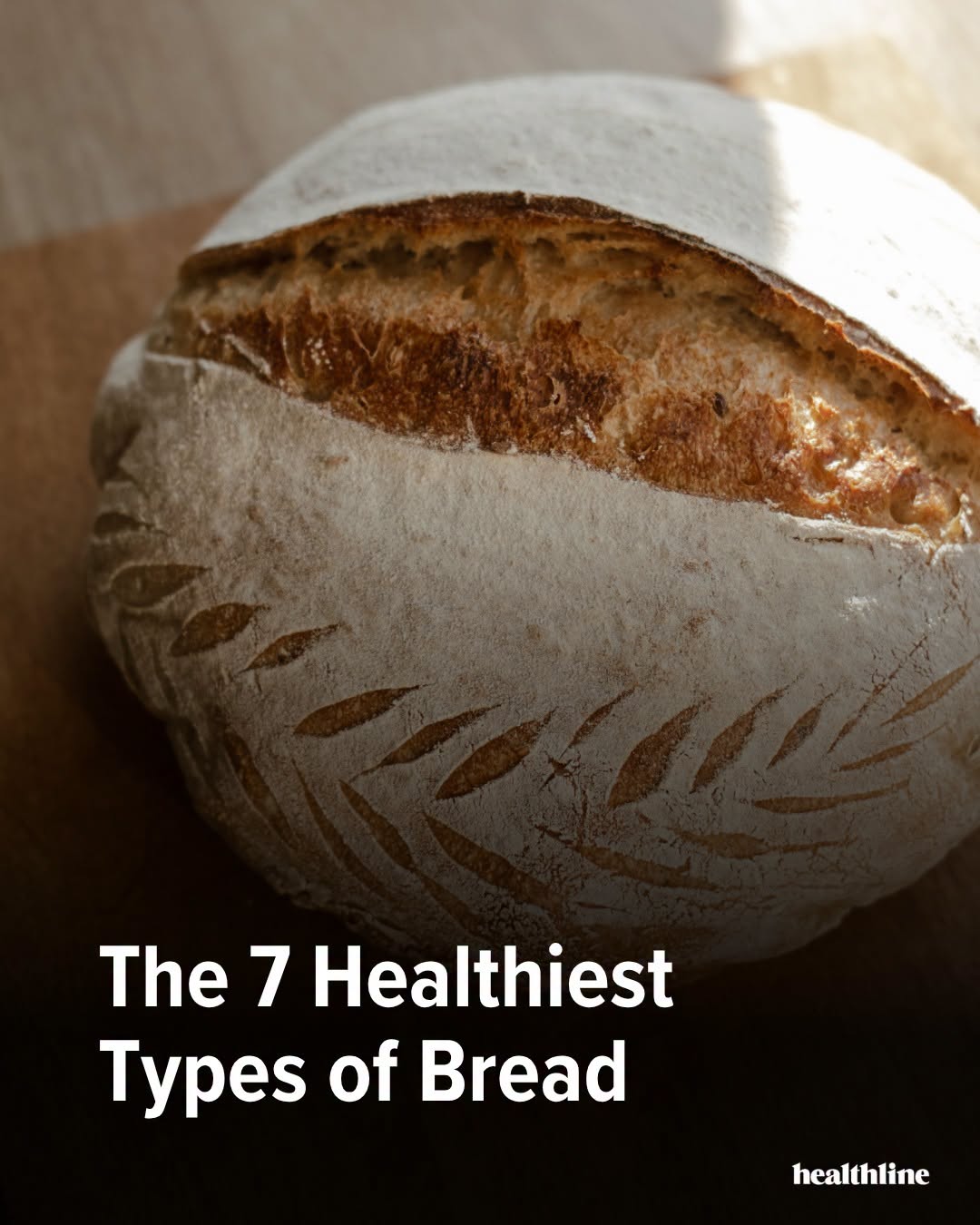
Bread has been a staple food for thousands of years, but not all loaves offer the same nutritional benefits. Some are packed with fiber, whole grains, and essential nutrients, while others are made mostly from refined flour—even when their packaging makes them look healthy.
If you’ve ever stood in the bread aisle wondering whether to buy whole wheat, sourdough, rye, or multigrain bread, you’re not alone.
With so many options available, choosing the healthiest bread can feel surprisingly complicated.
And here’s something many shoppers don’t realize:
A loaf labeled “multigrain,” “natural,” or even “wheat bread” isn’t necessarily made primarily from whole grains.
The good news is that you don’t have to give up bread to eat well.
Choosing the right variety can help you increase your fiber intake, enjoy important vitamins and minerals, and build more satisfying meals.
Here are seven nutritious types of bread worth considering, plus the simple label-reading tricks that can help you make better choices.
Is Bread Actually Healthy?
Bread sometimes gets a bad reputation because it contains carbohydrates.
But carbohydrates are not inherently unhealthy.
They are one of the body’s main sources of energy.
The nutritional value of bread depends on several factors, including:
- The type of flour used
- Whether the grains are whole or refined
- The amount of dietary fiber
- The protein content
- Added sugar and sodium
- Portion size
- Other ingredients
Whole-grain breads generally contain more fiber and retain more naturally occurring nutrients than breads made primarily with refined flour.
However, refined breads can also provide nutrients, particularly when made with enriched flour.
The key is to look at the overall nutritional profile rather than judging bread by its color or marketing claims.
1. Sprouted Whole-Grain Bread
Sprouted whole-grain bread is made from grains that have begun the germination process.
Instead of using only conventional flour, manufacturers may incorporate sprouted wheat, barley, millet, or other grains.
Sprouting changes some of the grain’s chemical composition and may influence the availability of certain nutrients.
Why It Can Be a Healthy Choice
Sprouted whole-grain bread may provide:
- Dietary fiber
- Plant-based protein
- B vitamins
- Magnesium
- Iron
- Other naturally occurring grain nutrients
Some research suggests sprouting may reduce certain compounds, such as phytates, that can interfere with mineral absorption.
However, the nutritional effects vary depending on the grains and production methods.
Sprouted bread is not automatically healthier than every conventional whole-grain loaf.
What to Look For
Choose bread made primarily from sprouted whole grains.
Check the fiber content and ingredients.
Some products marketed as sprouted bread may still contain refined flour.
Best Ways to Enjoy It
Sprouted bread works well for:
- Avocado toast
- Egg sandwiches
- Hummus toast
- Turkey sandwiches
- Breakfast toast with fruit
Important: Sprouted wheat bread still contains gluten and is not suitable for people with celiac disease.
2. Whole-Wheat Bread
Whole-wheat bread is one of the most accessible nutritious bread options.
True whole-wheat flour contains all three parts of the wheat kernel:
Bran: The outer layer, which contains fiber and various nutrients.
Germ: The nutrient-rich part that contains vitamins, minerals, and fats.
Endosperm: The starchy portion that provides carbohydrates and some protein.
Refining wheat removes much of the bran and germ.
Whole-wheat flour retains these components.
Why It Can Be a Healthy Choice
Whole-wheat bread can provide:
- More fiber than typical white bread
- B vitamins
- Magnesium
- Iron
- Plant protein
- Complex carbohydrates
Diets rich in whole grains are associated with several favorable health outcomes, including better cardiovascular health.
These benefits reflect overall dietary patterns rather than a guarantee from eating any single food.
What to Look For
Check that whole-wheat flour or 100% whole-wheat flour appears as the main flour ingredient.
Don’t rely solely on the color.
Some brown breads contain mostly refined flour and get their darker appearance from coloring ingredients or molasses.
Best Ways to Enjoy It
Whole-wheat bread is versatile.
Use it for sandwiches, toast, or as a side with soups and salads.
3. Sourdough Bread
Sourdough bread is made using a fermentation process involving naturally occurring yeasts and lactic acid bacteria.
Instead of relying exclusively on commercial baker’s yeast, sourdough uses a fermented starter.
This process gives sourdough its distinctive flavor and texture.
Why It Can Be a Healthy Choice
Fermentation may influence the bread’s digestibility and certain nutritional characteristics.
Depending on the recipe and fermentation conditions, sourdough preparation can reduce some phytates and modify carbohydrate availability.
However, the effects vary.
Sourdough is not automatically lower in calories or carbohydrates than other breads.
And its effects on blood sugar depend on the flour, recipe, portion size, and individual response.
Whole-Grain Sourdough vs. White Sourdough
A sourdough loaf made with whole-grain flour generally provides more fiber than one made primarily from refined white flour.
If nutrition is your priority, whole-grain sourdough can be an excellent option.
What to Look For
Check the ingredients rather than assuming all sourdough is nutritionally identical.
Traditional sourdough generally uses flour, water, salt, and a fermented starter.
Commercial sourdough products may use different preparation methods.
Best Ways to Enjoy It
Try sourdough with:
- Scrambled eggs
- Tomato and olive oil
- Vegetable soup
- Cottage cheese
- Hummus
Important: Regular wheat sourdough contains gluten. Fermentation does not make it safe for people with celiac disease.
4. Oat Bread
Oat bread is another nutritious option, especially when it contains a meaningful amount of whole oats.
Oats are well known for their beta-glucan content.
Beta-glucan is a type of soluble fiber associated with cholesterol-lowering effects when consumed in sufficient amounts.
Why It Can Be a Healthy Choice
Oat-containing bread may provide:
- Soluble fiber
- Complex carbohydrates
- Magnesium
- Manganese
- Some plant protein
However, the amount of beta-glucan in a slice of oat bread can be much lower than in a bowl of oatmeal.
That depends on how much actual oat flour or whole oats the product contains.
What to Look For
Check whether whole oats or whole-oat flour appear near the beginning of the ingredient list.
Some products labeled “oat bread” contain mostly refined wheat flour with only a small amount of oats.
Best Ways to Enjoy It
Oat bread pairs well with:
- Peanut butter
- Banana slices
- Eggs
- Low-sugar fruit spreads
- Savory sandwich fillings
5. Flaxseed Bread
Flaxseeds are small seeds that contain fiber and alpha-linolenic acid, or ALA.
ALA is a plant-based omega-3 fatty acid.
Bread made with flaxseed can be a nutritious addition to a balanced diet.
Why It Can Be a Healthy Choice
Flaxseed bread may provide:
- Dietary fiber
- Plant-based omega-3 fats
- Lignans
- Plant protein
- Various minerals
Lignans are plant compounds that have been studied for their potential biological effects.
However, flaxseed bread should not be considered a treatment for hormonal conditions or chronic disease.
What to Look For
Look for bread containing whole-grain flour and ground flaxseed.
Ground flaxseed can make some nutrients more accessible than intact seeds.
The amount matters.
A loaf containing only a small sprinkling of flaxseeds may provide relatively little nutritional benefit from them.
Best Ways to Enjoy It
Try flaxseed bread with:
- Avocado
- Cottage cheese
- Eggs
- Grilled vegetables
- Lean protein
6. Rye Bread
Rye bread has a distinctive earthy flavor and is popular in many European countries.
It can be made from whole rye flour, refined rye flour, or a combination of grains.
Some rye breads are dense and dark.
Others are lighter and softer.
Why It Can Be a Healthy Choice
Whole-grain rye bread can provide substantial dietary fiber.
It also contains minerals and other naturally occurring grain compounds.
Fiber-rich rye products may contribute to fullness and digestive health.
Some research has examined how rye foods affect appetite and blood sugar responses.
However, results vary depending on the type of rye bread and the meal in which it is eaten.
What to Look For
Choose bread made primarily with whole rye flour when possible.
Don’t assume dark rye bread is always whole grain.
Some dark breads contain refined flour or coloring ingredients.
Best Ways to Enjoy It
Rye bread is delicious with:
- Smoked fish
- Eggs
- Cheese
- Hummus
- Cucumber
- Lean sandwich fillings
Important: Rye contains gluten and is not suitable for people with celiac disease.
7. Healthy Gluten-Free Bread
Gluten-free bread is essential for people with celiac disease and may be appropriate for those with certain other medically diagnosed gluten-related conditions.
However, gluten-free does not automatically mean healthier.
Some gluten-free breads are made primarily from refined rice flour, tapioca starch, or potato starch.
These ingredients can produce a soft texture but may provide relatively little fiber.
Why Some Gluten-Free Breads Are Better Choices
More nutritious gluten-free breads may contain ingredients such as:
- Buckwheat
- Quinoa
- Certified gluten-free oats
- Brown rice
- Sorghum
- Teff
- Seeds
- Legume flours
These ingredients can contribute fiber, protein, and minerals.
What to Look For
Choose gluten-free bread with a useful amount of fiber and a balanced ingredient list.
If you have celiac disease, look for appropriate gluten-free labeling or certification to reduce the risk of gluten contamination.
Best Ways to Enjoy It
Gluten-free bread can be used for sandwiches, toast, and many other everyday meals.
The healthiest choice depends on the product’s ingredients and nutritional content, not simply the absence of gluten.
Which Type of Bread Is the Healthiest Overall?
There is no single bread that is best for everyone.
Your ideal choice depends on your nutritional needs, preferences, allergies, and medical conditions.
For many people, a bread made primarily from whole grains with a good amount of fiber is an excellent everyday option.
Here is a simple comparison.
| Bread Type | Main Nutritional Advantage |
|---|---|
| Sprouted whole-grain | Whole grains, fiber, and potential benefits from sprouting |
| Whole-wheat | Fiber and naturally occurring grain nutrients |
| Whole-grain sourdough | Whole-grain nutrition with fermented flavor |
| Oat bread | May provide soluble fiber from oats |
| Flaxseed bread | Can provide fiber and plant-based omega-3 fats |
| Whole-grain rye | Often rich in dietary fiber |
| Nutrient-rich gluten-free | Suitable for gluten avoidance when properly labeled |
The exact nutrition varies considerably by brand and recipe.
How to Spot Healthy Bread at the Grocery Store
This may be the most important part of choosing bread.
Marketing claims on the front of the package don’t always tell the whole story.
Here’s what to check.
1. Read the First Ingredient
Ingredients are generally listed in descending order by weight.
If you’re looking for whole-grain bread, check whether a whole-grain flour is the main ingredient.
Examples include:
- Whole-wheat flour
- Whole rye flour
- Whole-oat flour
- Whole-grain spelt flour
A product labeled “wheat bread” may still be made primarily with refined wheat flour.
2. Check the Fiber Content
Fiber is one of the most useful nutrients to consider when comparing bread.
A practical shopping target is approximately 3 grams of fiber or more per serving, although some nutritious breads contain less.
Compare products using similar serving sizes.
A two-slice serving cannot be directly compared with a one-slice serving without adjusting the numbers.
3. Look at Added Sugar
Some breads contain added sugar, honey, molasses, or syrups.
Small amounts are not necessarily a problem.
However, bread with a large amount of added sugar may be less desirable as an everyday choice.
4. Compare Sodium
Bread can contribute meaningful amounts of sodium because it is eaten frequently.
Check the nutrition label and compare brands.
Lower-sodium choices may be particularly useful for people managing blood pressure.
5. Don’t Judge Bread by Its Color
Dark bread isn’t automatically whole grain.
And lighter bread isn’t necessarily unhealthy.
Color can come from the flour, fermentation, molasses, or other ingredients.
The ingredient list provides more reliable information.
6. Be Careful With the Word “Multigrain”
Multigrain simply means the bread contains more than one type of grain.
Those grains may be whole or refined.
For example, bread made with refined wheat flour and refined corn flour can still be called multigrain.
Look for whole grains in the ingredients.
7. Remember That “Natural” Isn’t a Nutritional Guarantee
Words such as natural, artisan, traditional, and homemade-style can sound appealing.
But they don’t automatically indicate a high-fiber or whole-grain product.
The nutrition facts and ingredient list matter more.
Is White Bread Bad for You?
White bread is not inherently dangerous or unhealthy.
It can provide energy and, when made with enriched flour, certain vitamins and minerals.
However, it generally contains less fiber than comparable whole-grain bread.
For many people, replacing some refined grains with whole grains can improve overall dietary quality.
That doesn’t mean you can never enjoy white bread.
A balanced diet is about long-term eating patterns, not judging a single food.
Does Bread Make You Gain Weight?
Bread does not automatically cause weight gain.
Body weight is influenced by overall energy intake, activity, genetics, medications, health conditions, and other factors.
Eating bread can fit into a balanced eating pattern.
Portion size and toppings matter.
For example, whole-grain toast with eggs and vegetables provides a different nutritional profile from bread topped with large amounts of butter and sugary spread.
The goal is not necessarily to eliminate bread, but to choose portions and combinations that suit your needs.
Is Bread Good for Gut Health?
Some breads can contribute to digestive health, particularly those rich in dietary fiber.
Fiber supports normal bowel function and can serve as a substrate for certain intestinal microorganisms.
Whole-grain breads generally provide more fiber than refined breads.
However, people with irritable bowel syndrome or other digestive conditions may tolerate different types of bread differently.
Some individuals find certain sourdough breads easier to digest, but this varies by preparation and personal sensitivity.
If you experience persistent digestive symptoms, seek individualized medical advice.
Can People With Diabetes Eat Bread?
Yes, many people with diabetes can include bread in their eating plans.
However, the amount and type of carbohydrate can influence blood glucose.
Fiber-rich whole-grain breads may be useful choices.
Portion size and the rest of the meal also matter.
For example, pairing bread with protein and vegetables can create a more balanced meal.
Blood glucose responses vary between individuals.
People managing diabetes should follow their personalized nutrition guidance.
What About Bread and Heart Health?
Whole grains are associated with favorable cardiovascular outcomes in population studies.
Fiber-rich foods can contribute to healthy cholesterol levels.
Some types of soluble fiber, including oat beta-glucan, have specific evidence supporting LDL cholesterol reduction.
However, bread should be considered part of the overall diet.
A nutritious bread cannot compensate for an otherwise consistently poor eating pattern.
Similarly, choosing healthy unsaturated fats instead of excessive saturated fat can be important for heart health.
Five Healthy Ways to Eat Bread
Choosing nutritious bread is only one part of the equation.
What you put on it also matters.
1. Avocado and Egg Toast
Top whole-grain bread with mashed avocado and a cooked egg.
This combination provides fiber, protein, and unsaturated fat.
2. Hummus and Vegetable Sandwich
Spread hummus on whole-grain bread and add cucumber, tomato, lettuce, and grated carrots.
3. Cottage Cheese and Fruit Toast
Top toasted whole-grain bread with cottage cheese and sliced berries or peaches.
4. Grilled Chicken Sandwich
Use whole-wheat bread with grilled chicken, lettuce, and tomatoes.
5. Peanut Butter and Banana Toast
Spread a moderate amount of peanut butter on whole-grain toast and add banana slices.
Choose peanut butter without excessive added sugar when possible.
Common Bread-Buying Mistakes
Mistake 1: Assuming Brown Bread Is Always Whole Grain
Some brown breads contain mostly refined flour.
Mistake 2: Choosing Gluten-Free Bread Without Checking Nutrition
Gluten-free products can still be low in fiber and high in refined starch.
Mistake 3: Ignoring Serving Sizes
Bread slices vary considerably in size and weight.
Mistake 4: Assuming Sourdough Is Always Better
Sourdough fermentation can change certain properties of bread, but whole-grain content remains important.
Mistake 5: Avoiding Bread Completely Without a Medical Reason
Bread can be a convenient source of energy, fiber, and nutrients.
Mistake 6: Forgetting About Sodium
Some breads contain more sodium than expected.
Mistake 7: Believing Every “Multigrain” Claim
Multiple grains do not necessarily mean whole grains.
Frequently Asked Questions
What Is the Number One Healthiest Bread?
There is no universally healthiest bread. For many people, a high-fiber bread made primarily from whole grains is a strong everyday choice.
Is Sourdough Healthier Than Whole-Wheat Bread?
It depends on the ingredients. Whole-grain sourdough may offer benefits from both whole grains and fermentation, while refined white sourdough generally contains less fiber than 100% whole-wheat bread.
Is Rye Bread Healthy?
Whole-grain rye bread can be a nutritious, fiber-rich choice.
Is Sprouted Bread Better Than Regular Bread?
Sprouting may influence nutrient availability, but the overall benefits depend on the product. A nutritious conventional whole-grain bread can be just as reasonable.
Is Gluten-Free Bread Healthier?
Not necessarily. Gluten-free bread is important for people who must avoid gluten, but some varieties are made primarily from refined starches.
Is Multigrain Bread Healthy?
It can be, especially when the grains are whole. Check the ingredient list.
Can I Eat Bread Every Day?
Yes. Bread can be part of a balanced daily diet, depending on your nutritional needs and preferences.
Which Bread Has the Most Fiber?
Fiber content varies by product. Some whole-grain rye, sprouted-grain, and high-fiber whole-wheat breads contain substantial amounts.
Is Oat Bread Good for Cholesterol?
Bread containing meaningful amounts of oat beta-glucan may contribute to cholesterol-lowering effects, but the actual amount varies.
Should I Avoid Bread if I’m Trying to Lose Weight?
Not necessarily. Bread can fit into a weight-management eating pattern when portions and overall dietary intake are appropriate.
Final Thoughts: The Healthiest Bread Might Not Be the One You Expect
Bread doesn’t have to be removed from your diet to support good health.
In fact, choosing nutritious bread can help you consume more whole grains, fiber, vitamins, and minerals.
Sprouted whole-grain, whole-wheat, sourdough, oat, flaxseed, rye, and certain gluten-free breads can all be good choices.
But here’s the most important lesson:
The healthiest loaf isn’t necessarily the darkest, most expensive, or most heavily advertised one.
It’s the bread that offers a suitable combination of whole grains, fiber, and other nutrients for your individual needs.
Next time you’re shopping, take a moment to read the ingredient list and nutrition label.
That simple habit can help you make more informed choices.
And remember, a delicious slice of bread can absolutely have a place in a balanced, healthy diet.
Which type of bread do you usually buy: whole wheat, sourdough, rye, multigrain, or white bread?
Tell us your favorite in the comments!