That sharp, burning pain traveling from your lower back through your buttock and down your leg can make even the simplest activities feel difficult. If you’ve experienced sciatica, you know how frustrating it can be to sit, stand, walk, or sleep comfortably.
The good news is that certain gentle stretches and movements may help ease discomfort, reduce muscle tension, and improve mobility.
Some exercises can even be performed while sitting in a chair.
But there’s an important detail many people overlook: not every stretch is suitable for every type of sciatica.
The key is choosing movements that feel comfortable, progressing gradually, and avoiding positions that make your symptoms worse.
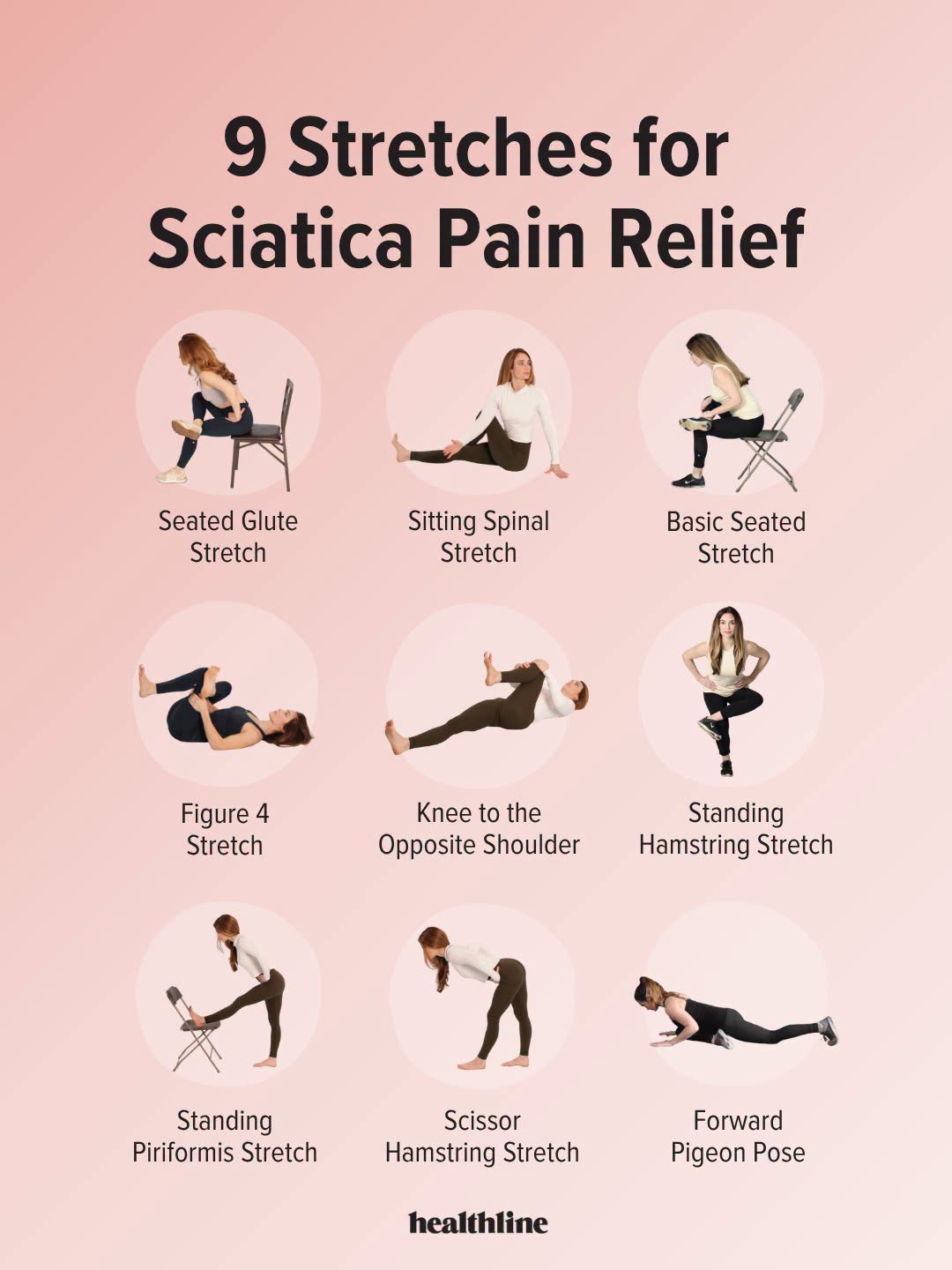
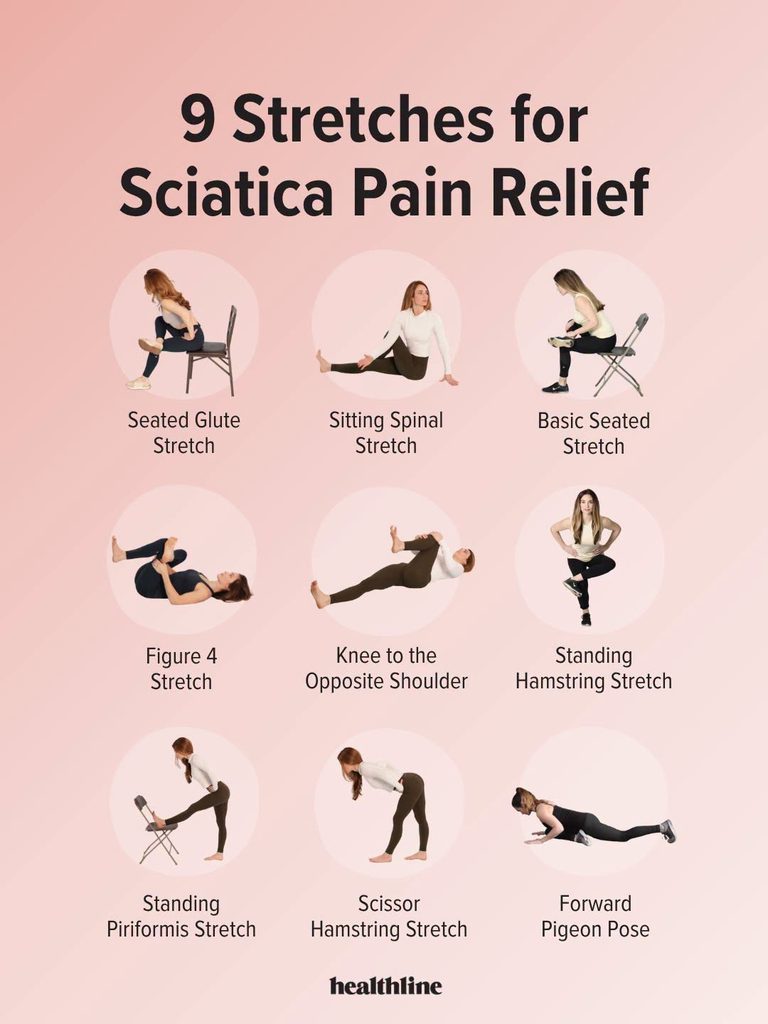
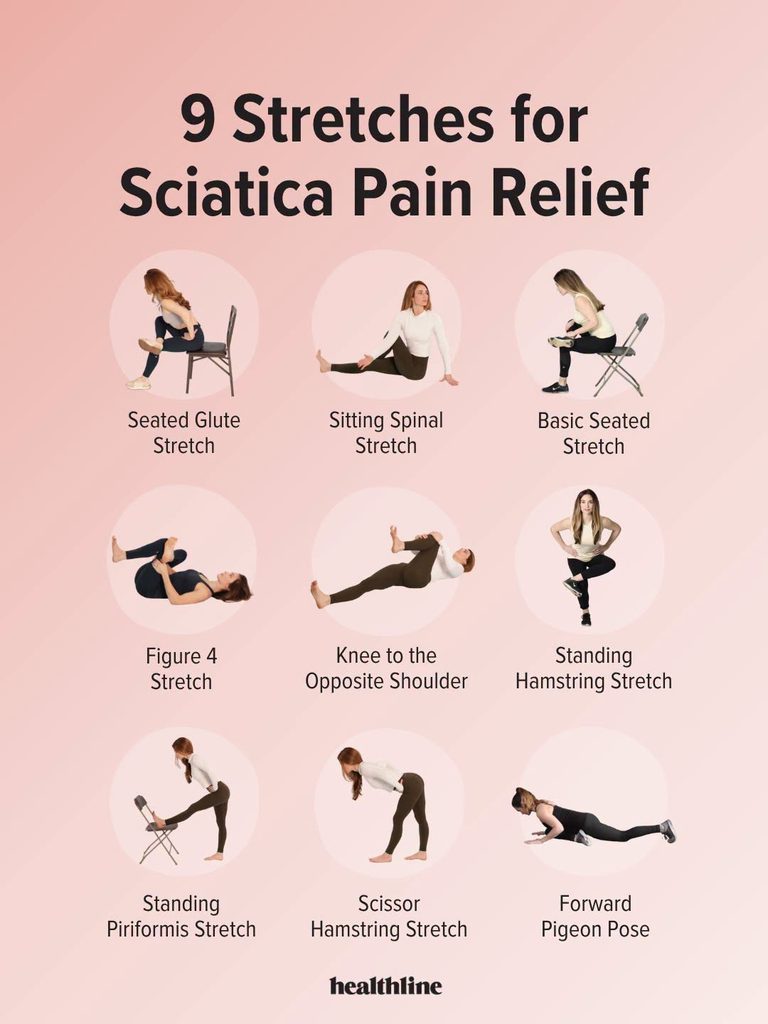
Here are nine commonly recommended stretches and mobility exercises, along with practical guidance for performing them safely.
What Is Sciatica?
Sciatica describes pain associated with irritation or compression of the sciatic nerve or the nerve roots that contribute to it.
The sciatic nerve is the largest nerve in the human body.
It travels from the lower spine through the buttocks and down each leg.
When the nerve or its roots become irritated, symptoms may develop along its pathway.
Common symptoms include:
- Pain in the lower back or buttock
- Pain radiating down one leg
- Burning or shooting sensations
- Tingling or pins and needles
- Numbness
- Muscle weakness in some cases
- Discomfort that worsens with certain positions or movements
Sciatica usually affects one side of the body, although symptoms can occasionally occur on both sides.
The intensity varies considerably.
Some people experience mild discomfort, while others develop pain that significantly interferes with daily activities.
What Causes Sciatica?
Sciatica is a symptom pattern rather than a single disease.
Several conditions can irritate the nerves in the lower spine.
Herniated Disc
A spinal disc can bulge or herniate and irritate a nearby nerve root.
Spinal Stenosis
Narrowing of the spinal canal or spaces where nerves exit can place pressure on nerve structures.
Degenerative Changes
Age-related changes in the spine may contribute to nerve irritation.
Spondylolisthesis
One vertebra may slip relative to another, sometimes narrowing the space available for nerves.
Other Causes
Less commonly, infections, injuries, tumors, or other medical conditions may produce similar symptoms.
Because different conditions require different approaches, persistent or severe symptoms should be assessed by a healthcare professional.
9 Stretches That May Help Ease Sciatica Discomfort
These movements are intended to be gentle.
They should not cause sharp pain, worsening numbness, or increased symptoms traveling down the leg.
Start slowly and avoid forcing your body into uncomfortable positions.
If you have a diagnosed spinal condition, recent surgery, significant weakness, or other medical concerns, ask a healthcare professional or physical therapist which exercises are appropriate for you.
1. Seated Glute Stretch
The seated glute stretch targets muscles around the buttocks and hips.
Tension in this area can contribute to discomfort, although stretching these muscles does not necessarily remove pressure from an irritated spinal nerve.
How to Do It
- Sit upright in a sturdy chair with both feet on the floor.
- Place your right ankle gently over your left thigh, just above the knee.
- Keep your back comfortably straight.
- Lean forward slightly from your hips until you feel a mild stretch in your right buttock.
- Hold for approximately 15–30 seconds if comfortable.
- Return to the starting position.
- Repeat on the opposite side.
Helpful Tip
Avoid pushing down forcefully on your knee.
If this position increases pain, tingling, or numbness, stop.
2. Sitting Spinal Stretch
A gentle seated rotation can improve mobility for some people.
However, spinal twisting may aggravate certain disc-related or nerve symptoms.
This movement should be performed cautiously and only if it feels comfortable.
How to Do It
- Sit upright on a stable chair.
- Keep both feet planted on the floor.
- Gently rotate your upper body a small distance to one side.
- Keep the movement controlled rather than forcing a deep twist.
- Hold briefly while breathing normally.
- Return to the center.
- Repeat on the other side.
Helpful Tip
Avoid using your arms to pull yourself into a stronger rotation.
If twisting causes pain to spread farther down your leg, discontinue the movement.
3. Basic Seated Hamstring Stretch
The hamstrings are the muscles along the back of your thighs.
Tight hamstrings may contribute to discomfort during some movements.
However, people with sciatica should be careful because stretching the hamstrings can also place tension on the sciatic nerve.
How to Do It
- Sit near the front of a sturdy chair.
- Extend one leg forward with the heel resting on the floor.
- Keep the knee slightly bent rather than locking it.
- Maintain a comfortable position through your back.
- Lean forward a small amount from your hips.
- Stop when you feel a gentle muscular stretch, without nerve symptoms.
- Return slowly and switch legs.
Helpful Tip
Do not try to touch your toes.
A mild stretch is enough.
If you experience shooting pain, tingling, or increased numbness, stop immediately.
4. Figure-Four Stretch
The figure-four stretch targets muscles around the hip and buttock.
It can be performed while lying down, which some people find more comfortable than sitting.
How to Do It
- Lie on your back on a comfortable, firm surface.
- Bend both knees and place your feet on the floor.
- Cross your right ankle over your left thigh.
- If comfortable, gently bring the left thigh slightly toward your body.
- Hold for 15–30 seconds without forcing the movement.
- Release slowly.
- Repeat on the other side.
Helpful Tip
Keep your head and shoulders relaxed.
Avoid pulling your legs toward your chest if doing so increases back or leg pain.
5. Knee-to-Opposite-Shoulder Stretch
This exercise stretches muscles around the buttock and hip.
Some people find it soothing, while others may experience increased symptoms with hip flexion.
How to Do It
- Lie comfortably on your back.
- Bend your right knee.
- Gently guide the knee toward your left shoulder.
- Move only as far as feels comfortable.
- Hold briefly without forcing the position.
- Slowly release.
- Repeat with the other leg.
Helpful Tip
The goal is not to pull your knee as far as possible.
Avoid this stretch if it causes pain to travel farther down your leg.
6. Standing Hamstring Stretch
This variation can be performed using a low, stable support.
Because hamstring stretching can increase tension on the sciatic nerve, it is not suitable for everyone with sciatica.
How to Do It
- Stand facing a low, stable step.
- Place one heel on the step.
- Keep a slight bend in the raised knee.
- Maintain a comfortable, neutral back position.
- Gently shift forward from the hips.
- Stop at the first sensation of mild muscular tension.
- Return to standing and switch legs.
Helpful Tip
Avoid placing your foot on a high surface or bending deeply forward.
Stop if symptoms increase.
7. Standing Piriformis Stretch
The piriformis is a small muscle located deep in the buttock.
In some individuals, structures in this region may contribute to sciatic-type symptoms.
A standing variation of the figure-four stretch can target the hip muscles.
How to Do It
- Stand near a sturdy countertop or chair for support.
- Shift your weight onto one leg.
- If your balance and hip mobility allow, place the opposite ankle across the supporting thigh.
- Bend the standing knee slightly.
- Lower your hips only a small distance.
- Return slowly to standing.
- Repeat on the opposite side.
Helpful Tip
This movement requires balance.
If you feel unstable, use the seated version instead.
Do not attempt it if you have a significant fall risk.
8. Scissor Hamstring Stretch
This stretch uses a staggered stance to target the back of the thigh.
Like other hamstring stretches, it should be approached cautiously if you have nerve-related leg pain.
How to Do It
- Stand with one foot slightly in front of the other.
- Keep both feet pointing forward.
- Bend the back knee slightly.
- Keep the front knee softly bent.
- Hinge forward gently at your hips.
- Stop when you feel mild tension in the front thigh’s hamstring muscles.
- Return to standing.
- Switch sides.
Helpful Tip
Avoid rounding your lower back aggressively or forcing the stretch.
If it reproduces shooting leg pain, discontinue it.
9. Forward Pigeon Pose
Pigeon pose is a yoga position that stretches the muscles around the hips and buttocks.
However, it is a relatively demanding stretch.
It may be inappropriate for people with acute sciatica, hip problems, or symptoms aggravated by spinal flexion.
How to Do It
- Begin on your hands and knees on a comfortable surface.
- Bring one knee forward toward the same-side wrist.
- Position the lower leg at a comfortable angle.
- Extend the opposite leg behind you.
- Keep your hips supported and avoid forcing them toward the floor.
- Remain upright rather than immediately folding forward.
- Hold briefly only if the position is comfortable.
- Carefully return to the starting position.
Helpful Tip
Use cushions or yoga blocks for support if appropriate.
If this position feels uncomfortable or difficult, skip it and choose a gentler alternative.
Important: Pigeon pose is not necessary for sciatica recovery, and a more advanced stretch is not automatically more effective.
How Often Should You Stretch for Sciatica?
There is no single stretching schedule that works for everyone.
A gentle approach may involve trying one or two comfortable movements for a short period.
For tolerated static stretches, holding for approximately 15–30 seconds is a common starting point.
However, you do not need to complete all nine exercises.
In fact, attempting every stretch in one session may aggravate symptoms.
The best routine depends on the underlying cause of your sciatica, your physical abilities, and how your symptoms respond.
A physical therapist can help identify movements that are more likely to benefit your particular condition.
The Most Important Rule: Don’t Stretch Through Nerve Pain
Muscle stretching and nerve irritation are not the same thing.
A mild pulling sensation in a muscle may be normal.
But sharp, electric, burning, or shooting pain should not be ignored.
Pay particular attention to whether symptoms move farther down your leg.
For example, a movement that changes discomfort from the buttock to the calf or foot may indicate that the exercise is aggravating your symptoms.
Stop the movement rather than pushing harder.
Some people benefit from exercises that involve gentle spinal extension.
Others may feel better with flexion-based movements.
There is no universally correct direction.
That is why individualized assessment can be valuable.
Can Walking Help Sciatica?
For many people, gentle walking is a useful way to remain active.
Prolonged bed rest is generally not recommended for uncomplicated sciatica.
Staying active within comfortable limits may help maintain mobility and reduce deconditioning.
You might begin with a short walk and gradually increase the duration as tolerated.
However, walking may worsen symptoms in some conditions, including certain cases of lumbar spinal stenosis.
If your pain increases significantly while walking, or you develop weakness or numbness, seek medical advice.
Is Sitting Bad for Sciatica?
Sitting can aggravate symptoms in some people, especially when the underlying problem involves a lumbar disc.
Prolonged sitting may increase discomfort in the lower back, buttock, or leg.
Try changing positions regularly.
A supportive chair and comfortable posture may help.
Some people benefit from standing or walking briefly after sitting for an extended period.
However, standing is not always better than sitting.
People with spinal stenosis, for example, may find that standing upright worsens their symptoms while sitting or leaning forward provides relief.
The goal is to find positions that reduce discomfort rather than forcing one posture for everyone.
Should You Use Heat or Ice for Sciatica?
Heat and cold may provide temporary symptom relief.
A warm compress or heating pad can help relax tense muscles.
A cold pack may be useful for short-term pain relief in some situations.
Always place a protective layer between your skin and the heat or cold source.
Avoid extreme temperatures.
Do not apply heat or ice to areas with significantly reduced sensation unless a healthcare professional advises it, because you may not recognize skin injury.
Neither heat nor ice corrects the underlying cause of nerve compression.
They are comfort measures rather than cures.
Five Common Mistakes That Can Make Sciatica Worse
1. Stretching Too Aggressively
Forcing a stretch can irritate sensitive tissues.
Gentle movement is preferable to pushing through pain.
2. Copying Every Exercise You See Online
An exercise that helps one person may worsen another person’s symptoms.
The underlying cause matters.
3. Staying in Bed for Too Long
Extended inactivity can contribute to stiffness and loss of strength.
Remain as active as comfortably possible unless your clinician advises otherwise.
4. Ignoring Worsening Neurological Symptoms
Increasing weakness, numbness, or difficulty walking requires medical attention.
5. Expecting Immediate Results
Sciatica often improves gradually.
Recovery may take several weeks, and some cases require additional treatment.
When Should You See a Doctor?
Seek medical evaluation if:
- Pain is severe or worsening
- Symptoms persist or interfere with daily life
- Numbness or tingling increases
- You notice weakness in your leg or foot
- Walking becomes difficult
- Symptoms develop after a significant injury
- You have fever or other concerning symptoms alongside back pain
Seek emergency medical care immediately if you develop new loss of bladder or bowel control, difficulty urinating with numbness around the groin or saddle area, or rapidly progressive leg weakness.
These can be warning signs of serious nerve compression requiring urgent assessment.
Can Sciatica Go Away on Its Own?
Many episodes of sciatica improve over time.
Some people recover with conservative treatment, which may include activity modification, appropriate exercise, and pain management.
Others experience persistent or recurrent symptoms.
Treatment depends on the cause, severity, and duration of symptoms.
Some individuals may require physical therapy, medications, injections, or surgery.
Surgery is generally considered for specific indications, such as serious or progressive neurological deficits or persistent symptoms despite appropriate treatment.
Not everyone with sciatica needs surgery.
Frequently Asked Questions
What Is the Best Stretch for Sciatica?
There is no single best stretch for everyone. The most appropriate movement depends on the cause of the symptoms and how your body responds.
Can Stretching Make Sciatica Worse?
Yes. Some stretches increase tension on irritated nerves or place the spine in positions that aggravate symptoms.
Is the Figure-Four Stretch Good for Sciatica?
It may help some people with buttock muscle tightness, but it is not suitable for everyone.
Should You Stretch Your Hamstrings if You Have Sciatica?
Only if the movement is comfortable and does not worsen nerve symptoms. Hamstring stretching can sometimes aggravate sciatic pain.
How Long Does Sciatica Last?
Many episodes improve over several weeks, but recovery varies. Some cases become persistent.
Can Sciatica Affect Both Legs?
Yes, although symptoms more commonly affect one side. New bilateral symptoms, especially with weakness or bladder or bowel changes, require prompt medical assessment.
Does Massage Help Sciatica?
Massage may temporarily reduce muscle tension and discomfort, but it does not necessarily resolve nerve compression.
Is Walking Better Than Sitting?
It depends on the underlying condition. Some people feel better walking, while others find relief when sitting or leaning forward.
Can Sciatica Be Caused by a Herniated Disc?
Yes. A herniated lumbar disc is one common cause of sciatic-type pain.
Do You Need an MRI for Sciatica?
Not always. Imaging is generally considered when there are concerning symptoms, progressive neurological deficits, or when results would affect treatment decisions.
Final Thoughts: Gentle Movement Can Help, but Listen to Your Body
Sciatica can make everyday activities uncomfortable and exhausting.
Fortunately, many people improve with time and appropriate conservative care.
Gentle stretching may help reduce muscle tension and improve mobility, especially when combined with comfortable activity and individualized guidance.
But the most important lesson is simple:
More stretching does not necessarily mean faster recovery.
Choose movements that feel comfortable.
Avoid exercises that cause shooting pain or worsening numbness.
Don’t force your body into difficult positions.
And seek professional assessment if your symptoms are severe, persistent, or getting worse.
You don’t have to complete all nine stretches to benefit from movement.
Sometimes a few carefully selected exercises are far more useful than an entire routine.
Have you ever experienced sciatica or pain traveling from your lower back down your leg?
Which gentle movement or activity has helped you feel more comfortable? Share your experience in the comments!