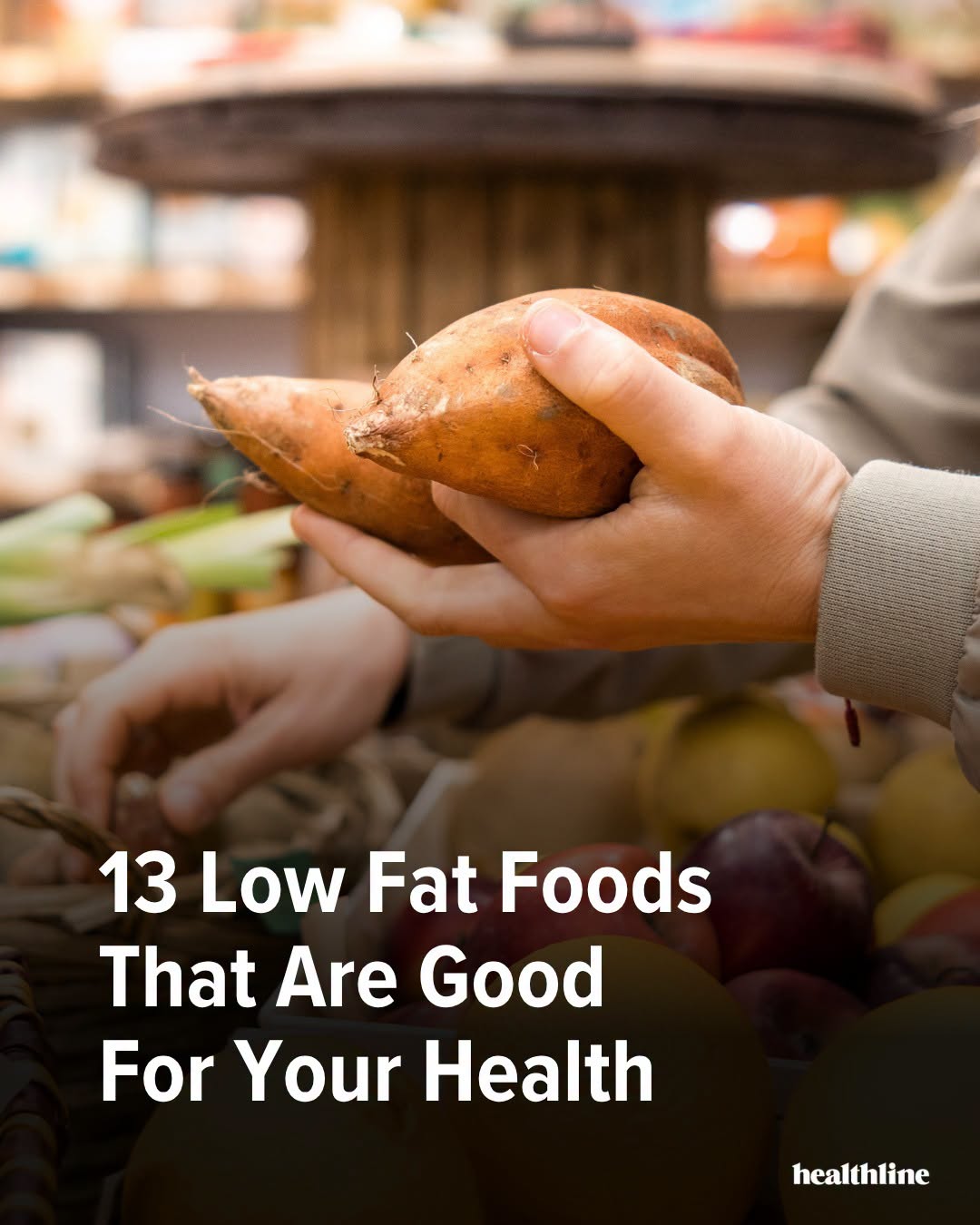
Trying to eat less fat doesn’t mean you have to survive on bland salads, tiny portions, or meals that leave you hungry an hour later. In fact, some of the most nutritious foods are naturally low in fat, packed with vitamins, and surprisingly satisfying.
Whether you’re looking to improve your eating habits, support your heart health, or follow a lower-fat diet recommended by your doctor, choosing the right foods can make a big difference.
But there’s something important to understand first.
Fat isn’t automatically bad for you.
Your body needs dietary fat to absorb certain vitamins, produce hormones, and maintain healthy cells.
Healthy fats found in foods such as olive oil, nuts, seeds, and avocados can be valuable parts of a balanced diet.
However, some people may benefit from reducing their overall fat intake, particularly when advised to do so for certain digestive conditions or after specific medical procedures.
The good news?
There are plenty of naturally low-fat foods that deliver essential nutrients without sacrificing flavor.
Here are 13 excellent options to consider adding to your meals.
1. Sweet Potatoes
Sweet potatoes are one of the most versatile and nutritious low-fat foods.
Naturally low in fat, they’re rich in complex carbohydrates, fiber, and important vitamins.
Orange-fleshed sweet potatoes are especially notable for their beta-carotene content.
Your body can convert beta-carotene into vitamin A, which contributes to normal vision, immune function, and healthy skin.
Why They’re Good for You
- Naturally very low in fat
- Provide dietary fiber
- Contain potassium
- Rich in beta-carotene
- Can help make meals more satisfying
Best Ways to Eat Them
Try baking, boiling, steaming, or roasting sweet potatoes with a small amount of oil.
You can also mash them with herbs and spices.
Be mindful of toppings.
A sweet potato may be naturally low in fat, but adding large amounts of butter, cream, or cheese changes the nutritional profile considerably.
2. Beans
Beans are nutritional powerhouses.
Black beans, kidney beans, pinto beans, and many other varieties provide a combination of plant protein, fiber, and essential minerals.
Most cooked beans are naturally low in fat.
Their fiber and protein content can also help you feel satisfied after eating.
Why They’re Good for You
Beans provide:
- Plant-based protein
- Soluble and insoluble fiber
- Folate
- Iron
- Potassium
- Magnesium
Soluble fiber may help support healthy cholesterol levels when included in an overall heart-healthy eating pattern.
Best Ways to Eat Them
Add beans to soups, salads, rice bowls, or vegetable stews.
You can also mash them into a flavorful spread.
If using canned beans, rinsing them can reduce some of the sodium.
Helpful tip: If beans cause bloating, introduce them gradually and cook dried beans thoroughly.
3. Lentils
Lentils are another excellent low-fat source of plant protein.
They’re inexpensive, easy to prepare, and extremely versatile.
A serving of cooked lentils provides fiber, protein, folate, and iron with very little fat.
Why They’re Good for You
Lentils may help support:
- Digestive regularity
- Healthy cholesterol levels
- Normal energy metabolism
- A satisfying, balanced eating pattern
Their combination of protein and fiber makes them particularly useful for people who want filling meals.
Best Ways to Eat Them
Try lentil soup, lentil salad, vegetable curry, or lentils served with brown rice.
Red lentils cook quickly and work well in soups.
Green and brown lentils generally hold their shape better in salads and grain bowls.
4. Leafy Green Vegetables
Spinach, kale, lettuce, Swiss chard, and other leafy greens are naturally very low in fat.
They also provide vitamins, minerals, and beneficial plant compounds.
Different greens offer different nutrients.
For example, spinach contains folate and vitamin K, while kale provides vitamin C and carotenoids.
Why They’re Good for You
Leafy greens can contribute to:
- Normal immune function
- Bone health
- Healthy digestion
- Adequate folate intake
- Overall dietary quality
Best Ways to Eat Them
Enjoy greens in salads, soups, omelets, sandwiches, and vegetable dishes.
You can also add spinach to smoothies.
Remember that some vitamins found in vegetables are fat-soluble.
A small amount of healthy fat, such as olive oil, can help your body absorb certain carotenoids.
The goal isn’t to eliminate fat completely.
5. White Fish
Many varieties of white fish are naturally low in fat and rich in high-quality protein.
Examples include cod, haddock, pollock, and tilapia.
Fish also provides nutrients such as vitamin B12, selenium, and iodine, although amounts vary by species.
Why It’s Good for You
White fish offers:
- High-quality protein
- Relatively little total fat
- Vitamin B12
- Important minerals
- A versatile alternative to higher-fat meats
Protein contributes to muscle maintenance and normal tissue repair.
Best Ways to Eat It
Bake, steam, poach, or grill fish with lemon, garlic, and herbs.
Avoid assuming all fish dishes are low in fat.
Deep-fried fish and fish served with rich sauces can contain much more fat than simply prepared fillets.
For people who eat fish, variety is useful because oily fish such as salmon and sardines provide beneficial omega-3 fats that lean white fish generally contains in smaller amounts.
6. Skinless Chicken Breast
Skinless chicken breast is a popular source of lean protein.
It contains relatively little fat compared with many fattier cuts of meat, particularly when prepared without heavy sauces or frying.
Why It’s Good for You
Chicken breast provides:
- Complete protein
- Vitamin B6
- Niacin
- Phosphorus
- Selenium
Protein helps support muscle maintenance and can contribute to fullness after meals.
Best Ways to Eat It
Try grilled chicken with vegetables, chicken and vegetable soup, or baked chicken seasoned with herbs.
Use a food thermometer to ensure chicken is cooked safely.
Avoid adding excessive amounts of oil or creamy sauces if your goal is to keep the meal lower in fat.
7. Plain Nonfat Greek Yogurt
Plain nonfat Greek yogurt is an excellent option for people who want a protein-rich food without much fat.
It can be eaten at breakfast, as a snack, or used as an ingredient in savory dishes.
Why It’s Good for You
Depending on the product, Greek yogurt can provide:
- High-quality protein
- Calcium
- Vitamin B12
- Phosphorus
- Live cultures
Some yogurts contain live and active cultures, although not every product provides clinically established probiotic benefits.
Best Ways to Eat It
Top plain Greek yogurt with berries, sliced banana, or oats.
You can also use it as a base for dips and dressings.
Choose unsweetened varieties when possible.
Some flavored yogurts contain substantial added sugar, even when labeled low-fat.
8. Oatmeal
Oats are a nutritious whole grain that naturally contains relatively little fat.
They are especially well known for their beta-glucan content, a type of soluble fiber.
Why It’s Good for You
Oats provide:
- Soluble fiber
- Complex carbohydrates
- Magnesium
- Manganese
- Some plant protein
Oat beta-glucan can help lower LDL cholesterol when consumed in sufficient amounts as part of a suitable diet.
Best Ways to Eat It
Prepare oatmeal with water or low-fat milk.
Add cinnamon, berries, banana, or unsweetened cocoa powder.
You can also prepare overnight oats.
Avoid relying on highly sweetened instant oatmeal products if you’re trying to reduce added sugar.
9. Berries
Strawberries, blueberries, raspberries, and blackberries are naturally low in fat.
They also contain fiber, vitamins, and plant compounds such as anthocyanins.
Why They’re Good for You
Berries can provide:
- Vitamin C
- Dietary fiber
- Polyphenols
- Water
- Naturally sweet flavor
Their combination of fiber and water makes them a useful addition to meals and snacks.
Best Ways to Eat Them
Add berries to oatmeal, yogurt, smoothies, or fruit salads.
Frozen berries are also nutritious and can be more affordable than fresh varieties.
Choose unsweetened frozen fruit rather than products packed in sugary syrup.
10. Apples
Apples are convenient, affordable, and naturally very low in fat.
They contain water, carbohydrates, and dietary fiber.
Much of an apple’s fiber is found in or near the skin, so eating the peel can be beneficial when appropriate.
Why They’re Good for You
Apples provide:
- Dietary fiber
- Vitamin C in modest amounts
- Polyphenols
- Natural sweetness
- A convenient snack option
Whole apples are generally more filling than apple juice because they retain their fiber and require chewing.
Best Ways to Eat Them
Enjoy apples fresh, sliced into oatmeal, or baked with cinnamon.
They also pair well with plain yogurt.
11. Carrots
Carrots are crunchy, colorful, and naturally low in fat.
They’re especially well known for their beta-carotene content.
Why They’re Good for You
Carrots provide:
- Beta-carotene
- Dietary fiber
- Potassium
- Vitamin K
- Water
Beta-carotene contributes to vitamin A intake, which supports normal vision and immune function.
Best Ways to Eat Them
Eat carrots raw, steamed, roasted, or added to soups.
Carrots can also be shredded into salads.
Pairing them with a small amount of healthy fat can improve absorption of certain carotenoids.
12. Potatoes
Potatoes sometimes have an undeserved reputation as unhealthy foods.
But plain potatoes are naturally low in fat.
They provide carbohydrates, potassium, vitamin C, and other nutrients.
The problem often comes from how they’re prepared.
Why They’re Good for You
Potatoes can provide:
- Potassium
- Vitamin C
- Vitamin B6
- Dietary fiber, especially when eaten with the skin
- Energy from carbohydrates
They can also be quite filling.
Best Ways to Eat Them
Bake, boil, or steam potatoes.
Try seasoning them with herbs, garlic, or a little olive oil.
French fries, potato chips, and potatoes covered in butter or cream contain much more fat than plain potatoes.
13. Egg Whites
Egg whites are an excellent source of protein with almost no fat.
They can be especially useful for people who have been advised to limit fat intake.
Why They’re Good for You
Egg whites provide:
- High-quality protein
- Very little fat
- Relatively few calories
- A versatile ingredient for meals
However, whole eggs also contain valuable nutrients.
Egg yolks provide choline, vitamins, and other nutrients that are largely absent from egg whites.
For many people, whole eggs can fit into a balanced diet.
Best Ways to Eat Them
Prepare egg-white omelets with vegetables.
You can also add egg whites to scrambled eggs or use them in cooking.
Cook eggs thoroughly according to food safety guidance.
Why Low-Fat Foods Can Still Keep You Full
One common misconception is that low-fat foods are never satisfying.
In reality, fullness depends on several factors.
These include:
- Protein content
- Fiber content
- Water content
- Portion size
- Food volume
- Individual appetite and eating habits
For example, a meal containing lentils, vegetables, and grilled chicken may be relatively low in fat while still providing substantial protein and fiber.
Similarly, oatmeal topped with berries and plain yogurt can make a filling breakfast.
The key is to build balanced meals rather than focusing exclusively on fat content.
Does Everyone Need a Low-Fat Diet?
No.
Most people do not need to eliminate fat or follow a very-low-fat eating plan.
Dietary fat is essential for normal health.
It supports:
- Absorption of vitamins A, D, E, and K
- Cell membrane structure
- Hormone-related processes
- Essential fatty acid intake
- Energy needs
The type of fat matters.
Replacing some saturated fat with unsaturated fats can support cardiovascular health.
Foods such as olive oil, nuts, seeds, avocados, and oily fish provide beneficial unsaturated fats.
A lower-fat diet may be recommended in certain medical circumstances, but the appropriate amount of fat depends on individual needs.
If your doctor has advised fat restriction because of a digestive condition or surgery, follow their specific recommendations.
Low-Fat Doesn’t Always Mean Healthy
Food packaging can sometimes be misleading.
A product labeled “low-fat” may still contain large amounts of added sugar, sodium, or refined starch.
For example:
Low-fat cookies: May contain substantial added sugar.
Fat-free salad dressing: May be high in sodium or sugar.
Low-fat flavored yogurt: May contain more added sugar than plain yogurt.
Low-fat snack foods: May still be highly processed and easy to overeat.
Instead of judging a product by one claim on the package, consider its overall nutritional quality.
Look at the ingredients, fiber, protein, added sugar, sodium, and portion size.
How to Build a Balanced Low-Fat Meal
A practical approach is to combine vegetables, lean protein, and fiber-rich carbohydrates.
For example:
Breakfast
Oatmeal with berries and plain nonfat Greek yogurt.
Lunch
Grilled chicken breast with brown rice and steamed vegetables.
Dinner
Baked white fish with sweet potatoes and leafy greens.
Snack
An apple, carrots, or plain yogurt.
These are examples rather than a personalized meal plan.
Depending on your nutritional needs, adding moderate amounts of healthy fats may be appropriate.
Common Mistakes People Make When Eating Low-Fat
Mistake 1: Eliminating All Dietary Fat
Your body needs essential fats.
Extremely restrictive diets can make it harder to meet nutritional requirements.
Mistake 2: Replacing Fat With Sugar
Choosing low-fat products that contain large amounts of added sugar may undermine the overall quality of your diet.
Mistake 3: Ignoring Protein
Protein is important for muscle maintenance and can contribute to satiety.
Mistake 4: Eating Too Little Fiber
Fiber-rich foods such as beans, lentils, oats, fruits, and vegetables support digestive health and help make meals satisfying.
Mistake 5: Assuming All Low-Fat Foods Are Low-Calorie
A food can be low in fat while still providing substantial calories from carbohydrates or other ingredients.
Mistake 6: Avoiding Healthy Fats Without a Medical Reason
Unsaturated fats can be part of a healthy diet.
The goal should be balance, not unnecessary restriction.
Frequently Asked Questions
What Are the Healthiest Low-Fat Foods?
Examples include beans, lentils, sweet potatoes, leafy greens, oats, berries, nonfat Greek yogurt, white fish, and skinless chicken breast.
Are Sweet Potatoes Low in Fat?
Yes. Plain sweet potatoes naturally contain very little fat.
Is Rice a Low-Fat Food?
Plain cooked rice is naturally low in fat. Whole-grain varieties such as brown rice also provide fiber.
Are Bananas Low in Fat?
Yes. Bananas are naturally very low in fat and provide carbohydrates, potassium, and other nutrients.
Is Chicken Breast Low in Fat?
Skinless chicken breast is a lean source of protein, especially when baked, grilled, or poached.
Can You Lose Weight by Eating Low-Fat Foods?
Weight management depends on overall energy intake, dietary quality, activity, and other factors. Low-fat foods may be useful, but they do not automatically cause weight loss.
Are Low-Fat Foods Good for Cholesterol?
Some low-fat foods, especially oats, beans, and lentils, contain soluble fiber that can help reduce LDL cholesterol. Replacing saturated fat with unsaturated fat is also important.
Can You Eat Eggs on a Low-Fat Diet?
Egg whites contain almost no fat. Whole eggs contain more fat but can still fit into many balanced eating patterns.
Are Potatoes Healthy?
Plain potatoes provide several nutrients and can be part of a healthy diet. Preparation methods and toppings make a significant difference.
Is a Fat-Free Diet Safe?
A diet that eliminates virtually all fat is generally not recommended because dietary fat provides essential fatty acids and supports absorption of fat-soluble vitamins.
Final Thoughts: Eating Less Fat Doesn’t Have to Mean Eating Less Delicious Food
A healthy eating pattern doesn’t need to be complicated or restrictive.
Many everyday foods are naturally low in fat while providing important nutrients.
Sweet potatoes, beans, lentils, leafy greens, fish, oats, berries, and lean proteins can all contribute to satisfying meals.
The most important lesson is that low-fat eating should focus on nutritious foods, not simply removing fat from everything you eat.
Healthy fats still have an important place in most balanced diets.
And if you’re following a medically recommended low-fat eating plan, choosing foods that provide enough protein, fiber, vitamins, and minerals can help you maintain good nutrition.
With a little planning, you can enjoy meals that are flavorful, filling, and supportive of your overall health.
Which of these 13 foods do you eat most often?
Tell us your favorite healthy meal in the comments!