An original fictional family drama about jealousy, entitlement, betrayal, and the moment one woman’s decision to stand up for herself changed her relationship with her entire family.
The Sound of Breaking Glass
The sound of metal striking glass is something you never forget.
It was a Sunday afternoon, the kind when the neighborhood was quiet enough to hear birds singing in the trees.
I had just returned from my mother’s house, where I’d dropped off some paperwork from my father’s old estate.
My black SUV was parked in the driveway, freshly washed, its dark paint gleaming beneath the afternoon sun.
I had worked for years to afford that vehicle.
It wasn’t simply a car to me.
It represented every overtime shift, every canceled vacation, and every financial sacrifice I’d made to build a comfortable life.
Then my brother appeared.
His name was Mason.
He was thirty-four years old, married, and convinced that the world owed him whatever he wanted.
He walked up my driveway with his wife, Vanessa, following closely behind.
I should have known something was wrong when I saw the expression on his face.
“Give Vanessa the SUV,” he said.
I stared at him.
“What?”
“She needs something safer for the baby.”
I looked toward Vanessa.
She stood beside him wearing oversized sunglasses and holding her phone like she was already recording a victory.
I almost laughed.
“You can’t be serious.”
Mason didn’t laugh back.
“She’s pregnant, Ethan. You’re single. You don’t need a family car.”
I crossed my arms.
“It’s my car.”
He stepped closer.
“And we’re family.”
I looked from him to Vanessa.
“Being family doesn’t mean you can take my property.”
That’s when everything changed.
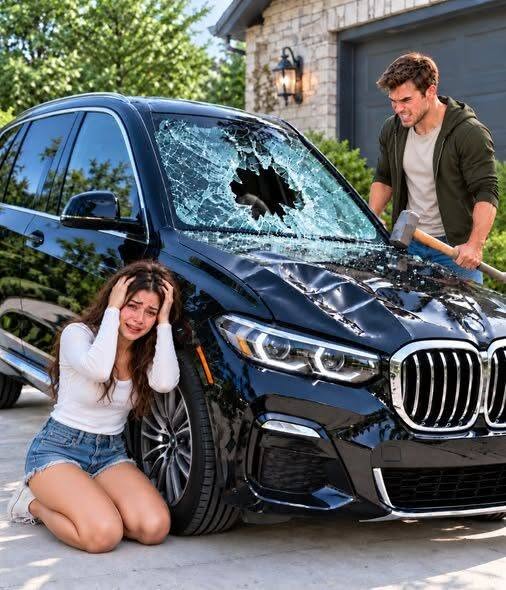
The SUV I Had Worked So Hard to Buy
My name is Ethan Parker, and at thirty-two, I had finally reached a point in my life where I felt financially secure.
I worked in commercial construction management.
It wasn’t glamorous.
Some days started before sunrise and ended long after dark.
There were difficult clients, unexpected problems, and weekends when my phone never stopped ringing.
But I enjoyed the work.
More importantly, I had learned to manage my money carefully.
I paid off my student loans.
I built an emergency fund.
I saved for a home.
And after years of driving an aging sedan, I decided to buy myself something I’d wanted for a long time.
A luxury SUV.
The purchase price was approximately $78,000.
It was expensive, and I knew it.
But I had planned for it.
I wasn’t asking anyone else to pay the bill.
I wasn’t borrowing money from my parents.
And I certainly wasn’t expecting my brother to contribute.
The vehicle was registered in my name, insured under my policy, and financed through an arrangement I was responsible for paying.
I loved it.
Unfortunately, so did Vanessa.
The First Time Vanessa Asked for My Car
The trouble started three months earlier.
We were having dinner at my mother’s house when Vanessa noticed my new SUV through the kitchen window.
“Oh my goodness,” she said. “Is that yours?”
I nodded.
“Picked it up last week.”
She walked outside to look at it.
She admired the leather seats, the panoramic roof, and the spacious interior.
Then she asked a question that seemed harmless at the time.
“Could I drive it sometime?”
I smiled politely.
“Maybe another day.”
She ran her hand along the passenger door.
“You know, this would be perfect for a family.”
I didn’t think much of the comment.
But over the next several weeks, she brought up the SUV repeatedly.
At another family dinner, she mentioned how uncomfortable her older sedan had become.
Then she talked about how expensive new cars were.
Then she began suggesting that my SUV was too large for someone who lived alone.
I started noticing a pattern.
She wasn’t simply admiring the vehicle anymore.
She was building an argument for why she deserved it more than I did.
The Family Dinner That Started Everything
The real confrontation began at my mother’s birthday dinner.
We were sitting around the dining table when Mason cleared his throat.
“Ethan, Vanessa and I have been talking.”
I looked up.
“About what?”
He glanced at his wife.
“About the baby.”
Vanessa placed a hand on her stomach.
“We’ve been looking at family vehicles,” she said. “But everything decent is so expensive.”
I nodded.
“Yeah, cars aren’t cheap.”
Mason leaned forward.
“Which brings us to your SUV.”
I set down my fork.
“What about it?”
“Well,” he said, “you don’t really need something that big.”
I stared at him.
“And?”
“And Vanessa does.”
I waited for him to explain.
Instead, he said something unbelievable.
“We think you should give it to her.”
The room went silent.
I looked at my mother, expecting her to laugh.
She didn’t.
Vanessa smiled.
“You can always buy another one.”
I felt my face grow hot.
“Are you asking me to give you a seventy-eight-thousand-dollar vehicle?”
Mason shrugged.
“You make good money.”
“That doesn’t answer my question.”
My mother finally spoke.
“Ethan, don’t make this into an argument. Your brother is starting a family.”
I looked at her.
“So?”
She sighed.
“Sometimes families need to make sacrifices.”
I pushed my chair back.
“I’ve made plenty of sacrifices. That’s how I bought the car.”
Vanessa’s smile disappeared.
“So you’re really saying no?”
“Yes.”
Mason shook his head.
“Unbelievable.”
I left dinner early.
I thought the conversation was over.
I had no idea how wrong I was.
The Messages Started Coming
Over the next two weeks, my phone barely stopped buzzing.
Mason sent messages about family loyalty.
Vanessa sent pictures of expensive baby equipment and complained about their financial situation.
My mother called almost every evening.
“Ethan, why can’t you just help them?”
“Mom, I’m happy to help with reasonable things. But I’m not giving away my car.”
“It’s only a car.”
“Then why don’t they buy one?”
She didn’t answer.
A few days later, Mason sent a particularly insulting message.
“You care more about a stupid vehicle than your own niece or nephew.”
I stared at the screen.
Then I replied:
“I care about my family. But my property isn’t yours to demand.”
He didn’t respond.
For almost a week, things went quiet.
I hoped they’d finally accepted my decision.
Then came Sunday.
The Day Mason Showed Up at My House
I had been working in the garage when I heard a car door slam.
Mason was standing beside my SUV.
Vanessa stood near the driveway.
My mother had arrived in a separate car.
All three of them looked serious.
I stepped outside.
“What’s going on?”
Mason pointed toward the SUV.
“We’re here to settle this.”
I frowned.
“Settle what?”
“The car.”
I took a deep breath.
“We already discussed this.”
Vanessa stepped forward.
“Ethan, please. I’m pregnant. I need something reliable.”
“You have a vehicle.”
“It’s old.”
“Then you need to make a plan to replace it.”
Mason scoffed.
“Listen to yourself. You sound selfish.”
I looked at him.
“I’m not handing over my SUV.”
My mother stepped onto the porch.
“Ethan, don’t be selfish. Mason has responsibilities.”
“So do I.”
Mason took a step toward me.
“You’re really going to make us beg?”
“No,” I said. “I’m asking you to leave.”
For a moment, nobody moved.
Then Mason looked toward the garage.
That’s when I noticed the heavy metal tool lying near the workbench.
The Moment He Lost Control
Mason grabbed the tool before I understood what he was doing.
“Mason,” I warned, “put that down.”
He turned toward the SUV.
Vanessa shouted something.
My mother gasped.
Then he swung.
The first strike shattered part of the windshield.
Glass cracked outward in a spiderweb pattern.
I froze.
He swung again.
The second blow struck the hood.
Metal bent beneath the impact.
“MASON! STOP!”
But he wasn’t listening.
He struck the vehicle a third time.
Then a fourth.
I backed away and reached for my phone.
My heart was pounding.
I wanted to run toward him, but I knew that approaching someone swinging a heavy tool could make the situation even more dangerous.
So I kept my distance.
I called emergency services.
And I watched my own brother destroy the vehicle I’d worked years to buy.
“It’s Just a Car. Lie to the Insurance Company.”
By the time Mason stopped, the windshield was badly damaged.
The hood was dented.
The front bodywork was scratched and bent.
Small pieces of glass glittered across the driveway.
Mason stood breathing heavily.
Vanessa stared at the damage.
My mother covered her mouth.
I looked at my brother.
“Why would you do that?”
He dropped the tool.
“Because you needed to learn a lesson.”
I couldn’t believe what I was hearing.
“You just destroyed my car.”
He shrugged.
“You have insurance.”
Then he said the words that made the entire situation even worse.
“It’s just a car. Tell them someone vandalized it.”
I stared at him.
“You want me to lie?”
He spread his hands.
“They’ll pay for it.”
I shook my head.
“No.”
My mother stepped closer.
“Ethan, please. Don’t make this worse.”
I looked at her.
“How could I possibly make this worse?”
She lowered her voice.
“Your brother has a baby on the way. Think about his future.”
I looked at the broken windshield.
Then at Mason.
For the first time in my life, I realized that my family wasn’t asking me to forgive a mistake.
They were asking me to help hide it.
The Police Arrived
Two officers arrived several minutes later.
One approached me while the other spoke to Mason.
I explained what had happened.
I showed them the damaged SUV.
I pointed out the tool.
Then I showed them the messages Mason had sent during the previous weeks.
One officer asked whether anyone had been injured.
“No,” I said. “Not physically.”
He nodded and continued taking notes.
Mason tried to interrupt.
“This is a family misunderstanding.”
The officer turned toward him.
“Sir, we’ll speak with you separately.”
Vanessa began crying.
My mother insisted that Mason had simply lost his temper.
But the officer didn’t appear interested in deciding the matter based on who was related to whom.
He wanted to establish what had happened.
Then he asked me a question.
“Do you have any security cameras?”
I looked toward the front of my house.
“Yes.”
And suddenly, everything became much simpler.
The Recording Nobody Expected
I had installed a security camera above the garage after several packages went missing from the neighborhood.
It covered most of the driveway.
I opened the camera application on my phone.
The recording showed Mason arriving.
It captured the argument.
Then it showed him picking up the tool and striking the SUV.
There was no mystery about how the damage occurred.
The officers reviewed the relevant footage and documented what they observed.
Mason’s expression changed when he realized the incident had been recorded.
My mother looked pale.
Vanessa stopped speaking.
One officer asked Mason to explain his actions.
He stared at the ground.
For the first time that afternoon, he had nothing to say.
The Question That Left Them Speechless
After reviewing the scene, one officer turned toward Mason.
“Did your brother give you permission to damage this vehicle?”
Mason shook his head.
“No.”
“Did you own the vehicle?”
“No.”
The officer paused.
“Then why did you think you had the right to destroy it?”
Mason opened his mouth.
Then closed it.
My mother stepped forward.
“He’s family.”
The officer looked at her.
“That doesn’t make the vehicle his property.”
Nobody answered.
It was such a simple point.
And yet my family had spent weeks acting as though it didn’t matter.
What Happened Next
The officers completed their initial investigation.
The exact legal consequences of property damage depend on local laws, evidence, and prosecutorial decisions.
In this fictional account, the incident resulted in a criminal investigation and a separate dispute over the cost of repairs.
I cooperated with the authorities.
I also contacted my insurance company.
I told them exactly what had happened.
I didn’t claim the damage was caused by an unknown vandal.
I didn’t invent a hit-and-run.
I didn’t try to protect Mason by making a false statement.
The insurer explained that coverage would depend on the policy terms and the circumstances.
An adjuster inspected the vehicle.
The repair estimate was substantial.
The windshield needed replacement.
The hood and front body panels required major work.
Additional components needed inspection for damage that wasn’t immediately visible.
It was devastating.
But at least the truth was documented.
My Mother’s Reaction Hurt More Than the Damage
Three days later, my mother called.
I almost didn’t answer.
“Ethan,” she said, “we need to talk.”
“About what?”
“Your brother.”
I closed my eyes.
“What about him?”
“He could get into serious trouble.”
“He damaged my car with a metal tool.”
“He wasn’t thinking clearly.”
“That doesn’t excuse it.”
She sighed.
“You know how stressed he is.”
I felt something inside me break.
“Mom, did you call to ask whether I’m okay?”
There was silence.
“Of course I care about you.”
“Then why is the first thing you mention Mason’s problems?”
She began crying.
“You’re tearing this family apart.”
I stared at the wall.
“No, Mom. Mason made a choice. I’m refusing to pretend it didn’t happen.”
She didn’t answer.
I ended the call.
And for the first time, I stopped feeling guilty about setting a boundary.
The Truth About Mason’s Financial Problems
A week later, my cousin Daniel came to see me.
He had heard about the incident.
After asking whether I was okay, he told me something unexpected.
“Mason and Vanessa have been telling people you’re selfish because you refused to help them.”
I sighed.
“I’m aware.”
Daniel hesitated.
“There’s something else.”
I looked at him.
“What?”
“They’ve been having serious money problems.”
That didn’t surprise me.
But what he said next did.
“They recently bought expensive furniture, booked a luxury vacation, and took out several loans.”
I frowned.
“While asking me for my car?”
He nodded.
“They thought you’d eventually give in.”
I sat quietly for a moment.
Then I laughed bitterly.
They hadn’t asked me for help finding an affordable family vehicle.
They hadn’t asked for advice on budgeting.
They had decided that because I owned something expensive, I should surrender it to them.
And when I refused, Mason tried to destroy it.
The Apology That Came Too Late
Almost a month later, Mason sent me a message.
“Can we talk?”
I didn’t respond immediately.
Then another message appeared.
“I know I messed up.”
I stared at the screen.
For weeks, he had blamed me.
Now, with legal and financial consequences becoming real, he wanted to talk.
Eventually, I agreed to meet him in a public café.
He looked exhausted.
“I shouldn’t have done it,” he said.
I nodded.
“No, you shouldn’t have.”
He rubbed his hands together.
“I was angry.”
“I noticed.”
He looked down.
“Vanessa kept saying you didn’t care about us. Mom agreed. I felt like you were looking down on me.”
I took a sip of coffee.
“Mason, I never looked down on you.”
He swallowed.
“I know.”
I waited.
Then he said, “I’m sorry.”
It was the first genuine apology I’d heard from him.
But I needed him to understand something.
“I’m glad you’re sorry,” I said. “But being sorry doesn’t erase what happened.”
He nodded.
“I understand.”
“I hope you do.”
Why I Refused to Drop Everything
Mason asked whether I would help him avoid the consequences.
I told him I would not lie or withdraw truthful information to protect him.
That didn’t mean I wanted revenge.
It meant I wanted accountability.
The vehicle had been damaged.
I had lost time and money.
And the incident had left me frightened in my own driveway.
I was willing to discuss repairing our relationship someday.
But I wasn’t willing to pretend the destruction had been harmless.
Forgiveness and accountability are not the same thing.
And I finally understood that I could care about my brother without rescuing him from every decision he made.
The Unexpected Letter From Vanessa
Two months after the incident, I received a handwritten letter from Vanessa.
I nearly threw it away.
But curiosity won.
She wrote that she’d been angry because she felt insecure about their financial situation.
She admitted that she had encouraged Mason to pressure me.
She also acknowledged that she had acted entitled to something that wasn’t hers.
Then she wrote:
“I kept telling myself you didn’t need the SUV because you weren’t married and didn’t have children. I see now how unfair that was. Your life and your hard work matter just as much as ours.”
I read that sentence twice.
It was the first time anyone in that household had acknowledged the real issue.
They had treated my independence as proof that my needs mattered less.
I didn’t respond immediately.
But I kept the letter.
Six Months Later
Six months after the incident, my SUV was back on the road following repairs and inspections.
The financial and legal matters had been addressed through the appropriate processes.
Mason and I were still rebuilding our relationship slowly.
We didn’t return to the way things had been.
Maybe we never would.
But our conversations became more honest.
My mother eventually apologized for pressuring me.
She admitted that she’d been so focused on helping Mason that she’d ignored how badly he’d treated me.
I appreciated her apology.
But I also made it clear that future family gatherings would have boundaries.
No demands for money.
No guilt trips.
No insults about my personal life.
And absolutely no treating my property as something other relatives could claim.
The Lesson I Never Expected to Learn
For years, I believed that being a good brother meant helping whenever I could.
I still believe family members should support one another.
But support is supposed to be voluntary.
It shouldn’t be extracted through pressure, manipulation, or threats.
Mason and Vanessa were about to become parents.
That was an important moment in their lives.
But it didn’t give them ownership of my possessions.
And being single didn’t make my hard work less valuable.
I had spent years building a stable life.
I deserved to enjoy it without apologizing.
7 Important Lessons From This Story
1. Family Relationships Do Not Eliminate Personal Boundaries
You can love someone and still say no.
A family relationship doesn’t create an automatic right to another person’s money, vehicle, or home.
2. Expensive Purchases Don’t Create Obligations to Others
Someone’s ability to afford an item doesn’t mean they must give it away.
3. Pregnancy Does Not Justify Entitlement
Expecting a child can bring financial pressure, but it doesn’t justify demanding another person’s property.
4. Anger Does Not Excuse Destruction
Damaging property during an argument can have serious financial and legal consequences.
5. Honesty With Insurance Companies Matters
Providing false information to obtain an insurance payment can constitute insurance fraud.
Always report events accurately.
6. Evidence Can Be Important
Security footage, messages, photographs, and repair records may help establish what happened during a property-damage incident.
7. Forgiveness Does Not Require Ignoring Consequences
A person may choose to forgive someone while still maintaining boundaries and allowing lawful processes to continue.
What Should You Do If Someone Intentionally Damages Your Vehicle?
Although this story is fictional, intentional vehicle damage can happen in real life.
If you find yourself in a similar situation, prioritize your safety.
Move to Safety
Do not physically confront someone who is acting violently or holding a dangerous object.
Contact Emergency Services When Necessary
If violence is ongoing or someone is at risk, seek immediate assistance.
Document the Damage
When it is safe, take photographs and preserve relevant messages or security footage.
Report the Incident Truthfully
Explain what happened to the appropriate authorities and your insurance provider.
Review Your Insurance Coverage
Coverage for vandalism or intentional damage depends on your policy and applicable law.
Seek Legal Advice if Needed
A qualified local professional can explain potential legal options.
Never fabricate a theft, accident, or unknown vandalism claim to protect someone who caused the damage.
Frequently Asked Questions
Is this story about the $78,000 SUV real?
This article is an original fictionalized drama inspired by a viral social media post. The events, names, and dialogue should not be treated as independently verified facts.
Can someone be arrested for intentionally damaging a family member’s car?
Intentional property damage may lead to criminal charges depending on the jurisdiction, the evidence, and the circumstances.
Does being related to the vehicle owner change the law?
Family relationships do not automatically authorize someone to damage another person’s property.
Will insurance pay if a relative damages your car?
Coverage depends on the policy, who caused the damage, and the applicable terms and exclusions. The insurer must be given accurate information.
Is it insurance fraud to lie about who damaged a vehicle?
Knowingly making a material false statement to obtain an insurance payment can constitute insurance fraud.
Can security camera footage be used as evidence?
Potentially, yes. Its use depends on authenticity, relevance, and applicable legal rules.
Should someone forgive a sibling who destroys their property?
That is a personal decision. Forgiveness does not require accepting further mistreatment or abandoning reasonable boundaries.
What if parents pressure one sibling to financially support another?
Adults can decide what assistance they are comfortable providing. Family pressure does not automatically create a legal or moral obligation to surrender valuable property.
Final Thoughts: “It’s Just a Car” Was Never the Point
When Mason destroyed my SUV, he kept repeating the same words.
“It’s just a car.”
But the issue was never simply the vehicle.
It was the belief that my choices didn’t matter.
That my hard work belonged to the entire family.
That being single meant I deserved less consideration.
And that saying no made me selfish.
The shattered windshield could be replaced.
The damaged hood could be repaired.
But trust was much harder to rebuild.
In the end, the most important thing I protected wasn’t my SUV.
It was my right to make decisions about my own life.
Because family should be built on love and respect—not demands, threats, or the expectation that one person must sacrifice everything to keep everyone else happy.
And sometimes, the strongest thing you can say to someone you love is simply:
“No.”
What would you do if your own brother destroyed your expensive car because you refused to give it to his wife? Would you forgive him—or let him face the consequences?
Editor’s note: This is a fictional story created for entertainment and reflection. The accompanying viral image is illustrative and does not verify that the described incident occurred.