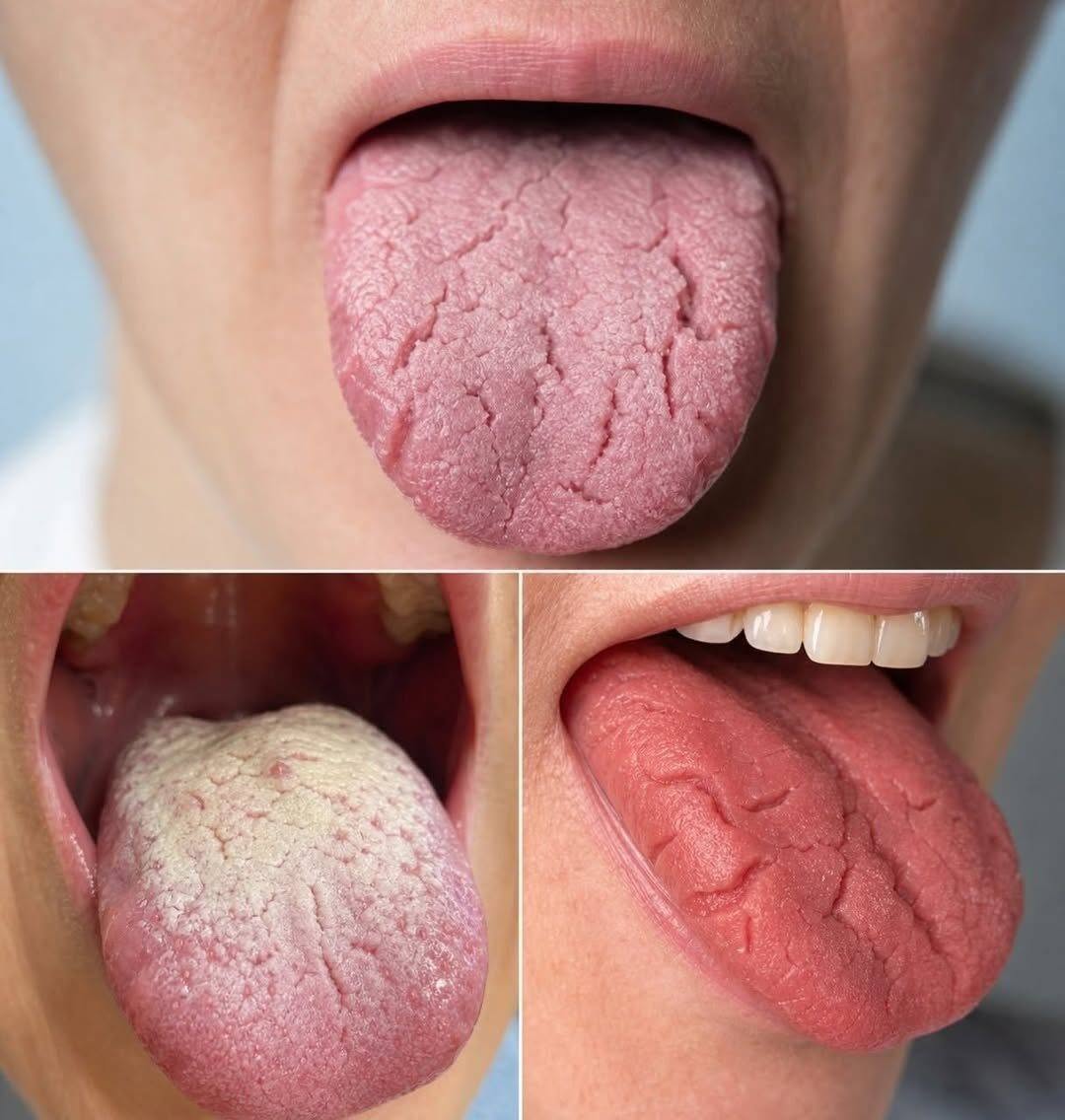
Have you ever looked in the mirror, stuck out your tongue, and noticed deep cracks, a thick white coating, or an unusually dry surface? These changes can look alarming, but they don’t always mean something is seriously wrong.
A viral social media image showing several tongues with cracks and white patches suggests that these changes are the consequences of a particular sleeping habit.
But the post doesn’t provide enough information to establish that claim.
The truth is that a cracked tongue and a white-coated tongue can have several different causes, ranging from harmless anatomical variations to oral hygiene problems, dry mouth, infections, and certain nutritional deficiencies.
Some people naturally have grooves on their tongues and experience no health problems at all.
Others develop temporary changes due to dehydration, medication side effects, or irritation.
Understanding the differences can help you recognize when simple care may be enough and when it’s time to see a healthcare professional.
What Does a Healthy Tongue Normally Look Like?
A healthy tongue is usually pink, although its appearance varies naturally between individuals.
Its surface contains small structures called papillae, which contribute to texture and taste.
A normal tongue may have:
- A pink or slightly reddish color
- A thin, pale coating
- Small visible bumps
- Minor variations in surface texture
- Shallow grooves or lines
Not every tongue looks perfectly smooth.
And a tongue that differs from a photograph on social media is not necessarily unhealthy.
What matters most is whether the appearance is new, whether symptoms are present, and whether changes persist.
1. Fissured Tongue: Why Do Cracks Appear?
A fissured tongue is a condition characterized by grooves or furrows on the tongue’s upper surface.
The cracks may be shallow or deep.
Some people have a single central groove.
Others have several branching fissures that create an irregular pattern.
Is a Fissured Tongue Dangerous?
Usually, no.
A fissured tongue is generally considered a benign anatomical variation.
It may become more noticeable with age and can occur in otherwise healthy individuals.
The fissures themselves do not necessarily indicate infection, dehydration, or vitamin deficiency.
Common Characteristics
- Visible grooves on the tongue
- A central crack with smaller branching lines
- No pain in many cases
- A relatively stable appearance over time
Food particles and debris may collect in deeper grooves, sometimes contributing to irritation or bad breath.
Gentle tongue cleaning can help.
2. White-Coated Tongue: What Causes It?
A white coating can develop when debris, bacteria, dead cells, and other material accumulate between the papillae.
This is especially common toward the back of the tongue.
Possible Causes
- Dry mouth
- Inadequate oral hygiene
- Mouth breathing
- Smoking
- Changes in oral bacteria
- Certain medications
- Reduced saliva production
A thin white coating is not necessarily a sign of disease.
However, thick, persistent, painful, or unusual white patches may require examination.
The appearance alone is not enough to determine the cause.
3. Sleeping With Your Mouth Open
One of the more plausible explanations for a dry or coated tongue after waking is mouth breathing during sleep.
When you breathe through your mouth, airflow can dry the oral tissues.
Saliva normally helps lubricate the mouth and wash away food particles and microorganisms.
Reduced moisture may contribute to:
- Dry tongue
- Sticky mouth
- Morning bad breath
- A more noticeable tongue coating
- Throat dryness
Why Do People Sleep With Their Mouth Open?
Possible reasons include:
- Nasal congestion
- Allergies
- Structural nasal obstruction
- Certain sleep-related breathing problems
- Habitual mouth breathing
However, sleeping with your mouth open does not automatically cause deep tongue fissures.
A naturally fissured tongue may simply become more uncomfortable when the mouth is dry.
What About Snoring?
Loud snoring, witnessed breathing pauses during sleep, gasping, and excessive daytime sleepiness can be associated with obstructive sleep apnea.
If these symptoms occur, seek a medical assessment.
Do not tape your mouth shut as a self-treatment for snoring or suspected sleep apnea. Mouth taping can be unsafe, particularly when nasal breathing is impaired.
4. Dehydration and Dry Mouth
Not drinking enough fluids can contribute to a dry mouth, although dry mouth has many possible causes.
When saliva production decreases, the tongue may feel rough or sticky.
Possible Symptoms
- Dry or sticky mouth
- Increased thirst
- Cracked lips
- Difficulty swallowing dry foods
- Bad breath
- A thicker tongue coating
Mild dehydration may improve with appropriate fluid intake.
But persistent dry mouth can also be caused by medications, medical conditions, or salivary gland problems.
If symptoms continue despite adequate hydration, consult a healthcare professional.
5. Oral Thrush: A Fungal Infection
Oral thrush, also called oral candidiasis, occurs when Candida yeast grows excessively in the mouth.
Candida can normally be present without causing disease.
Under certain conditions, however, it can produce an infection.
What Does Oral Thrush Look Like?
Possible signs include:
- Creamy white patches on the tongue
- White patches inside the cheeks
- Red or sore tissue beneath removable patches
- Burning or discomfort
- Changes in taste
- Cracking at the corners of the mouth
Some white patches associated with thrush may wipe away, leaving irritated or slightly bleeding tissue.
However, not all white tongue coatings are fungal infections.
Who Is More Likely to Develop Thrush?
Risk factors can include:
- Recent antibiotic treatment
- Inhaled corticosteroid use
- Dentures
- Diabetes
- Reduced immune function
- Dry mouth
Oral thrush may require antifungal treatment prescribed by a healthcare professional.
Do not assume that every white tongue needs antifungal medication.
6. Vitamin B12 and Iron Deficiency
Certain nutritional deficiencies can affect the appearance and comfort of the tongue.
Vitamin B12, iron, and folate are important for normal cell function and tissue health.
Deficiencies may contribute to glossitis, which involves inflammation of the tongue.
Possible Symptoms
- A sore or burning tongue
- Redness
- A smooth-looking tongue
- Changes in taste
- Mouth discomfort
Vitamin B12 deficiency can also cause neurological symptoms, such as numbness or tingling.
Iron deficiency may be associated with fatigue, pallor, or shortness of breath.
But here’s an important distinction:
A fissured tongue or white coating alone does not prove that someone has a vitamin deficiency.
Blood tests and clinical assessment may be needed when a deficiency is suspected.
Taking high doses of supplements without knowing the cause is not recommended.
7. Geographic Tongue
Geographic tongue is a benign inflammatory condition that produces smooth, reddish patches on the tongue.
These patches may have pale or whitish borders.
Their appearance and location can change over time.
Because the patches resemble the outlines of a map, the condition is called geographic tongue.
Possible Symptoms
- Irregular smooth red areas
- White or pale borders
- Changes in patch location
- Mild sensitivity to spicy or acidic foods
Many people experience no discomfort.
Geographic tongue is not contagious.
It can sometimes occur alongside a fissured tongue.
8. Medications That Cause Dry Mouth
A surprisingly large number of medications can reduce saliva production.
These may include certain:
- Antihistamines
- Antidepressants
- Medications for overactive bladder
- Decongestants
- Blood pressure medications
- Other prescription drugs
The likelihood and severity vary by medication and individual.
If your tongue becomes unusually dry after starting a medicine, discuss it with your pharmacist or prescriber.
Do not stop prescribed medication without medical advice.
9. Smoking and Other Irritants
Smoking can affect oral tissues and contribute to changes in the tongue’s appearance.
It may also increase the risk of certain oral diseases.
Other potential irritants include:
- Alcohol-containing mouthwashes
- Very hot foods or beverages
- Frequent exposure to irritating substances
- Poorly fitting dental appliances
Reducing irritation and maintaining good oral hygiene can help protect oral health.
Persistent white or red patches should be examined, particularly in people who use tobacco.
10. Oral Leukoplakia: A White Patch That Needs Attention
Not every white patch is caused by bacteria or a fungal infection.
Leukoplakia refers to a white patch in the mouth that cannot be classified as another condition after appropriate evaluation.
These patches often do not wipe away.
Some forms may contain precancerous changes.
Warning Signs
- A persistent white patch
- A patch that cannot be wiped away
- Changes in the texture of oral tissue
- A persistent sore
- Unexplained bleeding
- A lump or thickened area
A dentist or physician should assess persistent unexplained oral lesions.
Any mouth sore or patch that does not heal within approximately two weeks deserves professional evaluation.
11. Diabetes and Tongue Changes
Diabetes can sometimes contribute to oral health problems, particularly when blood glucose is not well controlled.
Possible issues include:
- Dry mouth
- Increased susceptibility to oral infections
- Gum disease
- Delayed healing
However, a white or cracked tongue is not a reliable standalone sign of diabetes.
Diagnosis requires appropriate blood glucose testing.
12. Other Medical Conditions Associated With Dry Mouth
Persistent dry mouth can occur with conditions affecting the salivary glands.
For example, Sjögren’s disease is an autoimmune condition that commonly causes dry eyes and dry mouth.
Some people also experience difficulty swallowing dry foods or frequent dental problems.
Other medical conditions may contribute to reduced saliva production.
If dry mouth is persistent, especially with dry eyes or repeated oral infections, medical evaluation may be appropriate.
How to Tell the Difference Between Common Tongue Changes
| Tongue appearance | Possible explanation |
|---|---|
| Deep grooves without pain | Benign fissured tongue |
| Thin white coating | Normal variation or debris accumulation |
| Thick coating with dry mouth | Reduced saliva, mouth breathing, or other causes |
| Creamy white patches with soreness | Possible oral thrush |
| Smooth red patches with pale borders | Geographic tongue |
| Smooth, sore, red tongue | Possible glossitis, including nutritional causes |
| Persistent white patch that does not wipe away | Requires evaluation for leukoplakia or other conditions |
These descriptions are general guides, not diagnostic tests.
Different conditions can look similar.
Does a Cracked Tongue Mean Your Body Is Dehydrated?
Not necessarily.
This is one of the most common misconceptions.
A fissured tongue may be a normal anatomical characteristic and remain present even when a person is fully hydrated.
Dehydration can make the tongue feel dry and may make existing fissures more noticeable.
But it does not explain every cracked tongue.
Other symptoms and clinical findings are needed to assess dehydration.
Does a White Tongue Mean You Have a Stomach Problem?
Not automatically.
Social media posts sometimes claim that tongue coatings reveal specific problems in the stomach, liver, or intestines.
There is no reliable medical basis for diagnosing an internal organ disease from a white tongue coating alone.
Oral hygiene, saliva production, medications, and local mouth conditions are often more relevant explanations.
Persistent symptoms should be evaluated based on the full clinical picture.
8 Practical Ways to Keep Your Tongue Healthy
1. Brush Your Teeth Twice Daily
Use fluoride toothpaste and a soft-bristled toothbrush.
2. Clean Your Tongue Gently
A soft toothbrush or suitable tongue scraper can help remove surface debris.
Avoid aggressive scraping, especially if the tongue is painful or inflamed.
3. Stay Adequately Hydrated
Drink fluids regularly according to your needs and any medical advice.
4. Address Persistent Mouth Breathing
If nasal obstruction or sleep-related breathing symptoms are present, seek appropriate assessment.
5. Avoid Tobacco
Tobacco use can harm oral tissues and increase the risk of serious oral conditions.
6. Be Careful With Harsh Home Remedies
Avoid applying lemon juice, concentrated vinegar, abrasive powders, or other irritating substances directly to your tongue.
These can worsen irritation.
7. Attend Regular Dental Checkups
A dentist can assess the tongue, gums, teeth, and other oral tissues.
8. Seek Care for Persistent Changes
If a tongue change lasts, worsens, or causes discomfort, arrange an examination.
What Not to Do If Your Tongue Looks White or Cracked
Several popular online remedies can make the problem worse.
Do not scrub the tongue aggressively. This can damage the surface and cause bleeding.
Do not use concentrated acidic mixtures. Lemon juice or vinegar may irritate sensitive tissues.
Do not take antifungal medication without an appropriate diagnosis. A white coating does not always indicate thrush.
Do not take high-dose vitamin supplements based only on tongue appearance. Testing may be needed.
Do not ignore persistent lesions. Some oral conditions require professional evaluation.
When Should You See a Doctor or Dentist?
Arrange an appointment if you notice:
- White patches that persist or cannot be wiped away
- Tongue pain that does not improve
- Persistent burning
- Recurrent oral infections
- Unexplained bleeding
- Difficulty eating or swallowing
- A sore that does not heal within two weeks
- Persistent dry mouth
- New lumps or changes in oral tissue
Seek urgent medical attention for rapidly increasing swelling of the tongue or throat, difficulty breathing, or inability to swallow saliva.
These can indicate a serious emergency.
Frequently Asked Questions
Why does my tongue have deep cracks?
A common explanation is a benign fissured tongue. However, other conditions can sometimes affect tongue appearance, so new or painful changes should be assessed.
Is a fissured tongue dangerous?
Usually not. Most cases are harmless and do not require treatment beyond gentle oral hygiene.
Can sleeping with your mouth open cause a white tongue?
Mouth breathing can contribute to dry mouth and make tongue coatings more noticeable, but it is not the only possible cause.
Does a white tongue mean I have an infection?
Not always. A white coating may be related to debris, dry mouth, or oral hygiene. Some white patches are caused by infections or other conditions.
Can vitamin B12 deficiency cause tongue problems?
Yes. Vitamin B12 deficiency can contribute to glossitis and other oral symptoms, but tongue appearance alone cannot confirm the deficiency.
Can iron deficiency cause a cracked tongue?
Iron deficiency may affect the tongue and oral tissues, but a fissured tongue is not a specific diagnostic sign of iron deficiency.
Is oral thrush contagious?
Oral thrush is generally caused by overgrowth of yeast already present in the mouth. It is not usually considered contagious in the same way as common respiratory infections.
Should I scrape the white coating off my tongue?
Gentle cleaning may help with ordinary surface coating. Avoid forceful scraping or attempting to remove persistent patches.
Can stress cause tongue cracks?
Stress may contribute indirectly to oral discomfort, dry mouth, or certain habits, but it is not an established universal cause of fissured tongue.
How long does a white tongue take to disappear?
It depends on the cause. A temporary coating may improve with oral hygiene and hydration, while infections or persistent lesions may require medical treatment.
Can children have fissured tongues?
Yes. Fissured tongues can occur at different ages. A pediatric dentist or clinician can assess any concerning changes.
Is a cracked tongue a sign of cancer?
A typical longstanding fissured tongue is generally benign. However, persistent sores, unexplained lumps, bleeding, or patches that do not heal should be evaluated.
Final Thoughts: Your Tongue Can Offer Clues, but It Doesn’t Tell the Whole Story
A cracked or white-coated tongue may look concerning, especially when compared with dramatic photographs online.
But appearance alone rarely provides a complete explanation.
For many people, tongue fissures are harmless anatomical variations.
A white coating may be associated with dry mouth, mouth breathing, or ordinary debris accumulation.
Other cases involve oral thrush, inflammation, nutritional deficiencies, or conditions that require medical assessment.
The viral image does not prove that these tongue changes are caused by one particular sleeping habit.
The most important clues are whether the changes are new, painful, persistent, or accompanied by other symptoms.
Maintain gentle oral hygiene, stay appropriately hydrated, and seek professional advice when something doesn’t seem right.
Your tongue is an important part of your oral health—but no single photograph can diagnose what is happening inside your body.
Medical disclaimer: This article is for educational purposes only and does not replace medical or dental diagnosis, advice, or treatment.