Could the origins of autism begin before a baby is born? Scientists have been investigating this question for decades, and research continues to reveal important clues about how the developing brain works.
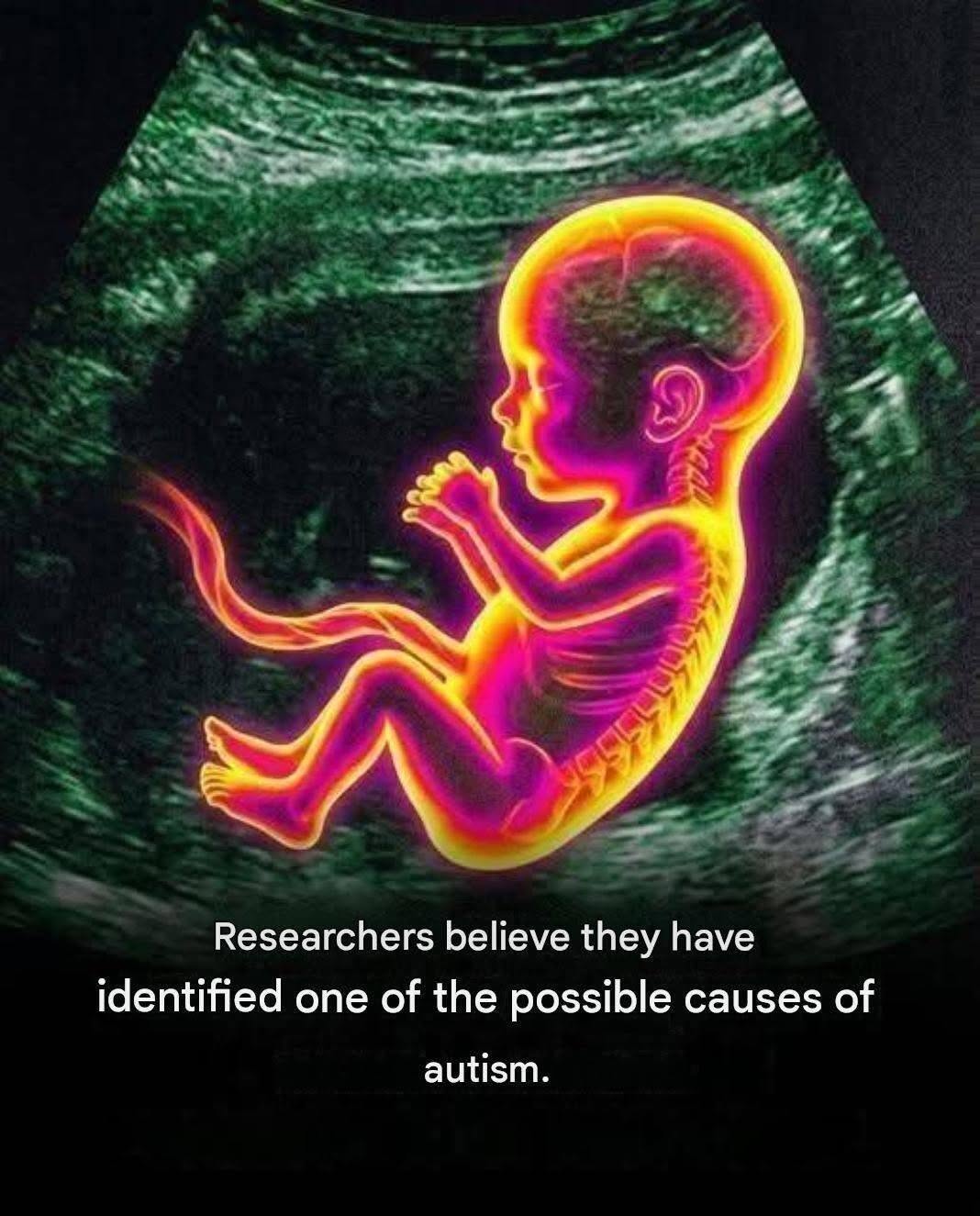
A viral social media image showing a fetus inside the womb claims that researchers may have identified one of the possible causes of autism.
The message has attracted attention because it touches on a question many parents ask: What causes autism, and can anything during pregnancy influence a child’s likelihood of being autistic?
The answer is more complex than a single discovery.
Research indicates that autism is associated with a combination of genetic and developmental factors. Some prenatal and environmental exposures have also been linked to differences in autism likelihood, although identifying an association does not necessarily mean that one factor directly causes autism.
There is no single established cause of autism, and no one pregnancy behavior can explain why a child is autistic.
Here’s what scientists know, what remains uncertain, and why understanding early brain development is so important.
What Is Autism Spectrum Disorder?
Autism spectrum disorder, commonly called autism or ASD, is a neurodevelopmental condition.
It is associated with differences in how people communicate, interact socially, process sensory information, and experience the world.
Autistic people may have characteristics such as:
- Differences in social communication and interaction
- Repetitive movements or behaviors
- Strong interests in particular subjects
- Preference for predictable routines
- Sensitivity to sounds, lights, textures, or other sensory experiences
- Differences in how they process information
Autism is described as a spectrum because autistic individuals have widely varying strengths, challenges, and support needs.
Some autistic people communicate verbally and live independently.
Others have significant communication difficulties or require substantial daily support.
Autism is not an infection, and it is not caused by poor parenting.
It is a lifelong neurodevelopmental difference, although people’s needs and abilities can change over time.
Can Autism Begin Before Birth?
Scientists believe that many biological processes associated with autism begin during prenatal brain development.
The human brain starts developing very early in pregnancy.
Throughout gestation, nerve cells are produced, migrate to different areas, form connections, and gradually organize into complex networks.
These processes continue after birth and throughout childhood.
Genetic instructions help guide the development of these networks.
Researchers have found that some genetic variations associated with autism affect processes involved in brain development, including communication between nerve cells.
This supports the understanding that autism often has prenatal developmental origins.
However, this does not mean autism can usually be identified through an ordinary pregnancy ultrasound.
A standard prenatal ultrasound cannot diagnose autism.
1. Genetics Plays a Major Role in Autism
One of the strongest findings in autism research is the importance of genetics.
Studies involving families, twins, and large genetic datasets consistently show that inherited and newly occurring genetic variations contribute substantially to autism likelihood.
Researchers have identified numerous genes associated with autism.
Many of these genes are involved in:
- Brain development
- Formation of connections between neurons
- Communication between nerve cells
- Regulation of gene activity
- Development of neural circuits
Some genetic variations are inherited from parents.
Others arise spontaneously during the formation of reproductive cells or early development.
These are known as de novo variants.
Does Autism Run in Families?
Autism can occur more frequently in some families.
Having an autistic sibling or another close relative may increase the likelihood of autism compared with the general population.
However, family history does not determine an individual child’s outcome.
Autism can also occur in families without any previously recognized autistic members.
Is There a Single Autism Gene?
No.
Autism is genetically complex.
Some rare genetic conditions or variants are strongly associated with autism, but most cases cannot be explained by one specific gene.
This is one reason researchers continue studying large groups of autistic people and their families.
2. Scientists Are Studying Prenatal Brain Development
Researchers are interested in how the fetal brain develops and whether differences in early neural organization contribute to autism.
Brain development involves a carefully coordinated series of processes.
Neuron Formation
The developing brain produces large numbers of nerve cells.
Neuron Migration
These cells move toward the regions where they will perform their functions.
Synapse Formation
Neurons begin forming connections that allow information to pass between cells.
Neural Circuit Development
Networks become organized to support movement, sensory processing, communication, and other functions.
Genetic and biological differences affecting these processes may contribute to the characteristics associated with autism.
However, the brain is extraordinarily complex.
Scientists cannot currently point to one universal fetal brain change that explains all autism.
3. Maternal Immune Activity: An Important Area of Research
One area receiving scientific attention is the possible relationship between immune activity during pregnancy and neurodevelopment.
When the body encounters an infection or inflammatory condition, the immune system releases signaling molecules.
Some of these signals can influence the biological environment in which the fetus develops.
Researchers have investigated whether certain patterns of maternal immune activation are associated with differences in neurodevelopment, including autism.
What Have Studies Found?
Some observational studies have reported associations between particular maternal infections, inflammatory conditions, or immune-related factors and a child’s likelihood of receiving an autism diagnosis.
Animal experiments have also helped researchers explore possible biological mechanisms.
But important uncertainties remain.
Not every infection during pregnancy affects fetal brain development.
Most pregnancies involving common infections do not result in an autism diagnosis.
And findings from animal models cannot automatically be applied to humans.
A statistical association between immune activity and autism does not prove that a specific infection causes autism.
Pregnant people should seek appropriate medical care for infections and fever, rather than trying to interpret individual symptoms as predictors of autism.
4. The Placenta and Its Possible Role in Brain Development
The placenta is an essential organ that supports fetal development during pregnancy.
It helps transfer oxygen and nutrients and participates in hormonal and immune signaling.
Researchers are investigating whether differences in placental function may be associated with neurodevelopmental outcomes.
Some studies have explored placental inflammation, blood flow, gene expression, and other biological features.
This is an evolving field of research.
At present, there is no routinely recommended placental test that can reliably predict whether a child will be autistic.
5. Parental Age and Autism Likelihood
Research has found associations between autism and older parental age.
This includes both maternal and paternal age in some studies.
Several explanations have been proposed.
For example, certain new genetic variants become more common with increasing paternal age.
Maternal age may also be associated with pregnancy-related factors that researchers continue to investigate.
However, parental age is only one factor among many.
Most children born to older parents are not autistic.
And autistic children are also born to younger parents.
Age-related statistical patterns should not be interpreted as individual predictions.
6. Premature Birth and Low Birth Weight
Some studies have found that children born very prematurely or with very low birth weight have a higher likelihood of certain neurodevelopmental diagnoses, including autism.
Possible explanations involve a complex combination of prenatal conditions, genetic influences, and the challenges associated with early birth.
However, prematurity does not automatically cause autism.
Many children born prematurely are not autistic.
Likewise, many autistic children were born at full term.
Researchers continue studying these associations to better understand developmental outcomes and improve support for children born early.
7. Environmental Exposures During Pregnancy
Scientists also study how certain environmental exposures might interact with genetic susceptibility.
Research areas include:
- Air pollution
- Certain industrial chemicals
- Some pesticides
- Specific medications
- Maternal metabolic and inflammatory conditions
The quality and strength of evidence differ substantially across these topics.
Some studies identify associations that require further investigation.
Others have limitations, including difficulty separating environmental effects from genetic, social, and medical factors.
It is important not to treat every proposed exposure as a proven cause.
What About Medications During Pregnancy?
Medication decisions require particular care.
Some medicines have known fetal risks, and certain prenatal exposures have been associated with increased likelihood of neurodevelopmental conditions.
For example, prenatal exposure to valproate, an antiseizure medication, is associated with important developmental risks, including an increased likelihood of autism.
However, abruptly stopping prescribed medication can also be dangerous.
Anyone who is pregnant or planning pregnancy should discuss medication safety with their healthcare professional rather than stopping treatment independently.
The benefits and risks depend on the specific medication, dose, medical condition, and available alternatives.
8. Maternal Health Conditions and Autism Research
Researchers have examined associations between certain maternal health conditions and neurodevelopmental outcomes.
Conditions under investigation include diabetes, obesity, and some immune-related disorders.
In some studies, these conditions are associated with modestly increased autism likelihood.
However, observational findings do not establish that a mother’s health condition directly caused her child’s autism.
Many factors can influence these relationships.
Genetics, medications, inflammation, access to healthcare, and other variables may contribute.
This is why researchers carefully distinguish between correlation and causation.
The practical message is to support healthy pregnancies through appropriate medical care—not to assign blame.
9. Is Autism Caused by Vaccines?
No. Extensive scientific research has found no credible evidence that routine childhood vaccines cause autism.
This includes studies examining the measles, mumps, and rubella vaccine.
The claim that vaccines cause autism has been repeatedly investigated and is not supported by reliable evidence.
Vaccination helps protect children and communities from serious infectious diseases.
Parents with questions about vaccine schedules should speak with qualified healthcare professionals.
10. Can Stress During Pregnancy Cause Autism?
Pregnancy can involve physical and emotional stress.
Researchers have studied whether severe or prolonged prenatal stress is associated with later developmental outcomes.
Some observational studies report associations, but the evidence does not establish that ordinary stress or a difficult day during pregnancy causes autism.
Human development is influenced by many interacting factors.
It would be scientifically incorrect to blame a parent’s worry, sadness, or everyday emotional experiences for a child’s autism.
Mental health support during pregnancy remains important because the pregnant person’s well-being matters in its own right.
11. Can Autism Be Detected During Pregnancy?
At present, there is no standard prenatal screening test that can reliably determine whether a child will be autistic.
What Can Prenatal Tests Detect?
Certain prenatal tests may identify chromosomal conditions or specific genetic variants.
Some of these conditions are associated with a higher likelihood of autism.
However, identifying such a condition is not the same as diagnosing autism.
Many autistic children do not have a genetic finding detectable through routine prenatal testing.
And many children with genetic findings associated with autism will have different developmental outcomes.
Can Ultrasound Show Autism?
No.
Ultrasound is valuable for assessing fetal anatomy, growth, and other aspects of pregnancy.
But it cannot diagnose autism from a baby’s appearance or movements.
A viral illustration of a fetus should not be mistaken for a medical diagnostic image.
12. Why Researchers Are Looking for Earlier Biological Clues
Scientists hope that studying early development will improve their understanding of autism.
This research may eventually help identify biological pathways involved in neurodevelopment.
Potential benefits include:
- Better understanding of genetic mechanisms
- Improved recognition of associated medical conditions
- More individualized developmental support
- Earlier identification of children who may benefit from services
- Better understanding of differences within the autism spectrum
However, a newly identified biological association does not automatically become a diagnostic test or treatment.
Scientific findings need replication and careful evaluation before they can guide routine medical practice.
Early Signs of Autism in Babies and Young Children
Although autism cannot currently be diagnosed through a routine prenatal ultrasound, developmental differences may become noticeable during infancy or early childhood.
Possible early signs include:
Differences in Social Attention
Some children may show reduced or unusual patterns of eye contact, social smiling, or shared attention.
Limited Response to Their Name
A child may not consistently respond when their name is called, although hearing differences and other factors must also be considered.
Delayed or Different Communication
Some children develop spoken language later than expected.
Others may communicate in different ways.
Repetitive Movements
Examples can include repeated hand movements, rocking, or other repetitive behaviors.
Strong Sensory Responses
Some children may be particularly sensitive to noise, textures, or changes in their environment.
Differences in Play
Some children may play with toys in repetitive ways or show less interest in certain forms of social play.
These signs are not sufficient to diagnose autism individually.
Children develop at different rates, and some behaviors can have multiple explanations.
A developmental evaluation can help clarify concerns.
At What Age Can Autism Be Diagnosed?
Autism can sometimes be identified reliably by experienced professionals around the age of two, although some children receive a diagnosis earlier or much later.
Routine developmental surveillance is important throughout childhood.
Autism-specific screening is commonly recommended at 18 and 24 months in U.S. pediatric practice, with additional assessment whenever concerns arise.
Parents do not need to wait for a scheduled screening visit if they notice developmental differences.
Early assessment can help children access appropriate communication, educational, and developmental support.
Does Early Support Make a Difference?
Early identification can help families understand a child’s needs and access useful services.
Support may include:
- Speech and language therapy
- Occupational therapy when appropriate
- Developmental and educational support
- Communication accommodations
- Sensory-friendly environments
- Family guidance and resources
Support should be individualized and respectful of the child’s communication style, autonomy, and well-being.
The goal is not to erase a child’s identity.
It is to help them communicate, participate, learn, and thrive.
What Can Expectant Parents Do?
Because autism does not have one established preventable cause, no supplement, diet, or pregnancy routine can guarantee that a child will not be autistic.
However, evidence-based prenatal care supports maternal and fetal health more broadly.
Attend Prenatal Appointments
Regular medical visits help monitor pregnancy and identify health concerns.
Discuss Medications With Your Clinician
Review prescription medications and supplements before pregnancy when possible, or during pregnancy as soon as appropriate.
Follow Recommended Nutrition Guidance
Take prenatal supplements as advised by your healthcare professional.
Manage Existing Medical Conditions
Conditions such as diabetes or hypertension should be monitored according to an individualized care plan.
Seek Care for Infections
Fever and suspected infections during pregnancy deserve appropriate medical advice.
Avoid Known Harmful Exposures
Avoid alcohol, tobacco, and other substances known to pose risks during pregnancy.
Take Care of Mental Health
Emotional well-being and access to support are important parts of prenatal care.
These measures promote healthier pregnancies in general.
They should not be presented as proven ways to prevent autism.
Common Myths About Autism
Myth 1: Autism Is Caused by Bad Parenting
False. Autism is a neurodevelopmental condition, not the result of parenting style.
Myth 2: Vaccines Cause Autism
False. Large studies have not found a causal link between routine vaccines and autism.
Myth 3: Every Autistic Person Has the Same Symptoms
False. Autism is highly variable.
Myth 4: Autism Can Always Be Seen on a Brain Scan
False. There is no routine brain scan that independently diagnoses autism.
Myth 5: Autism Can Be Prevented by One Special Pregnancy Diet
False. No diet has been shown to guarantee autism prevention.
Myth 6: Autistic People Cannot Form Close Relationships
False. Autistic people can form meaningful friendships, romantic relationships, and family connections.
Myth 7: Autism Is Always Diagnosed in Childhood
False. Some people are identified as autistic during adolescence or adulthood.
Frequently Asked Questions
What is the main cause of autism?
There is no single cause. Genetic factors play a substantial role, and researchers are studying how genetic and other developmental influences interact.
Does autism begin in the womb?
Many biological processes associated with autism likely begin during prenatal brain development. However, autism is usually recognized through developmental and behavioral characteristics after birth.
Can a mother cause autism during pregnancy?
Autism should not be attributed to an individual parent’s actions. Most autism cannot be traced to one specific pregnancy event or behavior.
Can ultrasound detect autism?
No. Routine prenatal ultrasound cannot diagnose autism.
Is autism inherited?
Genetic factors are important, and autism can run in families. However, inheritance patterns are complex.
Does a difficult pregnancy mean a baby will be autistic?
No. Pregnancy complications may be associated with some developmental outcomes, but they do not determine whether a child will be autistic.
Can infections during pregnancy cause autism?
Researchers have found associations involving certain infections and immune-related factors, but these findings do not establish that ordinary maternal infections directly cause autism.
Does taking prenatal vitamins prevent autism?
Prenatal vitamins support pregnancy health when appropriately prescribed, but they are not proven to prevent autism.
Can autism be cured?
Autism is a lifelong neurodevelopmental condition, not an illness with a simple cure. Appropriate support can improve quality of life and help address individual challenges.
Should parents worry if their baby shows developmental differences?
Developmental differences deserve attention, but they do not automatically indicate autism. Discuss concerns with a pediatrician or qualified developmental specialist.
Final Thoughts: The Science Is Advancing, but the Story Is More Complex Than a Viral Headline
Researchers are making important progress in understanding autism.
Genetic studies, prenatal brain research, and investigations into immune and environmental influences are helping scientists explore why neurodevelopment differs from one person to another.
But the claim that researchers have identified the cause of autism is misleading.
There is no single established cause that explains every autistic person.
The image circulating online does not identify a specific study, research team, or verified discovery.
Without those details, it is impossible to confirm which scientific finding the post is referring to.
What we can say is that autism research increasingly emphasizes the importance of genetics and early brain development, while continuing to investigate other possible contributing factors.
For families, the most useful approach is to rely on qualified medical advice, follow recommended prenatal care, and seek developmental support when concerns arise.
Autism is not caused by a parent’s lack of love, and it cannot be explained by one viral image.
Understanding autism requires good science, compassion, and respect for the many different ways human brains develop.
Medical disclaimer: This article is intended for educational purposes only. It does not replace professional medical advice, prenatal care, genetic counseling, or developmental evaluation.