Tired of mopping your floors only to discover that they still look dull, streaky, or cloudy? A viral cleaning trick promises to bring back their shine using a bucket of water and a common household product.
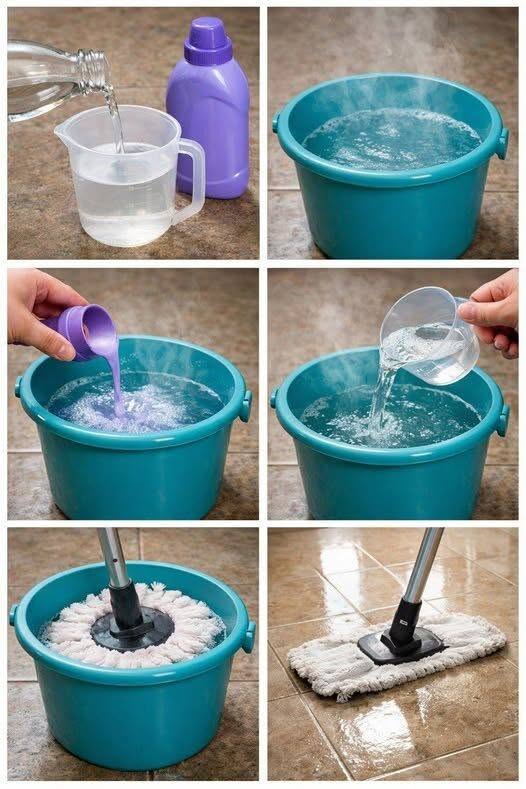
The popular social media images show a simple process: water is poured into a bucket, a small amount of purple liquid is added, the mixture is diluted, and a mop is used to clean the floor.
The final photograph shows a glossy tiled surface that appears beautifully polished.
It looks easy, inexpensive, and incredibly satisfying.
But there’s one important question: Does adding fabric softener to mop water really make floors cleaner and shinier?
The answer may surprise you.
Although this trick can temporarily change how a floor looks or smells, it can also leave behind a slippery residue. The safest way to restore shine depends on the type of flooring you have and what is making it look dull.
Here’s everything you need to know about the viral method, including a safer cleaning routine that can help your floors look their best.
Why This Floor-Cleaning Trick Is Going Viral
A sparkling floor can make an entire room look cleaner.
Whether you have ceramic tiles in the kitchen, porcelain flooring in the hallway, or laminate in the living room, maintaining a fresh appearance is a common household goal.
However, regular mopping doesn’t always produce the results people expect.
Sometimes floors look cloudy immediately after drying.
Other times, they develop streaks or feel sticky underfoot.
That’s why simple household cleaning hacks attract so much attention.
The viral method seems appealing because it requires only a few familiar items:
- A bucket
- Water
- A small amount of scented household liquid
- A mop
But the most important part of any cleaning method is not how shiny the floor looks in a photograph.
It’s whether the method actually removes dirt without damaging the surface or creating a safety hazard.
What Is the Purple Liquid in the Viral Images?
The purple bottle resembles a type of liquid fabric softener commonly used in laundry.
Some online cleaning tutorials recommend adding a capful of fabric softener to a bucket of water before mopping.
The reasoning is simple: fabric softener smells pleasant and contains ingredients that can leave surfaces feeling smooth.
However, fabric softener is formulated for textiles, not hard flooring.
Its ingredients are designed to interact with fabric fibers during the washing process.
When used on floors, they may leave behind a film rather than rinse away cleanly.
That residue can create several problems.
Does Fabric Softener Actually Make Floors Shine?
Fabric softener may temporarily change the appearance of certain surfaces.
A thin film can alter how light reflects off the floor, making it seem smoother or shinier.
But this is not the same as properly cleaning or restoring the floor’s finish.
The Hidden Problem: Slippery Residue
One of the biggest concerns is that fabric softener may leave a slippery coating.
This can increase the risk of falls, especially in homes with children, older adults, or people with limited mobility.
It Can Attract More Dirt
Residue left on the surface may trap dust and grime.
As a result, a floor that initially appears shiny may become dull or sticky again.
It Can Cause Streaking
Too much cleaning product can leave visible streaks, particularly on glossy tiles and dark floors.
It May Not Be Suitable for the Flooring
Some flooring materials require specific cleaners.
Using products outside the manufacturer’s recommendations may affect the surface finish or warranty.
Bottom line: Fabric softener is not recommended as a general-purpose floor cleaner or polish.
Fortunately, there are safer ways to achieve an attractive finish.
The Safer Floor-Cleaning Method: A Simple Bucket-and-Mop Routine
If your goal is to make dull floors look cleaner and brighter, you don’t need to experiment with laundry products.
Start with a cleaning method suited to your floor.
What You’ll Need
- A clean bucket
- Lukewarm water, if approved for your flooring
- A small amount of manufacturer-approved, pH-neutral floor cleaner
- A clean microfiber mop
- A dry microfiber cloth or mop pad
Preparation Time
Approximately 5 minutes.
Cleaning Time
Around 15–30 minutes for an average-sized room, depending on the amount of dirt and floor area.
Step 1: Remove Loose Dust and Debris
Before adding water, sweep or vacuum the floor.
This removes hair, crumbs, dust, and small particles that can otherwise be pushed around during mopping.
For delicate flooring, use an appropriate vacuum attachment.
Step 2: Fill Your Bucket With Water
Add the amount of water recommended for your cleaning product.
Avoid using excessive water, particularly on laminate, engineered wood, or other moisture-sensitive flooring.
Step 3: Add the Correct Amount of Floor Cleaner
Follow the dilution instructions on the cleaner’s label.
Adding more detergent than recommended does not necessarily improve cleaning.
In fact, too much product can leave the very streaks and residue you’re trying to eliminate.
Step 4: Use a Clean Microfiber Mop
Microfiber is effective at collecting fine dirt and distributing cleaning solution evenly.
Wring the mop thoroughly before using it on floors that should not become saturated.
Step 5: Mop in Small Sections
Work across the room in manageable areas.
Avoid spreading dirty water over already-cleaned surfaces.
Change the water when it becomes visibly dirty.
Step 6: Allow the Floor to Dry
Keep people and pets off the wet surface until it is completely dry.
If the flooring manufacturer permits it, gently buffing a dry, clean surface with microfiber may help reduce remaining streaks.
Step 7: Inspect the Results
Once dry, check the floor under natural light.
If it still looks cloudy, the cause may be product buildup, hard-water deposits, surface wear, or a damaged finish.
Identifying the cause is more effective than adding extra products.
Why Floors Become Dull Even After Mopping
Many people assume a dull floor simply needs a stronger cleaner.
But the problem is often more complicated.
1. Too Much Detergent
Excessive cleaning solution can leave a thin layer of residue.
Over time, repeated applications may make the floor appear cloudy.
2. Dirty Mop Water
If the water is already full of dirt, mopping can redistribute grime rather than remove it.
3. Hard-Water Deposits
Minerals in water may leave spots or a hazy appearance on certain surfaces.
4. Grease and Cooking Residue
Kitchen floors can accumulate oily deposits that ordinary water doesn’t remove effectively.
5. Worn Protective Finish
Some floors lose their shine because their protective coating has worn down.
Cleaning alone cannot restore a damaged finish.
6. Scratches and Surface Damage
Tiny scratches scatter reflected light, making a surface look less glossy.
7. The Wrong Cleaning Product
A cleaner that works well on ceramic tile may be unsuitable for natural stone or wood.
That’s why choosing the correct product matters.
How to Clean Different Types of Flooring
Not every floor should be cleaned the same way.
Ceramic and Porcelain Tiles
These are generally durable surfaces, but their finishes and grout may have specific requirements.
Use a suitable tile cleaner or a manufacturer-approved neutral cleaner.
Avoid leaving excess detergent behind.
Marble and Natural Stone
Natural stone requires special care.
Acidic products, including vinegar and lemon juice, can damage some stones.
Choose a cleaner specifically approved for the type of stone and its finish.
Laminate Flooring
Laminate can be vulnerable to excessive moisture.
Use a lightly damp microfiber mop and a compatible cleaner.
Never flood the floor or leave standing water around seams.
Hardwood Flooring
Wood floors may have different finishes, each with its own maintenance requirements.
Use products recommended by the flooring manufacturer.
Avoid excessive water, abrasive scrubbing, and unapproved homemade polishes.
Vinyl and Luxury Vinyl Plank
Many vinyl floors respond well to gentle cleaning with a compatible neutral product.
Avoid waxes, fabric softener, and shine-enhancing mixtures unless explicitly approved by the manufacturer.
The Secret to Streak-Free Floors
One of the easiest ways to improve cleaning results is to use less product, not more.
A clean microfiber mop and the correct dilution can make a noticeable difference.
For floors that permit rinsing, a separate pass with clean water can help remove leftover cleaner.
Change dirty mop pads regularly, and allow the floor to dry completely before walking on it.
If you still notice streaks, check whether your floor has accumulated layers of old cleaning products.
Can Vinegar Make Floors Shine?
Vinegar is another popular household cleaning ingredient.
Its acidity can help dissolve certain mineral deposits on compatible surfaces.
However, vinegar is not appropriate for every type of floor.
It may damage marble, limestone, some grout materials, and certain protective finishes.
For routine cleaning, follow your flooring manufacturer’s recommendations rather than assuming that a natural ingredient is universally safe.
Never mix vinegar with chlorine bleach, as the combination can release dangerous chlorine gas.
What About Baking Soda?
Baking soda is sometimes recommended for stubborn stains.
However, its mildly abrasive nature may scratch or dull certain finishes.
It is not a universal floor-polishing solution.
Before using any homemade cleaner, confirm that it is suitable for your specific flooring.
How Often Should You Mop Your Floors?
There is no single cleaning schedule that works for every household.
The ideal frequency depends on foot traffic, pets, children, cooking habits, and the type of flooring.
For example, a busy kitchen may require more frequent cleaning than a rarely used guest room.
Sweeping or vacuuming regularly can help prevent dirt from scratching surfaces and reduce the need for heavy scrubbing.
Spills should be cleaned promptly, especially when they create slipping hazards.
7 Mistakes That Make Floors Look Dirtier
Even people who mop regularly can accidentally make their floors look worse.
1. Skipping Sweeping
Loose dirt gets dragged across the surface and may create scratches.
2. Using Too Much Cleaner
Excess detergent can leave a sticky or cloudy film.
3. Reusing Dirty Water
Dirty mop water redistributes grime.
4. Using the Wrong Product
A cleaner that is suitable for tile may damage natural stone or wood.
5. Leaving Floors Too Wet
Excess moisture can damage certain flooring materials and create slipping hazards.
6. Applying Unapproved Polishes
Some shine-enhancing products create buildup or make surfaces dangerously slippery.
7. Ignoring the Mop Itself
A dirty mop cannot clean effectively.
Wash or replace mop pads according to their care instructions, and avoid using fabric softener when laundering microfiber.
What If You Already Used Fabric Softener on Your Floor?
If you’ve tried the viral trick and noticed a slippery or sticky surface, stop using the mixture.
Keep people away from the affected area until it is safe.
Check your flooring manufacturer’s cleaning guidance.
On compatible floors, cleaning with an approved floor cleaner followed by an appropriate clean-water rinse may help remove residue.
Avoid adding more polish or other household chemicals.
If the floor remains slippery or cloudy, seek advice from the flooring manufacturer or a qualified floor-care professional.
Frequently Asked Questions
What is the secret ingredient in the viral floor-cleaning trick?
The purple liquid resembles fabric softener, which some viral tutorials recommend adding to mop water. However, the exact product cannot be confirmed from the image alone.
Does fabric softener make floors shiny?
It may temporarily alter the surface’s appearance, but it can also leave residue and create a slipping hazard.
Is it safe to mop with fabric softener?
It is not recommended as a general floor-cleaning method. Use a product approved for your flooring.
What is the best way to make tiles shine?
Remove loose dirt, mop with a suitable cleaner at the recommended dilution, and prevent residue buildup. The original finish of the tile also affects its shine.
Why does my floor look cloudy after mopping?
Possible causes include excess cleaner, dirty water, mineral deposits, or accumulated residue.
Should I rinse my floor after mopping?
That depends on the cleaner and flooring. Some products require rinsing, while others are designed to be used without it.
Can I use dish soap on floors?
Some compatible floors can tolerate a very dilute solution, but dish soap may leave residue. A dedicated floor cleaner is generally a more predictable choice.
Can a cleaning hack restore scratched flooring?
No. Cleaning may remove grime, but it cannot repair deep scratches or a worn finish.
Is a shiny floor always a clean floor?
Not necessarily. Some products create a glossy film without removing dirt effectively.
How do I keep floors looking good longer?
Sweep regularly, clean spills promptly, use suitable products, and avoid excessive detergent.
Final Thoughts: The Real Secret to Beautiful, Shiny Floors
The viral cleaning trick is eye-catching because it promises dramatic results with a few simple ingredients.
But the impressive shine in a photograph does not prove that a cleaning mixture is safe or effective.
Adding fabric softener to mop water may leave a coating that makes floors slippery, sticky, or cloudy over time.
Fortunately, achieving cleaner, brighter floors doesn’t require risky experiments.
The best approach is simple: remove loose dirt, use the correct floor cleaner in the right amount, mop with clean microfiber, and avoid residue buildup.
The result may not look like a dramatic social media transformation, but it is a more reliable way to care for your flooring.
And when your floors are properly cleaned and maintained, their natural beauty can shine through—without an unnecessary coating.
Sometimes the most effective cleaning secret isn’t adding another ingredient. It’s using the right product and the right technique.