A photograph of a cluttered kitchen has sparked a familiar debate online: What does a messy home really say about the woman who lives there?
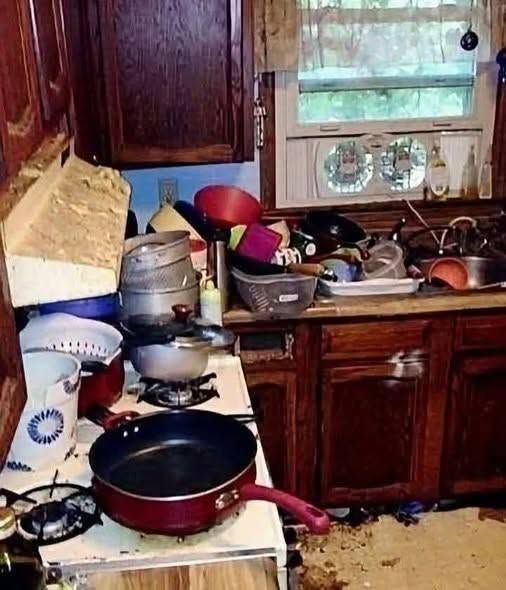
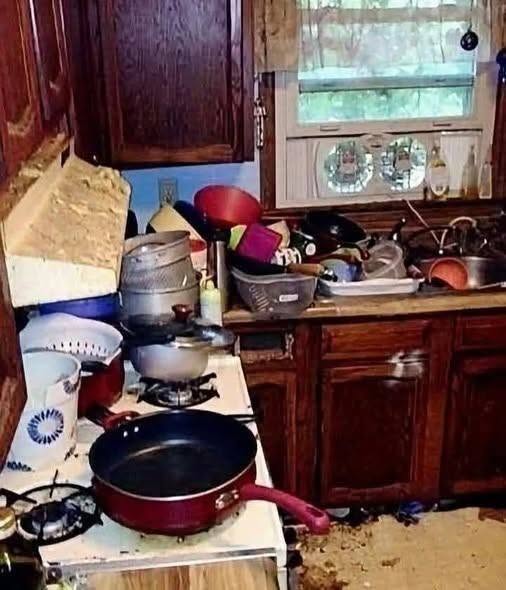
The image shows a kitchen crowded with pots, pans, dishes, and everyday household items. The countertops are overflowing, cookware is stacked around the sink, and the room looks as though cleaning has been postponed for quite some time.
For some viewers, the immediate reaction might be criticism.
Others might see something completely different: a person who is overwhelmed, exhausted, busy caring for others, or simply struggling to keep up with daily responsibilities.
The viral question asks what we should call a woman whose house looks like this.
But perhaps the more important question is: Why are we so quick to judge someone based on the condition of their home?
The truth is that a messy kitchen can tell us something about a household’s current circumstances, but it cannot reveal someone’s entire personality, character, or worth.
The Viral Photo That Started the Conversation
At first glance, the kitchen in the photograph appears chaotic.
Several pots and pans are piled around the cooking area. Dishes fill the sink and countertops. Cooking utensils and household items are scattered across the available surfaces.
It is easy to imagine the work required to restore order.
But what the photograph doesn’t show is just as important.
We don’t know who lives in the home.
We don’t know whether the mess accumulated over one busy day or a much longer period.
We don’t know whether someone has been ill, working long hours, caring for children, or dealing with personal difficulties.
We also don’t know whether the room was photographed during a temporary cleaning project or after an unusually hectic event.
A single picture captures a moment, not a person’s entire life.
Why People Judge Messy Homes So Quickly
For generations, a clean and organized home has been associated with responsibility, discipline, and good housekeeping.
In many communities, women have traditionally been expected to maintain the home, even when they also work outside it.
Those expectations can be powerful.
When someone sees a messy kitchen, they may immediately assume that the person responsible is careless or lazy.
But these assumptions overlook the many factors that influence household organization.
A clean home can reflect available time, energy, support, resources, and established routines.
A messy home may reflect temporary circumstances rather than a lack of concern.
And importantly, keeping a household clean should not automatically be considered a woman’s responsibility alone.
Everyone who shares a home can contribute according to their abilities and circumstances.
1. A Messy House Does Not Automatically Mean a Lazy Person
One of the most common judgments directed at people with cluttered homes is that they must be lazy.
But laziness is not something that can be diagnosed by looking at a photograph.
A person may genuinely want a clean home while struggling to find enough time or energy to maintain it.
Consider someone who works long shifts, commutes, prepares meals, helps children with homework, and manages family responsibilities.
By the end of the day, washing every dish or organizing every cupboard may feel overwhelming.
The dishes are still there.
The work still needs to be done.
But the situation is more complicated than simply not caring.
2. Mental and Emotional Exhaustion Can Affect Housekeeping
Stress can influence how people manage everyday tasks.
When someone is dealing with overwhelming responsibilities, routine chores may become harder to start or finish.
Anxiety, depression, grief, burnout, and other difficulties can sometimes affect motivation, concentration, and energy.
This doesn’t mean everyone with a messy house has a mental health condition.
It simply means that emotional well-being can influence daily functioning.
When Clutter Becomes Overwhelming
A person might look at a sink full of dishes and feel unsure where to begin.
Instead of starting, they may postpone the task.
As the mess grows, the task becomes even more intimidating.
This can create a frustrating cycle.
A compassionate response may be more helpful than criticism.
Sometimes, practical support—such as helping wash dishes or organizing one area—can make a meaningful difference.
3. Parenting Can Make a Perfectly Clean Home Difficult
Anyone who has cared for young children knows that household messes can appear remarkably quickly.
One moment, the kitchen is spotless.
The next, there are breakfast dishes, spilled juice, toys, snack wrappers, and another meal waiting to be prepared.
Parents often balance numerous responsibilities throughout the day.
These may include:
- Preparing meals
- Washing clothes
- Helping children get ready
- Managing school schedules
- Cleaning shared spaces
- Shopping for groceries
- Attending appointments
- Providing emotional support
For some families, maintaining a consistently spotless home simply isn’t realistic.
A lived-in home is not necessarily an uncared-for home.
4. Physical Health Can Affect Someone’s Ability to Clean
Housekeeping involves physical effort.
Washing dishes, carrying laundry, sweeping floors, and scrubbing surfaces may be difficult for people experiencing pain, illness, disability, or limited mobility.
Even temporary health problems can interrupt normal routines.
Someone recovering from surgery, managing chronic fatigue, or caring for an ill family member may have more urgent priorities than organizing kitchen cupboards.
This is another reason why outward appearances can be misleading.
A person may be doing their best with the energy and resources available.
5. Financial Stress Can Contribute to Household Clutter
Keeping a home organized sometimes requires resources that people take for granted.
Storage cabinets, shelving, functioning appliances, adequate living space, and cleaning supplies can all make a difference.
A small kitchen shared by several people may become cluttered more easily than a large kitchen with extensive storage.
A broken dishwasher, limited running water, or other household maintenance problems can also complicate daily cleaning.
Money doesn’t determine whether someone cares about cleanliness.
But access to practical resources can influence how easy it is to maintain a home.
6. Sometimes a Messy Kitchen Simply Means Someone Has Been Cooking
Not every untidy kitchen is a sign of an ongoing problem.
Cooking can create a surprising amount of mess.
Preparing a large family dinner may involve several pans, mixing bowls, cutting boards, utensils, and serving dishes.
After a celebration or holiday meal, even an ordinarily organized kitchen can look chaotic.
A photograph taken before cleanup may give an entirely misleading impression of the household’s usual condition.
That is why context matters.
7. A Home Does Not Have to Be Perfect to Be Full of Love
Social media often presents beautiful homes with spotless countertops, carefully arranged decorations, and perfectly organized shelves.
These images can be inspiring.
But they can also create unrealistic expectations.
Real homes are places where people eat, sleep, work, play, rest, and live.
Children make messes.
Meals create dishes.
Laundry accumulates.
People get tired.
A home can be loving, welcoming, and emotionally supportive without looking like a magazine photograph every day.
At the same time, basic cleanliness remains important for health and comfort.
The goal is not perfection.
It is creating a safe, functional environment that meets the needs of the people living there.
8. The Difference Between a Messy Home and an Unsafe Home
There is an important distinction between ordinary clutter and conditions that may create health or safety hazards.
A pile of clean laundry on a chair is not the same as spoiled food sitting on a counter.
Unwashed dishes after dinner are different from a sink containing rotting food for an extended period.
While nobody should be judged solely by their housekeeping, basic hygiene matters.
Conditions That Deserve Attention
- Spoiled or improperly stored food
- Pest infestations
- Mold associated with moisture problems
- Blocked exits or walkways
- Dangerous clutter around cooking appliances
- Sharp objects left within children’s reach
- Contaminated food preparation surfaces
These situations should be addressed because they may pose genuine risks.
The right response is to focus on improving safety, not humiliating the people who live there.
9. Why Women Often Carry the Invisible Work of Running a Home
Household work involves much more than physically cleaning rooms.
Someone also has to remember what needs to be done.
That might include noticing that the refrigerator needs cleaning, remembering to buy dish soap, planning meals, scheduling repairs, and keeping track of laundry.
This planning and organizing is sometimes called the mental load of household management.
When one person carries most of that responsibility, the pressure can become exhausting.
A more balanced household recognizes that cooking, cleaning, childcare, and planning are shared responsibilities.
Instead of asking why one woman hasn’t cleaned the kitchen, a more useful question might be:
How can everyone in the household contribute to keeping the space comfortable and safe?
10. How to Clean an Overwhelming Kitchen Without Feeling Defeated
If your kitchen looks like the one in the photograph, the most helpful thing may be a simple plan.
You don’t need to transform the entire room in five minutes.
Start with manageable steps.
Step 1: Remove the Trash
Collect food wrappers, empty packaging, and other obvious rubbish.
Dispose of spoiled food appropriately.
This can quickly make the space feel less overwhelming.
Step 2: Gather All the Dishes
Bring plates, cups, utensils, and cookware into one area.
Separate items that need washing from those that are already clean.
Step 3: Wash the Essential Items First
Start with the dishes and utensils you need for your next meal.
If there are too many dishes to wash at once, work in small batches.
Step 4: Clear One Countertop
Choose one food preparation area and remove unnecessary items.
Wash the surface with an appropriate cleaning product.
Step 5: Clean the Sink
After removing dishes and food debris, wash the sink and surrounding surfaces.
Step 6: Address the Stove
Allow cooking surfaces to cool before cleaning them.
Remove food residue and grease using products suitable for the appliance.
Step 7: Sweep the Floor
Pick up larger debris before sweeping or vacuuming.
Clean spills promptly to reduce slipping hazards.
Step 8: Put Frequently Used Items Away
Keep everyday utensils, pots, and dishes in convenient places.
Organizing the kitchen around how you actually use it can make future cleaning easier.
Step 9: Take a Break
If you’re exhausted, it’s reasonable to divide the work into shorter sessions.
Progress matters more than achieving instant perfection.
Step 10: Create a Simple Maintenance Routine
A few small habits can prevent messes from becoming overwhelming again.
A Simple 15-Minute Daily Kitchen Routine
For many households, a short routine is easier to maintain than a long cleaning session.
Minutes 1–3: Throw away rubbish and clear food scraps.
Minutes 4–7: Wash or load the most important dishes.
Minutes 8–10: Wipe the main food preparation surfaces.
Minutes 11–13: Put away cookware and everyday items.
Minutes 14–15: Check the floor and deal with obvious spills.
Some kitchens will need more time, especially after cooking large meals.
The goal is to establish a practical habit, not impose an unrealistic standard.
How Families Can Share Housework More Fairly
Housekeeping becomes easier when responsibilities are distributed.
Adults can agree on who handles cooking, dishes, shopping, laundry, and general cleaning.
Children can also help with age-appropriate tasks under supervision.
For example, younger children may put away toys or help clear safe items from the table.
Older children may be able to help with dishes, sweeping, or organizing.
A fair arrangement should consider work schedules, health, age, and other responsibilities.
It doesn’t have to mean that everyone performs exactly the same tasks.
It means that maintaining the home is recognized as a shared responsibility.
Why Kindness Is More Helpful Than Criticism
Imagine visiting someone whose kitchen is in disarray.
You could make a hurtful comment.
You could take a photograph and share it online.
Or you could ask whether they need help.
The third response may make the greatest difference.
Of course, not every messy home reflects a crisis.
Some people simply have different organizational habits or priorities.
But when someone is genuinely struggling, criticism rarely makes the work easier.
A practical offer of support can be far more meaningful.
Sometimes, helping a person clean one counter or wash one sink of dishes communicates more care than a hundred comments about what they should have done.
What a Clean Home Really Means
A clean home is valuable because it supports health, safety, and comfort.
But cleanliness is not a measure of someone’s moral worth.
A person who maintains a spotless kitchen isn’t automatically kinder, more responsible, or more loving than someone whose kitchen is cluttered.
Likewise, a messy home doesn’t automatically mean that someone is irresponsible.
People’s circumstances are complex.
The healthiest approach combines two ideas:
Everyone deserves a safe and hygienic living environment, and everyone deserves to be treated with dignity.
These principles can exist together.
Frequently Asked Questions
Does a messy house mean someone is lazy?
No. Clutter can result from many factors, including time constraints, health problems, limited space, stress, or temporary circumstances.
Can stress cause a person to neglect housework?
Stress and emotional exhaustion can make routine tasks harder to manage, although a messy home alone does not indicate a mental health condition.
Is it normal for a kitchen to become messy every day?
Yes. Kitchens are heavily used spaces, and cooking naturally creates dishes and clutter. Regular cleaning helps maintain hygiene.
Can a messy kitchen become a health hazard?
Yes, particularly when spoiled food, pests, contamination, or blocked walkways are involved.
How do you start cleaning a very messy kitchen?
Begin with rubbish, then gather dishes, clear a food preparation surface, clean the sink, and work through the remaining tasks in manageable stages.
Should housework be a woman’s responsibility?
No. Household responsibilities can be shared among the people who live there, according to their abilities and circumstances.
What if someone feels too overwhelmed to clean?
Breaking tasks into smaller steps, asking for practical help, and addressing any underlying health or emotional difficulties may be useful.
Is a perfectly clean home necessary for happiness?
No. A safe, functional, and comfortable home matters more than maintaining a flawless appearance.
How can you help someone whose home is extremely cluttered?
Offer practical assistance without judgment, respect their privacy, and focus on any immediate safety concerns.
What is the most important area to keep clean?
Food preparation surfaces, dishes, sinks, bathrooms, and frequently touched areas deserve regular attention because hygiene is important for health.
Final Thoughts: What Would You Call a Woman Whose Kitchen Looks Like This?
The viral photograph may inspire many different reactions.
Some people will see a messy kitchen that needs cleaning.
Others will see a woman who may be exhausted, overwhelmed, or simply having a difficult day.
But the truth is that we cannot know someone’s story from one photograph.
A messy kitchen doesn’t tell us whether a person is loving, hardworking, kind, or responsible.
It only shows that a particular space was cluttered at a particular moment.
Cleanliness is important, and unsafe conditions should never be ignored.
But compassion is important too.
Before criticizing someone else’s home, remember that you may know nothing about the challenges they are facing.
Sometimes, the kindest response isn’t to ask, “Why is your house so messy?”
It’s to ask, “Is there anything I can do to help?”
What do you think: Should people be judged by how clean their homes are, or is there always more to the story?