Tired of weeds growing between your patio stones, along your driveway, or through cracks in the sidewalk? A popular homemade weed killer made with vinegar, salt, and dish soap has been circulating online, promising impressive results with just three everyday ingredients.
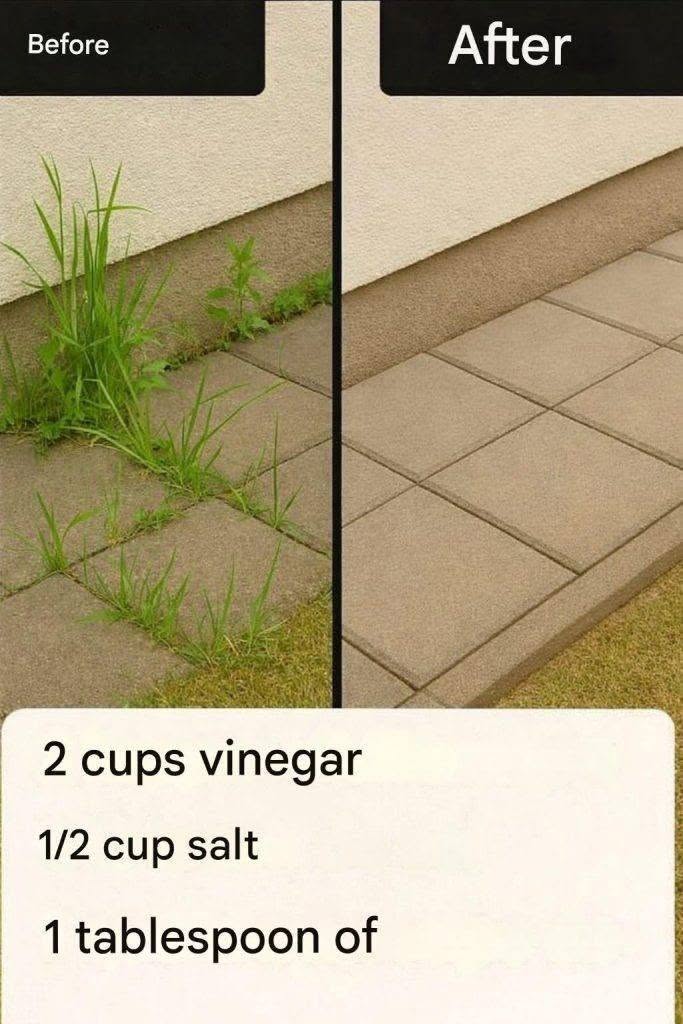
The viral before-and-after pictures are certainly attention-grabbing.
One image shows stubborn green weeds growing between paving stones. The next shows a clean, weed-free walkway.
But is this homemade mixture really effective? And more importantly, is it safe for your garden, pets, and surrounding plants?
The answer is more complicated than many social media posts suggest.
Vinegar can damage exposed plant tissue, salt can harm vegetation and soil, and dish soap may help a spray spread across leaves. However, the combination is not a guaranteed permanent weed killer, and it can create problems if used carelessly.
Here’s what you should know before trying this popular gardening trick.
What Is the Viral 3-Ingredient Homemade Weed Killer?
The mixture commonly shared online contains three household ingredients:
- White vinegar
- Table salt
- Liquid dish soap
The idea is simple: spray the solution directly onto unwanted weeds growing in cracks or along paved surfaces.
Supporters claim that the mixture causes weeds to dry out, turn brown, and eventually disappear.
There is some truth behind the basic mechanism, but the results depend on the type of weed, the conditions, and how the mixture is applied.
Importantly, the image circulating online does not establish that the mixture alone produced the dramatic before-and-after result.
What Does Each Ingredient Actually Do?
1. Vinegar: Damages Exposed Leaves
Household white vinegar usually contains approximately 5% acetic acid.
Acetic acid can damage plant cells on contact, causing leaves to wilt or turn brown.
Young, tender weeds may be more vulnerable than mature plants.
However, vinegar generally acts as a contact treatment.
It does not reliably travel through the plant to destroy deep roots.
This means perennial weeds may grow back after their leaves are damaged.
2. Salt: Can Harm Plants and Soil
Salt affects how plants take up and manage water.
At sufficiently high concentrations, it can damage plant tissue and interfere with growth.
Unfortunately, salt does not distinguish between weeds and desirable plants.
It can also remain in soil and contribute to conditions that make it difficult for other plants to grow.
Repeated applications may harm nearby flower beds, lawns, trees, and soil organisms.
For this reason, adding salt is generally not recommended as a routine gardening solution.
3. Dish Soap: Helps Liquid Spread
Dish soap is often included because it contains surfactants.
These ingredients can reduce surface tension, allowing liquid to spread more easily across waxy leaves.
However, household dish soap is not the same as a product specifically formulated and approved for use on plants.
Some detergents may damage desirable vegetation or create unnecessary environmental exposure.
Does Homemade Vinegar Weed Killer Really Work?
Vinegar can produce visible browning on some weeds, particularly small annual weeds with tender leaves.
However, several limitations are important.
First, visible browning does not necessarily mean the roots are dead.
A plant may look completely dried out above ground while its roots remain capable of producing new shoots.
Second, larger weeds are harder to control.
Mature weeds with extensive root systems are often more resilient.
Third, the mixture is nonselective.
It may damage grass, flowers, vegetables, and ornamental plants just as readily as unwanted weeds.
Fourth, repeated use can cause unintended harm.
Salt buildup and runoff are particular concerns around soil, drainage areas, and nearby vegetation.
So while the mixture may create a temporary visual improvement, it should not be considered a reliable, permanent, or environmentally harmless solution.
Why Weeds Keep Growing Between Patio Stones
Weeds growing between paving stones can be especially frustrating.
Even when the patio looks clean, tiny cracks provide opportunities for new plants to establish themselves.
Several conditions encourage this growth.
Wind-Blown Seeds
Weed seeds can travel through the air and settle in small gaps between paving stones.
Accumulated Dust and Organic Matter
Over time, dirt, decomposed leaves, and other debris collect inside cracks.
This material provides a growing medium for seeds.
Moisture
Water can collect in joints and beneath paving stones, creating favorable conditions for germination.
Sunlight
Many common weeds thrive in sunny, open spaces such as patios and driveways.
Established Roots
Some perennial weeds grow from roots or underground structures that remain beneath the paving.
Removing the visible leaves may not eliminate the plant.
Understanding these causes helps explain why a one-time spray often fails to provide lasting results.
A Safer Approach to Removing Weeds From Patio Cracks
For most homeowners, the best approach is to remove existing weeds and then reduce the conditions that allow new ones to grow.
Step 1: Remove Large Weeds by Hand
Start by pulling visible weeds when the soil or joint material is slightly damp.
Try to remove as much of the root system as possible.
A narrow weeding tool can help reach between paving stones.
Wear gardening gloves to protect your hands.
Step 2: Clear the Cracks
Use a stiff brush or suitable joint-cleaning tool to remove accumulated dirt and organic material.
This reduces the growing medium available to new weed seeds.
Step 3: Sweep the Patio Thoroughly
Remove loose seeds, leaves, and debris.
Regular sweeping can help prevent material from building up in the joints.
Step 4: Inspect the Paving Joints
Look for gaps where joint material has washed away.
Depending on the type of paving, replacing suitable jointing material may help reduce weed growth.
Step 5: Maintain the Area Regularly
Removing weeds while they are small is usually easier than waiting until they develop extensive root systems.
A few minutes of routine maintenance may prevent larger problems later.
What About the Viral Recipe With 2 Cups of Vinegar and ½ Cup of Salt?
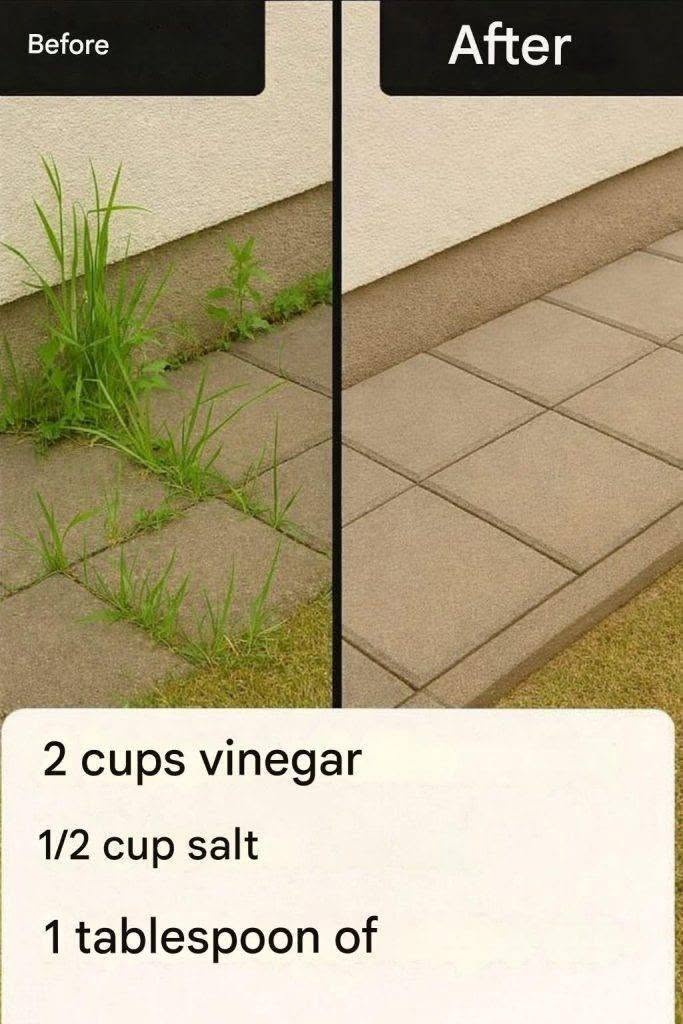
One popular social media version lists the following ingredients:
- 2 cups of white vinegar
- ½ cup of salt
- 1 tablespoon of liquid dish soap
Although these ingredients may cause visible damage to some weeds, this is not a recommended garden treatment.
The amount of salt is particularly concerning because it can accumulate in soil, damage nearby vegetation, and affect future plant growth.
There is also no guarantee that the mixture will destroy established roots.
For most patios and walkways, manual removal and regular joint maintenance are better long-term options.
Can You Use Vinegar Alone to Kill Weeds?
Household vinegar may damage small, young weeds when it contacts their leaves.
However, it is not a reliable treatment for larger weeds or plants with established root systems.
Vinegar is also nonselective, meaning it can harm desirable plants.
If you are considering a vinegar-based weed-control product, choose a commercially formulated herbicide that is specifically labeled for that purpose and follow its instructions.
Do not assume that a stronger concentration is automatically safer or better.
Horticultural vinegar can contain much higher concentrations of acetic acid than kitchen vinegar and may cause serious skin burns or eye injuries.
Five Alternative Ways to Control Weeds Without Homemade Salt Sprays
1. Use a Patio Weeding Tool
A narrow weeding knife or specialized patio tool can remove weeds from cracks and joints.
This method works especially well when weeds are small.
2. Brush Away Dirt and Seeds
A stiff outdoor brush can help remove debris that allows weeds to establish themselves.
Make sweeping part of your regular patio maintenance.
3. Repair Damaged Paving Joints
Where appropriate, replacing missing jointing material can make it harder for weeds to take root.
Choose a material suitable for your particular paving system.
4. Use Mulch in Garden Beds
For weeds growing in planting areas rather than pavement, a suitable layer of mulch can reduce sunlight reaching weed seeds.
Mulch also helps conserve soil moisture.
5. Remove Weeds Before They Produce Seeds
Preventing weeds from flowering and setting seed can reduce future infestations.
Early removal is often easier than tackling mature plants.
Is Boiling Water a Good Alternative?
Boiling water can damage small weeds growing in cracks by exposing plant tissue to intense heat.
However, it may not eliminate deep-rooted perennial weeds, and repeat treatment may be necessary.
It also presents a significant scalding risk.
Avoid using boiling water around children, pets, nearby plants, or surfaces that could be damaged by sudden heat.
For many homeowners, manual weeding remains the more controllable option.
What You Should Never Mix Into Homemade Weed Killers
Certain household cleaning chemicals can create serious hazards when combined.
Never mix vinegar with chlorine bleach.
This combination can release toxic chlorine gas.
Also avoid combining bleach with ammonia or other household cleaning products.
Do not add random cleaning chemicals to gardening mixtures in an attempt to make them stronger.
Products designed for cleaning household surfaces are not automatically safe for outdoor vegetation control.
Frequently Asked Questions
Does vinegar kill weeds permanently?
Usually not. It may damage exposed leaves, but many established weeds can regrow from their roots.
Does salt stop weeds from growing back?
Salt can inhibit plant growth, but it can also damage soil and nearby desirable vegetation. It is not recommended for routine weed control.
Why do people add dish soap to vinegar weed killer?
Dish soap can help a liquid spread across plant leaves, but it does not make the mixture selective or environmentally harmless.
Can I use this mixture on my lawn?
No. Vinegar and salt can damage lawn grass as well as weeds.
Is homemade weed killer safe around flowers?
No. The mixture can injure flowers, shrubs, and other desirable plants.
Can homemade weed killer harm trees?
Yes. Salt accumulation and exposure to weed-control mixtures can harm nearby trees and their root environments.
How quickly does vinegar affect weeds?
Some tender leaves may show damage relatively quickly, but visible browning does not prove that the roots have died.
Is stronger vinegar more effective?
Higher concentrations of acetic acid can be more damaging to plant tissue, but they also pose greater risks to people and surrounding vegetation.
What is the best way to remove weeds between paving stones?
Manual removal, clearing debris, repairing joints, and consistent maintenance are practical options.
Does the viral before-and-after photo prove the recipe works?
No. A photograph alone cannot establish which treatment was used, how long it took, or whether weeds later returned.
Final Thoughts: The Truth Behind the 3-Ingredient Weed Killer
The vinegar, salt, and dish soap trick is popular because it sounds simple, inexpensive, and convenient.
And while the ingredients can damage weeds, the mixture has important limitations.
Vinegar primarily affects exposed plant tissue. Salt can harm soil and surrounding vegetation. Dish soap may help the solution spread, but it does not turn the mixture into a safe or permanent weed-control treatment.
A clean, weed-free patio is achievable without risking unnecessary damage to your garden.
For lasting results, focus on removing weeds early, keeping paving joints clear, and preventing new seeds from establishing themselves.
Sometimes, the best gardening solution isn’t a stronger homemade spray—it’s a little consistent maintenance.
Have you ever tried the vinegar-and-salt weed killer trick, or do you prefer removing weeds by hand?
Disclaimer: This article is for informational purposes. Follow local regulations and product labels when using weed-control products, and avoid unapproved chemical mixtures.