Your body has many ways of telling you when something isn’t quite right.
Sometimes the warning signs are obvious, such as severe pain or difficulty breathing. Other times, they are subtle: unusual bruises, persistent fatigue, changes in your tongue, or unexplained swelling.
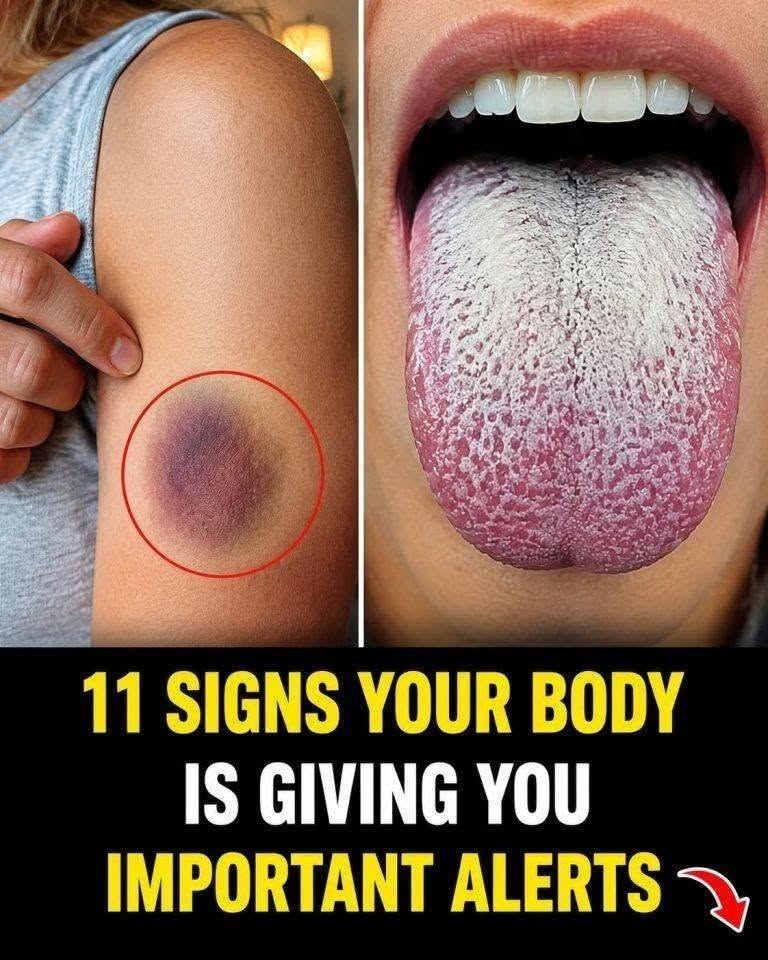
A viral social media image titled “11 Signs Your Body Is Giving You Important Alerts” shows two striking examples: a large purple bruise on an upper arm and a tongue with a noticeable white coating.
These images have sparked curiosity about what everyday physical changes might reveal about our health.
But here’s something important to understand: not every unusual symptom means you have a serious disease.
Many changes are harmless or temporary. Others deserve a medical evaluation, especially when they appear suddenly, persist, or occur alongside other symptoms.
Knowing the difference can help you make informed decisions about your health.
Here are 11 signs worth paying attention to, what they may mean, and when you should seek medical advice.
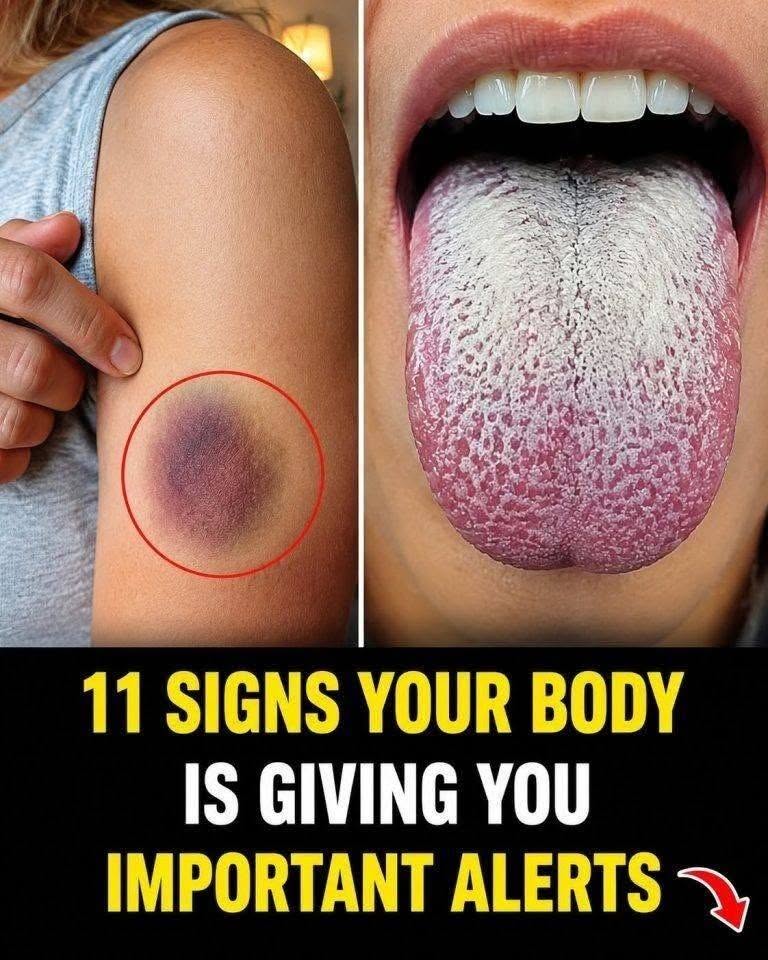
1. Unexplained Bruises on Your Body
Bruises happen when small blood vessels beneath the skin break and allow blood to leak into surrounding tissue.
They often appear purple, blue, red, or dark brown before gradually fading.
Most bruises result from minor bumps or injuries, even ones you may not remember.
However, frequent or unexplained bruising can sometimes indicate an underlying problem.
Possible Causes
- Minor injuries
- Fragile blood vessels
- Certain medications, including blood thinners
- Low platelet counts
- Blood-clotting disorders
- Some nutritional deficiencies
- Liver disease
When to Be Concerned
Consult a healthcare professional if you develop frequent unexplained bruises, unusually large bruises, or bruising accompanied by nosebleeds, bleeding gums, or unusual fatigue.
Seek urgent medical attention for rapidly spreading bruising, severe pain or swelling, or unusual bleeding.
A single bruise does not automatically indicate a vitamin deficiency or serious disease.
2. A White Coating on Your Tongue
A white tongue is another symptom frequently featured in viral health posts.
It may appear as a thin white film, thick patches, or an uneven coating.
In many cases, the cause is relatively simple.
Common Causes
- Buildup of bacteria and debris
- Dry mouth
- Dehydration
- Inadequate oral hygiene
- Mouth breathing
- Smoking
However, certain conditions can also cause white patches.
Oral Thrush
Oral thrush is a fungal infection caused by an overgrowth of Candida.
It may produce creamy white patches that can sometimes be wiped away, leaving a red or tender surface.
It is more common in certain situations, including after antibiotic use, with inhaled corticosteroids, or in people with weakened immune systems.
Other Oral Conditions
Some persistent white patches may be caused by irritation, inflammatory conditions, or leukoplakia.
A white patch that cannot be wiped away, persists for more than two weeks, or is associated with pain or bleeding should be evaluated by a dentist or doctor.
3. Constant Fatigue That Doesn’t Improve With Rest
Everyone feels tired occasionally.
A busy schedule, inadequate sleep, or a stressful week can leave you feeling exhausted.
But persistent fatigue that interferes with daily activities deserves attention.
Possible Causes
- Iron-deficiency anemia
- Thyroid disorders
- Poor sleep quality
- Sleep apnea
- Depression or anxiety
- Certain infections
- Diabetes
- Medication side effects
For example, iron deficiency may cause fatigue because the body needs iron to produce hemoglobin, which helps carry oxygen in the blood.
Thyroid disorders can also affect energy levels and metabolism.
When to See a Doctor
If fatigue lasts several weeks, becomes progressively worse, or is accompanied by shortness of breath, palpitations, unexplained weight loss, or other symptoms, arrange a medical assessment.
Treatment depends on identifying the cause.
4. Sudden or Unexplained Weight Changes
Body weight naturally fluctuates due to food intake, hydration, and hormonal changes.
However, significant unexplained weight loss or gain can sometimes be a warning sign.
Unexplained Weight Loss
Possible causes include:
- Overactive thyroid
- Diabetes
- Digestive disorders
- Depression
- Chronic infections
- Other medical conditions
Unexplained Weight Gain
Possible contributors include:
- Medication effects
- Reduced physical activity
- Hormonal changes
- Fluid retention
- Certain endocrine disorders
Sudden weight gain accompanied by swelling or breathing difficulties can be especially concerning because it may reflect fluid accumulation.
When to Seek Advice
Unintentional weight loss of approximately 5% or more of your body weight over 6–12 months warrants medical evaluation, particularly if no clear explanation exists.
5. Persistent Tingling or Numbness
Occasional tingling after sitting in an awkward position is common.
But repeated numbness, burning sensations, or pins-and-needles feelings may indicate a nerve-related problem.
Possible Causes
- Nerve compression
- Diabetes-related neuropathy
- Vitamin B12 deficiency
- Certain neurological disorders
- Medication effects
- Peripheral nerve injuries
The location and pattern of symptoms can help determine the cause.
For example, numbness affecting one hand may have a different explanation from burning sensations in both feet.
Important Warning
Sudden numbness or weakness on one side of the body, especially with facial drooping or speech difficulty, may indicate a stroke and requires immediate emergency care.
Do not wait for symptoms to disappear.
6. Changes in Your Nails
Your fingernails can sometimes reflect changes in your general health.
Occasional ridges or minor discoloration are common and often harmless.
However, some changes deserve closer attention.
Signs to Notice
Brittle nails: May result from repeated exposure to water, cleaning products, or certain health conditions.
Spoon-shaped nails: Sometimes associated with iron deficiency.
Nail clubbing: Enlargement and rounding of the fingertips can be associated with certain lung, heart, or other medical conditions.
Dark streaks: A new or changing dark stripe, particularly in one nail, should be assessed by a dermatologist.
Not every nail change indicates a deficiency. Avoid taking high-dose supplements without understanding the cause.
7. Persistent Swelling in Your Feet or Ankles
Swollen feet are common after prolonged standing, sitting, or traveling.
However, persistent or unexplained swelling can occasionally indicate a medical problem.
Possible Causes
- Prolonged inactivity
- Venous circulation problems
- Medication side effects
- Kidney disease
- Heart conditions
- Liver disease
- Blood clots
Swelling in both ankles may have a different cause from swelling in only one leg.
Sudden swelling in one leg accompanied by pain, warmth, or redness needs prompt medical assessment because it may indicate a blood clot.
If swelling occurs with severe breathlessness or chest pain, seek emergency care.
8. Frequent Headaches or Sudden Changes in Headache Patterns
Headaches are extremely common.
Many are caused by tension, migraine, dehydration, or changes in sleep.
However, the pattern and severity of a headache matter.
Warning Signs
Seek immediate medical care if you experience:
- A sudden, extremely severe headache
- Headache with confusion or loss of consciousness
- Headache with new weakness or speech difficulty
- Headache with fever and a stiff neck
- Headache after a significant head injury
Recurring headaches that are becoming more frequent or changing significantly should also be evaluated.
9. Persistent Changes in Bowel Habits
Digestive symptoms can be uncomfortable and sometimes embarrassing to discuss.
Occasional constipation or diarrhea may result from dietary changes, infections, or stress.
But persistent changes deserve attention.
Symptoms Worth Monitoring
- Ongoing diarrhea
- Persistent constipation
- Blood in the stool
- Black, tarry stools
- Unexplained abdominal pain
- Unintentional weight loss
- A lasting change in bowel habits
Possible causes range from dietary issues and irritable bowel syndrome to inflammatory bowel conditions or other illnesses.
Blood in the stool should not be ignored. Heavy bleeding, fainting, or severe abdominal pain requires urgent medical care.
10. Unusual Thirst and Frequent Urination
Feeling thirsty after exercise or on a hot day is normal.
But excessive thirst combined with frequent urination may be a sign of elevated blood glucose.
Possible Diabetes-Related Symptoms
- Drinking more water than usual
- Urinating frequently
- Feeling unusually hungry
- Unexplained weight loss
- Blurry vision
- Persistent fatigue
- Slow-healing wounds
These symptoms do not automatically mean someone has diabetes.
A healthcare professional may recommend blood glucose testing or an HbA1c test.
Severe dehydration, vomiting, confusion, or deep rapid breathing alongside high blood sugar symptoms can indicate an emergency.
11. Chest Discomfort or Unexplained Shortness of Breath
Chest discomfort and breathing difficulties are among the most important symptoms to recognize.
They can have several causes, including muscle strain, anxiety, respiratory conditions, and heart problems.
However, some causes require immediate treatment.
Possible Heart Attack Warning Signs
- Chest pressure, tightness, or pain
- Discomfort spreading to the arm, jaw, neck, or back
- Shortness of breath
- Cold sweating
- Nausea
- Lightheadedness
Symptoms can vary from person to person, and not everyone experiences severe chest pain.
If you develop new or severe chest discomfort, particularly with breathlessness, sweating, or faintness, contact emergency medical services immediately.
Do not attempt to diagnose the cause yourself.
How to Know When a Symptom Is Serious
A single symptom rarely tells the whole story.
Healthcare professionals consider several factors before deciding what a physical change may mean.
These include:
- How suddenly the symptom appeared
- How long it has lasted
- Whether it is getting worse
- Whether other symptoms are present
- Your medical history
- Your medications
- Relevant examination findings and tests
For example, a small bruise after bumping your arm is very different from developing numerous large bruises without an explanation.
Similarly, a temporary white tongue after waking may have a different cause from a persistent white patch that cannot be removed.
The key is to notice changes without assuming the worst.
7 Healthy Habits That Help You Monitor Your Body
1. Pay Attention to New Symptoms
Notice unusual changes, especially when they persist or worsen.
2. Maintain Regular Medical Checkups
Routine care can help identify conditions such as hypertension and diabetes.
3. Eat a Balanced Diet
Include vegetables, fruits, whole grains, protein sources, and appropriate healthy fats.
4. Stay Physically Active
Regular movement supports cardiovascular health, muscle strength, and general well-being.
5. Prioritize Sleep
Adequate sleep helps support physical and mental health.
6. Know Your Medications
Some medications can cause bruising, swelling, dizziness, or other side effects.
Never stop prescribed medication without appropriate medical advice.
7. Ask Questions When Something Changes
If a symptom is persistent, unexplained, or concerning, seek professional guidance rather than relying solely on social media.
Frequently Asked Questions
Are unexplained bruises always dangerous?
No. Bruising can occur after minor injuries, but frequent or unexplained bruises may need medical assessment.
Does a white tongue mean I have a serious illness?
Not necessarily. A white coating may result from harmless buildup, dry mouth, or other causes. Persistent white patches should be examined.
Can fatigue indicate low iron?
Yes. Iron deficiency is one possible cause of fatigue, but many other conditions can cause similar symptoms.
What does tingling in the hands and feet mean?
Possible causes include nerve compression, vitamin deficiencies, diabetes-related neuropathy, and other conditions.
Are swollen ankles a sign of heart disease?
Sometimes, but swelling can also result from prolonged standing, medication effects, and other causes.
Can nail changes reveal vitamin deficiencies?
Some nail changes may be associated with nutritional deficiencies, but appearance alone cannot confirm one.
When should I worry about a headache?
A sudden, extremely severe headache or one accompanied by neurological symptoms requires emergency evaluation.
Is frequent urination a symptom of diabetes?
It can be, particularly when accompanied by excessive thirst, fatigue, or unexplained weight loss.
Should I seek help for chest tightness?
New, severe, or unexplained chest tightness—especially with shortness of breath, sweating, or faintness—requires emergency medical attention.
Can the viral image diagnose a medical condition?
No. A photograph showing a bruise or coated tongue cannot establish a diagnosis without additional information.
Final Thoughts: Your Body’s Warning Signs Deserve Attention
Your body communicates through changes in how you feel, look, and function.
Some symptoms are temporary and harmless. Others may indicate conditions that benefit from early diagnosis and treatment.
Unexplained bruises, persistent tongue changes, unusual fatigue, swelling, numbness, and changes in digestion are all worth understanding.
The most important lesson is not to panic over every symptom, but also not to dismiss persistent or unusual changes.
Pay attention to your body, recognize emergency warning signs, and seek medical advice when something doesn’t seem right.
Your health deserves more than a viral guess.
Which of these 11 signs surprised you the most?