What if one of the simplest bedtime snacks was already sitting in your kitchen?
Pumpkin seeds are small, crunchy, and packed with valuable nutrients. They’re often sprinkled over salads, added to homemade bread, or enjoyed as a quick snack.
But recently, a viral social media post has attracted attention with an interesting claim: eating pumpkin seeds at night can increase magnesium intake, support muscle relaxation, and improve sleep quality.
The idea sounds appealing, especially for people who struggle to unwind after a long day.
But can a handful of pumpkin seeds really help you sleep better? How much should you eat? And are there any disadvantages to eating them before bedtime?
The answer is more interesting than you might expect.
Pumpkin seeds contain magnesium, zinc, protein, healthy fats, and several other important nutrients. These nutrients play roles in normal nervous system function, muscle activity, and overall health.
However, eating pumpkin seeds is not a proven treatment for insomnia, and their benefits depend on your overall diet and individual health needs.
Let’s explore what makes these seeds special and how to enjoy them as part of a healthy evening routine.
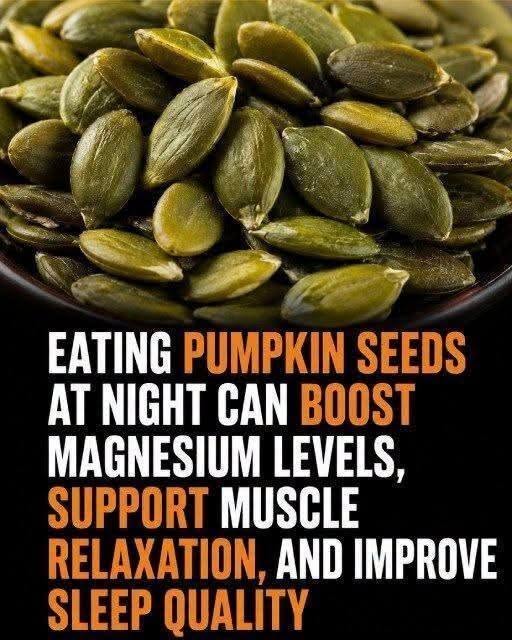
What Makes Pumpkin Seeds So Nutritious?
Pumpkin seeds, also known as pepitas when sold as green, shell-free kernels, come from pumpkins and certain other varieties of squash.
Despite their small size, they contain a concentrated mixture of nutrients.
A typical 1-ounce serving (approximately 28 grams) of unsalted, shelled, roasted pumpkin seeds provides roughly:
| Nutrient | Approximate amount |
|---|---|
| Calories | 160–170 |
| Protein | 8–9 grams |
| Total fat | 13–14 grams |
| Magnesium | 150–160 mg |
| Zinc | 2–2.5 mg |
| Iron | 2–3 mg |
| Fiber | Around 2 grams |
Values vary depending on the variety, preparation method, and whether the seeds are hulled or unhulled.
Pumpkin seeds also provide phosphorus, copper, manganese, and naturally occurring plant compounds.
These nutrients help explain why pumpkin seeds are considered a nutritious addition to a balanced diet.
1. Pumpkin Seeds Are an Excellent Source of Magnesium
One of the biggest reasons pumpkin seeds are associated with sleep is their magnesium content.
Magnesium is an essential mineral involved in hundreds of biochemical reactions in the body.
It contributes to:
- Normal muscle function
- Nerve signaling
- Energy production
- Protein synthesis
- Bone health
- Regulation of normal heart rhythm
A small serving of pumpkin seeds can provide a meaningful portion of an adult’s daily magnesium needs.
Why Is Magnesium Important at Night?
Magnesium is involved in normal nervous system and muscle function.
Some research has investigated whether magnesium supplementation can improve sleep, particularly in people with low magnesium intake or certain sleep difficulties.
However, the evidence remains limited and inconsistent.
Eating magnesium-rich foods is a sensible nutritional habit, but it does not guarantee that you’ll fall asleep faster.
Can Pumpkin Seeds Correct Magnesium Deficiency?
They can help increase dietary magnesium intake.
However, a diagnosed magnesium deficiency may require medical evaluation and individualized treatment.
Food alone may not be sufficient in every case.
2. They May Support Normal Muscle Function
Have you ever gone to bed feeling physically tense after a long day?
Magnesium plays a role in normal muscle contraction and relaxation.
Because pumpkin seeds contain magnesium, they can contribute to the nutrient intake needed for healthy muscle function.
But there’s an important distinction.
Eating pumpkin seeds has not been proven to immediately relax tight muscles or prevent nighttime cramps.
Muscle cramps can have many causes, including overexertion, medications, nerve problems, and certain medical conditions.
If cramps are frequent or severe, they deserve proper evaluation.
3. They Contain Tryptophan, an Amino Acid Involved in Sleep Biology
Pumpkin seeds contain tryptophan, an essential amino acid obtained through food.
The body uses tryptophan to produce serotonin, which can then be used in the production of melatonin.
Melatonin is a hormone involved in regulating the sleep-wake cycle.
This connection is one reason pumpkin seeds are frequently described as a bedtime snack.
Does Tryptophan in Pumpkin Seeds Make You Sleepy?
Not necessarily.
The body processes tryptophan through complex metabolic pathways, and its effects depend on many factors.
Eating a small handful of pumpkin seeds has not been shown to produce a reliable sedative effect.
Still, they can be a nutritious component of a light evening snack.
4. Pumpkin Seeds Provide Zinc
Zinc is another important mineral found in pumpkin seeds.
It supports:
- Normal immune function
- Wound healing
- DNA synthesis
- Cell growth and repair
- Normal metabolism
Some studies have explored relationships between zinc status and sleep quality.
However, the available research does not establish that eating pumpkin seeds before bed improves sleep through their zinc content.
The strongest reason to eat them is that they contribute to adequate nutrient intake.
5. They May Support Heart Health
Pumpkin seeds contain unsaturated fats, magnesium, and other nutrients that can fit into a heart-healthy eating pattern.
Replacing snacks high in saturated fat or added sugar with a moderate portion of unsalted nuts or seeds can be a useful dietary choice.
Magnesium also plays a role in normal blood pressure regulation.
However, pumpkin seeds are not a substitute for prescribed blood pressure or cholesterol medication.
Their potential benefits are best understood as part of an overall healthy lifestyle.
6. They Can Help You Feel Satisfied After an Evening Snack
If you often feel hungry shortly before bedtime, a small serving of pumpkin seeds may be a satisfying choice.
That’s because they contain protein, fat, and fiber.
These nutrients can help make a snack more filling than foods made primarily from refined sugar.
A handful of pumpkin seeds may be especially appealing when you’re craving something crunchy.
However, they are calorie-dense, so portion size matters.
A typical 28-gram serving provides approximately 160–170 calories.
You don’t need to eat a large bowl to benefit from their nutrients.
7. They Provide Plant-Based Protein
Pumpkin seeds contain approximately 8–9 grams of protein per ounce.
Protein is essential for:
- Maintaining muscle tissue
- Repairing body tissues
- Producing enzymes and hormones
- Supporting normal immune function
Eating enough protein throughout the day is particularly important for older adults and physically active people.
Pumpkin seeds can contribute to daily protein intake, although they should not be your only protein source.
For a more balanced snack, combine a small portion with another nutritious food.
8. They May Support Bone Health
Magnesium and phosphorus are important components of normal bone metabolism.
Pumpkin seeds provide both minerals.
Magnesium helps support normal bone structure, while phosphorus is an essential component of bones and teeth.
However, eating pumpkin seeds alone will not prevent osteoporosis.
Healthy bones also depend on factors such as adequate calcium and vitamin D, physical activity, and overall nutrition.
9. They Contain Iron and Other Important Minerals
Pumpkin seeds provide plant-based iron, which contributes to normal red blood cell production and oxygen transport.
They also contain copper and manganese, minerals involved in important metabolic processes.
The iron in pumpkin seeds is non-heme iron, which is generally less readily absorbed than iron from animal foods.
Combining plant-based iron sources with vitamin C-rich foods can help improve absorption.
For example, you could enjoy pumpkin seeds alongside strawberries, kiwi, or orange slices.
People with iron-deficiency anemia should not rely on pumpkin seeds alone to correct a diagnosed deficiency.
10. They Can Be Part of a Relaxing Bedtime Routine
Sometimes the greatest benefit of an evening snack comes from the routine surrounding it.
A consistent nighttime routine can help signal to your body that it’s time to wind down.
For example, you might:
- Turn off bright screens.
- Prepare a small, nutritious snack.
- Read a book.
- Lower the bedroom lights.
- Practice slow, comfortable breathing.
- Go to bed at a consistent time.
Pumpkin seeds can fit naturally into this routine.
But remember: the strongest evidence for improving sleep comes from consistent sleep habits and appropriate treatment of sleep disorders, not from one particular food.
How Many Pumpkin Seeds Should You Eat Before Bed?
For most healthy adults, a reasonable snack portion is approximately 1–2 tablespoons of shelled pumpkin seeds, or roughly 10–20 grams.
You can also enjoy a standard 28-gram serving if it fits your nutritional needs.
There is no scientifically established bedtime dose of pumpkin seeds that improves sleep.
Eating more does not necessarily provide greater benefits.
When Is the Best Time?
If you want to eat them in the evening, try having a small serving around 30–60 minutes before bed, provided that feels comfortable.
This timing is a practical suggestion, not a scientifically proven sleep-enhancing window.
People who experience acid reflux or discomfort after late meals may prefer eating earlier.
Raw or Roasted Pumpkin Seeds: Which Is Better?
Both raw and roasted pumpkin seeds can be nutritious.
Raw Pumpkin Seeds
Raw seeds have a mild flavor and can be added to yogurt, oatmeal, or salads.
Choose products intended for eating raw and store them properly.
Roasted Pumpkin Seeds
Roasting creates a crunchier texture and a richer flavor.
Dry-roasted or lightly roasted seeds without excessive added salt are convenient options.
Salted Pumpkin Seeds
Salted varieties may contain significant sodium.
People managing high blood pressure may benefit from choosing unsalted versions.
Easy Bedtime Pumpkin Seed Snack Ideas
Here are four simple ways to enjoy pumpkin seeds in the evening.
1. Simple Pumpkin Seed Snack
Ingredients:
- 1–2 tablespoons unsalted pumpkin seeds
- A small pinch of cinnamon, optional
Instructions:
Place the seeds in a small bowl.
Add cinnamon if desired, mix, and enjoy.
This is the easiest option when you want a quick snack without preparation.
2. Pumpkin Seed and Yogurt Bowl
Ingredients:
- ½ cup plain yogurt
- 1 tablespoon pumpkin seeds
- A few blueberries
- A pinch of cinnamon
Instructions:
Spoon the yogurt into a bowl.
Add the blueberries and pumpkin seeds.
Sprinkle with cinnamon and serve.
This snack combines protein with a variety of nutrients.
3. Warm Oatmeal With Pumpkin Seeds
Ingredients:
- ⅓ cup rolled oats
- ⅔ cup milk or a suitable alternative
- 1 tablespoon pumpkin seeds
- ¼ teaspoon cinnamon
Instructions:
Cook the oats with the milk according to the package directions.
Transfer to a bowl and sprinkle with pumpkin seeds and cinnamon.
Serve warm.
4. Homemade Pumpkin Seed Trail Mix
Ingredients:
- 2 tablespoons pumpkin seeds
- 2 tablespoons unsalted almonds
- 1 tablespoon dried cranberries without excessive added sugar
Instructions:
Combine all ingredients in a small container.
Divide into two portions for convenient snacking.
Can Eating Pumpkin Seeds at Night Cause Side Effects?
Pumpkin seeds are safe for most people when eaten in ordinary food amounts.
However, there are a few things to consider.
Digestive Discomfort
Eating large amounts may cause bloating or abdominal discomfort.
Start with a small portion if you are not accustomed to eating seeds.
Excess Calories
Pumpkin seeds are nutrient-dense but also calorie-dense.
Large portions can contribute substantial calories.
Food Allergies
Although uncommon, pumpkin seed allergies can occur.
Anyone with a known allergy should avoid them.
Kidney Disease
Pumpkin seeds contain potassium and phosphorus.
People with advanced kidney disease or specific mineral restrictions should discuss appropriate portions with a renal dietitian.
Swallowing and Choking Risks
Whole seeds may be unsuitable for young children or individuals with swallowing difficulties.
Age-appropriate preparation is important.
Can Pumpkin Seeds Replace Magnesium Supplements?
Pumpkin seeds can help increase magnesium intake through food.
For many people, eating a varied diet that includes nuts, seeds, whole grains, and vegetables is a practical way to obtain essential minerals.
However, a prescribed magnesium supplement may be recommended for specific medical reasons.
Do not replace prescribed treatment with pumpkin seeds without discussing it with your healthcare professional.
Likewise, taking large doses of magnesium supplements simply to improve sleep is not recommended without appropriate advice.
7 Other Habits That May Improve Sleep Quality
If better sleep is your goal, consider combining a balanced diet with these evidence-based habits.
1. Keep a Consistent Sleep Schedule
Try to go to bed and wake up at approximately the same time each day.
2. Reduce Caffeine Late in the Day
Coffee, energy drinks, and some teas can interfere with sleep, particularly when consumed later in the afternoon or evening.
3. Create a Dark, Quiet Bedroom
A comfortable sleep environment can make it easier to fall asleep and stay asleep.
4. Limit Bright Screens Before Bed
Reducing stimulating activities and bright light before bedtime may help your body prepare for sleep.
5. Stay Physically Active
Regular exercise supports general health and may improve sleep quality.
6. Avoid Large Meals Right Before Bed
Heavy meals can cause discomfort and aggravate reflux in susceptible individuals.
7. Seek Help for Persistent Insomnia
If you regularly struggle to fall asleep or stay asleep, a healthcare professional can help identify the cause.
Cognitive behavioral therapy for insomnia, known as CBT-I, is a recommended first-line treatment for chronic insomnia.
Frequently Asked Questions
Is it good to eat pumpkin seeds before sleeping?
Pumpkin seeds can be a nutritious evening snack. They provide magnesium, protein, and other nutrients, but they are not a proven sleep treatment.
Do pumpkin seeds make you sleepy?
There is no strong clinical evidence that a typical serving of pumpkin seeds directly causes sleepiness.
Can pumpkin seeds increase magnesium levels?
They contribute dietary magnesium and may help people meet their daily magnesium requirements.
How many pumpkin seeds should I eat at night?
A small serving of 1–2 tablespoons is a practical starting point. There is no established dose specifically for sleep.
Do pumpkin seeds contain melatonin?
Pumpkin seeds contain tryptophan, which participates in pathways related to melatonin production. This does not mean eating them reliably increases melatonin enough to improve sleep.
Can pumpkin seeds reduce muscle cramps?
They provide magnesium needed for normal muscle function, but they have not been proven to prevent or treat nighttime muscle cramps.
Are roasted pumpkin seeds healthy?
Yes. Unsalted roasted pumpkin seeds can be a nutritious snack.
Can I eat pumpkin seeds every day?
Most healthy adults can include moderate portions in a balanced diet.
Are pumpkin seeds good for people with high blood pressure?
Unsalted pumpkin seeds can fit into a heart-healthy diet. They are not a replacement for blood pressure medication.
Can pumpkin seeds cause weight gain?
Like other calorie-dense foods, large amounts can contribute to excess calorie intake. Moderate portions can fit into a healthy diet.
Should I eat pumpkin seeds on an empty stomach?
There is no established advantage to eating them on an empty stomach.
Are pumpkin seeds better in the morning or at night?
Both are fine. The overall quality of your diet matters more than the exact time you eat them.
Final Thoughts: A Small Seed With Valuable Nutrients
Pumpkin seeds may be small, but they provide an impressive combination of magnesium, zinc, iron, protein, and healthy fats.
These nutrients support normal muscle function, nerve signaling, and many other important processes in the body.
Enjoying a small serving in the evening can be a satisfying alternative to highly processed snacks.
However, the claim that pumpkin seeds dramatically improve sleep simply because they are eaten at night goes beyond what current scientific evidence can confirm.
The best approach is to enjoy pumpkin seeds as part of a balanced diet while maintaining consistent, healthy sleep habits.
Sometimes the simplest changes are the most sustainable—and a small handful of pumpkin seeds can be one delicious part of that routine. 🎃🌙