Have you ever felt like your ears were blocked, itchy, or full of wax?
If so, you’ve probably seen viral videos promising a surprisingly simple solution: just three drops of a liquid, and all the dirt and debris inside your ears will disappear.
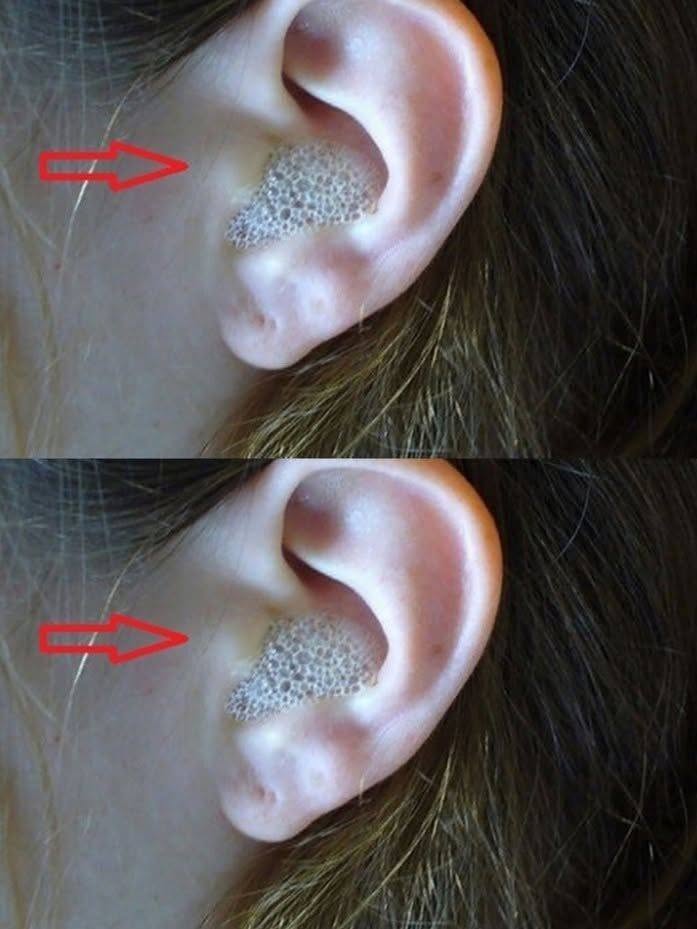
Some posts show a close-up of an ear filled with white foam, suggesting that a homemade treatment can dissolve stubborn earwax almost instantly.
It looks impressive. But is it really safe?
The truth is that certain ear drops can help soften earwax, and some products create bubbles when they come into contact with wax and debris.
However, not every ear needs cleaning, and putting the wrong liquid inside your ear can cause irritation, infection, or even damage to your hearing.
Before trying the viral three-drop trick, here’s what you should know about earwax, safe ear cleaning, and when to seek medical help.
Why Do Our Ears Produce Wax?
Earwax, medically known as cerumen, is a natural substance produced by glands in the ear canal.
Although many people consider it dirty or unhygienic, earwax actually performs several important functions.
It helps:
- Trap dust and tiny particles
- Protect the delicate skin inside the ear canal
- Prevent excessive dryness
- Support the ear’s natural defenses
- Carry trapped debris outward
In other words, earwax is not simply waste.
It’s part of your body’s natural protection system.
Do You Really Need to Remove Earwax?
Surprisingly, most people don’t need to clean the inside of their ears regularly.
The ear canal has a natural self-cleaning mechanism.
As the skin inside the canal gradually moves outward, it helps transport old wax toward the opening.
Normal jaw movements, including chewing and talking, can also assist this process.
Eventually, the wax may dry and fall away naturally.
That’s why healthcare professionals generally recommend leaving healthy ears alone unless wax buildup causes symptoms.
What Happens When Too Much Earwax Builds Up?
Sometimes, earwax accumulates faster than it can leave the ear canal.
This is called earwax impaction.
It may cause:
- A feeling of fullness in the ear
- Muffled hearing
- Ear discomfort
- Ringing in the ears
- Itching
- Difficulty hearing conversations
- Occasionally dizziness
However, these symptoms can also have other causes.
An ear infection, fluid behind the eardrum, or another ear condition may produce similar sensations.
It’s important not to assume that every blocked ear is caused by wax.
What Is the White Foam Shown in Viral Ear-Cleaning Pictures?
Some ear-cleaning videos show white bubbles or foam forming inside the outer ear.
This effect is often associated with peroxide-based products.
Certain earwax-softening drops contain carbamide peroxide, an ingredient that can release oxygen and create a bubbling sensation.
The bubbling may help loosen or soften accumulated wax.
But here’s the important part:
Foaming does not prove that the ear is dirty, infected, or completely cleaned.
The presence of bubbles is simply a chemical reaction.
And the absence of bubbles doesn’t necessarily mean a treatment has failed.
What Are the “Three Drops” People Talk About?
There is no universal three-drop remedy that works safely for everyone.
Different earwax-removal products have different instructions.
Some require several drops, while others have different recommended doses or application schedules.
The correct amount depends on the specific product.
Never assume that three drops of any household liquid will safely clean your ears.
1. Pharmacy Earwax-Softening Drops
One of the safer approaches for uncomplicated earwax buildup is using an over-the-counter product specifically formulated for earwax.
These products may contain ingredients such as:
- Carbamide peroxide
- Mineral oil
- Glycerin
- Other approved wax-softening agents
They work in different ways.
Some soften the wax, while others help loosen it so it can leave the ear more easily.
Important
Always follow the product label.
Do not use earwax-removal drops if you have a known or suspected perforated eardrum, ear tubes, ear drainage, significant pain, or certain ear conditions unless a healthcare professional specifically advises you to do so.
2. Mineral Oil Drops
Mineral oil is sometimes used to soften hard or dry earwax.
The goal is not to dissolve every particle instantly.
Instead, it may make the wax softer and easier to remove naturally or during professional treatment.
However, mineral oil isn’t suitable for every situation.
If you have ear pain, discharge, an ear infection, previous ear surgery, or a possible eardrum perforation, seek medical advice before putting anything inside your ear.
3. Glycerin-Based Ear Drops
Glycerin is another ingredient found in some earwax-softening products.
It can help soften accumulated wax.
As with other drops, correct use depends on the product instructions and your ear health.
Avoid experimenting with homemade mixtures when a properly formulated product is available.
Does Hydrogen Peroxide Clean Earwax?
Hydrogen peroxide is frequently featured in viral ear-cleaning videos because it produces noticeable bubbles.
Some commercial earwax-removal drops use peroxide-related ingredients in carefully formulated products.
However, pouring ordinary household hydrogen peroxide directly into your ear is not the same as using a product specifically designed for earwax removal.
Incorrect concentration, excessive use, or application to an irritated ear can cause problems.
For that reason, choose a product intended for earwax and follow its instructions rather than improvising.
Why You Shouldn’t Put Random Liquids in Your Ears
Social media contains many ear-cleaning recipes involving:
- Vinegar
- Lemon juice
- Alcohol
- Essential oils
- Garlic oil
- Undiluted peroxide
- Homemade herbal mixtures
These are not universal ear-cleaning solutions.
Some can irritate the delicate skin of the ear canal.
Others may be particularly dangerous if the eardrum is damaged.
A substance that is safe to apply to intact skin isn’t automatically safe inside the ear.
The Biggest Ear-Cleaning Mistake: Cotton Swabs
Many people clean their ears with cotton swabs every day.
But inserting a cotton swab into the ear canal can actually push wax deeper.
Instead of removing the blockage, you may compact it against the eardrum.
Cotton swabs can also cause:
- Scratches
- Irritation
- Bleeding
- Ear canal injuries
- Eardrum damage
It’s fine to gently clean the visible outer ear, but avoid inserting swabs deep into the ear canal.
Why Earwax Sometimes Becomes Hard
Earwax consistency varies from person to person.
Some people naturally produce softer wax.
Others have drier or harder wax.
Wax may also become impacted when it is repeatedly pushed deeper into the ear.
Factors that can contribute to buildup include:
Age
Earwax may become drier with age, making it more difficult to move outward.
Ear Canal Shape
Some people have naturally narrow or unusually shaped ear canals.
Hearing Aids
Devices worn in the ear can sometimes interfere with the normal outward movement of wax.
Earbuds
Frequent use of in-ear devices may contribute to wax accumulation in some individuals.
Cotton Swabs
Repeated cleaning attempts can push wax inward.
How to Clean Your Ears Safely at Home
If your ears feel normal and you have no symptoms, you generally don’t need to clean the ear canal.
For ordinary hygiene, follow these simple steps.
Step 1: Clean the Outer Ear
Use a soft, damp washcloth to gently wipe the visible outer ear.
Step 2: Avoid Inserting Objects
Don’t insert cotton swabs, hairpins, tweezers, or other objects into the ear canal.
Step 3: Leave Normal Wax Alone
A small amount of earwax is healthy.
Step 4: Use Appropriate Drops Only When Needed
If you suspect uncomplicated earwax buildup, a pharmacy earwax-softening product may be appropriate, provided you have none of the conditions that make drops unsafe.
Step 5: Follow the Instructions
Never increase the number of drops or duration because you want faster results.
Step 6: Seek Help if Symptoms Continue
If the ear remains blocked or your hearing doesn’t improve, have it examined.
How to Use Earwax Drops Correctly
The exact method depends on the product, but general instructions often include the following steps.
1. Read the Label
Check the ingredients, recommended dose, age restrictions, and warnings.
2. Wash Your Hands
Clean hands help reduce contamination.
3. Position Your Head
Tilt your head so the affected ear faces upward.
4. Apply the Recommended Number of Drops
Don’t guess the dose.
Use the amount specified on the product packaging or by your healthcare professional.
5. Keep the Ear Facing Up
Remain in the recommended position for the time stated in the instructions.
6. Wipe Away Excess Liquid
Gently wipe liquid from the outer ear.
Don’t push tissues or cotton swabs into the canal.
7. Stop if You Experience Pain
Pain, marked burning, dizziness, or worsening symptoms are reasons to stop and seek medical advice.
Can You Flush Your Ear With Water?
Ear irrigation is sometimes used to remove impacted wax.
However, it’s not appropriate for everyone.
Irrigation can be risky for people with:
- A perforated eardrum
- Ear tubes
- Previous ear surgery
- Certain ear infections
- Significant ear pain
- Some other ear conditions
People with diabetes or weakened immune systems should be particularly cautious about self-treatment because complications can be more serious.
If you’re unsure whether irrigation is safe for you, professional evaluation is the better choice.
Why Ear Candles Are Not Recommended
Ear candling is another popular alternative treatment.
It involves placing a hollow candle near the ear and claiming that heat or suction draws out wax.
But ear candling has not been shown to remove earwax effectively.
It can also cause:
- Burns
- Hot wax entering the ear
- Ear canal blockage
- Eardrum injury
Avoid ear candles.
What If You Hear Crackling After Using Drops?
Some earwax-softening products can cause bubbling or crackling sounds.
This can occur when the ingredients interact with wax.
However, if the sensation is accompanied by pain, significant dizziness, hearing deterioration, or discharge, stop using the product and seek medical advice.
Don’t interpret discomfort as proof that the treatment is working.
Can Earwax Cause Hearing Loss?
Yes.
When earwax completely or partially blocks the ear canal, it can interfere with sound transmission.
This may produce temporary conductive hearing loss.
Removing the blockage can improve hearing when wax is the cause.
But not all hearing loss comes from earwax.
Important Warning
If you experience sudden hearing loss, especially in one ear, seek urgent medical evaluation.
Don’t assume it’s wax or spend days trying home remedies.
Sudden hearing loss can be a time-sensitive medical problem.
Can Earwax Cause Dizziness?
Some people with earwax impaction report dizziness or a sense of imbalance.
However, dizziness has many possible causes.
These include inner-ear disorders, medication effects, blood-pressure changes, and neurological conditions.
If dizziness is severe, persistent, or accompanied by other concerning symptoms, seek medical attention.
What About Ear Itching?
An itchy ear doesn’t always mean there’s too much wax.
Possible causes include:
- Dry skin
- Eczema
- Irritation from earbuds
- Contact allergies
- Ear canal inflammation
- Infection
Repeatedly scratching the canal can make irritation worse.
If itching persists, a healthcare professional can identify the cause.
How Often Should You Clean Your Ears?
For most people, there is no need for a daily or weekly earwax-removal routine.
The ears usually clean themselves.
Cleaning the visible outer ear during regular bathing is generally sufficient.
People who repeatedly develop impacted wax may need individualized advice from a healthcare professional.
Why Some People Produce More Earwax
Earwax production varies naturally.
Genetics, age, ear anatomy, and individual skin characteristics can all influence the amount and consistency of wax.
Producing more earwax doesn’t necessarily mean you’re unhygienic.
And having very little visible wax doesn’t automatically mean your ears are healthier.
What If Earwax Keeps Coming Back?
Recurrent buildup can be frustrating.
If you frequently experience blocked ears, consider an examination rather than repeatedly experimenting with different remedies.
A clinician may be able to identify contributing factors and recommend a safe maintenance approach.
This can be particularly useful for people who wear hearing aids or have narrow ear canals.
How Professionals Remove Earwax
When earwax becomes impacted, healthcare professionals may use several methods.
Earwax-Softening Drops
These may be used before removal to make hard wax easier to manage.
Professional Irrigation
A controlled water-based method may be used when appropriate.
Manual Removal
A trained professional may remove wax using specialized instruments while directly viewing the ear canal.
Microsuction
Some clinics use gentle suction under direct visualization.
The best method depends on the ear’s condition and the patient’s medical history.
Warning Signs You Should Never Ignore
Don’t attempt to treat an ear problem with homemade drops if you experience:
- Severe ear pain
- Blood coming from the ear
- Pus or unusual discharge
- Fever with ear symptoms
- Sudden hearing loss
- Significant dizziness
- Suspected eardrum injury
- Swelling or redness around the ear
These symptoms may indicate a problem that needs medical assessment.
Can Children Use Earwax Drops?
Children’s ears require particular care.
Not every over-the-counter earwax product is suitable for young children.
Age restrictions vary.
Never use adult ear-cleaning remedies in a child’s ear without checking the product instructions and obtaining appropriate professional advice.
Avoid inserting cotton swabs or other objects into a child’s ear canal.
Frequently Asked Questions
Are three drops enough to clean an ear?
There is no universal answer. The correct dose depends on the product and the condition being treated.
Does white foam mean earwax is dissolving?
Not necessarily. Foam can result from the chemical action of peroxide-based ingredients. It doesn’t prove that the ear is clean.
Can I use hydrogen peroxide every day?
Routine daily peroxide use is not recommended without medical guidance. Overuse can irritate the ear canal.
Can olive oil soften earwax?
Some clinicians recommend suitable oil-based products for certain cases of uncomplicated wax buildup. However, they aren’t appropriate for everyone, and olive oil isn’t a treatment for ear infections or sudden hearing loss.
Should I remove all earwax?
No. A normal amount of earwax protects the ear.
Can I use ear drops if my eardrum is perforated?
Do not use ordinary earwax-removal drops unless a healthcare professional specifically confirms they are safe for your condition.
Why does my ear still feel blocked after using drops?
Wax may remain impacted, or the sensation may have another cause. An examination can help determine what’s happening.
The Truth Behind the Viral Ear-Cleaning Picture
The dramatic foam shown in many social-media images can make ear cleaning look quick and effortless.
But it doesn’t demonstrate that every ear contains harmful debris.
It also doesn’t prove that three drops of an unspecified liquid are safe or effective.
The most important question isn’t:
“How can I remove all the wax from my ears?”
It’s:
“Do my ears actually need treatment?”
For most healthy people, the answer is no.
Final Thoughts 👂✨
The viral claim that just three drops can remove all dirt and debris from your ears is an oversimplification.
Some properly formulated ear drops can soften accumulated earwax and make removal easier.
But the ears have their own natural cleaning system, and a small amount of wax is beneficial.
The safest approach is to:
- Leave normal earwax alone.
- Clean only the visible outer ear.
- Avoid inserting cotton swabs or sharp objects.
- Use earwax-softening drops only when appropriate.
- Follow the exact product instructions.
- Seek medical help for persistent blockage, pain, discharge, or hearing changes.
Remember: healthy ears don’t need to be completely free of wax. They need to be protected, comfortable, and functioning normally.
Sometimes, the best ear-cleaning trick is simply knowing when not to clean them. 👂💙