Bananas are one of the most popular fruits in the world. They’re inexpensive, naturally sweet, easy to carry, and packed with useful nutrients.
But social media is full of claims about what happens when you eat a banana at night.
Some posts say an evening banana can improve sleep, relax your muscles, support digestion, protect your heart, and even help with weight loss.
Others claim the opposite—that bananas should never be eaten before bed because they’re high in sugar.
So what’s actually true?
The answer is less dramatic than many viral posts suggest, but there are several good reasons why a banana can be a perfectly reasonable evening snack.
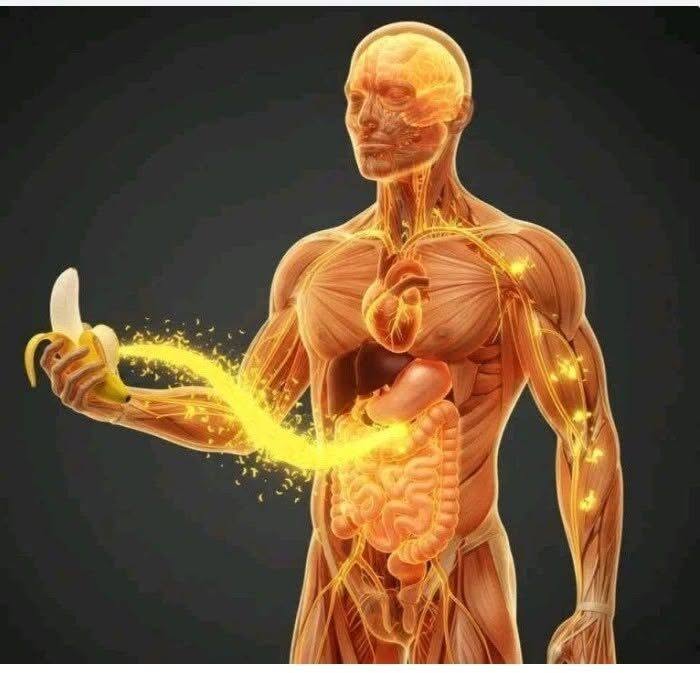
What’s Inside a Banana?
A medium banana provides roughly 100 calories and contains carbohydrates along with fiber and several vitamins and minerals.
Bananas are particularly known for providing:
- Potassium
- Vitamin B6
- Vitamin C
- Magnesium
- Fiber
- Naturally occurring carbohydrates
These nutrients perform important functions throughout the body.
However, eating them at night doesn’t suddenly give bananas completely different nutritional properties.
Your body still processes the fruit as food.
1. A Banana May Help Satisfy Evening Hunger
This is perhaps the simplest benefit.
If you’re hungry before bed, a banana can be an easy alternative to highly processed snacks such as cookies, candy, or chips.
It provides carbohydrates and some fiber while requiring no preparation.
For some people, one banana is enough to satisfy a late-night craving without turning into a large meal.
And because it’s naturally sweet, it may help when you’re craving dessert.
2. Bananas Contain Potassium
Potassium is an essential mineral involved in several important bodily functions, including normal muscle and nerve function.
Bananas are often advertised as extremely high in potassium.
They do contain a useful amount, although they’re certainly not the only good source.
Potatoes, beans, lentils, leafy greens, avocados, and several other foods can also provide potassium.
Eating a banana in the evening contributes to your overall daily potassium intake—it doesn’t create a special nighttime potassium effect.
3. What About Magnesium?
Bananas also provide some magnesium.
Magnesium is involved in normal muscle and nerve function and many other processes in the body.
Because magnesium is often associated with relaxation and sleep discussions, social-media posts sometimes claim:
“Eat one banana before bed and you’ll sleep instantly.”
That’s an exaggeration.
A banana contains magnesium, but it isn’t a sleeping pill.
Your sleep quality depends on many factors, including your sleep schedule, stress, caffeine intake, environment, activity, and overall health.
4. Can Bananas Help You Sleep? 😴
This is where the claims become interesting.
Bananas contain nutrients involved in pathways related to normal nervous-system function. They’re also often mentioned because they contain compounds related to serotonin and melatonin metabolism.
However, eating one banana shouldn’t be expected to cure insomnia or immediately make you fall asleep.
If you’re hungry at bedtime, though, a simple snack that doesn’t feel excessively heavy may be more comfortable than going to bed after eating a huge meal.
So think of bananas as food that can fit into a healthy evening routine, not as a medical treatment for sleep problems.
5. Bananas Provide Vitamin B6
Bananas are a useful source of vitamin B6.
This vitamin helps the body with many processes, including metabolism and normal nervous-system function.
Vitamin B6 also plays a role in producing certain neurotransmitters.
Again, the important point is your overall diet.
You don’t need to specifically eat bananas at 9 p.m. to obtain these benefits.
Eating one at breakfast, lunch, or as an afternoon snack can provide the same nutrients.
6. What Happens to Digestion?
Bananas contain dietary fiber.
Fiber supports normal digestive function and contributes to overall gut health.
The exact effect can depend partly on how ripe the banana is.
Less-ripe bananas contain more resistant starch, while very ripe bananas contain more readily available sugars.
People also respond differently.
Some find bananas easy to digest.
Others may experience bloating or digestive discomfort, especially if they already have gastrointestinal sensitivities.
Listen to your own body.
7. Will Eating a Banana at Night Make You Gain Weight?
Not automatically.
This is one of the biggest myths about eating at night.
Body weight is influenced by your overall energy intake and expenditure over time, along with many other biological and lifestyle factors.
A banana doesn’t suddenly become “fattening” because the clock reaches 8 p.m.
If a banana replaces a large serving of cookies, ice cream, or another calorie-dense snack, it may actually be a relatively modest choice.
However, adding extra food every night when you aren’t hungry can contribute additional calories.
Context matters.
8. Can a Banana Help With Weight Loss?
A banana isn’t a fat-burning food.
It won’t melt abdominal fat while you sleep.
However, bananas can fit into a balanced eating pattern.
Their natural sweetness may help satisfy a craving, and their fiber can contribute to fullness.
If you’re trying to manage your weight, the bigger picture matters:
- Overall calorie intake
- Portion sizes
- Protein intake
- Fiber-rich foods
- Physical activity
- Sleep
- Long-term consistency
No single fruit determines whether you gain or lose weight.
9. What About the Natural Sugar? 🍌
Bananas contain naturally occurring sugars.
As bananas ripen, some of their starch is converted into sugars, which is why a ripe banana tastes much sweeter than a green one.
But eating whole fruit isn’t the same as drinking a sugary soft drink.
A banana also provides fiber, vitamins, minerals, and other plant compounds.
For most healthy people, there’s no reason to fear the natural sugar in a normal serving of whole fruit.
10. People With Diabetes May Need More Individualized Advice
People managing diabetes or blood-sugar problems may need to pay more attention to carbohydrate quantity, portion size, ripeness, and what the banana is eaten with.
That doesn’t automatically mean bananas are forbidden.
Some people may choose a smaller banana or pair it with protein or fat, depending on their individual meal plan.
For example:
Banana + plain yogurt
or
Banana + a small amount of peanut butter
may provide a more balanced snack than banana alone.
People with diabetes should follow individualized advice from their healthcare professional or dietitian.
11. What About Heart Health? ❤️
Bananas are often promoted as a “heart food” because they contain potassium.
Potassium is important in maintaining normal body functions, and diets rich in fruits and vegetables are generally associated with cardiovascular benefits.
But don’t interpret that as:
“One banana before bed prevents heart disease.”
That’s not how nutrition works.
Heart health depends on your overall eating pattern, physical activity, smoking status, blood pressure, cholesterol, genetics, and other factors.
A banana can be part of a heart-healthy diet, but it isn’t a medicine.
12. Can Bananas Prevent Muscle Cramps?
Because bananas contain potassium, athletes are often told to eat them to prevent cramps.
The reality is more complicated.
Muscle cramps can have multiple causes.
Hydration, fatigue, exercise intensity, electrolyte balance, medications, and medical conditions can all play a role.
Eating bananas can contribute potassium and carbohydrates, but one banana isn’t guaranteed to prevent nighttime leg cramps.
If you experience frequent or severe unexplained cramps, discuss them with a healthcare professional rather than relying only on dietary tricks.
Is It Better to Eat a Banana Alone or With Something Else?
That depends on your hunger.
For a very light snack:
🍌 One banana
may be enough.
For something more filling, try:
🍌 + 🥜 Banana with peanut butter
🍌 + 🥛 Banana with plain yogurt
🍌 + 🌰 Banana with a few nuts
🍌 + 🥣 Banana with oatmeal
Adding protein or healthy fats can make the snack more satisfying.
Just remember that toppings add calories too, so portions still matter.
How Long Before Bed Should You Eat It?
There’s no universal rule saying you must eat a banana exactly 30, 60, or 90 minutes before sleeping.
If eating immediately before lying down makes you uncomfortable, have your snack earlier.
People who experience heartburn or reflux may find that eating close to bedtime worsens symptoms.
In that case, avoiding late-night eating may be more important than choosing a particular fruit.
Is a Green Banana Better Than a Ripe Banana?
They’re simply different.
Greener bananas
Contain more resistant starch and are less sweet.
Riper bananas
Are softer, sweeter, and contain more readily available sugars.
Neither is automatically “better.”
Choose according to your preference and digestive tolerance.
Some people find very ripe bananas easier to eat, while others prefer firmer bananas.
Who Might Want to Be Careful With Bananas?
Bananas are safe for most people, but certain individuals may need specific dietary guidance.
For example, people with some forms of kidney disease may be advised to limit potassium.
Because potassium needs vary considerably depending on kidney function and medications, those individuals should follow their healthcare professional’s advice.
People with allergies or specific digestive problems may also need to avoid or limit bananas.
A Banana Isn’t a “Detox”
Another viral claim says eating bananas at night can “detox the body.”
Your body already has sophisticated systems—including your liver and kidneys—that continuously process and eliminate waste products.
You don’t need a banana to activate a nighttime detox.
Bananas are nutritious because they’re fruit, not because they perform a mysterious cleansing process while you’re sleeping.
So, Is Eating a Banana at Night Good or Bad?
For most healthy people, eating a banana in the evening is perfectly reasonable.
It can provide:
Fiber
Potassium
Vitamin B6
Carbohydrates
Some magnesium
and a naturally sweet alternative to many highly processed snacks.
But the time of day doesn’t magically transform the banana.
A Simple Evening Snack Idea 🍌🥜
If you want something more satisfying than a banana alone, try this:
Banana & Peanut Butter Bites
Ingredients:
- 1 banana
- 1 tablespoon natural peanut butter
- Small sprinkle of cinnamon
Preparation:
Slice the banana.
Add a tiny amount of peanut butter to each piece.
Sprinkle lightly with cinnamon.
That’s it.
It’s quick, naturally sweet, and more filling than banana alone.
The Bottom Line
Eating a banana in the evening doesn’t trigger a miraculous transformation in your body, but it can be a nutritious and convenient snack.
It may help satisfy hunger, provides useful nutrients such as potassium and vitamin B6, and can be a better choice than many heavily processed nighttime snacks.
Just don’t expect it to:
❌ Burn fat overnight
❌ Cure insomnia
❌ “Detox” your liver
❌ Prevent every muscle cramp
❌ Treat heart disease
Instead, think of it for what it really is:
A nutritious piece of fruit that can comfortably fit into a balanced diet—morning, afternoon, or evening. 🍌🌙
And if you’re hungry before bed, sometimes the simplest snack is all you really need.