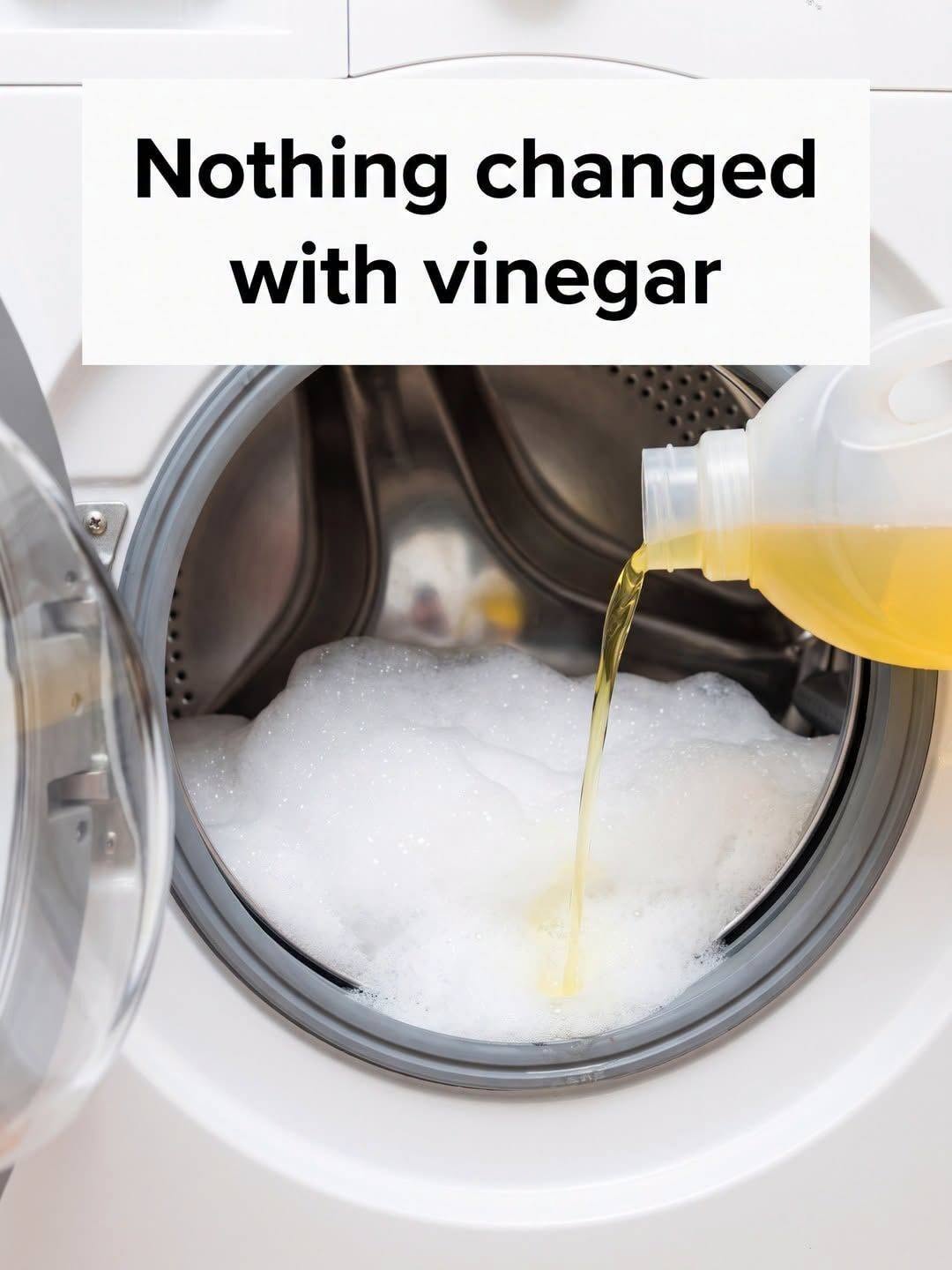
Vinegar has become one of the internet’s favorite household cleaning ingredients.
Scroll through social media for a few minutes and you may see claims that adding vinegar to your washing machine can soften clothes, eliminate odors, brighten fabrics, remove stains, clean the washer, and even replace fabric softener.
So it can be disappointing when you try it and think:
“Nothing changed. Did I do something wrong?”
Probably not.
Vinegar can be useful for certain laundry situations, but it isn’t the miracle product that some viral cleaning posts make it seem.
Here’s what vinegar can—and cannot—do in your laundry.
Why Do People Put Vinegar in the Washing Machine?
Household white vinegar contains acetic acid.
Because it’s mildly acidic, people commonly use it around the home to help dissolve certain mineral deposits and residues.
This is why vinegar became popular as a laundry hack.
Common claims include that it can:
- Reduce odors
- Soften laundry
- Remove detergent residue
- Brighten clothes
- Remove stains
- Clean washing machines
- Replace commercial fabric softener
Some of these ideas have a little truth behind them.
Others are exaggerated.
And some can be problematic depending on your washing machine and how the vinegar is used.
Why You May Notice Absolutely No Difference
If your laundry was already being washed effectively, adding a small amount of vinegar may produce no obvious visual change at all.
That’s completely possible.
Vinegar isn’t detergent.
It doesn’t contain the same surfactants and enzymes found in laundry detergents that are specifically formulated to lift oils, dirt, proteins, and stains from fabric.
If you’re expecting vinegar to transform heavily stained clothes into bright, spotless laundry, you’re probably going to be disappointed.
Vinegar Doesn’t Replace Laundry Detergent
This is perhaps the biggest misunderstanding.
Detergent is specifically formulated to clean clothing.
Vinegar isn’t.
For normal washing, use an appropriate laundry detergent according to its directions and your washing-machine manufacturer’s recommendations.
Vinegar should not be viewed as a substitute for proper detergent.
Can Vinegar Help With Odors?
Sometimes—but it depends on what’s causing the smell.
Laundry odors can come from:
Sweat
Body oils
Bacteria
Mildew
Too much detergent
Leaving wet clothes inside the washer
A dirty washing machine
If the underlying issue is detergent or mineral residue, an acidic rinse may sometimes help.
But if clothing smells because it hasn’t been properly cleaned, vinegar alone isn’t the solution.
You need to address the cause.
The Real Reason Towels Sometimes Smell
Have you ever washed towels only to discover that they smell strange again as soon as they become damp?
Several things can contribute.
Using too much detergent can leave residue behind.
Using too much fabric softener may coat fibers.
Leaving towels damp for long periods can encourage unpleasant odors.
Overloading the washer can prevent effective cleaning and rinsing.
The solution may be as simple as:
- Using the correct detergent amount
- Washing at an appropriate temperature
- Not overloading the machine
- Drying towels thoroughly
- Cleaning the washing machine regularly
Vinegar isn’t always necessary.
Can Vinegar Make Towels Softer?
This is another extremely popular claim.
Traditional fabric softeners can leave coatings on fibers, particularly when overused.
An acidic rinse may help remove some residues under certain conditions, which could make fabrics feel different afterward.
But don’t expect dramatic results every time.
If your towels are stiff because of hard water, detergent buildup, overdrying, or simply because they’re old, vinegar may not magically restore them.
More Detergent Does Not Mean Cleaner Clothes
Ironically, one of the reasons people turn to vinegar is because they’re using too much detergent in the first place.
Adding extra detergent can make people feel like they’re getting clothes cleaner.
But excessive detergent may be difficult to rinse away.
This can leave fabrics feeling:
- Stiff
- Sticky
- Heavy
- Less absorbent
Follow the detergent instructions and adjust appropriately for load size, soil level, and water conditions.
Sometimes the best laundry “hack” is simply using the correct amount of detergent.
Can Vinegar Remove Stains?
Don’t expect miracles.
Vinegar isn’t a universal stain remover.
Different stains require different treatments.
Grease, blood, grass, coffee, makeup, ink, and food stains don’t all respond to the same cleaning method.
For stubborn stains, use a product and method appropriate for that particular stain and fabric.
Always check the garment’s care label before treatment.
Can Vinegar Brighten White Clothes?
Social-media posts sometimes claim that vinegar will turn dull white clothing brilliant white again.
The reality is less dramatic.
If dullness is caused partly by residue, removing some of that buildup could improve appearance.
But vinegar isn’t bleach.
It won’t reliably restore every yellowed or heavily stained white garment.
The appropriate treatment depends on why the fabric became discolored.
Can Vinegar Damage a Washing Machine?
This is where you should be careful.
Vinegar is acidic.
Some washing-machine manufacturers warn against using vinegar in their appliances because repeated exposure may affect certain rubber components, seals, hoses, or other materials.
Other machines may have different recommendations.
Your washing machine’s manual should always come before a viral cleaning hack.
If the manufacturer says not to use vinegar, don’t use it.
If you’re unsure, check the care instructions for your exact model.
Don’t Just Pour Vinegar Anywhere
Even if your washing machine allows vinegar use, don’t assume you can pour large quantities directly into any compartment.
Detergent drawers are designed for specific products.
Some compartments are intended for:
- Detergent
- Fabric softener
- Bleach
- Prewash products
Using the wrong substance in the wrong compartment could affect the wash cycle or the machine.
Follow your appliance instructions.
Never Mix Vinegar and Bleach ⚠️
This is extremely important.
Never mix vinegar with chlorine bleach.
Combining an acid such as vinegar with chlorine bleach can release dangerous chlorine gas.
This isn’t a cleaning “hack.”
It’s a serious chemical hazard.
If you’ve used bleach in a laundry cycle, don’t start experimenting with vinegar in the same wash.
Always follow product labels and never mix household cleaning chemicals unless the instructions specifically say it’s safe.
What About Vinegar and Baking Soda?
You’ve probably seen videos where vinegar and baking soda create a huge amount of fizz.
It looks impressive.
But that bubbling reaction doesn’t automatically mean you’re creating a super-powered cleaning solution.
Vinegar is acidic and baking soda is alkaline.
When combined, they react with each other.
For certain household tasks, the bubbling action can be useful mechanically, but mixing them together doesn’t necessarily create a stronger laundry cleaner.
More fizz doesn’t equal more cleaning power.
What About Cleaning the Washing Machine With Vinegar?
Another popular recommendation is to pour vinegar into an empty washer and run the hottest cycle.
Again, check the manufacturer first.
Modern washing machines often have specific Tub Clean, Drum Clean, or Self Clean cycles.
Manufacturers may recommend a particular washing-machine cleaner or another cleaning procedure.
Following those instructions is safer than assuming every machine should be cleaned with vinegar.
Your Washer Itself May Be Causing the Smell
If freshly washed clothing comes out smelling musty, the problem may not be your clothes.
Inspect your washing machine.
Front-loading machines in particular can collect moisture and residue around areas such as:
- Door seals
- Detergent drawers
- Drain filters
- Drum surfaces
After washing, allowing appropriate areas of the machine to dry can help prevent persistent odors.
Clean the washer according to the manufacturer’s recommendations.
Don’t Forget the Detergent Drawer
The detergent drawer can become surprisingly dirty.
Residue from detergent and fabric softener may accumulate inside.
Moisture can remain trapped there as well.
Remove and clean the drawer according to your machine’s instructions.
Also inspect the compartment behind it.
Sometimes the “laundry smell” you’re trying to fix with vinegar is actually coming from an appliance that needs maintenance.
Check the Door Seal
If you own a front-loading washing machine, gently inspect the rubber door gasket.
Small items, hair, detergent residue, and moisture can collect in its folds.
Clean it according to the manufacturer’s instructions and check for trapped objects.
Don’t use sharp tools that could damage the seal.
Why Clothes Can Still Smell After Washing
If vinegar didn’t help, consider these possibilities:
You overloaded the machine
Clothing needs enough room to move so detergent and water can circulate.
You used too much detergent
Excess detergent may not rinse away completely.
Clothes remained wet too long
Leaving laundry sitting in the washer for hours can create a musty smell.
The washer needs cleaning
Residue and moisture inside the appliance can transfer odors back onto laundry.
The drying process is too slow
Thick fabrics and towels need to dry thoroughly.
The washing temperature isn’t appropriate
Follow garment-care instructions and detergent recommendations.
A Better Laundry Routine
Instead of searching for one magical ingredient, focus on the basics.
1. Sort your laundry appropriately.
Separate items according to color, fabric type, and care requirements.
2. Read garment labels.
Some fabrics need special washing conditions.
3. Use the correct detergent amount.
More isn’t necessarily better.
4. Don’t overload the drum.
Give clothing enough room to move.
5. Choose the appropriate wash cycle.
Use the cycle recommended for the fabrics you’re washing.
6. Remove laundry promptly.
Don’t leave wet clothing sitting in the machine unnecessarily.
7. Dry completely.
Damp fabric can quickly develop unpleasant odors.
8. Maintain the washing machine.
A clean machine is essential for clean-smelling laundry.
When Vinegar May Be Unnecessary
If your clothes:
- Smell fresh
- Feel comfortable
- Rinse properly
- Have no detergent buildup
- Come out clean
then you may not need vinegar at all.
Don’t add extra products simply because social media says every load needs them.
A quality detergent, correct dosing, suitable water temperature, and proper drying may be all you need.
Why Viral Laundry Hacks Become So Popular
There’s something satisfying about discovering a cheap household ingredient that supposedly replaces several expensive products.
That’s why claims like:
“Add vinegar and you’ll never buy fabric softener again!”
spread so quickly.
But laundry chemistry is more complicated than that.
Different fabrics, detergents, washing machines, water hardness levels, and stains require different approaches.
A trick that seems effective for one household may do almost nothing in another.
So Why Did Vinegar Do Nothing?
If you tried vinegar and noticed no difference, there are several possible explanations.
Your clothes may not have had residue that vinegar could help remove.
You may already be using the correct detergent amount.
Your water may not have significant mineral issues.
The problem you were trying to solve may require a completely different treatment.
Or the amount and method simply weren’t appropriate.
In other words: vinegar isn’t guaranteed to transform every load of laundry.
And that’s perfectly normal.
The Most Important Safety Rules
Before trying any laundry hack:
Read your washing machine manual.
Read clothing care labels.
Never mix vinegar with chlorine bleach.
Don’t mix random cleaning chemicals.
Don’t assume “natural” automatically means safe for every appliance.
Use products only as directed.
These rules matter far more than any viral cleaning trick.
The Bottom Line
Vinegar isn’t useless—but it isn’t a miracle laundry product either.
It may help in certain situations involving residue, mineral buildup, or odors, but results vary considerably.
If you pour vinegar into your washing machine and nothing seems to change, that doesn’t necessarily mean you used it incorrectly.
The problem may simply be something vinegar isn’t designed to solve.
For consistently clean laundry, focus first on:
The right detergent.
The right amount.
The correct wash cycle.
Not overloading the machine.
Drying clothes promptly.
And keeping the washer itself clean.
And before putting vinegar—or any homemade cleaning solution—into your washing machine, check what your appliance manufacturer recommends.
Sometimes the best laundry trick isn’t adding another ingredient.
It’s figuring out what’s actually causing the problem in the first place. 🧺✨