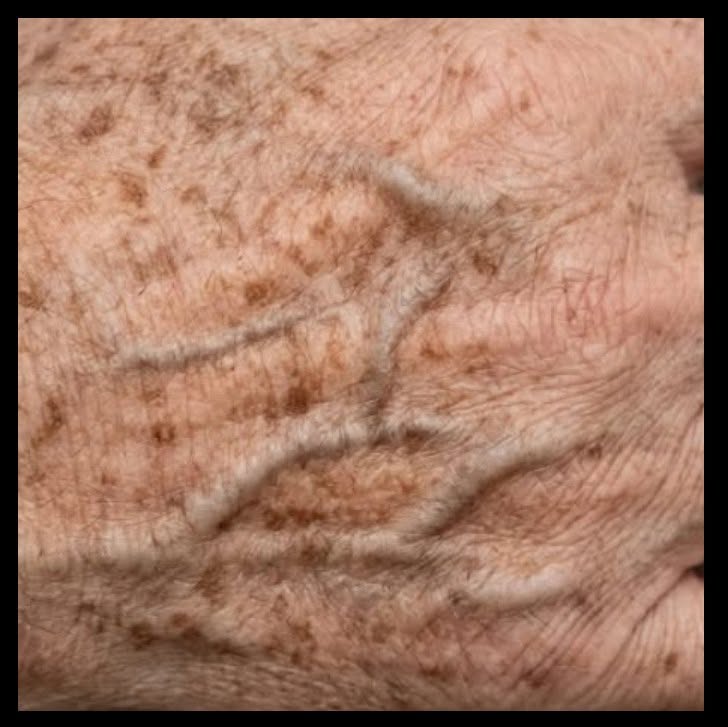
Have you started noticing small brown or dark spots on the backs of your hands?
They may appear gradually and become more noticeable as the years pass. Many people call them age spots, liver spots, or sunspots, but their medical name is often solar lentigines.
The good news is that typical age spots are generally harmless. They develop most often on areas that have received years of sun exposure, including the hands, face, shoulders, and arms.
But can you actually lighten them naturally?
Some gentle skincare habits may improve the overall appearance of your hands and help prevent additional pigmentation. However, it’s important to separate realistic options from viral remedies that promise to erase spots overnight.
Why Do Brown Spots Appear on the Hands?
Your skin contains melanin, the pigment responsible for skin color.
Ultraviolet radiation from the sun stimulates melanin production. After years of repeated exposure, pigment can become concentrated in certain areas, producing flat brown patches.
That’s why these spots commonly develop on the backs of the hands—an area that receives plenty of sunlight but is often forgotten when sunscreen is applied.
Age spots become especially common after age 50, although younger people who have significant sun exposure can develop them too.
The Most Important Step: Sunscreen ☀️
Before trying to lighten existing spots, protect your hands from additional UV exposure.
Otherwise, you may fade one spot while new ones continue appearing.
Dermatologists recommend a broad-spectrum, water-resistant sunscreen with SPF 30 or higher on exposed skin.
Apply it to the backs of your hands before spending time outside.
And remember that washing your hands can remove sunscreen, so reapplication may be necessary.
This simple habit is probably more important than any homemade remedy.
Can Natural Remedies Remove Age Spots?
This is where social media can be misleading.
You’ll find dozens of recipes promising to erase age spots with:
🍋 Lemon juice
🥔 Potato
🧅 Onion
🍎 Apple cider vinegar
🥛 Milk
🌿 Aloe vera
🥄 Baking soda
Unfortunately, “natural” doesn’t automatically mean effective—or safe.
There’s limited evidence that ordinary kitchen ingredients can reliably remove established solar lentigines.
Some can also irritate your skin.
And irritation can sometimes leave more pigmentation, particularly in darker skin tones.
So rather than experimenting with aggressive homemade mixtures, consider ingredients that dermatologists actually use or recommend for hyperpigmentation.
1. Vitamin C
Vitamin C is widely used in skincare products intended to brighten uneven pigmentation.
The American Academy of Dermatology lists vitamin C among ingredients that may help fade dark spots.
You could use a properly formulated vitamin C serum on your hands rather than applying acidic fruit juice directly to your skin.
Apply according to the product instructions.
And continue using sunscreen.
2. Azelaic Acid
Another useful skincare ingredient is azelaic acid.
Dermatologists recommend it for certain forms of hyperpigmentation because it can help even skin tone.
Results won’t happen overnight.
Pigmentation treatments usually require consistency over weeks or months.
3. Glycolic Acid
Glycolic acid is an alpha-hydroxy acid commonly found in exfoliating skincare products.
It helps remove dead surface skin cells and can gradually improve uneven pigmentation.
The American Academy of Dermatology includes glycolic acid among ingredients that can help fade dark spots.
Start cautiously because over-exfoliating can cause irritation.
More isn’t better.
4. Kojic Acid
Kojic acid is another ingredient commonly used in products formulated for pigmentation.
The AAD includes it among ingredients that may help fade dark spots.
Again, patience matters.
Don’t expect an established brown spot to disappear after one application.
5. Retinoids
Retinoids are vitamin-A-derived ingredients that increase skin-cell turnover.
Certain retinoids may help improve pigmentation and signs of sun damage over time.
Prescription retinoids are among the treatments dermatologists use for age spots and sun-damaged skin.
However, retinoids can cause:
- Dryness
- Peeling
- Redness
- Irritation
- Increased sensitivity
They should be introduced carefully.
If you’re pregnant or trying to become pregnant, ask a healthcare professional before using a retinoid.
What About Lemon Juice? 🍋
This is probably the most famous “natural” age-spot remedy.
You’ll often see instructions telling you to rub fresh lemon juice directly onto dark spots.
I wouldn’t recommend it.
Lemon juice is acidic and can irritate skin. Citrus compounds combined with sunlight can also cause skin reactions in some circumstances.
A properly formulated skincare product containing vitamin C or another established brightening ingredient is a much more controlled option.
What About Apple Cider Vinegar?
Another popular recommendation is applying apple cider vinegar directly to brown spots.
Again, be careful.
Vinegar is acidic and can irritate or even injure skin when used improperly or repeatedly.
There are safer, standardized skincare ingredients available.
What About Baking Soda?
Baking soda is often promoted as an exfoliant.
But aggressively rubbing abrasive powders over your hands isn’t necessary.
Repeated irritation can damage the skin barrier.
If exfoliation is your goal, a properly formulated skincare product containing an ingredient such as glycolic acid provides much more predictable use.
What About Aloe Vera? 🌿
Aloe vera can feel soothing and moisturizing for some people.
That’s perfectly fine if your skin tolerates it.
But don’t expect ordinary aloe gel to erase established solar lentigines.
Think of aloe primarily as skincare—not as a guaranteed pigmentation treatment.
A Simple Routine for Your Hands
Instead of complicated homemade mixtures, keep your routine simple.
Morning
Wash your hands normally.
Apply moisturizer if needed.
Then apply broad-spectrum SPF 30+ sunscreen to the backs of your hands before sun exposure.
Evening
Clean your hands.
Apply one well-formulated product containing an ingredient such as vitamin C, azelaic acid, glycolic acid, kojic acid, or an appropriate retinoid.
Then moisturize.
Don’t start five active ingredients simultaneously.
Start gently and see how your skin responds.
How Long Does It Take?
This is important because viral before-and-after pictures create unrealistic expectations.
Age spots usually don’t disappear in three days.
Even dermatological treatments can require weeks or months to produce results. Mayo Clinic notes that nonprescription fading products may need to be used regularly for several weeks or months before improvement becomes noticeable.
Consistency matters much more than finding a supposed miracle ingredient.
What If Creams Aren’t Enough?
Dermatologists have stronger options.
Depending on your skin type and the nature of the pigmentation, treatments may include:
Prescription creams: Hydroquinone or prescription retinoids may gradually fade pigmentation.
Cryotherapy: Liquid nitrogen can destroy excess pigment in selected spots.
Chemical peels: Controlled chemical exfoliation removes layers of skin.
Laser or intense pulsed light (IPL): These treatments target pigment-producing cells or pigmentation.
Microdermabrasion or dermabrasion: These techniques resurface the skin to varying degrees.
These procedures aren’t appropriate for everyone, and some can cause discoloration, irritation, or scarring.
A dermatologist can recommend the best option based on your skin tone and the type of spots you have.
Before You Try to Remove a Brown Spot, Check It
This is perhaps the most important part of this article.
Not every brown spot is an age spot.
Some skin cancers can resemble harmless pigmentation.
Mayo Clinic recommends having suspicious spots evaluated, particularly if a spot:
- Becomes black
- Gets larger
- Develops an irregular border
- Contains several unusual colors
- Starts bleeding
- Changes noticeably in appearance
Don’t repeatedly apply bleaching products to a suspicious or changing skin lesion.
Have it examined.
Why Your Hands Show Sun Damage So Easily
Think about how often your hands are exposed.
Driving.
Walking.
Gardening.
Sitting outside.
Shopping.
Even when you’re wearing long sleeves, your hands may remain uncovered.
And unlike your face, you probably don’t automatically apply sunscreen to your hands every morning.
Over decades, that exposure adds up.
That’s why the backs of the hands are one of the classic locations for solar lentigines.
Prevention Is Easier Than Treatment
Once age spots develop, removing them can require months of skincare or professional treatment.
Preventing additional ones is much easier.
Use sunscreen.
Seek shade during intense sunlight.
Consider protective clothing when spending long periods outdoors.
And don’t forget your hands.
The AAD emphasizes that sun protection remains essential even after age spots have been treated because they can return.
Can Age Spots Come Back After Treatment?
Yes.
Even if a dermatologist successfully removes or significantly lightens a spot, continued UV exposure can cause pigmentation to return or new spots to develop.
That’s why sunscreen isn’t simply part of the treatment.
It’s part of maintaining the results.
A Word About “Miracle” Whitening Creams
Be cautious when purchasing unregulated skin-lightening products online.
The American Academy of Dermatology notes that testing of some imported skin-lightening products has found ingredients such as mercury or steroids that weren’t disclosed on the label.
Choose products from reputable manufacturers with clearly listed ingredients.
If you’re uncertain, ask a dermatologist or pharmacist.
The Bottom Line
Brown spots on the hands are extremely common, especially after years of sun exposure.
Typical age spots are generally harmless, but they don’t usually disappear simply because you rub lemon, vinegar, potatoes, or another kitchen ingredient onto them.
A better strategy is:
Protect your hands daily with SPF 30+ sunscreen.
Use properly formulated products containing evidence-supported ingredients such as vitamin C, azelaic acid, glycolic acid, kojic acid, or appropriate retinoids if you want to address pigmentation.
For stubborn spots, a dermatologist can offer stronger treatments such as prescription creams, cryotherapy, chemical peels, IPL, or laser therapy.
And if a brown spot changes color, shape, size, starts bleeding, or simply looks unusual, get it checked before trying to lighten it.
The best approach isn’t finding the strongest homemade remedy.
It’s protecting your skin and treating pigmentation gently, consistently, and safely. ✨