Disposable razors are convenient, but there’s one frustrating moment almost everyone recognizes:
You pick up a razor that worked perfectly just a few shaves ago, run it across your skin…and suddenly it pulls instead of glides.
Your first thought might be:
“Time to throw it away.”
But then you see viral tricks online claiming you can “sharpen” a disposable razor at home using jeans, a towel, or other household objects.
Do these tricks actually work?
The answer is a little more complicated than the videos suggest.
A modern disposable or cartridge razor isn’t designed to be sharpened like a kitchen knife. Its blades have extremely fine edges and may include specialized coatings. What you can do is keep the blades clean, dry, and free of buildup so they continue performing well for as long as reasonably possible. Manufacturer guidance specifically warns that wiping blades on towels or banging cartridges against the sink can damage them.
So here are three practical tricks—and one popular “sharpening” hack you should approach carefully.
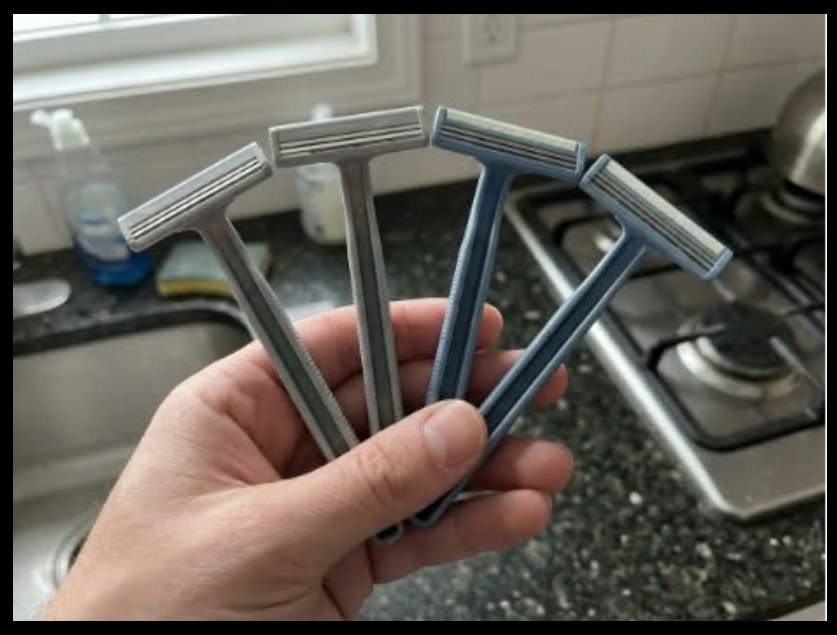
Why Does a Razor Become Dull?
Every time you shave, the blade encounters hair, skin, shaving cream, oils, and water.
Over time, several things can reduce performance:
- Hair becomes trapped between blades
- Shaving cream builds up inside the cartridge
- Mineral residue accumulates
- Moisture remains around the blades
- The cutting edges gradually wear
- The lubricating strip deteriorates
Eventually, you’ll notice more pulling and dragging.
You may also find yourself repeatedly shaving the same area.
That’s usually a sign the razor is approaching the end of its useful life.
Trick #1: Clean the Razor Properly After Every Shave 🚿
This is probably the simplest way to preserve performance.
While shaving, rinse the cartridge frequently.
Hold it under running water and allow the water to pass through the blades, helping remove trapped hairs and shaving product.
Gillette recommends rinsing the blades after every few strokes and allowing water to flush debris through the cartridge.
After shaving:
- Rinse the razor thoroughly.
- Look between the blades for trapped hair.
- Run water through the back of the cartridge.
- Gently shake off excess water.
- Leave it somewhere it can air-dry.
It sounds almost too simple.
But a blade packed with dried shaving cream and hair can feel much duller than a clean blade.
Don’t Bang It Against the Sink
We’ve all seen someone do this.
Tap. Tap. Tap.
The idea is to knock trapped hairs out of the cartridge.
But manufacturers specifically advise against it.
The impact can damage the precisely positioned components of a multiblade cartridge.
If hair is stuck, continue rinsing instead.
Trick #2: Keep the Razor DRY Between Uses 💧
Your bathroom may be the most convenient place to leave your razor.
Unfortunately, it’s also frequently one of the most humid rooms in the house.
After rinsing your razor, shake away excess water and allow it to air-dry in a ventilated location.
Proper drying and storage away from excessive moisture can help reduce corrosion and premature deterioration. Gillette recommends shaking off excess water, allowing the blades to air-dry, and storing the razor appropriately.
Don’t leave it sitting in:
- A puddle beside the sink
- A wet shower tray
- A cup containing water
- A closed, damp container
Keeping the blade permanently wet isn’t doing it any favors.
Don’t Rub the Blades With a Towel
This sounds logical:
“Water causes problems, so I’ll wipe the razor dry.”
But there’s a catch.
Gillette specifically advises against wiping cartridge blades on a towel because doing so can damage the blade edges and reduce shaving performance.
Instead:
Rinse → shake → air-dry.
Simple.
Trick #3: Prepare Your Hair Before Shaving
Here’s a blade-saving trick people often overlook.
Instead of trying to “repair” the razor afterward, make its job easier before you shave.
Warm water helps hydrate and soften facial hair, reducing resistance during cutting. Using shaving cream or gel also provides lubrication between the blade and skin.
A good routine is:
Step 1
Wet the area with warm water.
Step 2
Apply shaving cream or gel.
Step 3
Allow the hair to soften briefly.
Step 4
Shave using light pressure.
Step 5
Rinse the cartridge frequently.
This reduces unnecessary dragging and repeated passes.
And don’t press harder because the razor feels dull.
If anything, excessive pressure with a worn blade can increase irritation.
What About the Famous “Jeans Trick”? 👖
This is probably the most viral disposable-razor sharpening hack.
You’ve likely seen someone take an old pair of jeans and repeatedly push the razor backward along the denim.
The claim is that denim “sharpens” the blades.
Some people swear it makes their razor feel better afterward.
But there’s an important distinction:
Stropping isn’t necessarily sharpening.
With traditional blades, stropping can help realign or polish a fine edge rather than grind a genuinely new cutting edge.
Modern cartridge razors are different.
They contain multiple extremely thin, precisely positioned blades, often with coatings and other components surrounding them.
There isn’t strong evidence that rubbing a modern disposable cartridge across denim reliably restores a worn blade to its original sharpness.
And manufacturer guidance warns against wiping cartridge blades against towels because physical contact can damage the precisely engineered blade arrangement.
So I wouldn’t treat the jeans trick as a guaranteed method.
If Your Razor Is Pulling, Don’t Force It
This is much more important than saving a few extra shaves.
A worn razor may:
- Pull hair
- Require repeated passes
- Irritate skin
- Contribute to razor burn
- Make shaving uncomfortable
Once rinsing and proper preparation no longer restore a comfortable shave, replace the razor or cartridge.
A blade is a consumable item.
Eventually, it reaches the end of its useful life.
How Often Should You Replace a Disposable Razor?
There’s no perfect number for everyone.
How quickly a blade wears depends on factors such as:
- How frequently you shave
- How much area you shave
- Hair thickness
- Shaving technique
- Blade quality
- How well the razor is cleaned and stored
Some general consumer guidance suggests replacing disposable blades after roughly 5–7 shaves, while manufacturer recommendations vary depending on the razor and usage.
Rather than obsessing over a number, pay attention to performance.
Signs It’s Time for a New Razor
Replace the blade when you notice:
Pulling: The blade catches hair rather than cutting smoothly.
More pressure required: You’re pressing harder to get results.
Repeated passes: You need to shave the same area several times.
More irritation: Your skin suddenly feels uncomfortable after shaving.
Visible damage: Never continue using a bent, chipped, rusty, or damaged blade.
A fresh razor should glide relatively smoothly when used correctly.
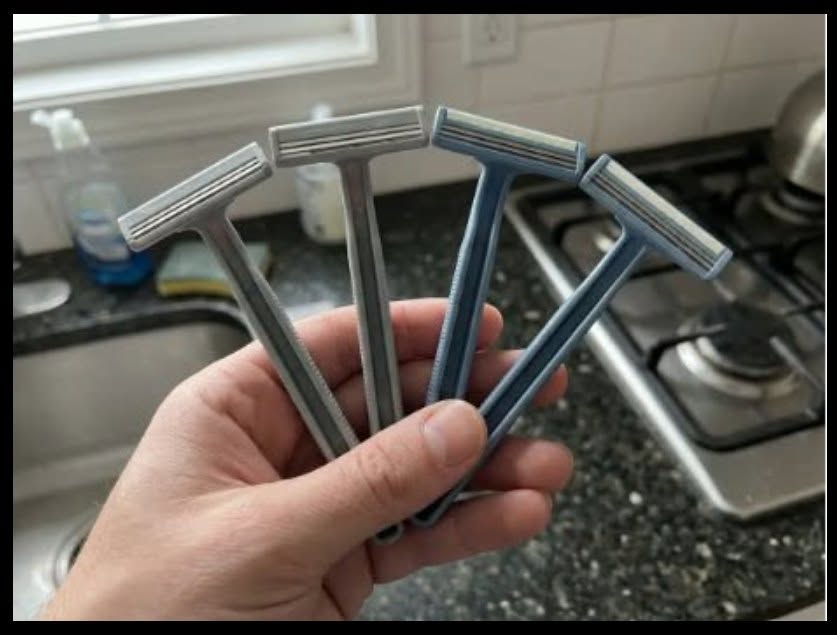
One Mistake That Can Shorten Razor Life
Leaving shaving cream trapped inside the cartridge.
After each shave, look closely between the blades.
Foam, hair, dead skin, and oils can accumulate there.
Once that mixture dries, the next shave may feel considerably worse.
Rinsing during and after shaving helps keep the blade clear and working efficiently.
Should You Soak Your Razor in Alcohol?
This is another popular internet recommendation.
For ordinary routine maintenance, you generally don’t need elaborate soaking mixtures.
Manufacturer instructions emphasize thorough rinsing and proper drying rather than complicated homemade solutions.
And remember:
Different razor designs use different materials, lubricating strips, adhesives, and coatings.
A chemical that seems harmless to bare metal may not be ideal for every cartridge.
Following the instructions for your particular razor is the safest approach.
Never Share Your Razor
This one is important.
Even if the blade still looks perfectly clean, don’t share personal razors with another person.
Razors can cause tiny cuts and become contaminated with biological material.
Manufacturer guidance specifically recommends not sharing razor blades because of hygiene and infection concerns.
One person, one razor.
How to Make a Disposable Razor Last Longer
If your goal is getting more comfortable shaves from each cartridge, forget miracle hacks.
Focus on these habits:
Before shaving: Soften the hair with warm water.
During shaving: Use proper lubrication and light pressure.
Every few strokes: Rinse the blades.
After shaving: Rinse thoroughly.
Then: Shake off excess water.
Finally: Let the razor air-dry somewhere relatively dry.
Those habits are much more dependable than repeatedly scraping your cartridge across random household surfaces.
Can You Restore a Completely Dull Razor?
Not realistically.
Cleaning can restore performance when the problem is buildup.
Proper drying can slow deterioration.
Good shaving technique can reduce unnecessary wear.
But none of these techniques magically return a severely worn disposable blade to factory condition.
Once the cutting edge is genuinely worn or damaged, replacement is the sensible option.
The 3 Tricks, Summed Up
1. Flush Out the Blades
Rinse thoroughly during and after shaving to remove hair and shaving product.
2. Keep Them Dry
Shake away excess water and allow the razor to air-dry rather than leaving it wet.
3. Reduce Blade Stress
Use warm water, shaving gel or cream, light pressure, and short strokes so the razor doesn’t have to work harder than necessary.
These aren’t dramatic “secret sharpening methods.”
But they’re much more likely to help your razor maintain good performance.
The Bottom Line 🪒
Can you magically sharpen a disposable razor until it’s as good as new?
Not really.
The popular denim trick may be described online as “sharpening,” but modern cartridge blades aren’t designed like traditional reusable blades.
What actually makes a difference is proper cleaning, drying, storage, and shaving technique.
Rinse the blades thoroughly, don’t bang the cartridge against the sink, don’t wipe the cutting edges with a towel, let the razor air-dry, and replace it when it begins pulling or irritating your skin.
Sometimes the smartest way to make a disposable razor last longer isn’t sharpening it at all.
It’s preventing it from becoming unnecessarily dull in the first place. 🪒✨