Heart disease does not always announce itself with dramatic chest pain. Some cardiovascular problems develop gradually, while others—such as a heart attack—can become life-threatening within minutes.
That is why knowing the important warning signs matters.
At the same time, viral posts can be misleading. A swollen foot, fatigue, sweating, or any other single symptom does not automatically mean your heart is failing. Many different medical conditions can produce similar symptoms.
What matters is the combination of symptoms, how suddenly they appeared, their severity, and your medical history.
Here are five warning signs that deserve attention.
1. Chest Pressure, Tightness, Squeezing, or Pain
Chest discomfort is one of the most important symptoms associated with a heart attack.
According to the American Heart Association, heart-attack discomfort commonly occurs in the center of the chest and may last more than a few minutes or disappear and return. People may describe it as pressure, squeezing, fullness, tightness, or pain.
It does not necessarily feel like the dramatic crushing pain portrayed in movies.
Some heart attacks begin slowly with relatively mild discomfort.
What Can Heart-Related Chest Discomfort Feel Like?
People may describe sensations such as:
- Pressure or heaviness on the chest
- Tightness or squeezing
- Burning or aching
- Uncomfortable fullness
- Pain that comes and goes
- Discomfort triggered by activity
Chest pain can have many non-cardiac causes, including reflux, muscle strain, anxiety, and lung conditions.
However, you should not attempt to diagnose new significant chest pain yourself.
Acute coronary syndrome—including heart attack and unstable angina—is a medical emergency.
2. Shortness of Breath — Especially if It Is New or Getting Worse
Feeling breathless after strenuous exercise can be completely normal.
Becoming unusually short of breath during ordinary activities is different.
Shortness of breath can occur during a heart attack with or without chest discomfort.
It is also one of the major symptoms of heart failure.
When the heart cannot pump effectively, blood can back up in the vessels returning from the lungs. Fluid may then accumulate in the lungs, contributing to breathlessness.
Pay Particular Attention If You:
Become breathless walking a distance you previously managed easily, struggle to breathe while resting, suddenly wake at night gasping for air, or increasingly need several pillows to breathe comfortably while sleeping.
The American Heart Association identifies breathlessness during activity or at rest, difficulty breathing when lying flat, and sudden severe nighttime breathlessness as important heart-failure symptoms.
Shortness of breath can also result from asthma, infections, anemia, blood clots, lung disease, anxiety, and many other conditions.
It needs context and medical assessment.
3. Swelling in the Feet, Ankles, or Legs
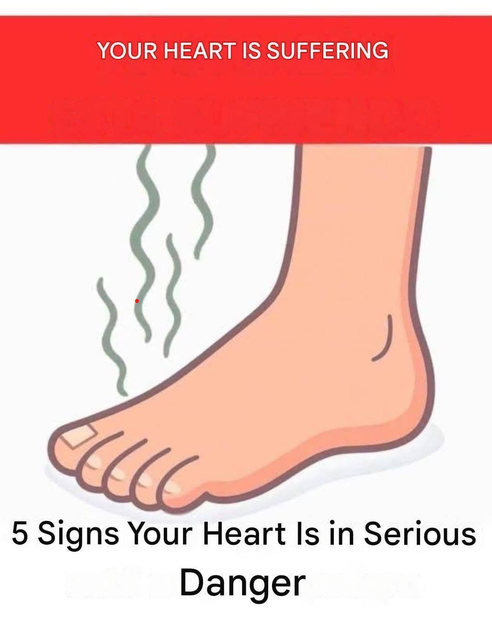
The swollen ankle often shown in viral “your heart is suffering” pictures has some basis in medicine—but the image alone is misleading.
Swollen feet do not automatically mean heart disease.
However, persistent swelling in the ankles, feet, or legs can occur with heart failure.
When the heart isn’t pumping effectively, blood can back up in the veins, contributing to fluid accumulation in body tissues. This swelling is called edema.
People with heart failure may also experience associated weight gain from fluid retention.
When Swelling Becomes More Concerning
It deserves particular attention when swelling is new or worsening and occurs alongside symptoms such as shortness of breath, reduced exercise tolerance, persistent fatigue, difficulty breathing while lying down, or rapid unexplained weight gain.
The American Heart Association recommends monitoring increasing swelling in the ankles, lower legs, and feet in people with heart failure.
But Swollen Feet Have Many Other Causes
Ankle swelling can also occur after standing or sitting for long periods, with venous problems, certain medications, pregnancy, kidney or liver problems, injuries, infections, and other conditions.
One swollen leg—particularly if it becomes suddenly painful, red, or warm—can also raise concern for a blood clot and requires prompt medical evaluation.
So don’t diagnose heart failure from swollen ankles alone.
4. Pain or Discomfort Spreading Beyond the Chest
Heart-attack symptoms don’t always remain in the chest.
Discomfort can occur in or spread toward the arms, shoulders, back, neck, jaw, or stomach.
Sometimes this occurs alongside obvious chest discomfort.
Sometimes other symptoms are more noticeable.
For example, someone may describe heaviness in an arm, pressure extending toward the jaw, or unusual upper-back discomfort.
That doesn’t mean every episode of jaw, arm, or back pain is cardiac.
Musculoskeletal and nerve problems are extremely common.
But sudden unexplained upper-body discomfort accompanied by chest pressure, sweating, nausea, breathlessness, weakness, or lightheadedness should be taken seriously.
5. Cold Sweat, Nausea, Dizziness, or Unusual Exhaustion
Not every heart attack begins with dramatic pain.
Other warning signs can include cold sweating, nausea, lightheadedness, unusual tiredness, weakness, or a rapid or irregular heartbeat.
The CDC likewise lists weakness or faintness, cold sweating, nausea or vomiting, unusual tiredness, and lightheadedness among potential heart-attack symptoms.
These symptoms are extremely nonspecific when they occur by themselves.
You can feel tired because you didn’t sleep enough.
You can feel nauseated because of something you ate.
You can become dizzy because you’re dehydrated.
The situation becomes more concerning when symptoms are sudden, severe, unexplained, or occur together with chest or upper-body discomfort or shortness of breath.
Heart Attack Symptoms Can Be Different From Person to Person
There is no single universal heart-attack experience.
Some people experience unmistakable chest pain.
Others have subtler symptoms.
The American Heart Association notes that although chest discomfort remains a common symptom in both men and women, women may also experience symptoms such as shortness of breath, nausea or vomiting, shoulder/back/arm discomfort, anxiety, or unusual tiredness and weakness.
That does not mean women don’t experience chest pain.
They absolutely can.
The important lesson is that absence of dramatic chest pain does not automatically rule out a heart attack.
Heart Attack and Heart Failure Are Not the Same Thing
These terms are frequently confused.
A heart attack occurs when blood flow to part of the heart muscle becomes blocked or severely reduced, depriving that tissue of oxygen. The longer treatment is delayed, the greater the potential heart-muscle damage.
Heart failure, on the other hand, means the heart isn’t pumping blood as effectively as the body needs.
Heart failure can produce symptoms such as shortness of breath, fatigue, swollen legs and ankles, coughing or wheezing, increased heart rate, and sudden changes in weight from fluid accumulation.
A person can have one without the other, although a heart attack can damage the heart and contribute to heart failure.
What About Palpitations?
Feeling your heart flutter, race, pound, or “skip” a beat is known as a palpitation.
Palpitations have many possible causes and aren’t automatically dangerous.
They can occur with stress, caffeine, exercise, medications, or abnormal heart rhythms.
However, some arrhythmias can produce palpitations along with dizziness, fainting, shortness of breath, chest pressure, or sweating.
If palpitations repeatedly occur, last a long time, or are accompanied by fainting, severe breathlessness, or chest pain, medical assessment is important.
Persistent Fatigue Can Sometimes Matter
Fatigue is one of the least specific symptoms in medicine.
It can result from poor sleep, stress, anemia, infection, thyroid disease, depression, medications, and countless other causes.
But persistent fatigue can also occur with heart failure because the heart may not provide enough blood to meet the body’s needs during ordinary activity.
The American Heart Association describes people with heart failure as sometimes becoming unusually tired during everyday activities such as walking, climbing stairs, shopping, or carrying groceries.
The important clue is a meaningful change in what you’re able to do.
If you previously climbed two flights of stairs easily but now repeatedly need to stop because of breathlessness or exhaustion, that deserves investigation.
Sudden Weight Gain Can Be a Fluid Warning
Weight doesn’t normally change dramatically overnight because of body fat.
For someone with heart failure, however, rapid weight gain can sometimes reflect retained fluid.
The American Heart Association notes that many people first recognize worsening heart failure when their weight increases rapidly because of fluid retention.
People already diagnosed with heart failure may therefore be advised to weigh themselves regularly and follow individualized instructions about what amount of change should trigger a call to their healthcare team.
This advice shouldn’t be converted into a universal self-diagnosis rule for everyone.
A Persistent Cough Can Occasionally Be Heart-Related
Most coughs aren’t caused by the heart.
Colds, allergies, asthma, reflux, smoking, and respiratory infections are much more familiar explanations.
But heart failure can cause fluid accumulation in the lungs and may produce persistent coughing or wheezing.
The American Heart Association notes that heart-failure-related coughing may sometimes produce white or pink, blood-tinged mucus.
A persistent cough combined with breathlessness, swollen legs, or difficulty lying flat should therefore be medically assessed.
When Should You Seek Emergency Help?
Do not wait for all five symptoms.
Heart attacks don’t come with a checklist that must be completed before you deserve emergency care.
Seek emergency medical assistance immediately for suspected heart-attack symptoms, particularly new chest pressure, squeezing, fullness or pain; unexplained shortness of breath; discomfort spreading into the arm, shoulder, back, neck or jaw; or concerning symptoms such as cold sweat, nausea, faintness, or lightheadedness.
Minutes matter because restoring blood flow quickly can reduce damage to the heart muscle.
Use your local emergency medical service number rather than relying on someone to drive you when a heart attack is suspected.
Don’t Try to Diagnose a Heart Attack at Home
You cannot reliably determine whether chest pain is a heart attack by checking your pulse, blood pressure, smartwatch, or oxygen saturation.
A normal reading on a consumer device does not safely exclude a heart attack.
Medical evaluation for suspected acute coronary syndrome may include an electrocardiogram (ECG/EKG) and blood testing for evidence of heart-cell injury, along with clinical assessment.
That is why persistent or concerning symptoms require professional evaluation.
Don’t Automatically Take Aspirin Without Appropriate Guidance
You may have heard that anyone with chest pain should immediately take aspirin.
Don’t use this as a substitute for calling emergency services.
Aspirin isn’t appropriate for everyone, particularly people with certain allergies, bleeding problems, medication interactions, or other medical conditions.
Call emergency services first and follow the instructions they provide.
Can You Have Heart Disease Without Symptoms?
Yes.
Conditions such as high blood pressure and atherosclerosis can exist for years without obvious symptoms.
That is why prevention involves more than waiting until your body produces a warning sign.
Risk factors for cardiovascular disease and heart attack include high blood pressure, diabetes, abnormal cholesterol levels, tobacco use, increasing age, excess weight, chronic kidney disease, and family history, among others.
Regular medical care can identify some of these risks before an emergency occurs.
How to Protect Your Heart Before Symptoms Appear
The most effective strategy isn’t waiting for your ankles to swell or your chest to hurt.
Know your blood pressure.
Know your cholesterol and blood glucose when testing is appropriate.
Avoid tobacco.
Stay physically active according to your health and abilities.
Choose a generally heart-healthy dietary pattern.
Take prescribed medications correctly.
And discuss your individual cardiovascular risk with a healthcare professional, particularly if you have diabetes, hypertension, kidney disease, high cholesterol, or a strong family history of premature cardiovascular disease.
Frequently Asked Questions
Are swollen feet a sign of heart problems?
They can be. Heart failure may cause fluid to accumulate in the feet, ankles, and legs. But swelling has many other possible causes, so swollen feet alone cannot diagnose heart disease.
What are the most important heart-attack warning signs?
Chest pressure or pain, discomfort in the arms, shoulders, back, neck or jaw, shortness of breath, sweating, nausea, lightheadedness, and unusual fatigue are among the recognized warning symptoms.
Can you have a heart attack without severe chest pain?
Yes. Some heart attacks begin gradually with mild discomfort, and some people have symptoms where breathlessness, nausea, fatigue, or upper-body discomfort is particularly noticeable.
Is left-arm pain always a heart attack?
No. Muscle, joint, tendon, and nerve problems can all cause arm pain. But new unexplained arm discomfort combined with chest symptoms, breathlessness, sweating, nausea, or dizziness requires urgent attention.
Why can heart failure cause swollen ankles?
When the heart cannot pump effectively, blood can back up in the veins and fluid can move into surrounding tissues, producing edema.
Why is it harder to breathe when lying flat with heart failure?
Fluid congestion associated with heart failure can make breathing more difficult when lying flat. Some people find themselves needing additional pillows or waking suddenly short of breath.
Can a smartwatch tell me whether I’m having a heart attack?
No. Consumer wearables can provide useful information about certain measurements, but they cannot reliably rule out a heart attack. Suspected heart-attack symptoms require proper medical evaluation.
Final Thoughts
The image of a swollen foot commonly used in viral “your heart is in danger” posts shouldn’t be interpreted as a diagnosis.
Swollen feet can occur with heart failure, but they can also have many completely different causes.
More meaningful cardiovascular warning signs include new chest pressure or discomfort, unexplained shortness of breath, upper-body pain or discomfort, worsening leg or ankle swelling, and concerning symptoms such as cold sweat, nausea, dizziness, faintness, or unusual exhaustion.
The most important distinction is urgency.
Gradually worsening ankle swelling or reduced exercise tolerance deserves medical evaluation.
But sudden chest pressure, significant breathlessness, or symptoms suggesting a heart attack should not wait for tomorrow’s doctor’s appointment.
Seek emergency medical help immediately.
When the heart isn’t receiving enough blood, every minute can matter.