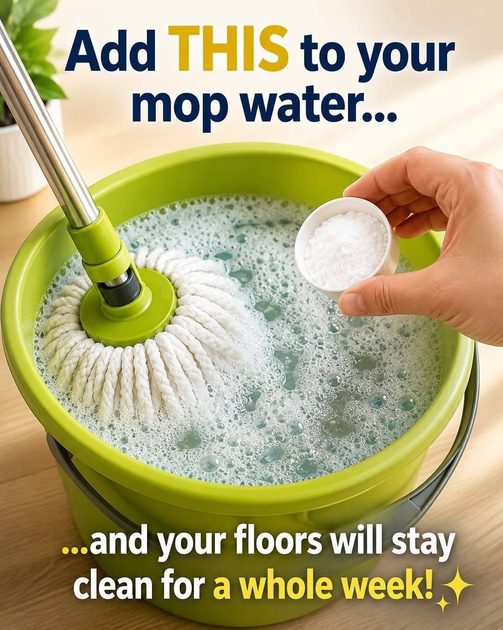
If you spend time on social media, you’ve probably seen the viral cleaning promise:
“Add this one ingredient to your mop water and your floors will stay clean for a whole week!”
The photos usually show a bucket of bubbly water, a mop, and someone pouring in a mysterious white powder.
It sounds perfect. Mop once, add one secret ingredient, and enjoy spotless floors for days.
But there’s an important catch: there is no universal homemade ingredient that safely keeps every type of flooring clean for an entire week.
What you put in your mop bucket should depend on whether you have tile, laminate, vinyl, sealed wood, natural stone, or another surface. In fact, flooring manufacturers sometimes specifically warn against popular DIY ingredients such as vinegar or abrasive powders.
The good news is that there is a simple cleaning method that can reduce sticky residue, streaks, and rapid re-soiling—and it may explain why some people swear their floors stay cleaner after changing what they put in their mop water.
The Real Secret: Don’t Use Too Much Cleaner
One of the biggest mistakes people make when mopping is assuming:
More soap = cleaner floor.
It doesn’t necessarily work that way.
When too much detergent is used, some of it can remain on the floor after the water evaporates.
That residue may leave the surface looking dull or sticky and can attract dirt.
Shaw’s cleaning guidance even notes in its stain-care instructions that detergent residue can lead to rapid re-soiling.
So one of the easiest ways to help floors stay looking cleaner is surprisingly simple:
Use less cleaning product, not more.
A Simple Mop-Water Formula for Compatible Floors
For many water-safe, non-porous floors, you don’t need a complicated mixture.
Start with:
- 1 gallon / approximately 4 liters of warm water
- A small amount of a floor cleaner specifically approved for your flooring
- A clean microfiber mop
Follow the cleaner manufacturer’s dilution instructions rather than pouring in an arbitrary amount.
For lightly soiled floors, using more than the recommended concentration usually isn’t necessary.
The goal isn’t to create a bucket overflowing with foam.
The goal is to loosen dirt and remove it without leaving a sticky film behind.
Why a Microfiber Mop Makes Such a Difference
The ingredient in your bucket isn’t the entire story.
Your mop matters too.
Microfiber is excellent for everyday floor cleaning because the material captures dust and fine particles effectively while allowing you to clean with relatively little water.
Pergo, for example, recommends a slightly damp microfiber mop for periodic laminate cleaning and warns against excessive water.
That means you shouldn’t be flooding the floor.
A mop should generally be damp rather than dripping wet, particularly on laminate and wood-based flooring.
Why the Viral White Powder May Be Baking Soda
The white powder shown in viral cleaning posts is often presented as baking soda, although the exact substance cannot be confirmed from this image alone.
Baking soda is popular because it’s inexpensive and mildly abrasive.
It’s useful for many household-cleaning jobs.
But that doesn’t mean you should automatically pour it into every mop bucket.
On some floors, powders and abrasive cleaners can potentially dull or damage finishes.
Shaw’s hard-floor care instructions, for example, advise against abrasive detergents and scrubbing powders for certain flooring products.
So before trying the viral trick, identify your flooring.
That’s much more important than identifying the “secret ingredient.”
What About Vinegar?
Vinegar is probably the internet’s favorite homemade floor cleaner.
And sometimes it can be useful.
But the claim that vinegar is universally safe for floors is incorrect.
Some flooring manufacturers specifically advise against it.
For example, Shaw’s resilient vinyl flooring guidance says it does not recommend vinegar because it isn’t pH-balanced for the flooring and can cause damage over time.
Shaw’s tile-and-stone guidance also warns against acidic cleaners such as vinegar because they can damage or discolor certain grout and surfaces.
So don’t automatically add vinegar to your mop bucket just because a viral cleaning recipe tells you to.
What About Dish Soap?
A tiny amount of mild dish soap is another popular DIY recommendation.
It can cut grease extremely well.
The problem is quantity.
Pour a large squeeze into your bucket and you may create so much detergent that it becomes difficult to remove completely.
The result can be:
streaks + residue + sticky floors + faster dirt accumulation.
If your flooring manufacturer permits mild detergent, use only the appropriate amount and rinse if necessary.
More bubbles don’t mean more cleaning power.
Why Does My Floor Feel Sticky After Mopping?
If you have just mopped and the floor somehow feels dirtier afterward, detergent residue is a likely possibility.
Common causes include:
Too much floor cleaner. The product isn’t sufficiently diluted.
Too much dish soap. It leaves surfactant behind.
Dirty mop water. You’re redistributing soil rather than removing it.
A dirty mop head. Old grease and detergent return to the floor.
Using the wrong product. Some cleaners aren’t designed for your particular finish.
Not rinsing when required. Certain cleaning products require a clean-water rinse.
Fixing those issues often produces a more dramatic improvement than adding another ingredient.
The Two-Bucket Trick
Want a genuinely useful cleaning trick?
Consider separating your cleaning solution from your rinse water.
Use one bucket for your correctly diluted floor-cleaning solution and another for clean water.
Periodically rinse the mop so you’re not repeatedly spreading increasingly dirty water across the floor.
Pergo’s laminate-care instructions similarly recommend keeping a bucket of clean water available for rinsing the mop, then wringing it out thoroughly before continuing.
This simple change can make a surprisingly big difference.
How to Mop Floors So They Stay Cleaner
Step 1: Vacuum or Sweep First
Never make mopping your first step on a dusty floor.
Remove:
hair, crumbs, sand, grit, dust and loose debris.
Otherwise, the mop combines that material with water and turns it into dirty residue.
Regular dry cleaning also reduces abrasive grit that can dull flooring.
Pergo recommends vacuuming laminate regularly before damp cleaning.
Step 2: Use the Right Cleaner
Read your flooring manufacturer’s care instructions.
If you don’t know what floor you have, be conservative until you identify it.
Avoid assuming that a viral DIY recipe is safe simply because the ingredients are “natural.”
Natural products can still be acidic, alkaline or abrasive.
Step 3: Dilute Correctly
This is crucial.
If the bottle says one capful, don’t add four because the floor looks particularly dirty.
Concentrated cleaner can leave more residue.
For example, Pergo provides specific dilution amounts for both normal residential cleaning and more intensive cleaning rather than recommending an arbitrary amount of detergent.
Follow the instructions for your particular product.
Step 4: Don’t Drench the Floor
Your floor shouldn’t look like you’ve emptied the bucket onto it.
This is especially important with laminate.
Pergo warns that excessive water is unnecessary and can damage laminate flooring.
Vinyl floors can also have restrictions regarding excessive water depending on their construction and installation. Shaw warns against drenching resilient vinyl with an overly wet mop.
Wring the mop thoroughly.
Step 5: Work in Sections
Don’t randomly push dirty water around the room.
Start at the farthest corner and work toward the exit.
Clean manageable sections.
Rinse the mop frequently.
If the water becomes noticeably dirty, replace it.
Step 6: Let the Floor Dry Properly
Avoid immediately walking across a freshly mopped floor.
Foot traffic can leave prints and introduce fresh dirt before the surface dries.
Good ventilation can help.
Pergo recommends allowing compatible laminate floors to air dry after damp cleaning; laminate without its AquaSafe technology should be wiped until completely dry.
The Best Cleaning Method Depends on Your Floor
This is where one-size-fits-all internet hacks become problematic.
Laminate Flooring
Laminate generally benefits from:
vacuuming first, minimal moisture, a microfiber mop, and a compatible cleaner.
Pergo recommends slightly damp rather than excessively wet cleaning and warns that too much water can damage laminate.
Avoid assuming that every DIY acid, powder, soap, or steam method is appropriate.
Vinyl Flooring
Vinyl may tolerate moisture better than some wood-based floors, but it still has specific care requirements.
Shaw recommends compatible hard-surface cleaners for its resilient vinyl and specifically advises against vinegar and steam for those products.
Always check your particular manufacturer’s instructions.
Ceramic and Porcelain Tile
Tile is generally durable, but the grout matters too.
Shaw recommends a neutral-pH cleaner compatible with tile and grout for its tile-and-stone products. It advises against acidic cleaners, chlorine, ammonia, abrasive powders and excessive standing water.
That means a homemade vinegar recipe isn’t automatically the best choice simply because the tile itself seems tough.
Natural Stone
Be particularly careful.
Acidic products can damage certain natural stones.
A neutral-pH cleaner designed for stone is a much safer choice than experimenting with vinegar, lemon juice, or other acidic household ingredients.
Hardwood
Wood finishes vary significantly.
Some are polyurethane-coated; others use different finishes.
Moisture can also enter seams and damage wood.
Use the cleaning method recommended for your particular floor and finish rather than a universal bucket recipe.
Why Floors Get Dirty Again So Quickly
Sometimes the mop water isn’t actually the problem.
Your floor may be getting dirty because dirt is constantly entering the house.
Think about your entrances.
Every time someone walks indoors, shoes can bring in:
sand, dust, soil, moisture and other debris.
A quality doormat can intercept much of it.
Pergo specifically recommends placing doormats at exterior doors as part of regular floor protection.
If you really want floors to remain clean longer, controlling what reaches them can be more effective than adding another chemical to your bucket.
The “Clean Floors for a Week” Routine
Instead of relying on a miracle ingredient, try this approach:
Day 1: Vacuum thoroughly and damp-mop correctly.
During the week: Quickly vacuum or sweep high-traffic areas when needed.
Immediately: Wipe up spills instead of letting them dry.
At entrances: Use clean doormats to catch outdoor dirt.
In the kitchen: Clean grease and food spills promptly.
Mop heads: Wash them regularly so you’re not cleaning tomorrow’s floor with yesterday’s dirt.
Depending on pets, children, weather, shoes and household traffic, your floors may still need attention before seven days have passed.
And that’s completely normal.
Don’t Mix Random Cleaning Chemicals
This is one area where viral cleaning hacks can become genuinely dangerous.
Don’t assume two cleaning products become “extra powerful” when mixed together.
Some combinations can create hazardous fumes or dangerous chemical reactions.
In particular, never mix chlorine bleach with ammonia or acidic cleaners.
If you’re using a commercial cleaner, follow its label.
Adding vinegar, bleach, ammonia, peroxide or another product to it without knowing the chemistry is unnecessary and potentially unsafe.
Should Mop Water Be Hot?
Usually, extremely hot water isn’t necessary.
Warm or lukewarm water is sufficient for many cleaning jobs when compatible with the floor and product.
Some flooring materials and finishes can be sensitive to heat.
Again, manufacturer instructions take priority.
How Often Should You Mop?
There’s no universal rule.
A household with two adults who remove their shoes indoors may need far less wet cleaning than a household with children, pets and frequent outdoor traffic.
Pergo, for example, recommends dry vacuum cleaning weekly and more thorough slightly damp laminate cleaning once or twice per month depending on use and dirt levels.
Clean based on actual need rather than automatically soaking floors every day.
Frequently Asked Questions
What can I add to mop water to make floors stay clean longer?
There isn’t one universal ingredient. The safest approach is the correct amount of a cleaner approved for your flooring, combined with a clean microfiber mop and minimal residue.
Does baking soda keep floors clean for a week?
There’s no reliable reason to expect baking soda in mop water to prevent new dirt from reaching the floor for seven days. It may also be inappropriate for surfaces where abrasive powders are discouraged.
Can I put vinegar in mop water?
Only if your flooring manufacturer says it’s compatible. Some manufacturers specifically advise against vinegar for certain vinyl, tile, stone, or grout surfaces.
Can I use dish soap?
If your flooring allows mild detergent, a small amount may be suitable. Too much soap can leave residue and contribute to rapid re-soiling.
Why is my floor sticky after I mop?
Excess cleaner, dirty mop water, a contaminated mop head, or insufficient removal of detergent are common possibilities.
Should I rinse after mopping?
Follow your cleaner and flooring instructions. If detergent residue remains, a correctly performed clean-water rinse can help.
Why does my floor look dull after cleaning?
Possible causes include excess detergent, incompatible cleaning products, mineral residue, surface wear, or dirty mop water.
The Bottom Line
The viral promise that one mysterious ingredient added to mop water will keep every floor spotless for an entire week is too good to be universally true.
The better trick is much simpler:
Use the right cleaner, use the correct amount, avoid leaving residue, keep the mop clean, use as little water as the floor requires, and stop dirt at the door.
Floor manufacturers themselves emphasize appropriate cleaners, minimal moisture for sensitive flooring, regular dry cleaning, and prompt spill removal.
And before pouring vinegar, baking soda, bleach, dish soap, or any other viral ingredient into your mop bucket, check what your floor manufacturer recommends.
Sometimes the secret to a floor that stays cleaner isn’t adding something extra.
It’s leaving less behind.