You walk into your bathroom, turn on the light, and suddenly notice a large spider resting in the corner. Its long legs stretch across the wall, and your first instinct might be to panic. But before you reach for a shoe or a can of insect spray, there’s something fascinating you should know.
Spiders are among the most misunderstood creatures that regularly enter our homes.
Some people believe that finding a spider indoors is a sign of bad luck. Others think it means their house is dirty, while certain traditions suggest that spiders bring good fortune or protect the home from negative energy.
Viral social media posts sometimes go even further, claiming that the presence of a spider has a mysterious meaning that most people don’t understand.
But what does science actually say?
The real explanation is surprisingly practical: spiders usually enter homes because they find shelter, suitable environmental conditions, or insects to eat.
And while their appearance can be unsettling, many household spiders are harmless to humans and can even help reduce certain insect populations.
However, not every spider should be handled, and some species require caution.
Let’s explore the real reasons spiders appear inside homes, what their presence may reveal about your living environment, and how to manage them safely.
Why Do Spiders Come Into Your House?
Spiders don’t enter homes to frighten people.
They are simply responding to their environment.
A house may provide several things that make it attractive to a spider.
These include food, protection from harsh weather, moisture, hiding places, and suitable temperatures.
Some spiders accidentally wander indoors, while others are well adapted to living inside buildings.
Here are the most common explanations.
1. Your House May Have Insects That Spiders Eat
One of the main reasons spiders settle in a particular location is the availability of prey.
Spiders are predators.
Depending on the species, they may feed on:
- Flies.
- Mosquitoes.
- Moths.
- Small beetles.
- Gnats.
- Other spiders.
- Various household insects.
If a spider repeatedly appears in the same area, it may have found a location where insects are available.
This doesn’t necessarily mean your home has an infestation.
Even clean homes contain occasional insects.
For example, a porch light can attract moths and flies at night.
Spiders may build webs near those lights because insects regularly gather there.
Similarly, a spider near a window may be taking advantage of small insects attracted by sunlight or indoor lighting.
What This Means for Your Home
A spider may indicate that insects are present nearby.
However, one spider is not enough to prove that you have a pest problem.
If you notice large numbers of spiders along with numerous flies, ants, or other insects, investigate possible sources of insect activity.
The surprising truth: a spider may be helping control some of the insects you would rather not have in your house.
2. Spiders Are Looking for Shelter
Homes provide protection from many environmental hazards.
Outside, spiders face changing temperatures, heavy rain, wind, predators, and disturbances.
Indoor spaces may offer more stable conditions.
Common hiding places include:
- Behind furniture.
- Under cabinets.
- Inside storage rooms.
- Around window frames.
- In garages.
- Behind curtains.
- In basements.
- Near ceiling corners.
These locations often remain relatively undisturbed.
Some spiders prefer dark, sheltered areas where they can rest or build webs.
Others are active hunters that wander in search of prey.
Finding a spider behind a sofa or under a shelf may simply mean it has discovered a convenient hiding place.
3. Changes in Weather Can Influence Spider Activity
Have you ever noticed more spiders around your house during certain seasons?
Weather can affect spider movement and behavior.
Heavy rain may disturb outdoor habitats.
Dry conditions may change the availability of prey and moisture.
Temperature shifts can influence where spiders find suitable shelter.
In some regions, adult male spiders become more visible during mating seasons because they travel in search of females.
This can create the impression that spiders have suddenly invaded the house.
In reality, the number of spiders may not have increased as dramatically as their visibility.
Does Cold Weather Drive Spiders Indoors?
Sometimes outdoor spiders may seek shelter as conditions change.
However, many common house spiders already live indoors throughout the year.
They are not necessarily entering from outside every autumn.
This is why sealing gaps can help reduce new arrivals but may not eliminate spiders already established indoors.
4. Your Home Offers Quiet Hiding Places
Spiders often prefer locations where they are unlikely to be disturbed.
Storage rooms, attics, garages, and rarely used closets can provide ideal hiding spots.
Cardboard boxes, stacked objects, and clutter create small sheltered spaces.
These areas can also attract insects.
As a result, spiders may find both protection and prey in the same location.
Keeping storage spaces organized may reduce some hiding opportunities.
But remember that even an exceptionally tidy home can contain spiders.
Finding a spider does not automatically mean your home is dirty.
5. Moisture May Attract Certain Spiders and Their Prey
Some spiders are commonly found in damp environments.
Bathrooms, basements, laundry rooms, and areas around plumbing may provide favorable conditions.
Moisture can also attract certain insects, which may then attract spiders.
If you frequently notice spiders around sinks or damp walls, check for excess humidity or water leaks.
Useful steps include improving ventilation, repairing leaks, and reducing standing water.
However, spiders have different habitat preferences.
Not every spider found in a bathroom is attracted to moisture.
Some simply wander there by chance.
6. Cracks and Openings Make Entry Easier
Spiders can enter through surprisingly small openings.
Possible entry points include:
- Gaps beneath doors.
- Cracks around windows.
- Open vents.
- Damaged screens.
- Openings around pipes.
- Spaces beneath garage doors.
Reducing these entry points can help limit unwanted visitors.
Install or repair window screens.
Use weatherstripping around doors.
Seal appropriate cracks around windows and walls.
Make sure ventilation openings remain functional and are protected with suitable screens where appropriate.
These measures may also help reduce other household pests.
7. Some Spiders Naturally Live Indoors
This is one of the most overlooked facts about house spiders.
Not every spider in your home is an outdoor visitor.
Certain species are well adapted to indoor environments.
They may spend much of their lives inside buildings.
Some establish webs in corners or other protected areas.
Others move around at night searching for prey.
Their presence does not necessarily reflect a recent change in the cleanliness or condition of your home.
For some species, your house is simply part of their normal habitat.
What Does It Mean When You See a Very Large Spider?
Large spiders can be especially frightening.
Their long legs and rapid movements may make them appear more dangerous than they actually are.
However, size alone is not a reliable indicator of medical danger.
Some large spiders have relatively low medical significance to humans.
Meanwhile, certain smaller species can cause medically important bites.
The species, geographic location, and circumstances matter far more than appearance alone.
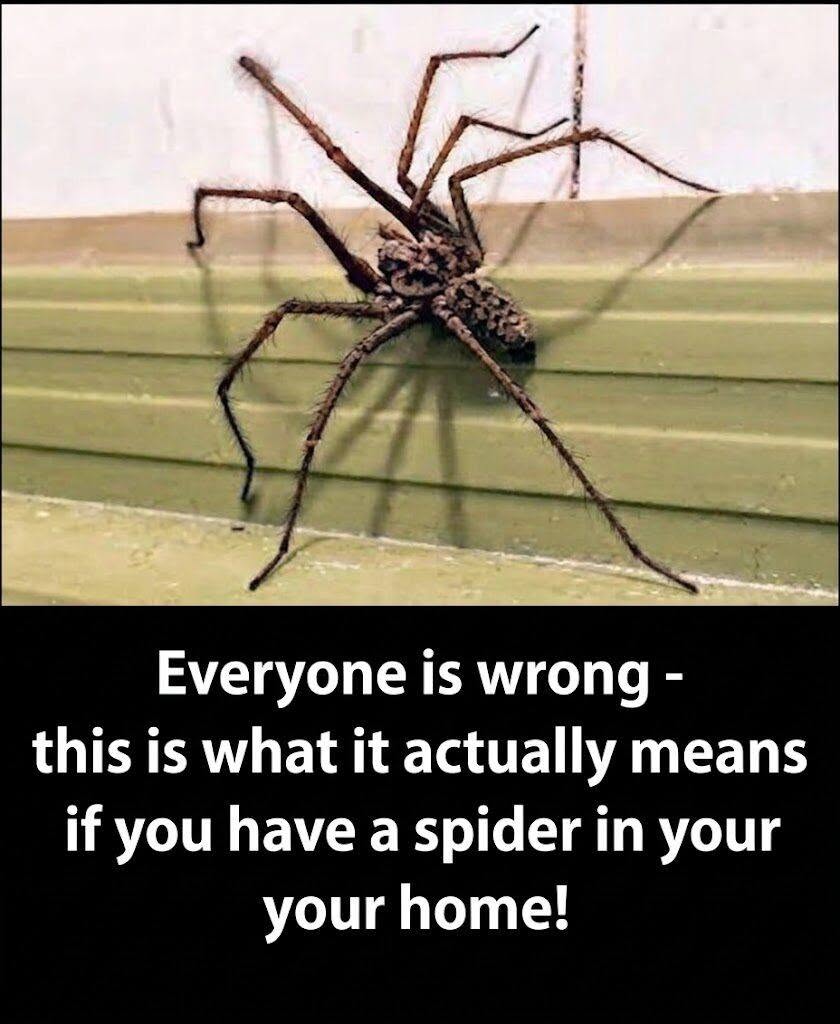
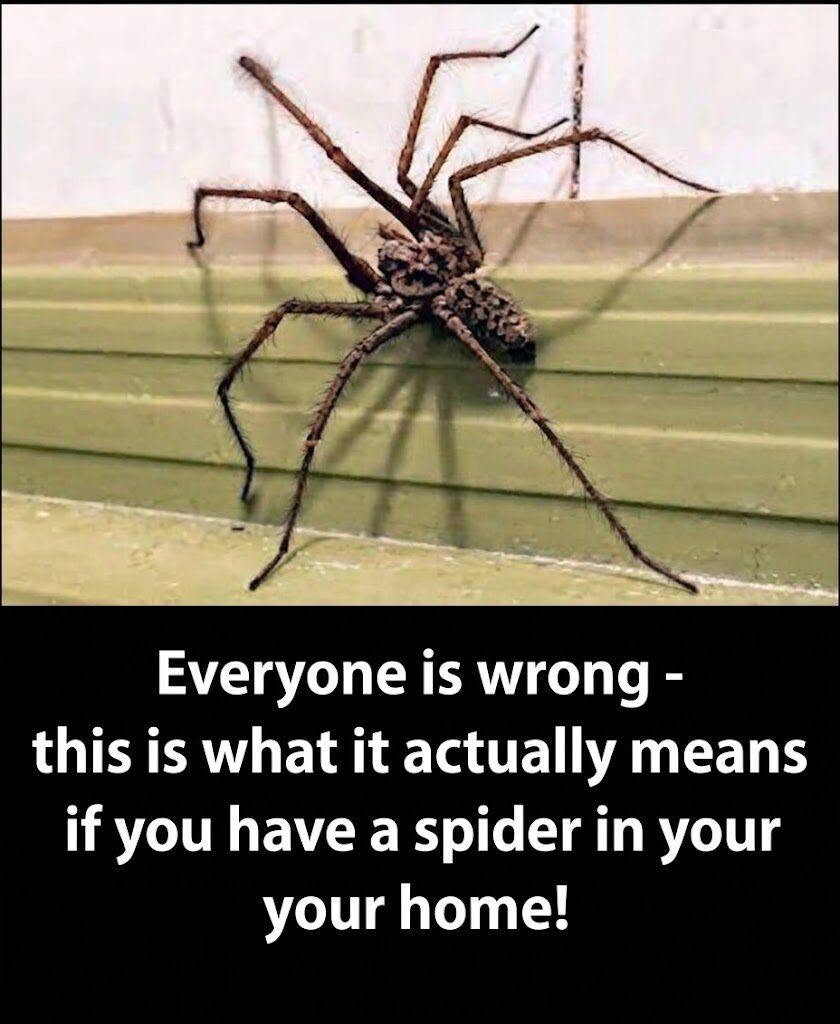
The spider shown in the viral photograph has long legs and a broad, flattened appearance, but the image alone is insufficient to confirm its exact species.
It may resemble some long-legged hunting spiders, including huntsman-type spiders, but identification would require clearer details and location information.
Never assume a spider is harmless or dangerous solely because it is large.
Are Huntsman Spiders Dangerous?
Huntsman spiders are known for their long legs, flattened bodies, and impressive speed.
They occur in many warm regions of the world.
Some species occasionally enter homes.
Unlike typical web-building spiders, huntsman spiders often actively hunt insects.
Their appearance can be alarming, especially when they move quickly across walls or ceilings.
Most huntsman spider bites are not considered medically serious, although bites can cause pain, redness, and swelling.
As with any unidentified spider, avoid handling it with bare hands.
If you are unsure of the species, contact a knowledgeable local professional for identification.
8 Common Types of Spiders Found Around Homes
The spiders found inside buildings vary significantly by country and climate.
Here are several broad groups people may encounter.
1. Common House Spiders
Many web-building spiders live around windows, corners, and storage areas.
They use their webs to capture small insects.
Most are not medically significant.
2. Cellar Spiders
Cellar spiders often have extremely long, thin legs and small bodies.
They are commonly found in basements, garages, and ceiling corners.
They may hang upside down in loose, irregular webs.
3. Jumping Spiders
Jumping spiders have compact bodies and excellent vision.
They are active hunters that often move in short, sudden jumps.
Many species are harmless to humans.
4. Wolf Spiders
Wolf spiders generally hunt on the ground rather than relying on capture webs.
They may be found in gardens, garages, or indoor areas.
Most bites cause localized symptoms, although individual reactions vary.
5. Huntsman Spiders
These spiders often have long legs that extend sideways.
Some species are large and fast-moving.
They occur mainly in warmer climates.
6. Orb-Weaver Spiders
Orb-weavers construct the familiar circular webs often seen in gardens and around buildings.
They are generally more common outdoors.
7. Widow Spiders
Some widow spiders can cause medically significant bites.
Their appearance varies by species.
Avoid handling suspected widow spiders.
8. Recluse Spiders
Certain recluse species can cause medically important bites.
They are geographically restricted, and many harmless spiders are mistakenly identified as recluses.
Accurate identification is essential.
Does Finding a Spider Mean Your Home Is Dirty?
No.
This is one of the biggest misconceptions about household spiders.
Spiders can appear in clean, well-maintained homes.
Their presence is influenced by factors such as insect availability, shelter, building openings, and local ecology.
A cluttered room may offer more hiding places, but cleanliness alone does not determine whether spiders will enter.
You can reduce their presence through regular cleaning and maintenance.
However, finding one spider is not evidence that your home is unhygienic.
Is It Good to Have Spiders in Your House?
From an ecological perspective, spiders can be useful predators.
Many feed on insects that people consider household pests.
For example, some spiders capture flies, mosquitoes, and moths.
They are part of natural food webs.
But that doesn’t mean every spider should be encouraged to remain indoors.
Households with young children, people with severe anxiety about spiders, or medically significant species may reasonably prefer to remove them.
The best approach depends on the species and circumstances.
If a spider is harmless and can be safely relocated, that may be a practical option.
If you suspect a dangerous species, seek professional assistance.
What Does It Mean When a Spider Appears in Your Bedroom?
Finding a spider in your bedroom can feel particularly uncomfortable.
However, it does not necessarily indicate anything unusual.
The spider may have entered through a window or door.
It may be searching for insects.
Or it may simply be wandering.
Bedrooms can provide quiet spaces behind furniture, under beds, and near curtains.
If you frequently see spiders, inspect windows, screens, and potential entry points.
Reduce clutter and vacuum regularly.
You may also want to check for insects that could be attracting them.
What Does It Mean When a Spider Appears in Your Bathroom?
Bathrooms are common locations for spider sightings.
Some species are attracted to humid environments.
Others may be searching for prey or shelter.
Smooth bathroom surfaces can also make it difficult for some spiders to climb out of sinks or bathtubs.
A spider found trapped in a bathtub may not have entered through the drain.
It may have wandered into the tub and become unable to escape.
If spiders frequently appear in your bathroom, inspect ventilation, window screens, and gaps around plumbing.
What Does It Mean When a Spider Appears Near Your Front Door?
Doorways often attract insects because of lighting.
Spiders may take advantage of this food source.
Exterior lights can attract flying insects, especially at night.
A spider may build a web nearby or wait for prey.
Reducing unnecessary outdoor lighting or choosing lighting less attractive to insects may help in some situations.
Sealing gaps around doors can also reduce entry.
Why Do Spiders Sometimes Appear Suddenly?
A sudden increase in spider sightings can have several explanations.
Seasonal Mating Activity
Male spiders may travel more frequently while searching for mates.
Weather Changes
Rain, heat, or other environmental changes may alter spider movement.
Increased Insect Activity
More prey can make certain locations attractive to spiders.
Disturbed Hiding Places
Cleaning, moving furniture, or renovation work may reveal spiders that were already present.
Young Spiders Dispersing
Spiderlings may disperse after emerging from an egg sac.
Seeing several small spiders at once does not necessarily indicate a permanent infestation.
Do Spiders Come Into Homes to Lay Eggs?
Some spiders may reproduce indoors.
Female spiders can produce egg sacs containing developing offspring.
The appearance and location of these sacs vary by species.
Finding an egg sac does not necessarily mean hundreds of spiders will survive or establish themselves in your home.
However, if you notice numerous spiders or egg sacs in a particular area, consider identifying the species and addressing favorable hiding conditions.
Avoid handling unidentified egg sacs with bare hands.
Are House Spiders More Active at Night?
Some species are nocturnal.
They may move around at night while searching for prey or mates.
Others are active during daylight hours.
A spider’s activity pattern depends on its species and environment.
Seeing a spider at night is not automatically a warning sign.
It often reflects normal behavior.
Can Spiders Sense Humans?
Spiders do not perceive the world exactly as humans do.
Many detect vibrations and air movements using specialized sensory structures.
Some have excellent vision, while others rely more heavily on touch and vibration.
They may respond to a person’s movement by retreating, remaining still, or attempting to escape.
Most spiders do not seek out humans as prey.
Humans are far too large for them to hunt.
Bites generally occur when a spider is trapped, pressed against the skin, or handled.
Do Spiders Crawl Into Your Mouth While You Sleep?
You’ve probably heard the claim that people swallow several spiders every year while sleeping.
This is a widespread internet myth.
There is no reliable scientific evidence supporting a predictable number of spiders swallowed during sleep.
Spiders generally have little reason to enter a person’s mouth.
Human breathing, movement, and vibrations are not particularly inviting to them.
Although unusual accidental encounters are possible, the popular claim is unsupported.
Do Spiders Bring Good Luck or Bad Luck?
Different cultures have attached symbolic meanings to spiders.
In some traditions, spiders are associated with patience, creativity, prosperity, or protection.
In others, they are linked with fear or misfortune.
These interpretations are part of folklore and cultural belief.
They are not scientific explanations for why spiders enter buildings.
From a biological perspective, a spider’s presence is related to environmental conditions, food, shelter, and behavior.
You can appreciate cultural traditions while still understanding the natural explanation.
What Should You Do When You Find a Spider in Your House?
Your response should depend on whether the spider can be identified safely.
Step 1: Stay Calm
Avoid sudden movements that could cause the spider to hide or run.
Step 2: Keep Your Distance
Do not pick up an unidentified spider with bare hands.
Keep children and pets away if there is any concern.
Step 3: Try to Identify It
If safe, take a clear photograph from a distance.
A local pest professional or knowledgeable naturalist may be able to help.
Step 4: Consider Safe Relocation
For a confidently identified harmless spider, you may be able to place a clear container over it and slide a stiff piece of paper underneath.
Release it in an appropriate sheltered location if local conditions and the species make relocation suitable.
Do not attempt this with a potentially dangerous spider.
Step 5: Address Entry Points
Check doors, windows, screens, and gaps.
Step 6: Reduce Insect Activity
Remove food debris, manage waste, and repair screens.
Step 7: Seek Professional Help When Needed
If you suspect a medically significant spider or repeatedly encounter large numbers of spiders, contact a qualified local pest-management professional.
10 Simple Ways to Reduce Spiders in Your Home
1. Seal Gaps Around Windows
Repair cracks and install suitable weatherstripping.
2. Repair Damaged Screens
Check windows and ventilation openings.
3. Vacuum Regularly
Clean corners, baseboards, and areas behind furniture.
4. Reduce Clutter
Organize boxes, storage rooms, and rarely used spaces.
5. Control Other Insects
Reducing available prey can make some areas less attractive to spiders.
6. Manage Moisture
Repair leaks and improve ventilation where necessary.
7. Keep Outdoor Vegetation Maintained
Trim vegetation that directly contacts doors, windows, or walls.
8. Check Stored Items
Inspect boxes, shoes, and equipment that have been stored for long periods.
9. Reduce Unnecessary Exterior Lighting
Outdoor lighting can attract flying insects that, in turn, attract spiders.
10. Avoid Unnecessary Pesticide Use
Not every spider sighting requires chemical treatment.
Use targeted prevention first.
If pesticides are necessary, choose products registered for the intended use and follow the label carefully.
Do Peppermint Oil and Vinegar Repel Spiders?
Many homemade spider-repellent recipes circulate online.
Peppermint oil, vinegar, citrus peels, and other household substances are frequently recommended.
However, evidence for reliable, long-lasting spider control using these methods is limited.
Essential oils can also irritate skin, affect indoor air quality, and pose risks to pets.
Certain concentrated oils are especially problematic around cats and other animals.
Vinegar may damage some surfaces and is not a proven comprehensive spider-control solution.
Rather than relying on strong scents, focus on physical exclusion, cleaning, and reducing insect prey.
These methods are generally more dependable.
What Happens if a House Spider Bites You?
Most spider bites are not medically serious.
When bites occur, symptoms may include:
- Localized pain.
- Redness.
- Mild swelling.
- Itching.
However, not every unexplained skin mark is a spider bite.
Many skin conditions and insect bites are mistakenly attributed to spiders.
If you suspect a bite, wash the area gently with soap and water.
A cool compress may help relieve discomfort.
Seek urgent medical attention if you experience severe or spreading pain, muscle cramps, difficulty breathing, significant swelling, vomiting, or other concerning symptoms.
If a medically significant spider species is suspected, contact a healthcare professional or poison control service promptly.
Do not attempt to capture a dangerous spider if doing so puts you at risk.
Why You Shouldn’t Automatically Kill Every Spider
Fear of spiders is common.
Their rapid movements and unusual appearance can trigger an immediate reaction.
But most spiders are not interested in attacking humans.
Many help regulate insect populations.
Killing every spider you encounter is not necessary for effective household pest management.
For harmless species, safe relocation or simply leaving the spider undisturbed may be reasonable.
However, personal safety always comes first.
If you cannot identify the spider or suspect a dangerous species, avoid handling it and seek appropriate assistance.
Frequently Asked Questions About Spiders in the House
What Does It Mean When a Spider Appears in Your Home?
Usually, it means the spider has found shelter, prey, suitable conditions, or an entry point. It does not have a scientifically established supernatural meaning.
Does Having Spiders Mean Your House Is Dirty?
No. Spiders can appear in clean homes.
Are Spiders Good for Your House?
Many spiders feed on household insects and can play a useful ecological role.
Why Do I Keep Seeing Spiders in My Bedroom?
Possible reasons include available hiding places, insect prey, seasonal movement, or gaps around doors and windows.
Do Spiders Prefer Dark Rooms?
Some species prefer sheltered, dim environments, while others are active in well-lit areas.
Why Do Large Spiders Enter Houses?
They may be searching for prey, shelter, or mates, or they may enter accidentally.
Are Large Spiders More Dangerous?
Not necessarily. Size alone does not determine the medical significance of a spider.
Can House Spiders Jump on People?
Some spiders can jump, but they do not generally seek out humans as targets.
Do Spiders Lay Eggs Inside Houses?
Some species can reproduce indoors, depending on their habitat and conditions.
Can Spiders Live in Beds?
Spiders may occasionally wander onto bedding, but beds are not generally their preferred habitat.
Do Spiders Come Up Through Drains?
Although spiders can occasionally be found near drains, many spiders seen in sinks or bathtubs have wandered into them from elsewhere.
Can Spiders Recognize Humans?
Spiders can detect movement and other environmental cues, but there is no good reason to assume that common house spiders recognize individual humans in the way people recognize one another.
Does Seeing a Spider Mean Rain Is Coming?
Spiders may respond to environmental changes, but a single indoor spider sighting is not a reliable weather forecast.
Should I Be Worried if I See Several Spiders?
Not automatically. Seasonal activity or nearby prey may explain the sightings. Repeated encounters with potentially dangerous species deserve professional attention.
What Is the Best Way to Keep Spiders Out?
Seal entry points, maintain screens, reduce clutter, and address insect activity.
The Hidden Ecological Role of Spiders
Spiders are an important part of ecosystems.
They help regulate populations of insects and other small arthropods.
In gardens, they may capture insects that feed on plants.
Around buildings, they may consume flies, moths, and other small creatures.
They also serve as food for birds, reptiles, and other animals.
This ecological role helps explain why spiders are found in so many environments.
They are not simply unwanted household visitors.
They are part of a much larger natural system.
The Real Meaning of a Spider in Your Home
Viral posts often suggest that seeing a spider indoors carries a secret message.
Some claim it means money is coming.
Others say it predicts bad luck.
And some suggest that spiders appear only when something is wrong with the house.
Science offers a more grounded explanation.
A spider in your home usually means that the environment provides something it needs—or that it happened to wander inside.
It may have found insects to eat.
It may be seeking shelter.
It may be moving during mating season.
Or it may belong to a species that naturally lives indoors.
None of these explanations requires superstition.
And none means that your home is automatically unsafe.
Final Thoughts: Think Twice Before Panicking Over a Spider
Finding a large spider on your wall can be startling.
Its long legs, sudden movements, and unfamiliar appearance may trigger fear.
But appearances can be misleading.
Most household spiders are not aggressive toward humans.
Many are useful predators that help control small insects.
Their presence can sometimes offer clues about hiding places, entry points, moisture, or available prey.
However, spiders differ widely by species and location, so unfamiliar individuals should not be handled casually.
The next time you find a spider inside your home, remember this: it is probably not delivering a mysterious warning. It is simply an animal responding to its surroundings.
Understanding that difference can help you respond with less fear and more confidence.
And if you prefer a spider-free living space, practical prevention methods can help reduce unwanted encounters without unnecessary panic.
What Would You Do?
Imagine walking into your bedroom and discovering a large, long-legged spider on the wall.
Would you carefully relocate it, leave it alone, or immediately call someone for help?
Share your reaction in the comments. You might be surprised how differently people respond to the same eight-legged visitor!