Yellow teeth and stubborn plaque can make even the most confident person feel uncomfortable about smiling. But before spending money on expensive whitening treatments or trying questionable internet remedies, there is a simple dental care routine worth understanding. The secret isn’t a miracle ingredient—it’s knowing how to remove plaque effectively, prevent stains, and protect your enamel at the same time.
A bright, healthy smile is something almost everyone wants.
Yet many people notice their teeth becoming slightly yellow over time, even when they brush regularly.
Others struggle with plaque buildup, especially around the gumline and between their teeth.
And when these problems appear, it’s tempting to search for a quick solution.
Social media is filled with videos promising dramatic results using baking soda, lemon juice, charcoal, or homemade whitening mixtures.
Some even claim that one simple method can remove years of yellow stains and hardened plaque in minutes.
But are these claims true?
The answer is more complicated than most viral posts suggest.
The good news is that several affordable, evidence-based dental care habits can help reduce plaque buildup, prevent new stains, and improve the appearance of your smile.
Let’s explore what actually works, what you should avoid, and how to build a routine that keeps your teeth looking and feeling their best.
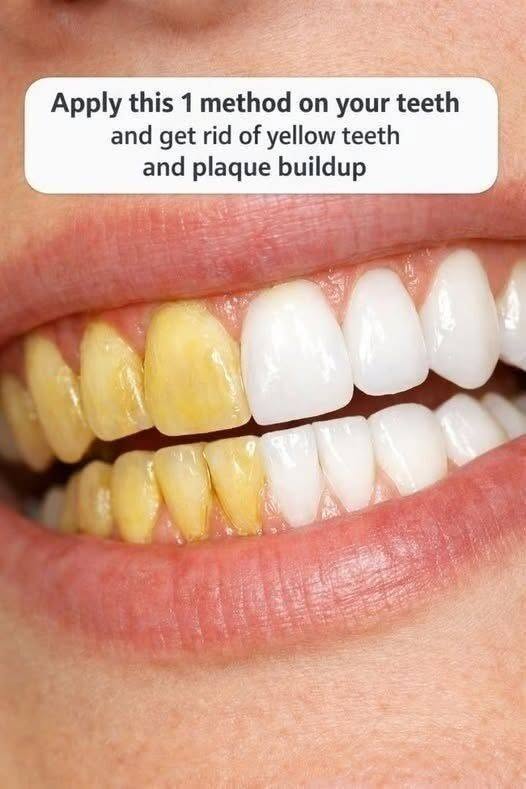
Why Do Teeth Turn Yellow?
Before trying to whiten your teeth, it’s important to understand why discoloration happens.
Not all yellow teeth are caused by poor hygiene.
In fact, tooth color varies naturally from person to person.
Several factors influence how white or yellow your teeth appear.
1. Natural Tooth Color
Teeth aren’t naturally pure white.
The outer layer, called enamel, is somewhat translucent.
Underneath it lies dentin, which has a naturally yellowish color.
The thickness and translucency of your enamel influence how much of that yellow color shows through.
Some people naturally have brighter-looking teeth than others.
2. Coffee and Tea
Coffee and tea contain compounds that can contribute to surface staining.
Drinking these beverages frequently may gradually darken the appearance of your teeth.
3. Tobacco Use
Smoking and other tobacco products can cause persistent yellow or brown stains.
These stains may become increasingly difficult to remove over time.
4. Aging
As we age, enamel may become thinner through normal wear and exposure to acids.
This allows more of the underlying dentin color to show.
5. Poor Plaque Control
When plaque isn’t removed regularly, it can accumulate around the teeth and gums.
Plaque can contribute to discoloration, gum inflammation, and cavities.
6. Certain Medications or Dental Conditions
Some medications, developmental conditions, and dental injuries can affect tooth color.
These types of discoloration may not respond well to ordinary whitening products.
Important: Yellow teeth aren’t automatically unhealthy, and very white teeth aren’t necessarily healthier.
The goal should always be healthy teeth and gums—not an unrealistic shade of white.
What Is Dental Plaque?
Dental plaque is a sticky, nearly colorless film of bacteria that constantly forms on teeth.
These bacteria interact with food particles and sugars in the mouth.
When plaque isn’t removed properly, it can contribute to tooth decay and gum disease.
Plaque tends to accumulate in areas that are difficult to clean, including:
- Along the gumline.
- Between neighboring teeth.
- Around dental restorations.
- Behind the lower front teeth.
- Near orthodontic brackets.
- In grooves on chewing surfaces.
Because plaque can be difficult to see, people sometimes assume their teeth are clean when deposits remain.
This is one reason daily brushing and interdental cleaning are so important.
Plaque vs. Tartar: What’s the Difference?
Many people use the words plaque and tartar interchangeably.
However, they aren’t the same thing.
Plaque is a soft bacterial film that can be removed through effective brushing and cleaning between the teeth.
Tartar, also called dental calculus, is plaque that has hardened through mineralization.
Once tartar forms, ordinary brushing and flossing cannot reliably remove it.
It generally requires professional removal by a dental hygienist or dentist.
This distinction matters because many viral home remedies claim to dissolve hardened tartar.
There is no safe, proven household mixture that can replace professional scaling.
Trying to scrape tartar away yourself may injure your gums or damage your teeth.
The Simple Method That May Help Reduce Plaque Buildup
One of the most effective and affordable approaches is combining twice-daily brushing with fluoride toothpaste, daily interdental cleaning, and consistent technique.
It sounds simple.
But the details make a significant difference.
Many people brush every day without effectively cleaning the areas where plaque collects.
Here’s how to improve your routine.
Step 1: Choose a Soft-Bristled Toothbrush
A soft-bristled toothbrush is generally recommended for everyday use.
Hard bristles and aggressive scrubbing may contribute to gum irritation and tooth wear.
Choose a brush that comfortably reaches the back teeth.
An electric toothbrush can also be helpful, particularly for people who struggle with brushing technique.
Some powered toothbrushes have been shown to reduce plaque and gingivitis more effectively than manual brushing.
However, either type can work well when used properly.
Step 2: Use Fluoride Toothpaste
Fluoride is one of the most important ingredients in everyday dental care.
It helps strengthen enamel and protect teeth against cavities.
For most adults, brushing twice daily with fluoride toothpaste is a reliable foundation for oral health.
Look for a toothpaste appropriate for your age and dental needs.
If you have sensitive teeth, gum problems, or a high risk of cavities, your dentist may recommend a specific formulation.
Does Whitening Toothpaste Work?
Some whitening toothpastes can help remove external stains caused by coffee, tea, and other foods.
They generally work by using cleaning or polishing ingredients to reduce surface discoloration.
However, they do not necessarily change the natural internal color of your teeth.
Whitening toothpaste also cannot remove hardened tartar.
Step 3: Brush for Two Full Minutes
Many people brush for less time than they realize.
A good target is two minutes, twice a day.
Divide your mouth into four sections:
- Upper right teeth.
- Upper left teeth.
- Lower right teeth.
- Lower left teeth.
Spend approximately 30 seconds cleaning each section.
Pay attention to the outer, inner, and chewing surfaces of your teeth.
Avoid rushing.
Step 4: Clean Along the Gumline
The gumline is one of the most important areas to clean.
Plaque often collects where the teeth meet the gums.
For a manual toothbrush, gently angle the bristles toward the gumline and use small, controlled movements.
Avoid pressing too hard.
More pressure does not necessarily mean better cleaning.
In fact, excessive force can irritate the gums and contribute to wear.
Step 5: Clean Between Your Teeth Every Day
This is the step many people skip.
A toothbrush cannot effectively reach every surface between neighboring teeth.
Floss or an appropriately sized interdental brush can help remove plaque from these spaces.
If you use dental floss:
- Gently guide it between your teeth.
- Curve it around the side of one tooth.
- Move it carefully along the tooth surface.
- Repeat on the neighboring tooth.
- Avoid snapping floss into your gums.
If you have larger spaces between teeth, interdental brushes may be especially useful.
Ask your dentist which size and technique are appropriate.
Step 6: Spit Out Excess Toothpaste
After brushing, spit out excess toothpaste.
Avoid immediately rinsing your mouth thoroughly with water, because doing so can wash away some of the fluoride remaining on your teeth.
This simple adjustment may help fluoride continue protecting your enamel after brushing.
Step 7: Stay Consistent
Plaque forms continuously.
That’s why a single intense cleaning session cannot replace regular daily care.
A consistent routine is more valuable than an occasional complicated treatment.
The real secret is removing plaque before it hardens into tartar.
Can Baking Soda Help Remove Yellow Stains?
Baking soda is one of the most frequently discussed ingredients in homemade dental care remedies.
You may have seen claims that mixing baking soda with water, lemon juice, or other household ingredients can instantly whiten teeth.
But what does the evidence actually suggest?
Baking soda, also known as sodium bicarbonate, has mild abrasive properties.
When included in properly formulated toothpaste, it can help remove some surface stains.
Research also suggests that certain baking soda-containing toothpastes can be effective for plaque removal.
However, that doesn’t mean every homemade baking soda mixture is safe or effective.
Why Baking Soda Toothpaste Is Different From a Homemade Mixture
Commercial toothpastes are formulated and tested for specific cleaning properties.
They may also contain fluoride and ingredients that help protect enamel.
Homemade mixtures don’t necessarily provide those benefits.
Using plain baking soda instead of fluoride toothpaste may leave you without important cavity protection.
And aggressively scrubbing with abrasive substances can cause unnecessary wear or gum irritation.
A fluoride toothpaste formulated with baking soda is generally a better choice than experimenting with homemade whitening pastes.
Why You Should Never Mix Lemon Juice With Baking Soda for Your Teeth
One popular internet trend recommends combining lemon juice and baking soda.
The mixture bubbles dramatically, which can make it appear powerful.
But bubbling doesn’t mean it’s beneficial for your teeth.
Lemon juice is acidic.
Repeated exposure to acids can weaken and erode tooth enamel.
Once enamel is lost, the body cannot naturally regrow it.
Ironically, enamel erosion may make teeth look more yellow because the underlying dentin becomes more visible.
Other acidic ingredients sometimes promoted for whitening include:
- Vinegar.
- Citrus juice.
- Strong acidic fruit mixtures.
These are not recommended as tooth-whitening treatments.
A quick cosmetic effect is not worth the risk of permanent enamel damage.
Does Activated Charcoal Whiten Teeth?
Activated charcoal has become popular in beauty and oral care products.
Some social media posts claim that brushing with black charcoal powder can remove deep stains and leave teeth dramatically whiter.
However, evidence supporting charcoal as a safe and effective tooth-whitening treatment is limited.
Charcoal products may also be abrasive, depending on their formulation.
Some do not contain fluoride.
For these reasons, charcoal should not be considered a substitute for standard fluoride toothpaste.
If you want noticeable whitening, speak with a dental professional about safer, evidence-based options.
Can Oil Pulling Remove Plaque?
Oil pulling is another widely discussed home remedy.
It involves swishing an edible oil, commonly coconut oil, around the mouth for several minutes.
Supporters claim it can whiten teeth, remove toxins, and improve oral health.
But strong scientific evidence supporting these broad claims is lacking.
Oil pulling has not been established as a replacement for brushing with fluoride toothpaste, flossing, or professional dental care.
It also cannot reliably remove hardened tartar.
If someone chooses to practice oil pulling, it should never replace proven oral hygiene habits.
Seven Everyday Habits That Can Help Prevent Yellow Teeth
A brighter-looking smile often starts with simple daily choices.
1. Drink Water After Coffee or Tea
Coffee and tea can contribute to external staining.
Drinking water afterward may help wash away some pigments and food residues.
It won’t completely prevent staining, but it can be a useful habit.
2. Avoid Tobacco
Tobacco use can cause stubborn stains and significantly increase the risk of gum disease and oral cancer.
Avoiding tobacco benefits both oral and overall health.
3. Limit Frequent Sugary Snacks
Oral bacteria use sugars to produce acids that can contribute to cavities.
Frequent snacking and sipping sugary drinks expose teeth to repeated acid attacks.
Reducing the frequency of sugary foods and beverages can help protect enamel.
4. Eat a Balanced Diet
A nutritious diet supports oral health.
Foods rich in calcium and other essential nutrients help maintain healthy teeth and bones.
Crunchy fruits and vegetables can be part of a healthy diet, but they don’t replace brushing.
5. Stay Hydrated
Saliva helps protect the mouth by washing away food particles and buffering acids.
Drinking enough water supports normal saliva production.
People experiencing persistent dry mouth should discuss it with a dental professional.
6. Replace Your Toothbrush Regularly
A toothbrush with worn or frayed bristles may not clean effectively.
Replace your toothbrush or electric toothbrush head approximately every three to four months, or sooner if the bristles become damaged.
7. Schedule Regular Dental Visits
Professional dental examinations and cleanings help identify problems before they become more serious.
The ideal frequency depends on your oral health needs.
Some people require more frequent appointments than others.
How to Remove Existing Tartar Safely
If you notice hard yellow or brown deposits near your gums, they may be tartar.
Tartar commonly accumulates behind the lower front teeth and around the gumline.
It may feel rough when you run your tongue over it.
Unlike soft plaque, tartar cannot simply be brushed away.
The safest approach is professional dental cleaning.
During a cleaning, a dental professional may use specialized instruments to remove deposits from tooth surfaces.
This process is commonly called scaling.
Depending on your oral health, the appointment may also involve polishing, gum assessment, and advice about home care.
What You Should Avoid
Do not attempt to remove tartar using:
- Metal scraping tools.
- Sharp household objects.
- Needles.
- Hard abrasive powders.
- Acidic mixtures.
- Unregulated dental cleaning devices.
These methods may cause gum injuries, enamel damage, or other complications.
Professional cleaning is much safer.
Can Professional Teeth Whitening Help?
If your main concern is tooth color rather than plaque, professional whitening may be an option.
Dental whitening treatments commonly use peroxide-based agents to lighten certain types of discoloration.
Results depend on the cause of staining and the condition of your teeth.
Whitening is not suitable for everyone.
For example, existing fillings, crowns, and veneers generally do not whiten in the same way as natural teeth.
Whitening may also temporarily increase tooth sensitivity.
A dental professional can evaluate whether treatment is appropriate and explain realistic expectations.
A Simple Seven-Day Dental Care Routine
You don’t need a complicated routine to start improving your oral hygiene.
Try this straightforward weekly plan.
Day 1: Check Your Current Habits
Think about how often you brush, whether you clean between your teeth, and how long you spend brushing.
Identify one habit you can improve.
Day 2: Focus on Brushing Technique
Brush gently for two full minutes in the morning and before bed.
Pay extra attention to the gumline.
Day 3: Add Interdental Cleaning
Use floss or interdental brushes to clean between your teeth.
Be gentle, especially if your gums are sensitive.
Day 4: Review Your Toothpaste
Check whether your toothpaste contains fluoride.
If you want help reducing surface stains, consider an appropriate whitening toothpaste rather than a homemade mixture.
Day 5: Reduce Stain Exposure
Pay attention to frequent coffee, tea, tobacco, and other staining habits.
Drink water regularly.
Day 6: Check for Gum Problems
Notice whether your gums bleed, appear swollen, or feel tender.
Persistent symptoms deserve professional evaluation.
Day 7: Make Your Routine Sustainable
Choose a morning and evening schedule that you can realistically maintain.
Remember that noticeable changes in plaque control and gum health take consistency.
Don’t expect dramatic whitening in seven days. The purpose of this plan is to establish healthier habits.
Signs You May Need a Dental Cleaning
Sometimes, home care alone isn’t enough.
Consider scheduling a dental appointment if you notice:
- Persistent bad breath.
- Bleeding gums.
- Swollen or tender gums.
- Hard deposits around your teeth.
- Gum recession.
- Tooth sensitivity.
- Pain when chewing.
- Loose teeth.
- Persistent discoloration that concerns you.
These symptoms may have different causes, and a dentist can help identify the problem.
Seek prompt dental care for severe tooth pain, facial swelling, or signs of infection.
Common Mistakes That Make Plaque Buildup Worse
Even people who brush regularly can make mistakes that reduce the effectiveness of their routine.
Brushing Too Quickly
A rushed brushing session may leave plaque behind.
Aim for two full minutes.
Brushing Too Hard
Aggressive brushing can irritate gums and contribute to tooth wear.
Gentle technique is more important than force.
Ignoring the Spaces Between Teeth
Plaque can remain between teeth even after brushing.
Daily interdental cleaning is essential.
Using Homemade Acidic Whitening Mixtures
Lemon juice and vinegar can damage enamel.
Avoid applying acidic mixtures to your teeth.
Skipping Fluoride Toothpaste
Fluoride helps protect enamel against tooth decay.
Using homemade powders instead of fluoride toothpaste may reduce this protection.
Assuming Yellow Teeth Always Mean Poor Hygiene
Natural tooth color varies.
Some discoloration cannot be corrected through brushing alone.
Trying to Scrape Off Tartar at Home
Hardened tartar requires professional removal.
Attempting to remove it with sharp tools can be dangerous.
Frequently Asked Questions
Can You Remove Yellow Teeth Naturally?
Some external stains may improve with consistent brushing and appropriately formulated whitening toothpaste. However, natural tooth color and deeper discoloration may not change significantly without professional treatment.
What Is the Fastest Way to Remove Plaque?
Effective brushing with fluoride toothpaste and daily cleaning between the teeth help remove soft plaque. Hardened tartar requires professional cleaning.
Can Baking Soda Remove Tartar?
No. Baking soda-containing toothpaste may help with surface stains and plaque, but it cannot reliably remove hardened tartar.
Is It Safe to Brush With Baking Soda Every Day?
A properly formulated fluoride toothpaste containing baking soda can be suitable for daily use when used as directed. Homemade baking soda mixtures are not a recommended substitute for regular fluoride toothpaste.
Does Lemon Juice Whiten Teeth?
Lemon juice is acidic and may erode enamel. It should not be used as a tooth-whitening treatment.
Can Salt Remove Yellow Stains?
There is no good reason to scrub your teeth with coarse salt. Abrasive scrubbing can irritate gums and contribute to tooth wear.
Does Coconut Oil Remove Plaque?
Evidence for oil pulling is limited. It should not replace brushing, interdental cleaning, or professional dental care.
Why Are My Teeth Yellow Even Though I Brush Twice a Day?
Possible explanations include natural dentin color, enamel thickness, aging, external stains, and other dental factors. A dentist can help determine the cause.
How Long Does It Take to Reduce Plaque?
Soft plaque can be removed during an effective brushing and interdental cleaning session. However, it forms again continuously, which is why daily care is necessary.
Can Teeth Become White Again After Years of Staining?
Some stains can be reduced through professional cleaning or whitening. The results depend on the type and cause of discoloration.
Is Professional Dental Cleaning Painful?
Routine cleaning is usually manageable, although people with sensitive teeth or inflamed gums may experience discomfort. Tell your dental professional if you’re concerned.
How Often Should I Have My Teeth Professionally Cleaned?
The appropriate schedule depends on your gum health, cavity risk, and individual needs. Your dentist can recommend an interval.
Final Thoughts: The Real Secret to Cleaner, Healthier-Looking Teeth
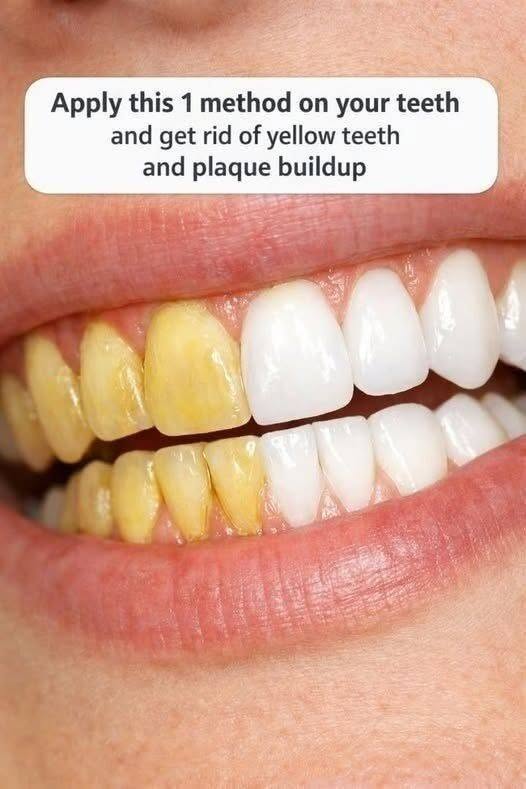
The internet is full of dramatic before-and-after pictures showing yellow teeth becoming brilliantly white after a single homemade treatment.
But these images don’t always tell the full story.
Some are edited.
Others show professional treatments rather than home remedies.
And certain viral methods may actually damage your enamel.
The most reliable way to reduce plaque buildup is much simpler:
Brush twice a day with fluoride toothpaste, clean between your teeth daily, use gentle technique, and schedule professional dental care when needed.
A properly formulated whitening toothpaste may help reduce surface stains.
Avoiding tobacco and limiting frequent exposure to staining beverages can also make a difference.
But remember that hardened tartar cannot be safely removed with household ingredients, and natural tooth color varies.
A healthy smile is about more than having perfectly white teeth.
It’s about strong enamel, healthy gums, fresh breath, and preventing dental problems before they start.
The best dental care method isn’t a miracle trick. It’s a simple routine you can maintain every day.
And sometimes, the smallest changes in your daily habits can make the biggest difference over time.
What do you struggle with most: yellow teeth, plaque buildup, bad breath, or sensitive gums? Share your experience in the comments!