Imagine preparing pork ribs for dinner when you suddenly notice a thin, curled, worm-like object sticking out of the meat. Is it a parasite, a blood vessel, or something completely harmless? Here’s what you need to know before taking another bite.
Cooking a delicious meal at home should be a relaxing experience.
You season your meat, heat the pan, and wait for the familiar aroma of dinner to fill your kitchen.
But sometimes, an unexpected discovery can turn an ordinary cooking session into a moment of panic.
That’s exactly the situation described in a viral social media post.
A person claimed to have purchased pork ribs from a grocery store and started frying them in a pan.
After cooking for a while, they noticed something unusual.
A small, thin, curved object appeared to be protruding from the meat.
Concerned, they carefully removed it and placed it on a paper towel.
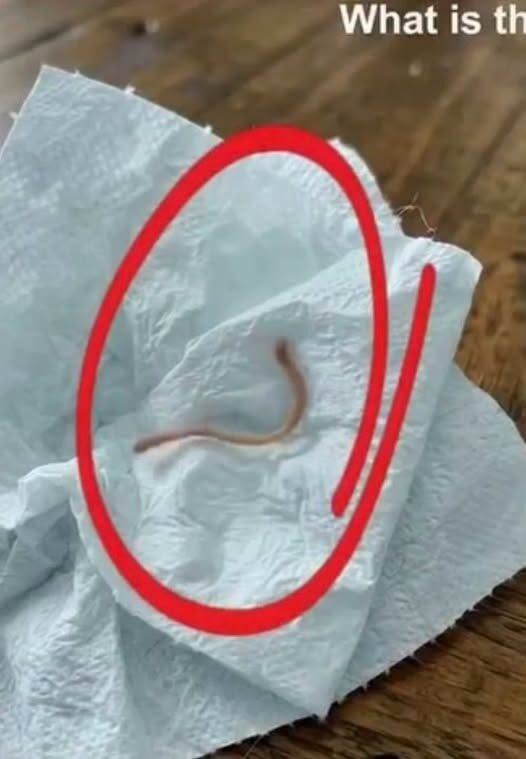
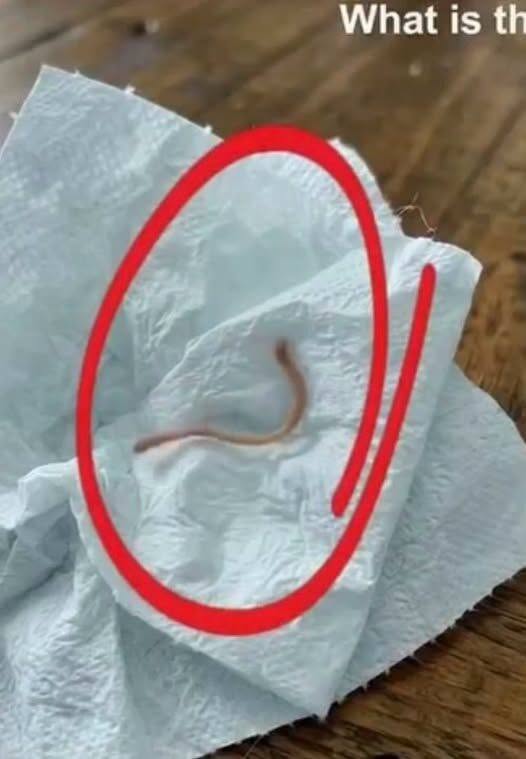
The accompanying photograph shows a pale, slightly reddish, worm-like object curled into an unusual shape.
The person wrote that they immediately lost their appetite and wanted to know what the mysterious object was.
It’s an understandable reaction.
After all, nobody wants to discover something resembling a worm in their dinner.
But here’s the important question:
Does finding a worm-shaped object in cooked pork automatically mean the meat contains parasites?
Not necessarily.
Several normal structures found in meat can resemble worms, including blood vessels, connective tissue, and tendons.
However, certain parasites can also occur in pork, particularly when meat comes from animals raised or processed without adequate food-safety controls.
The challenge is that a photograph alone cannot reliably distinguish all these possibilities.
Let’s explore what the mysterious object could be, how to recognize potential food-safety concerns, and what you should do if you discover something unusual in your meat.
What Is the Strange Worm-Like Object in the Viral Photo?
The viral image shows a narrow, curved, pinkish-beige object resting on a white paper towel.
It appears elongated and somewhat tubular.
One end is curved upward, creating a hook-like shape.
At first glance, the object resembles a small worm.
However, its appearance is not enough to establish what it actually is.
Several possibilities deserve consideration.
Possibility 1: A Blood Vessel
Meat contains blood vessels that supply muscles and surrounding tissues.
During butchering, some of these structures may remain attached to a cut of meat.
When heated, they can change color, shrink, and curl.
A small vessel removed from cooked pork may therefore resemble a worm.
Blood vessels can have a tubular appearance and may appear reddish, pale, or grayish after cooking.
Possibility 2: Connective Tissue
Connective tissue helps support muscles and other structures.
Certain strands can become more visible as meat cooks and surrounding tissues shrink.
These strands may appear pale, stringy, or slightly translucent.
Some can curl or separate from the meat during cooking.
Possibility 3: A Small Tendon or Tissue Strand
Pork ribs contain several types of tissue beyond muscle.
Depending on the cut, small strands of connective tissue may remain.
Heat can cause them to contract.
This may create unusual shapes that resemble worms or other unfamiliar objects.
Possibility 4: A Parasite
Parasitic infection is another possibility that cannot be ruled out from appearance alone.
However, not every parasite associated with pork looks like a visible worm, and many cannot be identified without laboratory examination.
The object in the photograph cannot be confidently identified as a parasite, blood vessel, or other tissue based solely on the image.
A reliable conclusion would require examination of the actual specimen.
Why Does Cooked Meat Sometimes Contain Strange-Looking Structures?
Most people encounter meat only after it has been trimmed, packaged, and prepared for sale.
As a result, it’s easy to forget that meat comes from a complex biological structure.
Muscle tissue contains more than muscle fibers.
It also includes:
- Blood vessels.
- Nerves.
- Connective tissue.
- Fat.
- Tendons.
- Membranes.
- Supporting tissue.
Some of these structures remain visible in certain cuts.
Pork ribs, in particular, contain meat, bone, fat, membranes, and connective tissue.
When heat is applied, these components respond differently.
Muscle proteins contract.
Fat melts.
Connective tissue changes texture.
Some structures shrink more than others.
This can cause a small strand to emerge from the meat or become more noticeable during cooking.
A structure that looked completely ordinary when raw may appear strange after heating.
Can Blood Vessels Look Like Worms in Pork?
Yes.
Blood vessels can sometimes resemble worms, especially when they are separated from surrounding meat.
A vessel may look like a small tube.
Depending on its condition, it may have a hollow center.
Its color can vary.
When cooked, it may become pale or grayish.
Heat may also cause it to contract into a curved shape.
This can create an appearance similar to the object in the viral photograph.
However, identifying a blood vessel requires more than visual similarity.
A specimen may need to be examined for its structure and composition.
Without that examination, calling the object a blood vessel would be speculation.
Can Pork Contain Actual Parasites?
Yes, pork can carry certain parasites under some circumstances.
However, the risk varies considerably depending on the country, farming practices, veterinary controls, food processing, and preparation methods.
Commercial pork from regulated supply chains generally benefits from measures designed to reduce foodborne risks.
But no food system eliminates every possible hazard.
The most important parasites associated with pork include certain species of Trichinella and Taenia solium.
These organisms differ significantly in how they infect people and what they look like.
Trichinella: The Parasite Associated With Undercooked Pork
Trichinella is a group of parasitic roundworms that can cause a disease called trichinellosis.
Humans may become infected after eating raw or undercooked meat containing infective larvae.
Pork has historically been an important source, although wild game meat can also pose a risk.
What Does Trichinella Look Like?
Here’s an important detail.
Trichinella larvae in meat are microscopic.
They are not normally visible as long, free-moving worms protruding from a pork chop or rib.
This means the worm-like object shown in the viral photograph does not match the typical appearance of Trichinella larvae in muscle tissue.
However, this does not establish what the object actually is.
Symptoms of Trichinellosis
Symptoms may include:
- Nausea.
- Diarrhea.
- Abdominal discomfort.
- Fever.
- Muscle pain.
- Swelling around the eyes.
- Fatigue.
Symptoms vary depending on the infection.
Severe cases can cause serious complications.
Anyone who develops concerning symptoms after consuming potentially undercooked pork should seek medical advice.
Pork Tapeworm: Another Important Food-Safety Concern
Taenia solium, commonly called the pork tapeworm, is another parasite associated with pork.
Humans can develop intestinal tapeworm infection after eating raw or undercooked pork containing viable larval cysts.
These larvae are generally present as cyst-like structures in the muscle rather than as long, mature worms extending from cooked meat.
The adult tapeworm develops in the human intestine.
This distinction is important because viral posts often show a visible string or tissue strand and immediately label it a tapeworm.
That conclusion is not medically justified without examination.
A Different Condition: Cysticercosis
Cysticercosis occurs when a person ingests T. solium eggs, typically through fecal contamination.
It is not acquired simply by eating pork containing larval cysts.
The two conditions involve different stages of the parasite’s life cycle.
Understanding this difference helps avoid misinformation about pork and parasites.
Does Cooking Pork Kill Parasites?
Proper cooking is one of the most important ways to reduce foodborne risks.
Heat can inactivate many harmful organisms, including relevant parasites, when the meat reaches appropriate internal temperatures.
However, cooking time and temperature matter.
The outside of a piece of meat can look fully cooked while the center remains undercooked.
Color alone is not a reliable indicator of safety.
A food thermometer is the best way to check.
Recommended Internal Temperatures for Pork
For whole cuts of pork, such as chops, roasts, and many rib cuts, U.S. food-safety guidance recommends an internal temperature of at least 145°F (63°C) followed by a three-minute rest.
Ground pork should reach 160°F (71°C).
These recommendations apply to properly handled meat and standard cooking conditions.
Certain high-risk products, wild game, or other circumstances may require additional precautions.
Always follow relevant local food-safety guidance.
Why a Meat Thermometer Matters
Many home cooks judge meat by appearance.
They look for browned surfaces, clear juices, or a particular color.
But these methods are not dependable enough to confirm that meat has reached a safe temperature.
A food thermometer provides a more objective measurement.
How to Use One
Insert the thermometer into the thickest part of the meat.
Avoid touching bone.
For thin cuts, insert the probe from the side when appropriate.
Check more than one location if the cut is uneven.
Follow the temperature recommendations for the type of meat being prepared.
A thermometer cannot identify a mysterious object, but it helps reduce the risk associated with undercooked meat.
What Should You Do if You Find a Worm-Like Object in Pork?
If you discover something unusual in your meat, the safest response is to stop and assess the situation.
Step 1: Stop Eating the Meat
Do not continue eating while the object remains unidentified.
This is especially important if the meat also has an unusual odor, appearance, or texture.
Step 2: Avoid Handling the Object With Bare Hands
Use clean utensils or disposable gloves.
Wash your hands afterward.
Step 3: Preserve the Object if Necessary
If you intend to report the issue, place the object in a clean, sealed container.
Keep it separate from other foods.
Refrigerate it promptly if advised by the relevant food-safety authority.
Avoid preserving it with household chemicals, which may interfere with examination.
Step 4: Keep the Packaging
The packaging may contain useful information, such as:
- Brand.
- Product name.
- Purchase date.
- Lot number.
- Processing information.
- Expiration or use-by date.
These details may help a retailer, producer, or food-safety authority investigate.
Step 5: Contact the Store or Manufacturer
Explain what you found.
Provide photographs if requested.
Ask whether the product should be returned or retained for examination.
Step 6: Contact a Food-Safety Authority if Appropriate
If you suspect contamination, a local food-safety agency may provide guidance.
The appropriate reporting process depends on your location.
Should You Throw Away the Entire Batch of Pork?
That depends on the circumstances.
A harmless tissue strand is not the same as evidence of contamination.
However, a consumer usually cannot make that distinction with certainty from appearance alone.
If you discover an unexplained object and cannot establish what it is, the cautious choice is to avoid eating the affected meat until the issue is clarified.
If the meat smells spoiled, shows unusual discoloration, has been stored improperly, or may be contaminated, discard it safely.
Do not taste suspicious meat to determine whether it is safe.
When in doubt, seek guidance from the retailer or appropriate food-safety authority.
Can You Identify Meat Parasites by Looking at Them?
Sometimes parasites or parasite-related lesions may be visible during meat inspection.
But many important foodborne parasites are microscopic or appear in forms that do not resemble familiar worms.
A long, stringy object is not automatically a parasite.
And meat that looks completely normal is not automatically free from harmful organisms.
This is why food safety depends on multiple protections:
- Veterinary oversight.
- Proper slaughter and processing.
- Inspection.
- Safe transportation.
- Refrigeration.
- Hygienic handling.
- Adequate cooking.
Visual inspection at home is only one small part of the process.
Why Do Worm-Like Objects Curl When Meat Is Heated?
Heat changes the structure of proteins.
When proteins are heated, they can unfold, contract, or reorganize.
Different tissues contain different proteins and have different mechanical properties.
For example, collagen-rich tissue behaves differently from muscle fibers.
A small strand of tissue attached to meat may contract unevenly.
If one side shortens more than the other, the strand can bend or curl.
This may produce a shape that looks surprisingly similar to a worm.
The curling itself is not evidence that the object was alive.
A nonliving tissue strand can change shape during cooking.
Could the Object Be a Nerve?
Nerves are another normal component of animal tissue.
They may appear as pale strands in certain cuts of meat.
However, nerves are generally associated with specific anatomical structures.
Their appearance can vary depending on how the meat was butchered and cooked.
A small, pale strand could resemble nerve tissue, connective tissue, or another structure.
As with the other possibilities, a photograph cannot reliably establish that the object is a nerve.
Is Pork Safe to Eat?
Pork can be part of a balanced diet when it is sourced, stored, handled, and cooked properly.
Like other raw meats, pork can contain harmful microorganisms.
Safe food preparation reduces these risks.
Important Pork Safety Habits
Buy meat from reputable retailers.
Keep raw pork refrigerated.
Avoid leaving meat at room temperature for extended periods.
Prevent raw meat juices from contacting ready-to-eat foods.
Use separate utensils and cutting surfaces when necessary.
Wash hands thoroughly after handling raw meat.
Cook pork to the recommended internal temperature.
Refrigerate leftovers promptly.
These steps are more important than judging safety solely by color or appearance.
How Long Can Raw Pork Stay in the Refrigerator?
Storage recommendations vary depending on the product.
Under standard U.S. food-safety guidance, fresh whole cuts of pork are generally refrigerated for approximately three to five days at 40°F (4°C) or below.
Raw ground pork is generally recommended for use within one to two days.
Always follow package instructions and local guidance.
If you cannot cook the meat within the recommended period, freezing may be appropriate.
Do not rely on smell alone to determine whether stored meat is safe.
Some harmful microorganisms do not produce an obvious odor.
Does Freezing Pork Kill Parasites?
Freezing can reduce the risk from certain parasites under specific temperature and time conditions.
However, it is not a universal safety solution.
Some parasites found in wild game are more resistant to freezing.
Household freezers may also vary in temperature and performance.
Freezing does not reliably eliminate all bacteria or other foodborne hazards.
For these reasons, freezing should not replace proper cooking and safe handling.
Is Wild Pork More Dangerous Than Store-Bought Pork?
Wild boar and other wild game animals may present different food-safety risks from commercially raised pork.
Their diets and exposure to parasites are less controlled.
Certain Trichinella species associated with wildlife can be resistant to freezing.
People preparing wild game should follow specific local public health recommendations.
Thorough cooking and careful handling are especially important.
Can You Get Sick From Touching Raw Pork?
Handling raw pork does not automatically cause illness.
However, raw meat can carry microorganisms that may contaminate hands, utensils, and surfaces.
This is why handwashing is essential.
Wash hands with soap and water after handling raw meat.
Clean utensils and preparation surfaces appropriately.
Avoid touching ready-to-eat foods before washing your hands.
Do not wash raw pork under running water, as splashing can spread microorganisms around the kitchen.
Why Do Some Pork Ribs Have White Strings?
White or pale strings in pork ribs can sometimes be normal connective tissue.
Ribs contain membranes and other supporting structures.
When cooked, these tissues may become more visible.
Some may appear stringy.
Others may shrink or curl.
However, not every white object found in meat is necessarily connective tissue.
If an object is unusual, detached, or concerning, avoid making a definitive identification without appropriate examination.
Can Parasites Survive Frying?
Parasite survival depends on the organism and the temperature reached inside the meat.
Frying can heat the outside of meat rapidly.
But thick pieces may remain cooler in the center.
A browned exterior does not guarantee that the interior has reached a safe temperature.
Use a food thermometer rather than relying on cooking time or appearance alone.
Proper cooking is a key safeguard.
What If You Already Ate the Pork?
If you have already eaten meat containing an unidentified object, do not automatically assume you have a parasitic infection.
Many unusual-looking structures in meat are not parasites.
However, the appropriate response depends on whether the meat was adequately cooked, whether contamination is suspected, and whether symptoms develop.
Symptoms Worth Monitoring
Possible foodborne illness symptoms include:
- Nausea.
- Vomiting.
- Diarrhea.
- Abdominal cramps.
- Fever.
Some parasitic infections can cause symptoms days or weeks after exposure.
If you develop significant symptoms, contact a healthcare professional.
Seek urgent medical attention for severe dehydration, bloody diarrhea, severe abdominal pain, persistent high fever, or other serious symptoms.
Pregnant people, older adults, young children, and people with weakened immune systems may require additional caution.
Tell the clinician about the suspected food exposure.
Do not take antiparasitic medication without medical advice.
Why Viral Food Photos Can Be Misleading
Social media photographs often lack essential context.
A close-up image may make an ordinary object look enormous.
Lighting can change its apparent color.
The photograph may not show where the object came from.
And the accompanying story may be impossible to verify.
In the viral pork-rib image, viewers see a curved object on a paper towel.
They do not see a continuous recording of it being removed from the meat.
They do not have laboratory results.
They do not know the product’s origin or cooking conditions.
As a result, claims that the object is definitely a worm—or definitely a blood vessel—go beyond what the photograph establishes.
The most responsible conclusion is that the object remains unidentified.
What a Food Laboratory Could Determine
If the specimen were submitted for examination, a laboratory might use several approaches.
These could include:
- Visual examination under magnification.
- Microscopic analysis.
- Assessment of tissue structure.
- Specialized testing when indicated.
A blood vessel has a different structure from a parasitic worm.
Connective tissue also has distinctive microscopic characteristics.
A trained examiner may be able to distinguish these possibilities.
The exact method would depend on the specimen’s condition and the suspected hazard.
Common Myths About Worms in Pork
Myth 1: Every White String in Pork Is a Parasite
False.
Normal connective tissue and other anatomical structures can look stringy.
Myth 2: You Can Always See Parasites in Raw Meat
False.
Some parasites are microscopic.
Myth 3: A Worm-Shaped Object Must Have Been Alive
False.
Heat can cause ordinary tissue to curl into worm-like shapes.
Myth 4: All Pork Contains Dangerous Worms
False.
The presence and risk of parasites depend on many factors, including animal health and food-safety controls.
Myth 5: If Meat Looks Cooked, It Is Definitely Safe
False.
Appearance alone cannot reliably establish internal temperature.
Myth 6: Freezing Makes All Pork Completely Safe
False.
Freezing does not eliminate every potential hazard.
Myth 7: You Can Identify Every Parasite From a Social Media Photo
False.
Reliable identification may require examination of the actual specimen.
Frequently Asked Questions
What Is the Worm-Like Thing Found in Pork Ribs?
It could be a blood vessel, connective tissue, another normal anatomical structure, or potentially a foreign or parasitic object. The viral photograph alone cannot establish its identity.
Can Blood Vessels Look Like Worms When Cooked?
Yes. Small vessels may shrink, curl, and change color during cooking.
Can Pork Ribs Have Parasites?
Pork can carry certain parasites under some circumstances, but the risk varies with sourcing, processing, and preparation.
Is Trichinella Visible in Pork?
The larvae in muscle are microscopic and are not typically seen as long worms sticking out of meat.
Can Cooking Kill Pork Parasites?
Proper cooking to recommended internal temperatures is an important way to reduce parasite-related risks.
What Temperature Should Pork Ribs Reach?
For whole cuts of pork, the standard U.S. minimum recommendation is 145°F (63°C) with a three-minute rest. Ribs are often cooked to higher temperatures for tenderness.
Should I Eat Pork After Finding a Strange Object?
If the object cannot be identified and contamination is a concern, avoid eating the affected meat until the situation is clarified.
Can I Get a Tapeworm From Pork?
Eating raw or undercooked pork containing viable Taenia solium larval cysts can cause intestinal tapeworm infection in areas where the parasite occurs.
Is It Normal to Find Connective Tissue in Pork?
Yes. Connective tissue is a normal component of meat and can become more noticeable during cooking.
How Can I Know for Sure What the Object Is?
A qualified laboratory or food-safety professional may be able to examine the specimen and determine its identity.
Final Thoughts: Don’t Panic, but Don’t Ignore an Unidentified Object in Your Food
Finding something that looks like a worm in your dinner can be deeply unsettling.
The viral photograph of a curled, pale object supposedly removed from pork ribs is certainly unusual.
But its appearance does not prove that the meat was infested with parasites.
Blood vessels, connective tissue, and other normal anatomical structures can sometimes resemble worms after cooking.
At the same time, genuine foodborne parasites do exist, and safe handling and cooking of pork remain important.
The key is to avoid jumping to conclusions.
A photograph cannot replace laboratory identification.
If you encounter a similar object, stop eating the affected meat, preserve relevant packaging, and contact the retailer or appropriate food-safety authority if necessary.
Most importantly, remember that proper cooking, safe storage, and good kitchen hygiene are the foundations of food safety.
The mysterious object in the viral image may eventually have a straightforward explanation.
But until it is properly examined, its true identity remains uncertain.
Would you continue eating your dinner after finding something like this in your pork ribs—or would you immediately throw the whole meal away?
Share your reaction in the comments!