A surprisingly simple laundry hack is going viral on social media: put an empty plastic bottle inside your washing machine with your clothes, and supposedly enjoy better washing results. But does this unusual trick actually work, or could it damage your machine?
Laundry is one of those household chores that never seems to end.
You sort the clothes, add detergent, choose a wash cycle, and wait for the machine to finish. Yet sometimes, the results are disappointing.
Clothes come out tangled together. Sleeves are twisted around other garments. Large items become tightly wrapped into knots, and certain fabrics seem to have collected every piece of lint in the drum.
That’s why people are constantly searching for simple ways to make laundry easier.
From adding white vinegar to using dryer balls, household laundry tricks regularly attract attention online.
But one of the latest viral ideas is particularly unexpected.
An ordinary empty plastic bottle placed inside a washing machine.
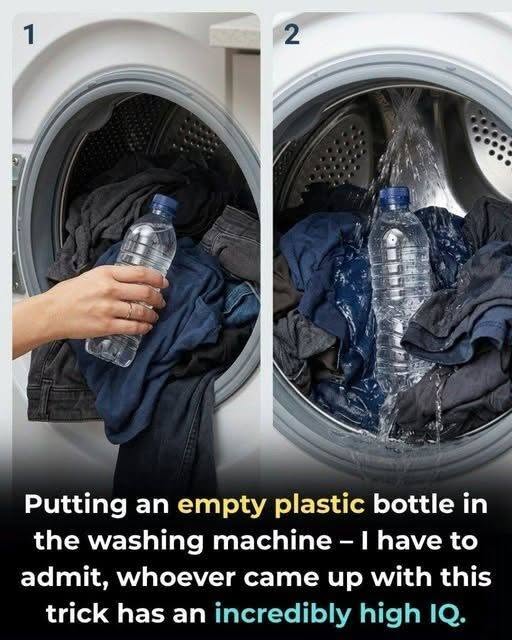
The social media post promoting this trick suggests that whoever discovered it must have an incredibly high IQ.
The accompanying photographs show a person placing a clear plastic water bottle among dark clothing inside a front-loading washing machine.
The claim sounds almost too simple to be true.
Could a plastic bottle really improve the way clothes move inside the drum?
And, more importantly, is it safe?
Let’s explore the idea, the possible science behind it, and what laundry experts generally recommend instead.
What Is the Viral Plastic Bottle Laundry Trick?
The trick involves placing an empty plastic water bottle directly into the washing machine drum along with dirty clothes.
According to versions of the claim circulating online, the bottle supposedly helps prevent clothing from becoming tangled during washing.
Some posts also suggest that it can improve water circulation, reduce wrinkles, or help separate garments.
The method is usually described as follows:
- Take an empty plastic water bottle.
- Remove any remaining liquid.
- Place the bottle inside the washing machine with the laundry.
- Add detergent and select a normal washing cycle.
- Allow the bottle to move among the clothes during washing.
Supporters claim that the bottle acts as a simple object that keeps garments from bunching together.
However, there is an important distinction between an idea that sounds mechanically plausible and one that has actually been proven effective.
There is no strong, established evidence that adding a loose plastic bottle to a washing machine consistently improves laundry results.
And the practice introduces potential risks that shouldn’t be overlooked.
Why Do Clothes Become Tangled in the Washing Machine?
To understand the theory behind the trick, it helps to understand how washing machines work.
Most modern washing machines clean clothes through a combination of water, detergent, and mechanical movement.
In a front-loading machine, the drum rotates, lifting clothes before allowing them to tumble back down.
This movement helps detergent and water reach the fabric while loosening dirt.
However, certain garments are more likely to twist around each other.
Long sleeves, trouser legs, bedsheets, and lightweight fabrics can become intertwined during repeated drum rotations.
When a load contains items of very different sizes, smaller pieces may also become trapped inside larger ones.
The problem can become worse when the machine is overloaded.
With insufficient space to move freely, garments may form a tightly packed bundle rather than tumbling individually.
This is one reason manufacturers recommend leaving adequate room inside the drum.
The Theory Behind the Plastic Bottle Trick
The idea behind adding a plastic bottle is that an additional object moving inside the drum might interrupt the way clothes wrap around one another.
In theory, a bottle could occasionally push two pieces of fabric apart.
It might also alter the movement of a particular garment during part of the cycle.
But that doesn’t mean the effect would be reliable.
Washing machines are designed around specific mechanical movements, load sizes, and balance requirements.
A loose bottle can behave unpredictably.
It might become trapped between garments.
It might float during certain phases of washing.
It could become compressed, crushed, or thrown against the drum.
And depending on the machine and cycle, it might do nothing useful at all.
There is no reliable reason to assume that a household water bottle will function like a purpose-designed laundry accessory.
Can a Plastic Bottle Prevent Clothes From Tangling?
This is the main question behind the viral trend.
The short answer is that the benefit is unproven.
Although an object inside the drum could theoretically change how fabrics move, there is insufficient evidence that an empty plastic bottle prevents tangling across different washing machines and laundry loads.
Several factors influence tangling:
- The type of washing machine.
- The size of the load.
- The length and shape of the garments.
- The wash program.
- The amount of water used.
- The drum’s movement.
- The spin speed.
An ordinary plastic bottle does not address these factors in a controlled or predictable way.
A better approach is to follow the machine manufacturer’s recommendations and adjust how the laundry is loaded.
Could the Plastic Bottle Damage Your Washing Machine?
This is where the viral trick becomes more concerning.
An empty plastic bottle may appear harmless because it is lightweight.
However, washing machines contain moving components and operate under conditions that are very different from simply shaking clothes in a container.
1. The Bottle Could Become Crushed
Thin disposable water bottles are not designed to withstand repeated mechanical impacts inside a washing machine.
They can deform or crack.
If the plastic breaks, fragments may remain inside the drum or become caught in clothing.
2. The Bottle Cap Could Come Loose
A bottle cap can detach during washing.
A loose cap or broken plastic component could potentially enter areas where small objects should not be present.
This could create problems with drainage or internal components.
3. The Bottle Could Cause Excessive Noise
As the drum rotates, a bottle may repeatedly strike its metal interior.
This can create knocking or rattling sounds.
Although noise alone doesn’t necessarily mean damage is occurring, unusual objects inside the drum can interfere with normal operation.
4. It Could Affect Load Distribution
Washing machines are designed to distribute clothing during spinning.
An additional loose object may move unpredictably within the load.
While a lightweight bottle is unlikely to create the same imbalance as a heavy item, there is no guarantee that it will remain harmless under all operating conditions.
5. Heat Can Deform Certain Plastics
Disposable water bottles are not designed for repeated exposure to hot washing conditions.
Heat and mechanical stress can cause certain plastics to deform.
For these reasons, putting a loose disposable plastic bottle into a washing machine is not recommended unless the appliance manufacturer explicitly approves the practice.
Does the Trick Work Better in Front-Loading or Top-Loading Machines?
The viral image shows a front-loading washing machine.
But front-loading and top-loading appliances move clothing differently.
Front-Loading Washing Machines
Front-loaders generally use a rotating horizontal drum.
Clothes are lifted and dropped repeatedly.
An empty bottle placed among the clothes would tumble unpredictably.
It might occasionally separate garments, but it could also become trapped or compressed.
Top-Loading Washing Machines
Top-loaders may use an agitator or an impeller to move clothing through water.
A loose bottle could interfere with the movement of the laundry or the machine’s normal operation.
The risks and behavior would depend on the particular appliance.
Neither design provides a clear justification for introducing an ordinary disposable bottle.
What About the Claim That It Reduces Wrinkles?
Some versions of the trick suggest that a plastic bottle can reduce wrinkles.
This claim is also unsupported.
Wrinkles form for several reasons.
Clothes may become tightly compressed during washing or spinning.
They may remain inside the machine for too long after the cycle finishes.
Certain fabrics naturally wrinkle more easily than others.
And excessively high spin speeds can leave some garments more creased.
Adding a plastic bottle does not directly solve these problems.
There are simpler and more dependable methods for reducing wrinkles.
For example, removing clothes promptly after washing can make a noticeable difference.
Shaking garments before hanging or drying them also helps release folds.
Using a suitable wash cycle and avoiding overloading can further improve results.
Seven Better Ways to Stop Clothes From Tangling in the Wash
Instead of experimenting with an unapproved object inside your washing machine, try these practical methods.
1. Avoid Overloading the Drum
One of the most common laundry mistakes is putting too many clothes into the washing machine.
When garments are packed tightly together, they cannot move freely.
This may reduce washing performance and contribute to tangling.
Follow the load limits specified for your machine and the selected wash program.
Remember that bulky items can fill the drum before reaching its maximum weight capacity.
2. Wash Large Items Separately
Bedsheets, duvet covers, and other large textiles can wrap around smaller garments.
Washing them separately may help reduce tangling.
Always follow the care labels and appliance instructions for bulky items.
3. Use Mesh Laundry Bags
Mesh laundry bags are particularly useful for small or delicate items.
They can help keep socks, delicate garments, and certain clothing accessories contained.
Choose bags intended for machine washing, and avoid overfilling them.
A mesh bag should allow water and detergent to circulate around the contents.
4. Fasten Zippers and Secure Loose Straps
Open zippers, long straps, and loose ties can catch on other clothing.
Before washing, close zippers and secure loose attachments where appropriate.
This can reduce snagging and help protect delicate fabrics.
5. Choose the Correct Washing Program
Different fabrics require different washing conditions.
Delicate clothing may benefit from gentler drum movement.
Bulky items may require a dedicated program.
Always check the clothing care labels and the washing machine’s instructions.
6. Use an Appropriate Spin Speed
Very high spin speeds can leave certain garments tightly compressed.
For delicate or wrinkle-prone fabrics, a lower spin speed may be more suitable.
However, lower spin speeds leave more moisture in clothing, so the best setting depends on the fabric and drying method.
7. Remove Clothes Promptly
Leaving wet laundry sitting inside the drum can contribute to wrinkles and unpleasant odors.
Removing garments promptly after the cycle ends helps keep them in better condition.
Give each item a gentle shake before hanging it up or placing it in the dryer.
Are Laundry Balls a Better Alternative?
Some people compare the plastic bottle trick to reusable laundry balls.
However, not all laundry balls serve the same purpose.
Certain products are designed for specific washing applications, while others make cleaning claims that may not be well supported by independent evidence.
A product being sold as a laundry accessory does not automatically mean it improves cleaning.
If you’re considering one, check whether the manufacturer of your washing machine allows its use.
Also look for credible performance testing rather than relying entirely on promotional claims.
Dryer balls are a separate category.
They are designed for use in compatible clothes dryers, not necessarily washing machines.
Never assume that an accessory intended for a dryer is suitable for a washing machine.
Can a Plastic Bottle Help Remove Pet Hair?
Another variation of this type of laundry advice suggests that putting objects inside the drum can help collect pet hair.
However, an ordinary smooth plastic water bottle is not designed to capture loose fur.
Pet hair can cling to fabrics because of friction, static electricity, and the structure of the material.
A plastic bottle does not provide a reliable mechanism for collecting it.
If pet hair is a recurring problem, try removing loose fur before washing.
A lint roller, suitable fabric brush, or vacuum attachment can help.
For heavily covered items, following the garment and appliance manufacturer’s recommendations may also reduce the amount of hair entering the washer.
Remember to inspect and maintain your machine’s filters according to its instructions.
Can You Use a Plastic Bottle to Save Detergent?
Some social media laundry tricks suggest that adding an object to the drum helps distribute detergent more effectively.
There is no convincing evidence that a loose disposable plastic bottle reduces the amount of detergent needed.
Using too much detergent can actually cause problems.
Excess detergent may leave residue on fabrics and inside the machine.
The correct amount depends on factors such as:
- Load size.
- Water hardness.
- Soil level.
- Detergent concentration.
- Washing machine type.
High-efficiency machines generally require detergents and quantities appropriate for their design.
For the best results, follow both the detergent instructions and the appliance manufacturer’s recommendations.
The Real Secret to Cleaner Laundry
Many viral hacks promise dramatic improvements from a single household item.
But consistently clean laundry usually depends on a combination of ordinary habits.
Using the right detergent matters.
So does sorting clothes appropriately.
Choosing the correct temperature can help protect fabrics and improve cleaning performance.
Avoiding overload allows clothing to move as intended.
And regular machine maintenance can prevent buildup and unpleasant odors.
These steps may not be as surprising as placing a plastic bottle inside the drum.
But they are supported by the way washing machines are designed to operate.
Why Do Simple Household Hacks Go Viral?
The popularity of the plastic bottle trick reveals something interesting about social media.
People love solutions that seem clever, inexpensive, and easy to try.
A household object that supposedly solves a frustrating everyday problem is almost guaranteed to attract attention.
The visual demonstration also plays an important role.
Seeing a bottle placed inside a washing machine makes the trick look simple and convincing.
But a photograph only shows that someone placed the bottle there.
It does not establish that the laundry became cleaner, less tangled, or less wrinkled.
To evaluate a claim properly, we would need controlled comparisons under similar washing conditions.
Without that evidence, dramatic captions should be treated as claims rather than established facts.
Common Laundry Mistakes That Are Easy to Avoid
Sometimes the best laundry improvement comes from correcting a mistake rather than adding something new.
Using Too Much Detergent
More detergent does not necessarily mean cleaner clothes.
Excess product can leave residue and may make rinsing less effective.
Mixing Incompatible Fabrics
Washing delicate fabrics with rough or heavy items can increase wear.
Separate garments according to their care requirements.
Ignoring Care Labels
Care labels provide useful information about temperature, washing methods, and drying restrictions.
Ignoring them can shorten the lifespan of clothing.
Forgetting to Clean the Washing Machine
Detergent residue, moisture, and accumulated debris can contribute to odors and performance problems.
Follow the manufacturer’s maintenance instructions.
Leaving Wet Clothes in the Drum
Promptly removing laundry helps prevent wrinkles and reduces the chance of musty odors developing.
Frequently Asked Questions
Does Putting an Empty Plastic Bottle in the Washing Machine Really Work?
There is no strong evidence that placing an ordinary empty plastic bottle in the drum reliably improves cleaning or prevents tangling.
Is It Safe to Put a Plastic Bottle in the Washing Machine?
It is not recommended unless the washing machine manufacturer specifically approves the practice. Bottles can deform, crack, or interfere with normal operation.
Can a Plastic Bottle Stop Clothes From Getting Tangled?
The claim is unproven. Better approaches include avoiding overload, washing bulky items appropriately, and using suitable mesh laundry bags.
Will a Plastic Bottle Reduce Wrinkles?
There is no reliable evidence that it reduces wrinkles. Choosing the correct cycle, avoiding overloading, and removing clothes promptly are more dependable methods.
Should the Bottle Have Its Cap On or Off?
Neither option makes the trick a recommended washing method. A cap may come loose, while an uncapped bottle may fill with water and behave unpredictably.
Can I Use the Trick With Hot Water?
Disposable plastic bottles may deform under heat and mechanical stress. They are not designed to function as washing machine accessories.
What Is the Best Way to Keep Bedsheets From Tangling?
Avoid overloading, wash large bedding items according to their care labels, and use an appropriate bedding or bulky-item cycle if your machine provides one.
Are Dryer Balls the Same as the Plastic Bottle Trick?
No. Dryer balls are purpose-designed accessories for compatible dryers. A disposable water bottle is not a substitute and should not be placed in a dryer.
Final Verdict: Clever Idea or Risky Laundry Myth?
The plastic bottle laundry trick is certainly unusual.
And it’s easy to understand why people are curious.
After all, the idea of improving laundry results with something as simple as an empty water bottle sounds appealing.
But an eye-catching social media post is not the same as a tested household method.
There is no convincing evidence that a loose plastic bottle reliably prevents tangling, improves cleaning, or reduces wrinkles in a washing machine.
Meanwhile, introducing an object that was never designed for the appliance may create unnecessary risks.
The better solution is to focus on proven laundry practices: correct loading, appropriate wash cycles, suitable accessories, and regular machine care.
Sometimes the smartest household trick isn’t adding something surprising.
It’s understanding how the appliance already works.
Would you ever put an empty plastic bottle inside your washing machine, or would you rather stick to traditional laundry methods?
Share your thoughts in the comments!