Baking soda is inexpensive, easy to find, and useful for dozens of household tasks. That’s probably why it keeps appearing in viral beauty remedies.
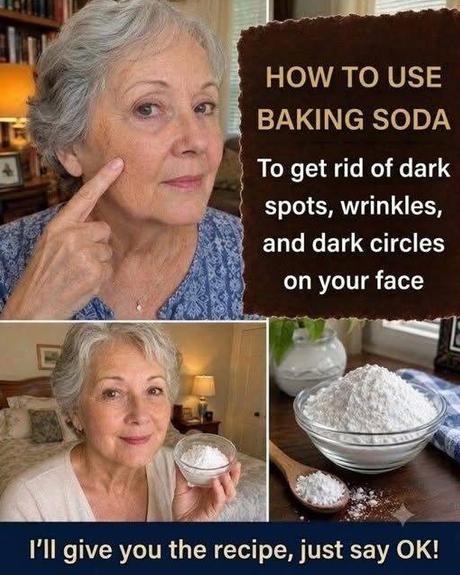
One popular claim suggests that applying baking soda to the face can remove dark spots, reduce wrinkles, and eliminate dark circles under the eyes.
It sounds like an incredibly simple anti-aging treatment.
Unfortunately, skincare isn’t quite that easy.
While baking soda can act as an abrasive and may temporarily make skin feel smoother, there is no good reason to consider it a proven treatment for wrinkles, facial hyperpigmentation, or under-eye circles. More importantly, irritating the skin can actually make some pigmentation problems worse. The American Academy of Dermatology (AAD) specifically advises stopping skincare products that sting or burn, because irritation can worsen the appearance of aging and can contribute to darkening in people prone to hyperpigmentation.
Here’s what to use instead.
Why Do People Put Baking Soda on Their Face?
Baking soda, or sodium bicarbonate, has a slightly gritty texture.
When mixed with water into a paste and rubbed across the skin, it can physically remove some material from the skin’s surface.
That immediate smooth feeling is probably one reason people believe it is “removing” wrinkles or pigmentation.
But smoother-feeling skin isn’t the same thing as reversing wrinkles or removing excess pigment.
Wrinkles develop through complex changes in collagen, elastin, skin hydration, aging, repeated facial movements, and especially accumulated sun exposure.
Dark spots can have many different causes.
And under-eye circles can involve pigmentation, visible blood vessels, shadows from facial anatomy, aging-related volume changes, allergies, and other factors.
One kitchen ingredient cannot reliably address all of these problems.
Can Baking Soda Remove Dark Spots?
There’s no established dermatologic treatment in which ordinary baking soda is considered a standard treatment for facial hyperpigmentation.
Dark spots may develop after:
- Acne
- Skin irritation
- Sun exposure
- Hormonal changes
- Inflammation
- Injury
- Melasma
- Aging-related sun damage
Treatment depends partly on what’s causing the pigmentation.
That’s important because repeatedly irritating dark spots with aggressive DIY treatments can sometimes make matters worse.
The AAD notes that products that burn or sting can irritate the skin, and irritation can darken existing spots in people with melasma or hyperpigmentation-prone skin.
The Problem With Scrubbing Dark Spots
Imagine that you have a brown mark left behind after a pimple.
You scrub it every day because you’re trying to remove the darker layer.
Instead of disappearing, the area becomes red and irritated.
That inflammation can potentially lead to additional pigmentation, particularly in darker skin tones.
So when treating hyperpigmentation, gentler is often better than aggressive scrubbing.
Can Baking Soda Remove Wrinkles?
Baking soda doesn’t rebuild lost collagen or reverse the structural changes responsible for established wrinkles.
If a homemade paste exfoliates the surface, your skin might temporarily feel smoother.
That’s not the same as permanently reducing wrinkles.
The AAD recommends beginning an anti-aging routine with two much more useful products:
sunscreen and moisturizer.
Moisturizer can temporarily plump the skin and make some fine lines less noticeable, while sunscreen helps prevent additional UV-related aging.
For appropriate people, retinoids are another evidence-supported option for mild fine lines and wrinkles.
Sun Protection Matters More Than Most DIY Anti-Aging Tricks
If your goal is younger-looking skin, protecting it from ultraviolet radiation is fundamental.
Unprotected sun exposure contributes to:
- Wrinkles
- Age spots
- Uneven pigmentation
- Loss of firmness
- Other signs of premature skin aging
The AAD recommends a broad-spectrum, water-resistant sunscreen with SPF 30 or higher.
This doesn’t mean sunscreen will magically erase every wrinkle you already have.
It means you’re helping prevent additional UV damage while any other treatment has a chance to work.
What About Dark Circles Under the Eyes?
This is where you should be particularly cautious with viral baking-soda recipes.
The skin around your eyes is delicate.
A gritty DIY paste isn’t something you want accidentally entering your eyes, and irritating the area may make it look worse rather than better.
Dark circles aren’t one single condition with one universal cause.
They can become more noticeable due to factors such as genetics, pigmentation, shadows created by facial anatomy, aging-related changes, rubbing the eyes, allergies, and visible blood vessels beneath thin skin.
That means the best solution depends on the cause.
What Actually Helps Dark Spots?
The first step is identifying what you’re treating.
A brown spot from previous acne isn’t necessarily treated exactly like melasma or an age spot.
However, several skincare approaches have much stronger dermatologic support than baking soda.
1. Daily Sunscreen
This is one of the most important steps.
UV exposure can contribute to pigmentation and make existing discoloration harder to improve.
The AAD recommends broad-spectrum SPF 30 or higher. For people particularly concerned about hyperpigmentation, including those with darker skin tones, tinted sunscreen containing iron oxide can provide additional protection against visible light, which can worsen pigmentation.
2. Vitamin C
Topical vitamin C is commonly used in skincare routines targeting uneven tone.
AAD dermatologist guidance identifies vitamin C as an ingredient that can help with dark spots and signs of skin aging.
A vitamin C serum can typically be incorporated into a morning routine before sunscreen, depending on the formulation and your skin’s tolerance.
3. Retinoids
Retinoids are vitamin A derivatives.
Depending on the product and strength, they can help with:
- Fine lines
- Uneven pigmentation
- Acne
- Skin texture
The AAD notes that retinoids can be useful for mild pigmentation irregularities and fine lines.
But they can also irritate skin, especially when introduced too quickly.
Start cautiously and follow product or medical instructions.
Retinoids should not be used during pregnancy.
4. Professional Treatments
For stubborn age spots or significant sun damage, dermatologists have additional options.
Depending on the diagnosis, these may include:
- Prescription retinoids
- Chemical peels
- Laser treatments
- Intense pulsed light
- Microdermabrasion
- Cryosurgery for appropriate lesions
The AAD lists several of these approaches for treating age spots and other signs of sun damage.
These aren’t treatments to reproduce at home without professional guidance.
What Actually Helps Wrinkles?
A simple routine is usually a better starting point than complicated DIY masks.
Morning
Use a gentle cleanser if needed.
Apply an appropriate moisturizer.
Apply broad-spectrum SPF 30+ sunscreen.
Vitamin C can be added if your skin tolerates it and you’re targeting discoloration or signs of aging.
Evening
Cleanse gently.
Apply moisturizer.
An appropriate retinol or retinoid may be introduced gradually if suitable for you.
You don’t need ten different anti-aging products.
In fact, using too many products at once can irritate the skin and make signs of aging more noticeable.
Moisturizer Is More Important Than It Looks
Moisturizer sounds boring compared with a viral miracle ingredient.
But it actually does something useful.
Moisturizers trap water in the skin, which can temporarily plump the skin and make fine lines appear less noticeable.
Dry, irritated skin tends to make lines look more pronounced.
So before experimenting with harsh exfoliating remedies, make sure your basic skincare routine is supporting your skin barrier.
Why “If It Burns, It’s Working” Is Bad Skincare Advice
A surprisingly common myth says that a product must sting to be effective.
That’s not true.
The AAD specifically advises stopping products that sting or burn unless the reaction is expected as part of treatment supervised by a dermatologist. Irritated skin can make signs of aging more noticeable.
This is especially important when treating dark spots.
Irritation may lead to additional discoloration in people susceptible to post-inflammatory hyperpigmentation.
Pain isn’t proof that a skincare treatment is working.
What About Baking Soda Mixed With Lemon Juice?
This combination frequently appears online.
It’s not a facial treatment I would recommend.
Adding another potentially irritating ingredient doesn’t transform baking soda into an evidence-based treatment for pigmentation.
If you’re trying to fade dark spots, your goal should be to improve pigmentation without repeatedly inflaming your skin.
Gentle skincare and sun protection are much safer foundations.
What About Baking Soda and Coconut Oil?
Another viral recipe combines baking soda with coconut oil.
Adding oil may change how the mixture feels, but it doesn’t create a proven wrinkle or pigmentation treatment.
Some people also find certain oils too heavy or pore-clogging for their particular skin.
Choose products formulated for your skin type rather than assuming that every natural ingredient is suitable for every face.
Can Baking Soda Be Used as a Facial Scrub?
There are many facial exfoliating products designed specifically for skin.
Using an improvised kitchen powder isn’t necessary.
If you want exfoliation, select a properly formulated skincare product appropriate for your skin type and follow its directions.
Don’t assume that harder scrubbing produces faster results.
It can simply produce more irritation.
Dark Spots Aren’t Always Just “Age Spots”
This is particularly important for older adults.
Not every new brown, black, red, scaly, or changing mark should automatically be treated at home as an age spot.
Sun exposure can produce benign pigmentation, but it can also contribute to precancerous growths and skin cancer. The AAD notes that accumulated UV damage can lead not only to wrinkles and age spots but also to actinic keratoses and skin cancer.
A dermatologist should examine a spot that is new, changing, bleeding, persistently itching, unusual in appearance, or otherwise concerning.
Don’t repeatedly cover a suspicious lesion with DIY treatments hoping to bleach it away.
A Simple Anti-Aging Routine That Makes More Sense
You don’t need expensive skincare to start taking better care of mature skin.
Try building around three priorities:
Protect. Hydrate. Treat one concern at a time.
The AAD specifically recommends starting with sunscreen and moisturizer before adding products targeting individual aging concerns.
This approach also makes it easier to identify which product is causing irritation if your skin reacts.
Morning Routine
Step 1: Gentle cleansing.
Step 2: Optional vitamin C product for pigmentation/antioxidant skincare if tolerated.
Step 3: Moisturizer.
Step 4: Broad-spectrum SPF 30+ sunscreen.
Evening Routine
Step 1: Gentle cleansing.
Step 2: Retinol/retinoid if appropriate and tolerated.
Step 3: Moisturizer.
Start slowly when introducing active ingredients.
Skincare results require patience.
The AAD notes that while moisturizer may improve the appearance of fine lines fairly quickly, many anti-aging products require at least six weeks, and sometimes around three months, before results become apparent.
Don’t Expect One Product to Fix Everything
The viral image promises an impressive combination:
Dark spots.
Wrinkles.
Dark circles.
All treated by one cheap household ingredient.
That’s exactly the kind of promise that should make you cautious.
These concerns have different causes and often require different treatments.
Even the AAD advises focusing on your primary aging concern rather than immediately combining numerous anti-aging products.
Good skincare is usually less dramatic than social media makes it look.
But it’s also much more realistic.
When Should You See a Dermatologist?
Consider professional evaluation if:
- Dark spots are rapidly changing
- A spot has an irregular or unusual appearance
- A lesion bleeds or doesn’t heal
- Pigmentation keeps worsening
- Over-the-counter skincare isn’t helping
- Your skin becomes persistently irritated
- You want treatment for deeper wrinkles
- You’re unsure whether a mark is actually an age spot
- Dark circles are severe or accompanied by other symptoms
A dermatologist can determine what you’re actually treating before recommending a solution.
The Bottom Line
Baking soda is not a proven miracle treatment for dark spots, wrinkles, and under-eye circles.
And aggressively scrubbing or irritating your face can work against your goal — particularly if you’re prone to hyperpigmentation.
For healthier-looking aging skin, the evidence points toward a much less sensational approach:
Use gentle skincare.
Moisturize regularly.
Protect your skin every day with broad-spectrum SPF 30+ sunscreen.
Consider evidence-supported ingredients such as vitamin C or an appropriate retinoid for specific concerns.
And get persistent or unusual pigmentation evaluated rather than trying to bleach or scrub it away.
The most effective skincare routine isn’t necessarily the one with the cleverest kitchen ingredient.
It’s the one that protects your skin barrier, addresses the actual problem, and can be used consistently without causing unnecessary irritation.
Medical Disclaimer: This article provides general skincare information and isn’t a diagnosis or individualized treatment plan. People with persistent pigmentation, sensitive skin, skin disease, or suspicious/changing lesions should consult a qualified healthcare professional or dermatologist.