What if one inexpensive kitchen ingredient could help tackle certain laundry problems without adding another expensive product to your shopping list?
White vinegar has become one of the most talked-about household cleaning ingredients, especially when it comes to washing clothes, removing unpleasant odors, and keeping towels feeling fresh.
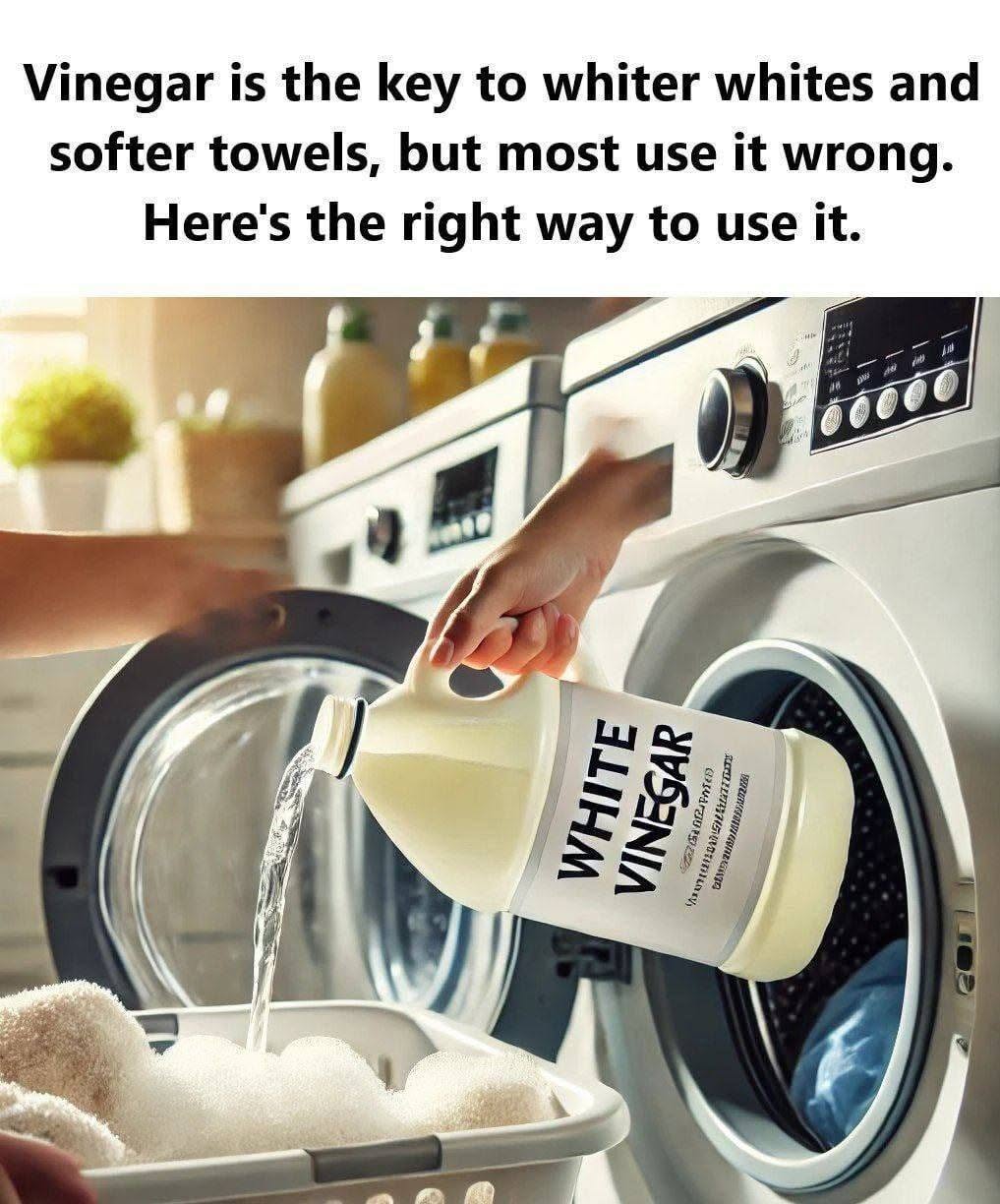
A viral laundry tip claims that vinegar is the secret to brighter white clothes and softer, fluffier towels. The accompanying image shows white vinegar being poured into a laundry container beside a washing machine.
It sounds almost too simple.
But does vinegar really whiten clothes? Can it soften towels? And is it safe to pour directly into your washing machine?
The truth is more complicated than many viral cleaning tips suggest.
While vinegar has certain useful properties, it is not a miracle laundry treatment. Using it incorrectly can damage some fabrics or potentially affect washing machine components.
Here’s what you need to know before trying this popular trick.
Why White Vinegar Is So Popular for Laundry
White vinegar is a familiar household product made primarily from water and acetic acid.
Ordinary distilled white vinegar generally contains around 5% acetic acid, although concentrations vary.
Its acidity gives it properties that can be useful for certain cleaning tasks.
For example, vinegar can help dissolve some mineral deposits and alkaline residues.
That is why people sometimes use it to clean kettles, remove limescale from compatible surfaces, or address particular household odors.
However, cleaning a hard surface is different from washing fabric inside an appliance.
Clothing contains different fibers, dyes, finishes, and elastic components, while washing machines contain seals, hoses, and other parts that may not be compatible with repeated acid exposure.
The fact that vinegar is a familiar kitchen ingredient does not automatically make it safe for every laundry application.
Can Vinegar Really Make White Clothes Whiter?
One of the biggest claims surrounding vinegar is that it can restore the brightness of white clothing.
There is a limited reason this idea sounds plausible.
Some white fabrics become dull because of detergent residue or minerals left behind by hard water.
Acidic solutions can help dissolve certain mineral deposits under suitable conditions.
However, vinegar is not a reliable substitute for a proper laundry whitening product.
It does not work like oxygen bleach, and it cannot reverse every cause of discoloration.
Why White Clothes Turn Gray or Yellow
Several factors can cause white laundry to lose its brightness.
Detergent buildup: Using too much detergent or rinsing poorly can leave residue.
Body oils and perspiration: Oils and sweat can contribute to yellowing, especially around collars and underarms.
Hard water: Minerals can interfere with detergent performance and leave deposits.
Color transfer: Washing white clothing with colored garments can cause discoloration.
Incorrect washing temperatures: Water that is too cool for certain oily stains may reduce cleaning effectiveness, depending on the detergent and fabric.
Overloading the washing machine: Clothes need enough room to move for proper cleaning and rinsing.
The most effective solution depends on what caused the discoloration.
The Best Way to Brighten White Laundry
Before reaching for vinegar, try these proven laundry habits.
Step 1: Separate White Clothes
Wash white items separately from strongly colored garments when appropriate.
Always check care labels.
Step 2: Choose an Effective Laundry Detergent
Use a detergent suitable for your washing machine and the type of fabric.
Follow the recommended amount based on load size, water hardness, and soil level.
Step 3: Pretreat Stains
Apply a compatible stain remover to visible marks before washing.
Sweat stains, grease, and food stains may require different treatments.
Step 4: Consider Oxygen-Based Laundry Whitener
For washable white fabrics, an oxygen-based whitening product may help remove certain stains and improve brightness.
Follow the product instructions and check fabric compatibility.
Step 5: Avoid Overloading
Leave enough space for the laundry to circulate.
Step 6: Dry Appropriately
Follow garment care labels.
Some white cotton fabrics can benefit from outdoor drying, but prolonged direct sunlight can damage or fade certain textiles.
These methods are generally more predictable than adding vinegar to every wash.
Can Vinegar Make Towels Softer?
This is another popular claim.
Some people report that their towels feel softer after using vinegar.
One possible explanation is that acidic rinses may help remove certain alkaline residues or mineral deposits.
But results vary, and there is limited evidence that vinegar consistently improves towel softness in normal home laundering.
It is also important to understand why towels become stiff in the first place.
Common Reasons Towels Feel Rough
- Too much laundry detergent
- Inadequate rinsing
- Hard-water mineral buildup
- Overdrying
- Detergent or fabric conditioner residue
- General wear and fiber damage
In many cases, changing your washing routine is more helpful than adding another ingredient.
How to Keep Towels Soft Without Fabric Softener or Vinegar
Towels are designed to absorb moisture.
Traditional fabric softeners can coat fibers, sometimes reducing absorbency over time.
If your towels feel stiff or less absorbent, try the following routine.
1. Use the Correct Amount of Detergent
Excess detergent can remain trapped in the fibers.
Measure carefully rather than pouring in extra.
2. Avoid Overloading the Washer
Towels need room to move and rinse thoroughly.
3. Use an Extra Rinse When Needed
If you suspect detergent buildup, an extra rinse with plain water may help.
4. Skip Fabric Softener When Appropriate
Many towel manufacturers recommend avoiding conventional fabric softener because it can reduce absorbency.
5. Dry Towels Properly
If the care label permits tumble drying, use an appropriate temperature and avoid excessive drying.
6. Shake Towels Before Drying
Giving towels a good shake can help separate the fibers.
7. Address Hard Water
If your home has hard water, consider a detergent formulated for those conditions or other manufacturer-approved laundry solutions.
These steps can help preserve towel softness and absorbency without relying on unapproved additives.
The Right Way to Use Vinegar for Specific Laundry Problems
If you want to try vinegar, a controlled pretreatment outside the washing machine is generally preferable to routinely pouring it into the appliance.
One potential use is addressing certain mineral or detergent residues on washable fabrics.
A Targeted Vinegar Soak for Residue Buildup
This method is intended for selected washable items affected by hard-water or detergent deposits, not as an everyday treatment for all clothing.
What you’ll need:
- 1 cup (240 ml) of ordinary 5% distilled white vinegar
- 1 gallon (3.8 liters) of warm water
- A clean plastic basin
- The affected washable item
Instructions:
- Check the fabric’s care label and test a hidden area for colorfastness.
- Mix the vinegar and water in a separate basin.
- Soak the affected item according to the fabric’s tolerance, using a short initial soak.
- Rinse thoroughly with clean water.
- Wash normally with an appropriate detergent if needed.
This approach may help with some mineral or detergent deposits, but it will not fix every type of discoloration or fabric stiffness.
Avoid this method for delicate materials or garments whose manufacturers advise against acidic treatments.
Important: Never use this treatment on items contaminated with chlorine bleach or other incompatible chemicals.
The Biggest Mistake: Pouring Vinegar Directly Into the Washing Machine
Many viral tutorials recommend pouring half a cup or a full cup of vinegar into the fabric softener compartment.
Others suggest adding vinegar directly to the drum.
But this advice is not universally safe.
Several major appliance manufacturers warn that repeated exposure to vinegar may damage certain washing machine components, particularly rubber seals and hoses.
Over time, this could contribute to deterioration and leaks.
The safest approach is to consult your specific washing machine’s instruction manual.
If the manufacturer advises against vinegar, do not use it in the appliance.
And even if occasional vinegar use is permitted, that does not mean it should become part of every wash.
Never Mix Vinegar With Chlorine Bleach
This is the most important safety warning in the entire article.
Vinegar must never be mixed with chlorine bleach.
Vinegar is acidic, and combining it with chlorine bleach can release toxic chlorine gas.
Exposure can cause coughing, burning eyes, breathing difficulties, and potentially serious lung injury.
Do not add vinegar to a laundry cycle containing chlorine bleach, and do not combine them in a bucket, sink, or container.
If you accidentally mix them and notice irritating fumes, leave the area immediately and contact emergency services or a poison control center.
Never experiment with mixing household cleaning chemicals.
Does Vinegar Remove Laundry Odors?
Vinegar can sometimes help with certain odor-related residues, but it is not a universal deodorizer.
If your towels smell musty after washing, possible causes include:
- Leaving wet laundry inside the washer too long
- Using excessive detergent
- Inadequate drying
- Residue inside the washing machine
- Poor ventilation during storage
- Persistent dampness
For a lasting solution, identify the cause.
Wash towels according to their care labels, dry them thoroughly, and clean your washing machine using a manufacturer-approved method.
If laundry repeatedly develops an unpleasant smell, inspect the washer’s detergent drawer, door gasket, and drainage system according to the appliance instructions.
Is Cleaning Vinegar Better Than White Vinegar?
Not necessarily.
Cleaning vinegar may contain a higher concentration of acetic acid than ordinary food-grade distilled white vinegar.
Higher acidity can increase the risk of damage to fabrics, surfaces, and appliance components.
Do not assume that a stronger product will produce better laundry results.
Never substitute concentrated cleaning vinegar for ordinary white vinegar in a recipe without checking the product’s intended use and safety instructions.
Can Vinegar Replace Laundry Detergent?
No.
Laundry detergent contains ingredients specifically designed to remove oils, dirt, and other soils from fabric.
These may include surfactants, enzymes, and other cleaning agents.
Vinegar does not provide the same broad cleaning performance.
Using vinegar alone is not an effective replacement for normal laundry detergent.
What About Mixing Vinegar and Baking Soda?
Another viral laundry trick involves combining vinegar and baking soda.
The mixture produces visible fizzing, which can look impressive.
However, the two substances react with each other, reducing their distinctive acidic and alkaline properties.
The fizzing does not automatically translate into better laundry cleaning.
Rather than combining random household ingredients, use products designed for your specific laundry problem.
10 Simple Habits for Cleaner, Softer, Brighter Laundry
Sometimes the best results come from improving your routine rather than adding extra ingredients.
1. Sort Clothes Properly
Separate whites, dark colors, and delicate fabrics as needed.
2. Read Care Labels
Not every white garment can tolerate hot water or whitening products.
3. Measure Detergent Carefully
Too much detergent may leave residue.
4. Avoid Overloading
Allow enough space for clothes to move.
5. Pretreat Stains
Address stains before they become difficult to remove.
6. Choose the Correct Water Temperature
Follow garment care instructions and detergent recommendations.
7. Consider an Extra Rinse
This may help if detergent residue is a recurring problem.
8. Dry Towels Completely
Damp towels can develop unpleasant odors.
9. Maintain Your Washing Machine
Use the cleaning cycle and products recommended by its manufacturer.
10. Treat Different Laundry Problems Differently
Whitening, deodorizing, stain removal, and softening are separate goals that may require different approaches.
Frequently Asked Questions
Does white vinegar really whiten clothes?
It may help remove certain mineral or detergent residues that contribute to dullness, but it is not a dependable whitening agent for all stains or yellowing.
Can vinegar make towels fluffy again?
Some people notice an improvement when residue is removed, but vinegar is not guaranteed to restore softness or fluffiness.
How much vinegar should I put in my washing machine?
There is no universally safe amount for every machine. Check your appliance manufacturer’s instructions; some manufacturers advise against using vinegar inside the washer.
Can I pour vinegar into the fabric softener dispenser?
Only if your washing machine manufacturer explicitly permits it. The dispenser does not eliminate potential compatibility concerns.
Can vinegar damage washing machine seals?
Repeated exposure may affect certain rubber components, according to several appliance manufacturers.
Is vinegar safe for colored clothes?
It depends on the fabric and dye. Check the care label and test an inconspicuous area before any pretreatment.
Does vinegar disinfect laundry?
Ordinary household vinegar is not a reliable laundry disinfectant.
Can I use vinegar with chlorine bleach?
Absolutely not. Mixing them can release toxic chlorine gas.
Can vinegar remove yellow stains?
It may help with some mineral-related discoloration, but sweat, body oils, and other stains often need a suitable laundry stain remover.
What is the best way to keep white towels bright?
Wash them separately when appropriate, use the correct amount of detergent, avoid overloading, and choose a fabric-safe whitening product if needed.
Final Thoughts: Vinegar Can Help Sometimes, but It Isn’t a Laundry Miracle
White vinegar has earned a reputation as a versatile household ingredient, and it can be useful for certain cleaning problems.
In laundry, its acidity may help address specific mineral or detergent residues.
However, the claim that vinegar is the universal secret to whiter whites and softer towels goes too far.
It is not a replacement for detergent, not a reliable disinfectant, and not a guaranteed whitening treatment.
Most importantly, repeatedly pouring vinegar into a washing machine may be incompatible with the appliance manufacturer’s recommendations.
For the best results, focus on proper sorting, accurate detergent dosing, appropriate stain treatment, thorough rinsing, and correct drying.
If you choose to use vinegar for a specific fabric problem, consider a carefully controlled pretreatment outside the washer and always check fabric compatibility.
The real secret to brighter whites and softer towels isn’t using more household ingredients—it’s understanding what your laundry actually needs.
Safety reminder: Never mix vinegar with chlorine bleach, and always follow garment and washing machine care instructions.