Have you ever picked up your favorite pair of glasses, looked through the lenses, and noticed tiny scratches that seem impossible to ignore?
Maybe they appeared after cleaning your glasses with a shirt, dropping them on a table, or carrying them in your bag without a protective case.
Whatever the cause, scratched eyeglasses can be frustrating, especially when you depend on them every day.
Recently, a viral cleaning trick has been circulating on social media with an exciting promise:
“Stop buying new glasses! This simple recipe erases scratches and restores perfect shine.”
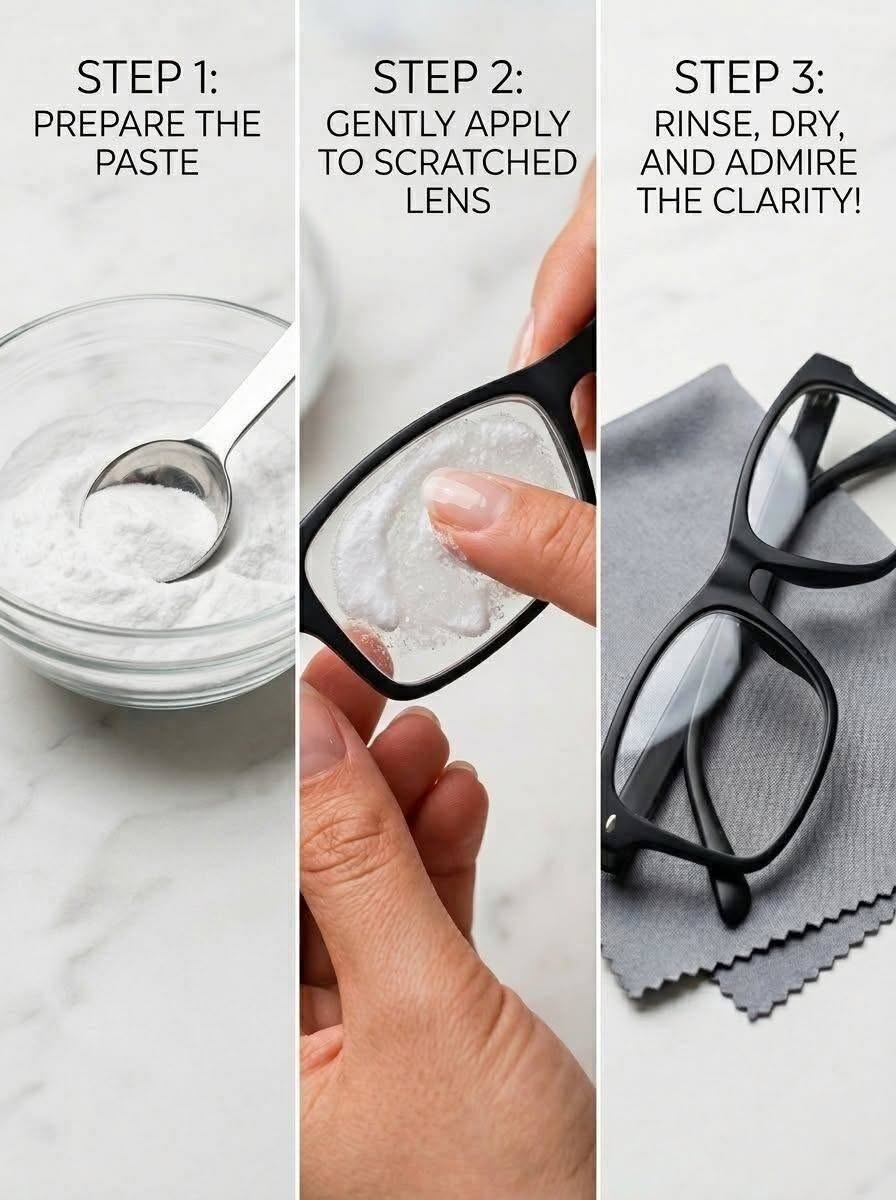
The accompanying image shows three steps: preparing a white paste, gently applying it to scratched lenses, and rinsing the glasses until they appear clean.
It looks simple, affordable, and almost too good to be true.
But does this homemade method actually remove scratches?
And could it accidentally damage your expensive lenses?
Before trying the viral trick, here’s what you should know about eyeglass scratches, lens coatings, and the safest ways to clean your glasses.
What Is the Viral Eyeglass Scratch Removal Trick?
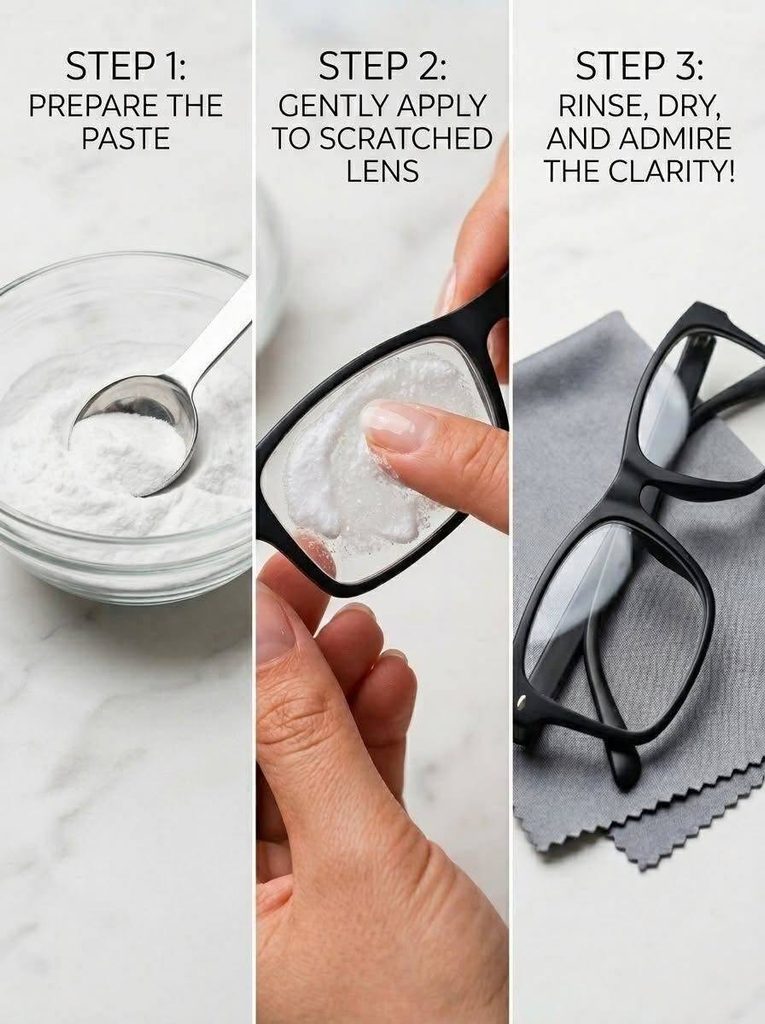
The viral image shows a white paste being prepared in a small container.
The second picture shows someone applying the mixture to an eyeglass lens.
The final image displays a pair of clean glasses beside a microfiber cloth.
Although the image doesn’t clearly identify the ingredients, similar viral methods frequently recommend a paste made from baking soda and water.
Other versions suggest toothpaste, vinegar, or household polishing products.
These methods often promise to:
- Remove fine scratches
- Restore lens clarity
- Eliminate cloudy marks
- Make old glasses look new
- Save money on replacement lenses
However, there is no reliable evidence that rubbing baking soda paste on modern prescription lenses safely repairs scratches.
In fact, abrasive homemade pastes can make the problem worse.
Why Eyeglasses Get Scratched
Modern eyeglass lenses are typically made from materials such as plastic, polycarbonate, Trivex, or high-index plastic.
These materials are lighter than traditional glass and can provide excellent optical performance.
However, they can still develop scratches.
Common causes include:
Cleaning Glasses With Clothing
Shirts, towels, and tissues may contain rough fibers or trapped dust particles.
Rubbing them against lenses can cause tiny scratches over time.
Wiping Dry Lenses
Dust, sand, and other small particles can act like abrasives when rubbed across a dry lens.
Placing Glasses Face Down
Putting your glasses on a table with the lenses touching the surface increases the risk of scratches.
Carrying Glasses Without a Case
Keys, coins, and other objects can damage lenses inside a bag or pocket.
Using Harsh Cleaning Products
Some household cleaners contain chemicals or abrasive particles that can damage lens coatings.
Exposure to Excessive Heat
High temperatures may damage certain lens coatings, producing cloudy areas or fine cracking patterns.
Does Baking Soda Remove Scratches From Eyeglasses?
Baking soda is a mild abrasive.
That means it can help scrub certain household surfaces, but this property makes it unsuitable for polishing delicate coated eyeglass lenses.
When rubbed onto a lens, baking soda may remove or damage part of its surface coating.
It does not restore the original optical material that has been scratched away.
Even if the lens appears temporarily shinier after cleaning, the scratch itself may remain.
The safest recommendation is to avoid using baking soda paste on prescription eyeglasses.
Why Toothpaste Isn’t a Good Solution Either
Another popular online trick involves rubbing toothpaste over scratched lenses.
Some people believe that toothpaste can smooth out surface imperfections.
However, many toothpastes contain abrasive polishing agents.
These ingredients are designed for teeth, not delicate optical coatings.
Using toothpaste on eyeglasses may:
- Create additional fine scratches
- Damage anti-reflective coatings
- Make the lens appear cloudy
- Reduce visual clarity
- Cause uneven surface wear
Whitening toothpastes can be particularly abrasive.
Rather than risking further damage, use a cleaning method recommended by your optician or lens manufacturer.
The Safe Way to Clean Eyeglasses at Home
If your glasses look cloudy or scratched, cleaning them properly is a good first step.
Sometimes what appears to be scratching is actually grease, fingerprints, or dried residue.
A gentle cleaning may restore clarity if the problem is surface dirt rather than physical damage.
What You’ll Need
- Lukewarm water
- A small amount of mild, lotion-free dish soap, if approved for your lenses
- A clean microfiber lens cloth
- A clean sink or bowl
Step 1: Wash Your Hands
Wash your hands thoroughly to remove dirt, oil, and lotion.
Dry them before handling your glasses.
Step 2: Rinse the Glasses
Hold your glasses under a gentle stream of lukewarm water.
This helps remove dust and small particles before wiping.
Avoid hot water, which can damage some lens coatings.
Step 3: Apply a Small Amount of Soap
If your lens manufacturer permits it, apply a tiny drop of mild, lotion-free dish soap.
Gently clean both sides of the lenses and the frame with your fingertips.
Do not scrub aggressively.
Step 4: Rinse Thoroughly
Rinse away all soap residue using lukewarm water.
Step 5: Dry With a Microfiber Cloth
Use a clean microfiber cloth specifically intended for eyeglasses.
Gently dry the lenses without applying excessive pressure.
Step 6: Inspect the Lenses
Hold your glasses under good lighting.
If the marks disappear, they were probably surface residue.
If the marks remain in the same positions, they may be actual scratches or coating damage.
Important: This method cleans lenses. It does not repair physical scratches.
How to Tell the Difference Between Dirt and Scratches
Sometimes it can be difficult to identify what’s causing blurry lenses.
| Problem | Typical appearance | Can cleaning help? |
|---|---|---|
| Fingerprints | Greasy smudges | Yes |
| Dust | Small loose particles | Yes |
| Dried residue | Spots or streaks | Usually |
| Fine scratches | Thin lines that remain after cleaning | No |
| Coating damage | Persistent cloudy patches or irregular patterns | Usually not |
| Deep scratches | Visible grooves or pronounced lines | No |
If you’re unsure, an optician can examine the lenses and help determine whether replacement is necessary.
What About Anti-Reflective Coatings?
Many modern eyeglasses have special surface coatings.
These may include:
- Anti-reflective coatings
- Scratch-resistant coatings
- Water-repellent coatings
- Oil-resistant coatings
- UV-protective treatments
These layers improve comfort, durability, or optical performance.
However, they can also be damaged by unsuitable cleaning methods.
Abrasive pastes and harsh chemicals may scratch or degrade coatings, creating permanent cloudy patches or visible marks.
That is why homemade polishing recipes are especially risky for coated lenses.
10 Mistakes That Can Damage Your Eyeglasses
1. Cleaning With Toothpaste
Toothpaste can contain abrasive particles that damage lens surfaces.
2. Using Baking Soda Paste
Baking soda can scratch delicate coatings instead of restoring them.
3. Wiping With a Shirt
Clothing can trap dirt particles that scratch lenses.
4. Using Paper Towels
Paper towels and tissues are not recommended for delicate optical surfaces.
5. Applying Household Glass Cleaner
Window-cleaning products may contain ingredients unsuitable for lens coatings.
6. Using Very Hot Water
Excessive heat can damage certain lens materials and coatings.
7. Cleaning With a Dirty Microfiber Cloth
A cloth containing dust or grit may cause scratches.
8. Placing Glasses Lens-Down
Hard surfaces can scratch lenses when they come into contact.
9. Leaving Glasses in a Hot Car
High temperatures can affect frames and coatings.
10. Storing Glasses Without Protection
A hard case helps prevent accidental damage.
Can an Optician Repair Scratched Glasses?
An optician can inspect the lenses and determine whether the issue is caused by dirt, surface damage, or deteriorating coatings.
They may be able to professionally clean the glasses or adjust the frame.
However, actual scratches in modern prescription lenses generally cannot be safely polished away while preserving the original optical quality.
In many cases, replacing the affected lenses is the appropriate solution.
The good news is that you may not need to replace the entire pair of glasses.
If the frame is still in good condition and suitable for reuse, an optician may be able to fit new lenses into it.
This can sometimes reduce the overall cost.
How to Prevent Scratches in the Future
Prevention is the most reliable way to keep your glasses clear.
Always Use a Protective Case
Store your glasses in a hard case when you’re not wearing them.
Rinse Before Wiping
Removing loose particles first reduces the risk of rubbing grit against the lenses.
Keep a Microfiber Cloth Handy
Carry a clean lens cloth rather than using clothing or tissues.
Clean the Cloth Regularly
Wash microfiber cloths according to their care instructions.
Avoid fabric softener because it can leave residue.
Avoid Extreme Temperatures
Don’t leave glasses on a hot dashboard or near heaters.
Choose Scratch-Resistant Lenses
When purchasing replacement lenses, ask your optician about durable coatings.
Scratch-resistant does not mean scratch-proof, but suitable coatings can help reduce everyday wear.
Schedule Professional Adjustments
Poorly fitting glasses are more likely to slip, fall, or be handled frequently.
Proper adjustments can improve comfort and reduce accidental damage.
Frequently Asked Questions
Can baking soda remove scratches from glasses?
Baking soda is abrasive and is not recommended for polishing prescription lenses. It can damage lens coatings and create additional scratches.
Does toothpaste work on scratched eyeglasses?
Toothpaste is not a safe or reliable way to repair scratches on modern eyeglass lenses.
Can scratches disappear after cleaning?
True scratches do not disappear through ordinary cleaning. However, grease or residue that resembles scratching may wash away.
Can I use vinegar to clean my glasses?
Avoid homemade acidic cleaning solutions unless your lens manufacturer specifically approves them.
Can I use rubbing alcohol?
Only use alcohol-containing products specifically approved for your lens material and coatings. Some eyeglass wipes are formulated for coated lenses, but household rubbing alcohol is not automatically suitable.
What is the safest homemade eyeglass cleaning method?
For compatible lenses, lukewarm water and a tiny amount of mild, lotion-free dish soap can work well. Follow your manufacturer’s instructions.
Why do my glasses look cloudy even after cleaning?
Persistent cloudiness may result from coating deterioration, scratches, or other surface damage.
Can scratched prescription lenses affect vision?
Yes. Scratches can scatter light, increase glare, and interfere with visual clarity.
Do I need to replace the entire pair of glasses?
Not necessarily. Depending on the frame’s condition, you may be able to replace only the lenses.
Are expensive lenses scratch-proof?
No. Even premium lenses with protective coatings can develop scratches.
Can professional polishing restore prescription lenses?
Polishing can alter the optical surface and coatings. It is generally not an appropriate repair for modern prescription lenses.
Why does the viral photo show clear glasses after using a paste?
A before-and-after image alone cannot establish that scratches were repaired. The glasses may simply have been cleaned, and lighting or camera angles can affect how scratches appear.
Final Thoughts: Don’t Risk Your Glasses With a Viral Cleaning Trick
The promise of removing eyeglass scratches using a simple kitchen ingredient sounds wonderful.
After all, replacement lenses can be expensive, and nobody wants to spend money unnecessarily.
But the viral baking soda trick has an important limitation: cleaning a lens and repairing a scratch are two completely different things.
A gentle cleaning method can remove fingerprints, grease, and dust, making your glasses look clearer.
However, an abrasive paste may permanently damage the surface and coatings.
For the best results, use lens-safe cleaning products, protect your glasses from scratches, and consult an optician if the damage affects your vision.
The real secret to keeping your glasses crystal clear isn’t a miracle paste—it’s cleaning them gently and protecting them every day. 👓✨
Have you ever tried a homemade trick to clean scratched glasses? What happened?