Have you ever cleaned your bathroom thoroughly, only to notice that your toilet seat still looks dirty?
You scrub it, spray it with an all-purpose cleaner, try baking soda, and even reach for vinegar. But those stubborn yellowish stains simply refuse to disappear.
If this sounds familiar, you’re certainly not alone.
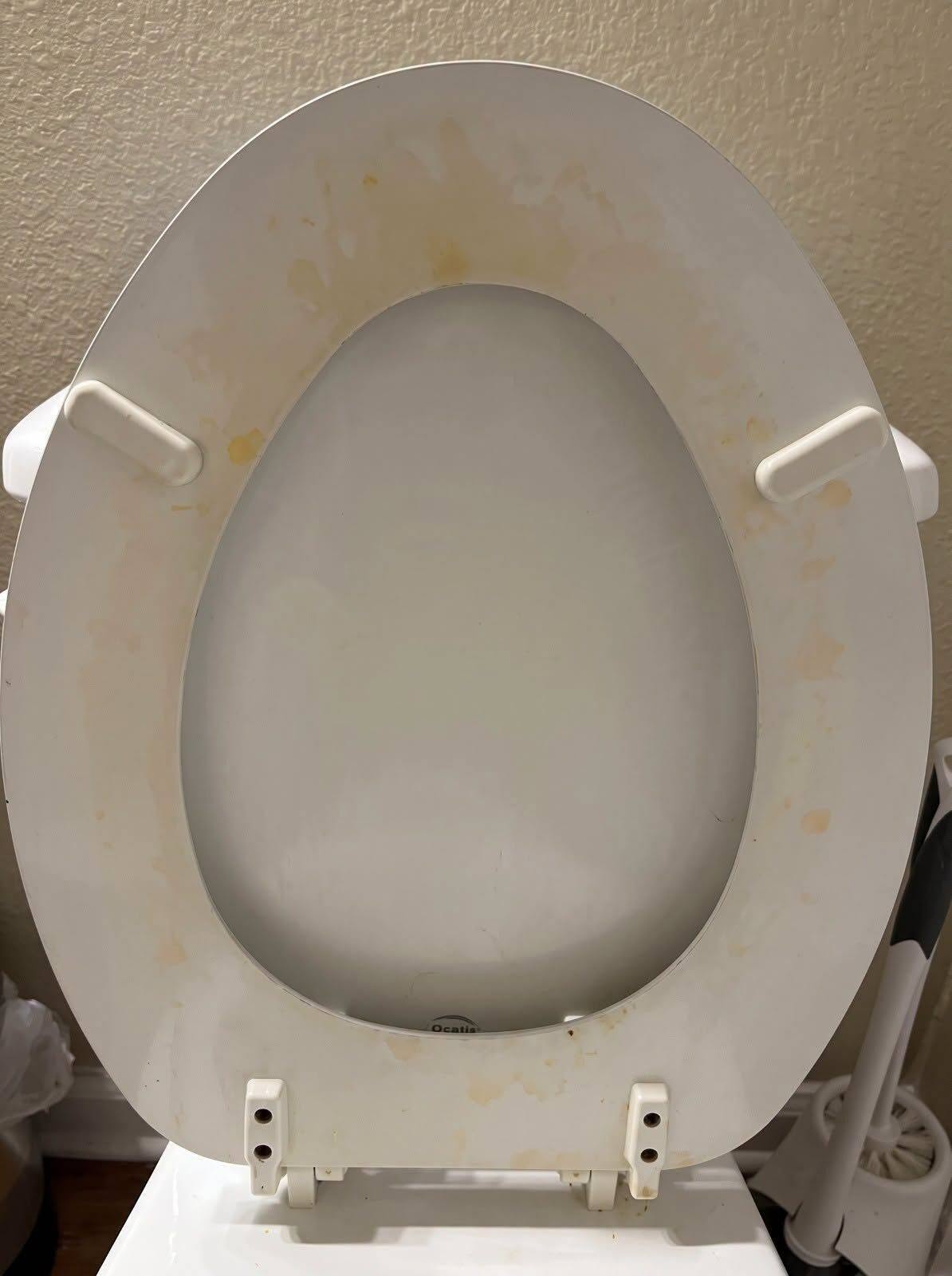
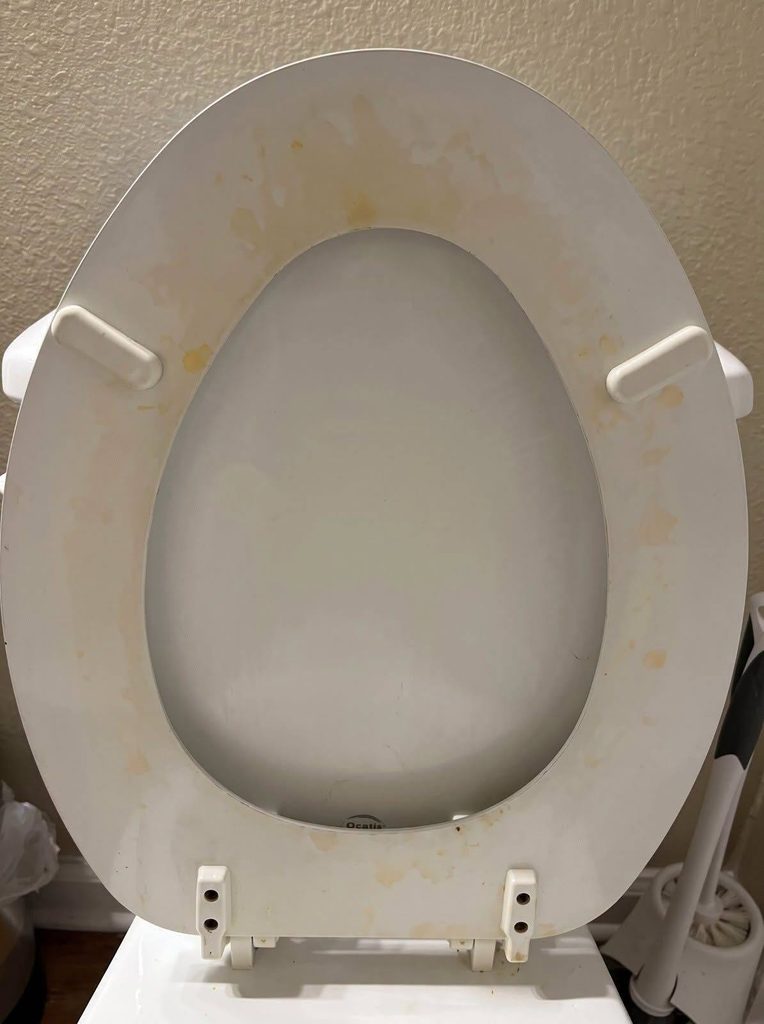
A viral Facebook post recently showed a white toilet seat covered in irregular yellow stains. The person who shared the photo explained that they had already tried several popular household cleaning products without success.
The question was simple:
“How do I get these stains off? I’ve tried multi-purpose cleaner, baking soda, and vinegar.”
The good news is that some toilet seat stains can be removed with gentle cleaning methods.
But there’s something important many people don’t realize: not every yellow mark on a toilet seat is actually a removable stain.
Sometimes the discoloration comes from changes in the plastic itself, and scrubbing harder can make the problem worse.
Before trying another cleaning hack, it’s worth understanding what causes these marks and which methods are safe for your toilet seat.
Why Do Toilet Seats Turn Yellow?
A white toilet seat may become yellow or discolored for several different reasons.
Understanding the cause can save you time, money, and unnecessary scrubbing.
1. Urine Residue
Small droplets of urine can reach the underside of a toilet seat, especially around the inner rim and hinges.
If residue remains on the surface, it may contribute to staining and unpleasant odors.
Regular cleaning can help prevent buildup.
However, not every yellow mark is caused by urine.
2. Aging Plastic
Many toilet seats are made from polypropylene, thermoset plastic, or other synthetic materials.
Over time, some plastics can change color because of aging, oxidation, heat, or environmental exposure.
This can produce a yellowish appearance that ordinary cleaning products cannot reverse.
3. Harsh Cleaning Chemicals
Repeated exposure to certain cleaning products can damage or discolor toilet seat materials.
Strong bleach solutions, abrasive powders, and aggressive chemical cleaners may affect some plastic surfaces or protective finishes.
Ironically, using increasingly harsh products to remove yellow stains can sometimes make discoloration worse.
4. Hard Water and Mineral Deposits
In some bathrooms, water containing dissolved minerals can leave deposits on nearby surfaces.
These deposits may appear yellowish, white, or brown, depending on the minerals present.
Mineral deposits are usually more common inside the toilet bowl than on the seat, but splashes can affect surrounding areas.
5. Cleaning Product Residue
Some cleaners leave films or residues behind if they aren’t properly rinsed away.
Over time, these residues may trap dirt or make a surface look dull.
6. Surface Wear and Scratches
Tiny scratches can trap dirt and make cleaning more difficult.
Scratches may result from abrasive sponges, stiff brushes, or gritty cleaning powders.
Once the surface is damaged, stains can become more persistent.
The First Thing You Should Check Before Cleaning
Before choosing a cleaning method, examine the stained area.
Ask yourself:
- Does the surface feel smooth or rough?
- Are the marks concentrated around the hinges or inner rim?
- Does the discoloration disappear temporarily when wet?
- Are there visible scratches?
- Has the seat become yellow evenly over time?
- Have strong cleaners already been used repeatedly?
If the surface is smooth, the marks have no visible buildup, and several appropriate cleaners have failed, the discoloration may be embedded in the material.
In that case, replacement may be more effective than continued scrubbing.
Method 1: Warm Water and Mild Dish Soap
<text weight=”medium”>Best for: Everyday grime, body oils, and light surface residue.</text>
This is the safest starting point for many toilet seats.
What You’ll Need
- Warm water
- Mild dishwashing liquid
- A soft microfiber cloth
- A second clean cloth
- A dry towel
Step-by-Step Instructions
- Mix a few drops of mild dish soap into a bowl of warm water.
- Dip a soft cloth into the solution.
- Wipe the upper and lower surfaces of the toilet seat.
- Pay attention to the inner rim and areas around the hinges.
- Allow the solution to remain briefly on the surface, without letting it dry.
- Wipe away residue with a clean, damp cloth.
- Dry thoroughly with a soft towel.
Why This Method Works
Dish soap helps loosen oils and ordinary dirt.
It is generally less aggressive than strong chemical cleaners, making it a sensible first option.
If the yellow marks remain unchanged after thorough cleaning, they may not be ordinary grime.
Method 2: Use a Toilet-Seat-Compatible Bathroom Cleaner
<text weight=”medium”>Best for: Persistent surface grime that doesn’t respond to dish soap.</text>
If mild soap isn’t enough, consider a bathroom cleaner specifically labeled as suitable for the material of your toilet seat.
How to Use It
- Check the toilet seat manufacturer’s care instructions.
- Read the cleaner’s label.
- Test the product on a small, inconspicuous area.
- Apply it according to the label directions.
- Respect the recommended contact time.
- Wipe or rinse as directed.
- Dry the surface thoroughly.
Avoid assuming that a product designed for ceramic toilet bowls is also suitable for plastic toilet seats.
Some toilet bowl cleaners contain strong acids or other ingredients that can damage plastic, coatings, and metal hinges.
Method 3: Clean Around the Hinges
<text weight=”medium”>Best for: Hidden dirt, trapped moisture, and buildup near seat attachments.</text>
One of the most overlooked areas of a toilet seat is the hinge assembly.
Moisture and residue can collect around these fittings, creating stains and odors.
What You’ll Need
- Mild dish soap
- Warm water
- Soft cloth
- Soft toothbrush, if permitted by the manufacturer
- Dry towel
Instructions
- Check whether your toilet seat has a quick-release mechanism.
- If it does, follow the manufacturer’s instructions to remove the seat.
- Clean around the hinge fittings with mild soapy water.
- Use a soft brush only where the material allows it.
- Wipe away residue.
- Dry all parts completely.
- Reattach the seat securely.
Never force a hinge mechanism that doesn’t release easily.
A thorough cleaning around the hinges may solve an odor or grime problem even when the visible yellowing remains.
Why Baking Soda and Vinegar Might Not Work
Baking soda and vinegar are among the most popular household cleaning ingredients.
But they’re not universal stain removers.
Baking Soda
Baking soda is mildly abrasive and can help with certain cleaning tasks.
However, rubbing it onto a toilet seat may scratch or dull delicate finishes, particularly with repeated scrubbing.
Vinegar
Vinegar is acidic and can dissolve some mineral deposits.
Unfortunately, acidic products can damage certain toilet seat finishes and metal fittings.
That means vinegar may be useful for some bathroom surfaces but unsuitable for your particular seat.
What Happens When You Mix Them?
Combining baking soda and vinegar creates a bubbling reaction that releases carbon dioxide.
The fizzing can look impressive, but the ingredients also neutralize each other.
The resulting mixture is not automatically a stronger cleaner.
If you’ve already tried baking soda and vinegar without success, don’t assume you need a stronger version of the same mixture.
The marks may be caused by damaged or discolored plastic.
5 Cleaning Mistakes That Can Make Yellow Stains Worse
Mistake 1: Using Bleach on Every Surface
Bleach is often associated with whitening and disinfection.
However, some toilet seat manufacturers specifically warn against chlorine bleach because it can damage or discolor the material.
Always follow the manufacturer’s instructions.
Mistake 2: Scrubbing With Steel Wool
Steel wool can scratch the toilet seat and permanently damage its surface.
Avoid using it on plastic or coated seats.
Mistake 3: Using a Magic Eraser Without Checking Compatibility
Melamine sponges work through gentle abrasion.
They may dull glossy or delicate finishes, even if they appear soft.
Only use them if the manufacturer confirms they’re suitable.
Mistake 4: Applying Toilet Bowl Cleaner to the Seat
Products designed to remove mineral deposits from ceramic bowls may contain acids or other aggressive ingredients.
These are not necessarily safe for plastic seats.
Mistake 5: Mixing Household Cleaning Products
Never mix bleach with vinegar, ammonia, acidic toilet cleaners, or other cleaning chemicals.
Dangerous gases can form.
If you’ve already applied a cleaner, rinse it away thoroughly according to its instructions before using anything else.
How to Tell Whether the Yellowing Is Permanent
Sometimes a toilet seat remains yellow even after careful cleaning.
This may happen when the surface or material has changed color.
Look for these clues:
- The discoloration remains completely unchanged after washing with mild soap.
- There is no visible dirt or raised deposit.
- The yellowing appears embedded beneath the surface.
- The finish looks dull, rough, or worn.
- The seat has been exposed to harsh cleaners.
- The marks have gradually developed over several years.
If several of these signs are present, further cleaning may not restore the original white color.
Permanent discoloration is a material problem, not necessarily a hygiene problem.
A clean toilet seat can still look stained.
When Should You Replace the Toilet Seat?
Replacing the seat may be the most practical solution if:
- The yellowing is permanent.
- The surface has become rough or cracked.
- The coating is peeling.
- The seat is difficult to clean properly.
- The hinges are damaged.
- The material has become brittle.
Replacement seats are available in many shapes, materials, and price ranges.
Before purchasing one, measure the existing seat and check the toilet’s mounting-hole spacing.
Some toilets require specific seat models.
How to Prevent Yellow Stains From Returning
Once your toilet seat is clean—or you’ve installed a replacement—simple maintenance can help preserve its appearance.
1. Wipe the Seat Regularly
Use mild soapy water and a soft cloth.
Clean both the upper and lower surfaces.
2. Don’t Forget the Inner Rim
The underside of the seat can collect residue that isn’t immediately visible.
3. Keep the Hinges Clean and Dry
Moisture around fittings may contribute to buildup and corrosion.
4. Avoid Abrasive Sponges
Use soft microfiber cloths or nonabrasive sponges.
5. Check Product Labels
A cleaner that is safe for ceramic may not be safe for plastic or painted wood.
6. Rinse Away Cleaning Residue
Follow the product instructions and remove residues where required.
7. Keep the Seat Raised When Cleaning the Bowl
If you use a strong toilet bowl cleaner, keep the seat and lid raised until the cleaner has been flushed away and the area has aired out.
This can help reduce exposure to damaging splashes and fumes.
8. Address Small Stains Early
Fresh surface residue is usually easier to remove than long-standing buildup.
Toilet Seat Cleaning vs. Toilet Bowl Cleaning: Why the Difference Matters
One of the biggest bathroom cleaning mistakes is treating every surface as though it’s made from the same material.
But toilet bowls and toilet seats are often very different.
| Surface | Common material | Preferred cleaning approach |
|---|---|---|
| Toilet bowl | Glazed ceramic | Manufacturer-approved toilet bowl cleaner |
| Toilet seat | Plastic or coated wood | Mild soap and soft cloth |
| Toilet lid | Plastic or coated wood | Mild soap and soft cloth |
| Hinges | Plastic or metal | Mild cleaner, careful drying |
| Exterior ceramic | Glazed ceramic | Mild surface cleaner |
A product that safely removes limescale from a ceramic bowl may damage a plastic seat.
Always match the cleaning product to the surface.
Frequently Asked Questions
Why is my white toilet seat turning yellow?
Possible causes include surface residue, aging plastic, chemical exposure, and deterioration of the finish.
Can yellow toilet seat stains be removed completely?
Some surface stains can be removed. Discoloration caused by changes in the plastic or coating may be permanent.
Does vinegar remove yellow stains from toilet seats?
Vinegar may dissolve some mineral deposits, but it can damage certain seat materials and finishes. Check the manufacturer’s guidance before using it.
Does baking soda whiten a toilet seat?
It may remove some surface grime, but its abrasive properties can damage delicate finishes. It cannot reliably reverse yellowed plastic.
Can I use bleach to whiten a toilet seat?
Many manufacturers advise against bleach because it can discolor or damage the surface.
Why do the stains remain after scrubbing?
The marks may be embedded in the material rather than sitting on top of it.
Can I use a magic eraser?
Only if the manufacturer confirms that the seat’s finish can tolerate it. Melamine sponges are abrasive.
How often should I clean my toilet seat?
Clean it regularly according to household use, and promptly remove visible residue.
Is a yellow toilet seat necessarily dirty?
No. A seat can be clean but permanently discolored.
Is it better to replace a badly stained toilet seat?
If the material is permanently yellowed or damaged, replacement is often the most practical option.
Final Thoughts: The Secret Isn’t Scrubbing Harder
Yellow stains on a toilet seat can be frustrating, especially when you’ve already tried several popular cleaning tricks.
But before reaching for stronger chemicals, remember that the safest cleaning method is often the simplest: mild soap, warm water, and a soft cloth.
If the marks disappear, the problem was likely surface residue.
If they remain unchanged, the plastic or finish may be permanently discolored.
And in that situation, no amount of aggressive scrubbing will necessarily restore the original appearance.
Sometimes the smartest bathroom cleaning trick is knowing when to stop cleaning and consider replacing the seat.
Have you ever dealt with stubborn yellow stains on a toilet seat? What cleaning method worked best for you? 🚽✨