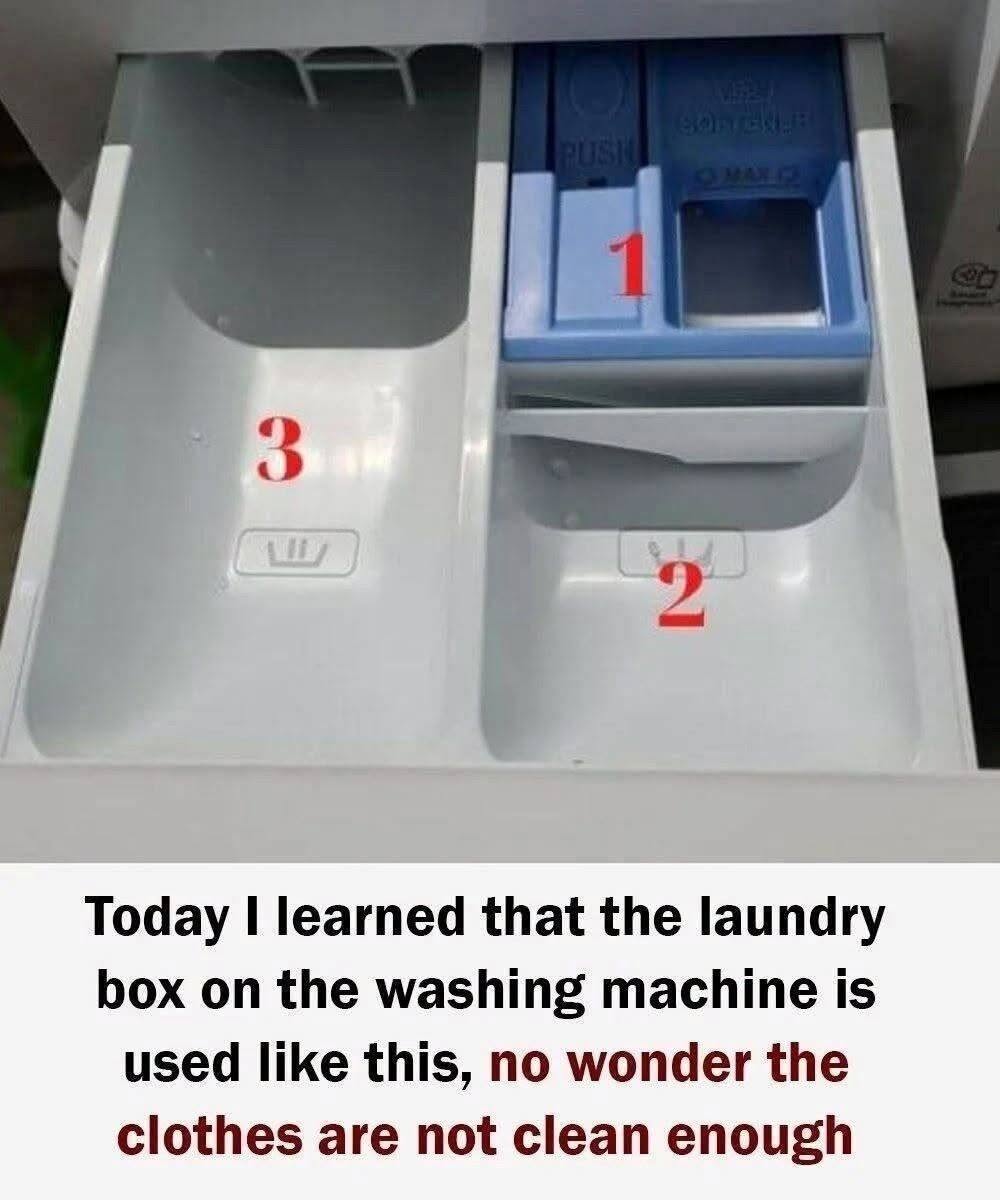
Have you ever opened your washing machine’s detergent drawer and wondered why it has three different compartments?
Many people use their washing machine for years without knowing exactly what each section is designed for. Some simply pour detergent into the largest compartment, while others put fabric softener wherever there seems to be enough space.
But those compartments aren’t random.
Your washing machine is designed to release different laundry products at different stages of the wash cycle. Putting a product in the wrong compartment can mean it is released too early, too late, or sometimes not as intended at all.
The good news is that understanding the drawer is surprisingly easy once you know the symbols.
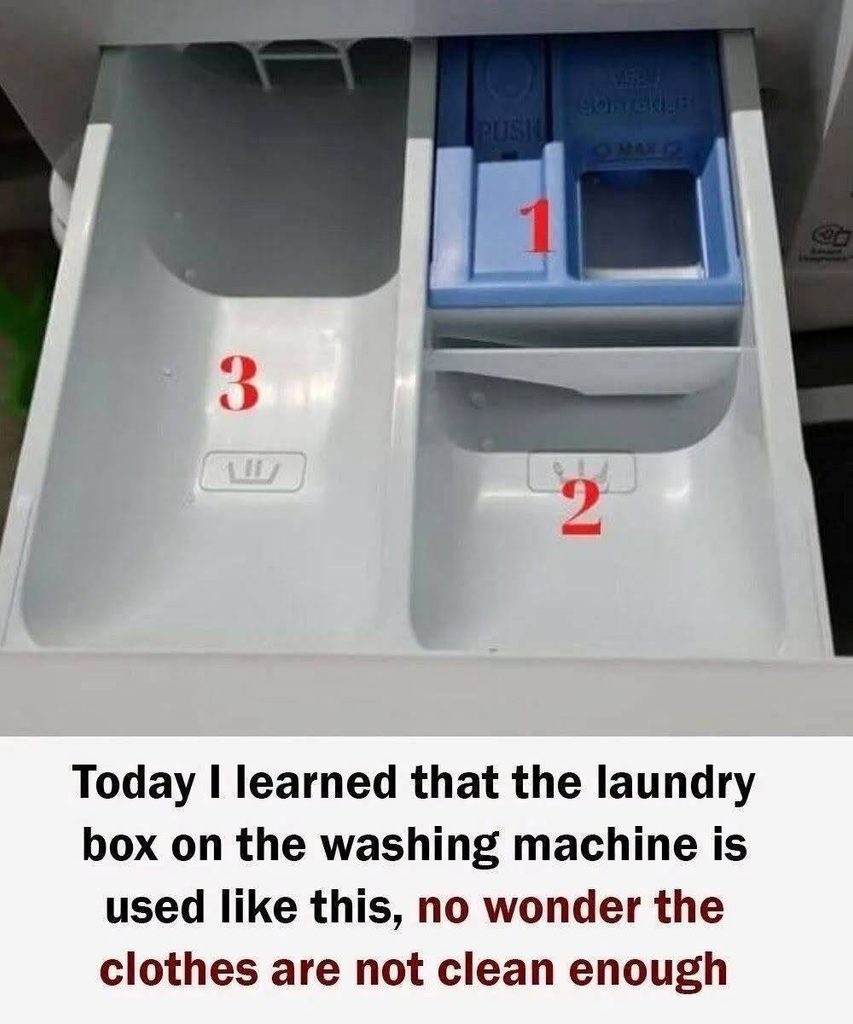
First, Don’t Rely Only on the Numbers in the Photo
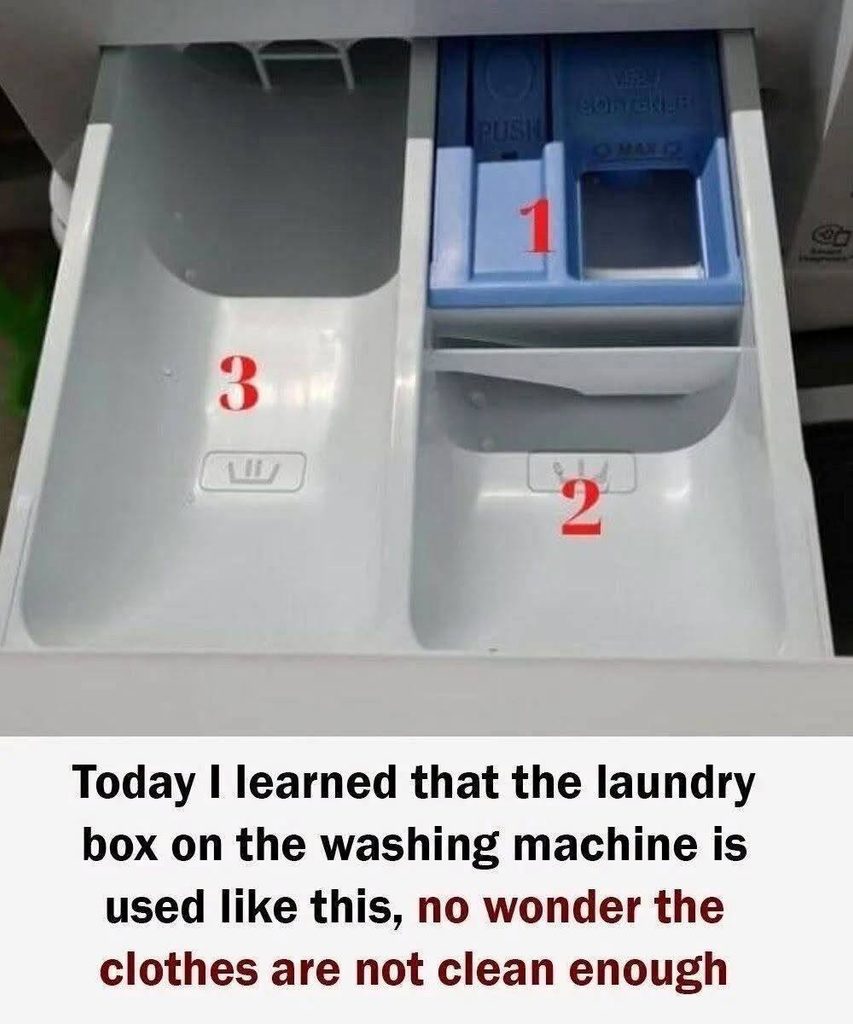
The numbers 1, 2 and 3 shown in viral images are usually added to the picture by whoever created the post.
They are not universal washing-machine labels.
Different brands can arrange their detergent drawers differently.
Instead, look for the actual symbols printed or molded into your washing machine drawer.
The three most common are:
I = Prewash
II = Main wash
🌸 Flower symbol = Fabric softener
These symbols are much more useful than memorizing whether the compartment is on the left, right or center.
Compartment I: Prewash Detergent
The compartment marked with the Roman numeral:
I
is normally intended for prewash detergent.
A prewash is an additional cleaning stage that takes place before the main washing cycle.
It can be useful when you’re washing heavily soiled items such as:
- Muddy clothes
- Certain work clothes
- Heavily stained fabrics
- Very dirty household textiles
If you select a washing program that includes prewash, detergent placed in compartment I can be used during this first stage.
Do You Need to Use Compartment I Every Time?
No.
For an ordinary everyday washing cycle without prewash, this compartment will generally remain empty.
This is one of the biggest misunderstandings surrounding detergent drawers.
Some people assume that because the compartment exists, they should put detergent in it every time.
That’s unnecessary.
Using more detergent doesn’t automatically make clothes cleaner.
Compartment II: The Main Wash
The compartment marked:
II
is generally where your main laundry detergent goes.
This is the compartment most people will use for a normal washing cycle.
Depending on your machine and detergent instructions, it may be designed for powder or liquid detergent.
So, for a standard everyday wash:
Look for the compartment marked II.
That’s usually where your main detergent belongs.
Why Does This Matter?
Imagine putting your main detergent into the prewash compartment while using a cycle that doesn’t include prewash.
The machine may not dispense the detergent in the way you expected.
Similarly, if you accidentally put fabric softener into the main-wash compartment, it could be released during the washing stage instead of the final rinse.
The compartments exist because timing matters.
Compartment With the Flower Symbol 🌸
The compartment marked with a little flower is generally intended for:
Fabric softener or fabric conditioner.
Unlike detergent, fabric softener is normally released later in the cycle.
The machine holds it in the dispenser until the appropriate rinse stage.
That’s why it has its own compartment.
Never Fill Above the MAX Line
Look inside the fabric-softener compartment and you may see a line marked:
MAX
Don’t exceed it.
It may be tempting to add extra softener because you want your laundry to smell stronger, but more isn’t necessarily better.
Overfilling the compartment can cause the product to dispense incorrectly or too early.
Follow the amount recommended on your fabric-softener packaging and washing-machine instructions.
The Simple Rule to Remember
For many traditional front-loading washing machines:
I = PREWASH
II = MAIN DETERGENT
🌸 = FABRIC SOFTENER
That’s the easiest way to remember it.
For most ordinary loads, you’ll primarily use:
Compartment II
And, if desired:
The flower compartment.
Compartment I is normally only needed when you’ve selected a program that actually uses prewash.
Why Are the Compartments Different Sizes?
You may notice that one compartment is significantly larger than another.
This is because different products are used in different quantities and at different stages.
However, don’t use size alone to determine where a product belongs.
Always check the symbol.
A compartment that looks like the “obvious” place for detergent may have a different function on another washing-machine model.
What Is the Plastic Flap Inside the Drawer?
Some washing machines have a small removable or adjustable plastic insert inside the detergent compartment.
It may be designed to help when using liquid detergent.
Depending on the model, the insert may need to be moved or removed when switching between liquid and powder detergent.
This varies between manufacturers.
If your drawer has an unfamiliar plastic piece, don’t throw it away.
Check your machine’s instructions to determine its purpose.
Liquid Detergent vs. Powder Detergent
Both liquid and powder detergents can work well when used correctly.
However, your washing machine may require slightly different dispenser configurations depending on which one you’re using.
Liquid detergent
It dissolves easily and can be convenient for everyday washing.
Powder detergent
It can also be very effective, but moisture inside the drawer can sometimes cause unused powder to clump.
Whichever you choose, use the correct compartment and follow the recommended dosage.
More Detergent Does NOT Mean Cleaner Clothes
This is probably one of the most common laundry mistakes.
You see a large pile of dirty clothes and think:
“I’ll add extra detergent to make sure everything gets clean.”
Unfortunately, adding significantly more detergent than necessary can actually cause problems.
Excess detergent may contribute to:
- Too much foam
- Residue on clothes
- Sticky buildup in the drawer
- Unpleasant odors
- Poor rinsing
- Buildup inside the washing machine
Modern detergents can be highly concentrated.
You may need much less than you think.
How Much Detergent Should You Use?
There’s no single amount that works for every household.
The appropriate quantity can depend on:
- The detergent concentration
- Load size
- How dirty the clothes are
- Water hardness
- Washing-machine type
- Selected program
Follow the instructions on your detergent and washing machine rather than simply filling the compartment to the top.
What About Laundry Pods?
Laundry capsules or pods are generally used differently from ordinary drawer detergent.
Many are designed to go directly into the drum, usually before the clothes are added.
However, always follow the instructions printed on the pod packaging and those provided by your washing-machine manufacturer.
Don’t automatically put a laundry pod inside compartment II.
Also remember that concentrated detergent capsules can be dangerous if swallowed.
Store them securely away from children and pets.
Why Is There Water Left in the Fabric-Softener Compartment?
After finishing a load, you might open the drawer and find a small amount of water inside the fabric-softener section.
A little water can sometimes remain and doesn’t necessarily mean the machine is broken.
However, if the compartment repeatedly remains full or your softener isn’t being dispensed, the siphon system may need cleaning.
Fabric-softener residue can become surprisingly thick over time.
Why Does Fabric Softener Sometimes Disappear Immediately?
You fill the compartment.
You start preparing the laundry.
Then you notice the softener has already disappeared.
One possible reason is overfilling.
If the liquid goes above the MAX level, it may trigger the siphoning mechanism prematurely.
A dirty or incorrectly positioned siphon insert can also cause dispensing problems.
Clean the compartment thoroughly and make sure all removable pieces are installed correctly.
Why Is Detergent Left in the Drawer?
If you frequently find detergent remaining after the cycle, several things could be responsible.
Possible explanations include:
- Too much detergent
- Damp or clumped powder
- A dirty dispenser
- Blocked water jets
- Incorrect insert position
- Inappropriate detergent
- Water-flow problems
Start by thoroughly cleaning the drawer.
If the problem continues after you’ve confirmed the correct product and dosage, the machine may need further inspection.
Your Detergent Drawer Needs Cleaning Too
Many people clean the washing-machine drum but completely forget about the detergent drawer.
Over time, the drawer can collect:
- Detergent residue
- Fabric-softener buildup
- Moisture
- Dirt
- Dark deposits
- Unpleasant odors
Fortunately, many detergent drawers are removable.
How to Clean Your Detergent Drawer
First, check how the drawer is removed on your particular machine.
Many models have a small release tab.
Once removed:
Step 1: Rinse With Warm Water
Run warm water over the drawer to loosen detergent and softener residue.
Step 2: Use a Soft Brush
An old toothbrush can be useful for reaching small corners.
Pay particular attention to areas where thick softener residue has accumulated.
Step 3: Clean the Siphon
The fabric-softener compartment often contains a removable siphon insert.
Remove and clean it according to your machine’s instructions.
Step 4: Rinse Thoroughly
Make sure loosened residue has been removed.
Step 5: Dry and Reinstall
Allow excess water to drain before putting everything back into position.
Don’t Forget Behind the Drawer
Once you’ve removed the dispenser, look at the space where it normally sits.
You may be surprised by how much detergent residue has accumulated there.
Clean accessible areas carefully with a damp cloth or soft brush.
Avoid pouring random cleaning chemicals directly into internal openings.
Can a Dirty Drawer Make Laundry Smell Bad?
It can contribute.
A combination of moisture, detergent residue and poor ventilation can create unpleasant odors.
But the drawer isn’t the only possible source.
Other areas that may need maintenance include:
- Door gasket
- Drum
- Drain filter
- Drainage system
Regular washing-machine maintenance can help prevent persistent odors.
Should You Leave the Drawer Open After Washing?
When appropriate for your household and appliance, allowing the detergent drawer and washing-machine door to dry after a cycle can help reduce persistent moisture.
However, safety matters.
If small children or pets have access to the appliance, follow the manufacturer’s safety recommendations rather than leaving doors or compartments accessible.
Can You Pour Fabric Softener Directly Onto Clothes?
Generally, concentrated fabric softener shouldn’t simply be poured directly over dry clothing.
It can distribute unevenly and potentially leave marks.
Use the designated compartment and follow the product instructions.
The machine will release it during the correct stage.
You Don’t Always Need Fabric Softener
Fabric softener is optional.
And some fabrics may perform better without it.
For example, frequent use of fabric conditioner may affect the absorbency or performance of certain materials, including:
- Some towels
- Microfiber cloths
- Moisture-wicking sportswear
Always check clothing-care labels.
Don’t Overload Your Washing Machine
Even perfectly placed detergent can’t compensate for an overloaded drum.
Clothes need enough room to move.
When the drum is packed too tightly, water and detergent may not circulate effectively.
That can result in clothes that don’t wash or rinse properly.
Follow the recommended load size for your machine and selected program.
Choosing the Right Program Matters
Correct detergent placement is only one part of successful laundry.
Different materials may require different:
- Temperatures
- Spin speeds
- Cycle lengths
- Washing actions
A delicate blouse doesn’t need the same treatment as heavily soiled cotton towels.
Check garment labels before selecting a program.
Be Careful With Viral Laundry Hacks
Social media is full of tricks involving:
- Vinegar
- Baking soda
- Dishwasher tablets
- Bleach
- Essential oils
- Dishwashing liquid
Not every product belongs inside a washing machine.
Some can create excessive foam, damage components or interact dangerously with other chemicals.
Use products specifically intended for laundry unless your appliance manufacturer clearly says otherwise.
Never Mix Bleach and Vinegar ⚠️
This is especially important.
Never mix chlorine bleach with vinegar or other acidic cleaners.
The combination can release dangerous chlorine gas.
Also avoid mixing chlorine bleach with ammonia-containing products.
Don’t experiment with combinations of household cleaning chemicals.
Does Vinegar Replace Fabric Softener?
Vinegar is often promoted online as a universal fabric-softener replacement.
But washing-machine manufacturers may have different recommendations regarding acidic products.
Repeated exposure to acids may not be appropriate for every appliance component.
Check your machine’s instructions before routinely adding vinegar.
What About Baking Soda and Vinegar Together?
You’ll see dramatic fizzing when they are combined.
But that reaction doesn’t automatically mean you’ve created a powerful cleaner.
The acid and base react with each other and largely neutralize one another.
For washing-machine maintenance, use an appropriate cleaning method rather than assuming fizz means better cleaning.
Why Clothes Sometimes Don’t Smell Fresh
Using the wrong detergent compartment is only one possibility.
Other common reasons include:
- Overloading the machine
- Using too much detergent
- Leaving wet laundry inside too long
- Dirty door seals
- Dirty detergent drawer
- Incorrect washing temperature
- Persistent moisture inside the machine
- Drainage problems
Sometimes adding more perfume or fabric softener only hides the underlying problem temporarily.
What If Your Clothes Feel Stiff or Soapy?
You may be using too much detergent.
Try measuring your detergent rather than estimating.
Remember that concentrated products may require only a small amount.
You should also make sure the washing machine isn’t overloaded so the laundry can rinse properly.
A Simple Laundry Routine 🧺
For a typical everyday load:
1. Check clothing labels.
Separate garments when necessary.
2. Load the drum.
Don’t pack it excessively tightly.
3. Add detergent to compartment II.
Use the correct amount.
4. Add fabric softener to the flower compartment if desired.
Stay below the MAX line.
5. Leave compartment I empty unless using prewash.
6. Select the appropriate program.
7. Remove clothes promptly after washing.
8. Allow the machine to dry according to the manufacturer’s recommendations.
Simple habits can make a surprisingly big difference.
7 Common Mistakes to Avoid
1. Using Compartment I for Every Wash
It’s generally intended for prewash.
2. Putting Fabric Softener in Compartment II
The main-wash compartment is normally for detergent.
3. Filling Above the MAX Line
Especially in the softener section.
4. Using Too Much Detergent
More soap doesn’t necessarily equal cleaner clothes.
5. Never Cleaning the Drawer
Residue can accumulate surprisingly quickly.
6. Assuming Every Washing Machine Is Identical
Drawer positions vary between models.
7. Mixing Random Household Chemicals
Some combinations can be dangerous.
Quick Cheat Sheet
Save this simple rule:
🧼 I → PREWASH
Use only when the selected program includes a prewash stage.
🫧 II → MAIN WASH
This is where the main detergent normally goes for an everyday wash.
🌸 FLOWER → FABRIC SOFTENER
Fill only to the recommended level and never exceed MAX.
One Important Detail About the Viral Photo
If your own washing-machine drawer doesn’t look exactly like the one in the picture, don’t worry.
The position of each compartment isn’t universal.
On one washing machine, the main detergent compartment might be on the left.
On another, it could be on the right.
The flower compartment may also appear in a different position.
That’s why the symbols matter more than the location.
Final Thoughts 🧺✨
The three sections inside your washing machine drawer aren’t there just to organize laundry products.
They allow the appliance to release each product at the appropriate stage of the cycle.
The easiest rule to remember is:
I = Prewash
II = Main wash detergent
🌸 = Fabric softener
For an ordinary wash, you’ll usually need the II compartment for detergent, while the flower-marked compartment is used for fabric softener if desired.
And compartment I?
You can usually leave it empty unless you’ve actually selected a prewash program.
It’s a tiny detail, but using the detergent drawer correctly can help you avoid wasted detergent, residue, dispensing problems and disappointing laundry results. 🧺✨