You may have used padlocks your entire life without ever noticing it.
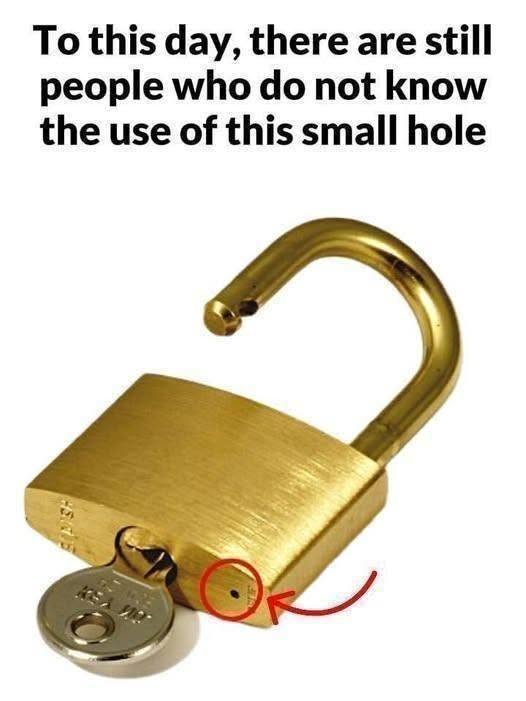
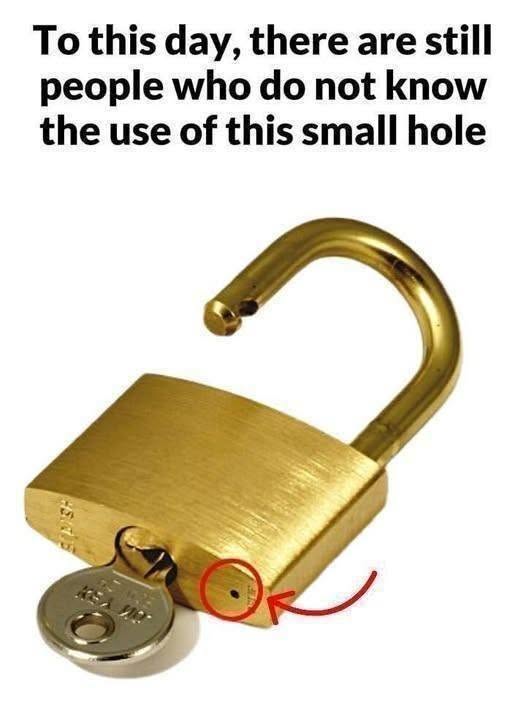
Turn over many traditional padlocks and look carefully near the keyway. On some models, you’ll find a tiny round hole that seems almost too small to have any purpose.
It isn’t decoration. It usually isn’t a manufacturing mistake either.
That tiny opening can play an important role in keeping a padlock working properly—especially when the lock spends its life outside in rain, humidity, dust, and changing temperatures.
So, what exactly does it do?
The Tiny Hole Is Mainly There for Drainage
The primary purpose of this small opening on many padlocks is surprisingly simple:
It allows water and moisture to escape.
Think about where padlocks are commonly used:
- Garden gates
- Sheds
- Garages
- Storage units
- Toolboxes
- Fences
- Outdoor cabinets
- Trailers
Many of these locations expose the lock to rain and humidity.
Even though a padlock looks like a solid piece of metal, it contains an internal mechanical system with small moving components.
Water can sometimes find its way inside through openings around the shackle or other parts of the lock.
If that moisture had nowhere to go, it could remain trapped inside.
The small opening at the bottom can act as a drainage or “weep” hole, allowing accumulated moisture to escape rather than remain inside the mechanism.
Why Is Drainage So Important?
A little water might not sound like a serious problem for a thick metal padlock.
But inside the lock are much smaller components that need to move precisely.
Depending on the design, the mechanism can contain pins, springs and other moving metal parts.
Repeated exposure to moisture can contribute to corrosion.
Eventually, the key may become more difficult to turn or the mechanism may begin sticking.
A simple drainage hole helps reduce the amount of moisture that remains trapped inside.
It Can Help Reduce Rust and Corrosion
This is where the tiny hole becomes surprisingly important.
Metal and moisture are rarely a good combination over long periods.
A padlock hanging outside may repeatedly experience cycles of:
Rain → moisture → drying → more rain → more moisture.
If water continually collects inside the lock, corrosion can gradually affect its internal components.
Allowing moisture to drain helps protect those components and can contribute to a longer useful life for the lock. monroeengineering.com
That tiny opening suddenly doesn’t seem so pointless.
There’s Another Problem: Freezing ❄️
People living in cold climates have another reason to appreciate this tiny feature.
Imagine water entering a padlock during rain or melting snow.
Later that evening, the temperature falls below freezing.
The trapped water can freeze.
If ice forms inside the mechanism, the lock may become difficult—or temporarily impossible—to operate.
Allowing moisture to drain reduces the amount of water available to freeze inside the lock.
That’s particularly useful for padlocks installed permanently outdoors.
But That’s Not Its Only Possible Purpose
Here’s where things become even more interesting.
On some padlocks, that little opening can also provide access for maintenance and lubrication. hongjilock.com
Over time, a lock can become stiff.
You insert the key…
It goes in normally…
But turning it becomes increasingly difficult.
People often respond by forcing the key.
That’s usually not the best idea.
Excessive force could damage the key or lock.
Instead, the lock may simply need appropriate maintenance.
The Hole Can Sometimes Be Used for Lubrication
Depending on the padlock’s design and manufacturer instructions, the small opening may provide a route for an appropriate lock lubricant to reach internal moving components.
Lubrication can help a stiff mechanism move more smoothly.
However, this doesn’t mean you should pour whatever oil happens to be nearby into your lock.
Different manufacturers can recommend different maintenance products.
The safest approach is to check the instructions for your particular lock and use a lock-specific lubricant recommended for that model.
Don’t Confuse It With the Keyhole
This sounds obvious, but the small hole shown in viral photos isn’t the same as the keyway.
The keyway is where the key enters and interacts with the locking mechanism.
The smaller secondary opening serves a different purpose.
Depending on the design, it may be associated primarily with drainage and sometimes maintenance.
Is It a Secret Emergency Unlock Button?
This is one of the myths that often appears whenever photos of these holes circulate online.
People see a mysterious opening in a lock and immediately imagine a hidden bypass.
But you shouldn’t assume the hole is a secret reset or emergency unlocking button.
On ordinary padlocks, its principal practical purpose is generally related to drainage and protection of the internal mechanism.
Trying to push random objects, wires, needles or other tools into an unfamiliar opening can damage the lock.
Do All Padlocks Have This Hole?
No.
That’s another important detail frequently missing from viral posts.
Padlocks come in many designs.
Some are intended mainly for indoor lockers.
Others are designed specifically for harsh outdoor environments.
Some use drainage openings.
Others use weather-resistant covers, seals or different internal designs.
So if you turn over your own padlock and don’t find a tiny hole exactly like the one in the picture, that doesn’t automatically mean something is wrong.
The design simply may be different.
Why Is the Hole Usually Near the Bottom?
Gravity.
If the goal is to remove accumulated water, placing an opening near the lower portion of the lock makes sense.
Water naturally travels downward.
Instead of allowing moisture to remain trapped inside the housing, a drainage point provides somewhere for it to escape.
It’s an incredibly simple engineering solution.
No electronics.
No complicated valves.
Just a strategically placed opening.
Outdoor Padlocks Need Extra Protection
If your padlock protects an outdoor gate, shed or storage area, weather exposure should be part of your buying decision.
A cheap indoor padlock may work perfectly well on a gym locker but may not be ideal for years of exposure to rain and humidity.
When choosing an outdoor lock, look for one specifically designed for exterior or weather-resistant use.
A protective cover over the keyway can also help reduce the amount of dirt and moisture entering the mechanism.
What If Your Padlock Is Becoming Difficult to Open?
Don’t immediately assume it’s broken.
Start by examining it.
Look for:
- Visible corrosion
- Dirt around the keyway
- Damage to the key
- A bent shackle
- Heavy rust
- Ice in freezing weather
- Signs that the lock has been physically damaged
If the lock simply feels stiff, consult the manufacturer’s maintenance instructions.
An appropriate lock lubricant may help.
But if the lock is severely corroded, damaged or securing something important, replacement may be safer than repeatedly trying to repair it.
Keep the Drainage Opening Clear
If your padlock has a drainage hole, avoid intentionally blocking it.
Mud, paint, grease and other debris could interfere with drainage.
Outdoor locks occasionally benefit from a quick visual inspection.
Simply check that nothing obvious has accumulated around the bottom of the lock.
Can You Pour Water Through It to Clean the Lock?
That’s generally unnecessary.
Remember, the purpose of the opening is to help moisture escape—not to encourage you to fill the lock with water.
If your padlock needs cleaning or lubrication, follow its manufacturer’s instructions.
Flooding the internal mechanism could potentially make the problem worse.
What About WD-40?
People often reach automatically for multipurpose sprays when a lock becomes difficult to operate.
But products suitable for one mechanical problem aren’t necessarily the best long-term lubricant for every lock.
Some lock manufacturers recommend specific dry or specialized lubricants because certain oily products can attract dust and dirt over time.
The simplest rule is:
Use a lubricant intended or approved for locks and follow the manufacturer’s directions.
Never Force a Stuck Key
Imagine your outdoor lock has become stiff.
You insert the key and it moves halfway.
The temptation is to twist harder.
Don’t.
Keys can bend or break, leaving part of the key trapped inside the cylinder.
Instead, stop and determine why the mechanism isn’t moving normally.
It may be dirt, corrosion, freezing, physical damage or simply a worn key.
What If the Lock Is Frozen?
A frozen outdoor padlock can be frustrating.
Avoid pouring boiling water over it.
Although warmth might temporarily melt ice, adding more water around the mechanism can create another problem once temperatures fall again.
Use methods recommended by the manufacturer for cold-weather operation.
If frozen locks are a frequent problem in your area, consider purchasing a padlock specifically designed for outdoor winter conditions.
Other Everyday Objects Have Hidden Design Features Too
The tiny padlock hole is a great example of something engineers include for a reason even though most users never notice it.
Our homes are full of similar details.
Small holes, grooves, tabs and openings often exist because designers are solving practical problems such as:
- Drainage
- Ventilation
- Pressure relief
- Alignment
- Maintenance
- Safety
- Manufacturing
We simply become so familiar with everyday objects that we stop asking why those features exist.
Why This Tiny Detail Matters
Imagine an outdoor padlock without adequate protection from moisture.
Rain enters.
Water accumulates.
The internal components remain damp.
Corrosion gradually develops.
Then winter arrives and remaining moisture freezes.
Eventually, a perfectly good padlock becomes difficult to operate.
A tiny drainage opening is an elegantly simple way to reduce that problem.
How to Make an Outdoor Padlock Last Longer
A few basic habits can help:
1. Choose the correct lock
Use a model designed for outdoor exposure when securing exterior gates, sheds or storage areas.
2. Keep it reasonably clean
Remove visible dirt and debris from around the lock.
3. Don’t block drainage openings
If your lock has one, keep the opening unobstructed.
4. Lubricate according to the manufacturer’s instructions
Use an appropriate product rather than randomly applying household oils.
5. Don’t force the key
A stiff mechanism is a sign to investigate, not an invitation to twist harder.
6. Replace heavily damaged locks
Security equipment isn’t something to keep indefinitely once its reliability has become questionable.
Is the Tiny Hole a Security Weakness?
Seeing an additional opening naturally makes some people wonder whether it compromises security.
But a drainage opening is an intentional design feature on many locks.
It shouldn’t be treated as an invitation to insert objects or attempt to manipulate the mechanism.
The overall security of a padlock depends on far more than the presence of a tiny drainage opening, including its materials, shackle design, cylinder, construction and resistance to physical attack.
If security is especially important, choose a lock rated for the specific application rather than judging it by appearance alone.
The Simple Answer 🔒
So, what is that mysterious little hole?
On many padlocks:
💧 It primarily allows moisture to drain.
🛡️ That can help reduce internal rust and corrosion.
❄️ It can reduce problems caused by trapped water freezing.
🔧 On some designs, it can also provide access for lubrication or maintenance.
It’s a tiny feature doing a surprisingly useful job.
Final Thoughts
Most of us have opened a padlock hundreds of times without ever examining the bottom.
Yet that tiny hole illustrates how even the simplest everyday objects can contain clever engineering details.
For a padlock exposed to rain and humidity, moisture trapped inside can eventually lead to corrosion and mechanical problems. Providing a small drainage route helps protect the mechanism and extend its useful life.
And on some designs, that same opening can make maintenance easier when the mechanism becomes stiff.
So the next time you pick up a padlock, turn it over.
You might finally notice the tiny feature that has quietly been helping protect the lock all along. 🔒✨