Have you ever looked closely at your thumb and compared it with someone else’s?
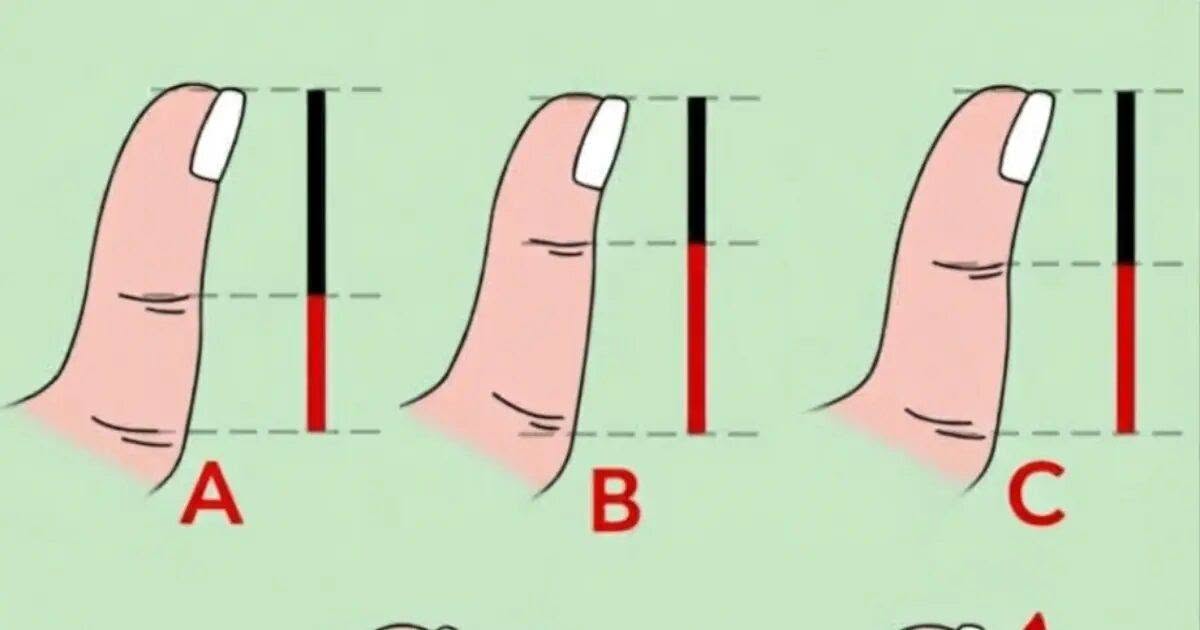
Some thumbs appear almost completely straight. Others curve backward slightly, while some are noticeably more flexible at the upper joint. Images circulating on social media often divide these differences into categories such as A, B, and C and claim that each thumb shape reveals something surprising about your personality.
According to these posts, your thumb might supposedly reveal whether you’re stubborn, emotional, adaptable, independent, or even a natural leader.
It’s certainly a fun idea—but how much truth is behind it?
Let’s look at what different thumb shapes may actually mean and why personality claims based on thumb appearance should be taken as entertainment rather than science.
First, Look at Your Own Thumb
Hold your hand naturally in front of you and extend your thumb without forcing it backward.
Now look at its general position.
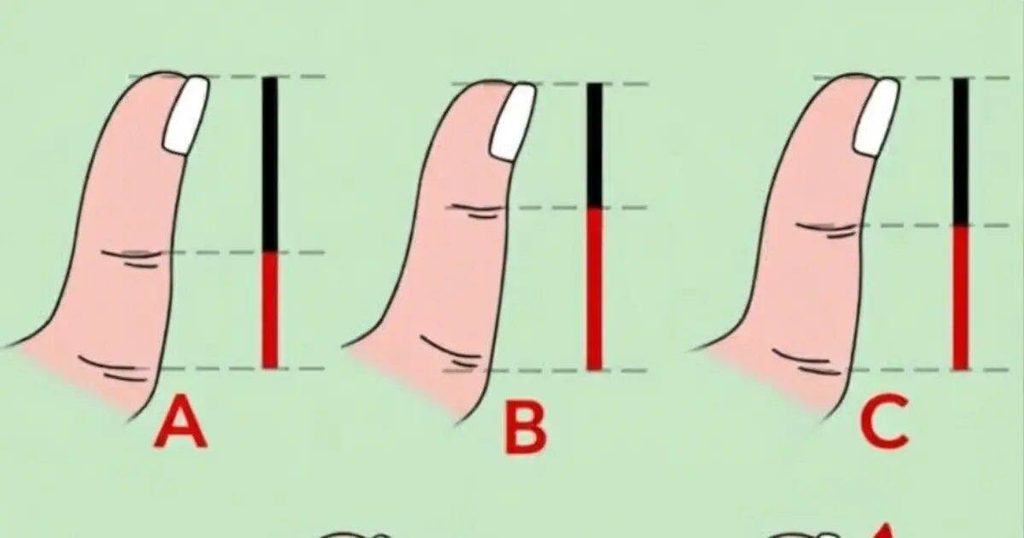
Does it resemble one of these common patterns?
Type A: A Straighter Thumb
The thumb stays relatively straight when extended, with limited backward bending at the upper joint.
Type B: A More Flexible Thumb
The upper part of the thumb bends backward more noticeably when extended.
Type C: Somewhere in Between
The thumb has some flexibility but doesn’t bend backward as dramatically.
There are many variations beyond these three simplified categories, so don’t worry if your thumb doesn’t perfectly match any picture.
Human anatomy isn’t divided neatly into three types.
What Causes These Differences?
The appearance and flexibility of your thumb can be influenced by several factors, including:
- Genetics
- Joint structure
- Ligament flexibility
- Tendon anatomy
- Age
- Previous injuries
- General joint mobility
In other words, your thumb shape is primarily an anatomical characteristic, not a personality test.
The Famous “Hitchhiker’s Thumb”
You may have heard the term “hitchhiker’s thumb.”
It generally refers to a thumb whose end joint can bend backward noticeably.
Some people can extend the distal portion of their thumb much farther backward than others.
This variation can run in families, although the genetics behind human traits like joint flexibility can be more complicated than the simple “one gene, two types” explanations often shared online.
Having a flexible thumb is usually just a normal physical variation.
What Viral Personality Tests Say About Type A
In popular thumb personality quizzes, people with straighter thumbs are sometimes described as:
Strong-minded
Practical
Responsible
Determined
Disciplined
Logical
The story usually suggests that because the thumb is physically “firm,” the person’s personality must also be firm.
It’s an interesting metaphor.
But there’s an important problem.
There isn’t good scientific evidence showing that a straight thumb makes someone more disciplined or determined.
You might recognize yourself in the description, but that doesn’t prove the thumb predicted your personality.
What They Say About Type B
People with more flexible thumbs are often given almost opposite personality characteristics.
Online quizzes may describe them as:
Adaptable
Creative
Emotional
Open-minded
Spontaneous
Flexible in difficult situations
Again, you can see how the symbolism works.
A flexible thumb becomes associated with a “flexible personality.”
It makes an entertaining social-media quiz, but anatomy doesn’t provide a scientifically reliable way of determining these personality traits.
And What About Type C?
The middle category is usually described as a balance between the other two.
These people may be called:
Balanced
Calm
Dependable
Adaptable but cautious
Emotionally controlled
Conveniently, these are broad descriptions that could apply to a huge number of people.
That’s one reason personality quizzes can sometimes feel surprisingly accurate.
Why These Descriptions Feel So Personal
Have you ever read a personality test and thought:
“Wow, that’s exactly me!”
There’s a psychological reason this can happen.
People tend to recognize themselves in broad, generally positive personality descriptions.
For example:
“You care deeply about people, but sometimes you need time alone.”
That could describe millions of people.
Or:
“You can be determined, but you know when to change your mind.”
Again, that statement is broad enough to fit many personalities.
When a description contains characteristics we already believe about ourselves, we’re more likely to remember the parts that match and overlook those that don’t.
Can Your Thumb Reveal Your Personality?
Based on current scientific understanding, thumb shape isn’t a reliable method for determining personality.
Personality develops through a complicated combination of influences that can include biology, environment, upbringing, experiences, culture, relationships, and many other factors.
You can’t reliably determine whether someone is loyal, intelligent, generous, stubborn, romantic, or successful simply by looking at their thumb.
So if an online post says:
“Your thumb proves you’re a born leader!”
enjoy it as entertainment—but don’t treat it as a psychological diagnosis.
Your Thumb Is Still Surprisingly Interesting
Just because it can’t reveal your personality doesn’t mean your thumb is boring.
Quite the opposite.
The human thumb plays an enormous role in everyday life.
Its ability to oppose the fingers allows us to grip and manipulate objects with remarkable precision.
Think about everything you use your thumb for:
- Writing
- Holding a cup
- Opening containers
- Using a smartphone
- Turning a key
- Buttoning clothes
- Cooking
- Using tools
We rarely appreciate our thumbs until one becomes painful or injured.
Why Some People Are More Flexible Than Others
Joint flexibility varies considerably from person to person.
Some people naturally have a greater range of motion in several joints, including their thumbs.
Others have relatively stiff joints.
Neither automatically means something is wrong.
You may even notice differences between your own two hands.
One thumb might bend backward farther than the other.
Don’t Force Your Thumb to Match the Picture
This is important.
If you’re comparing your thumb with a viral image, don’t aggressively push it backward to see which category you belong to.
Your natural range of motion is enough.
Forcing a joint beyond its comfortable limit can cause pain or injury.
The test is supposed to be harmless fun—not a flexibility competition.
When Thumb Flexibility May Be Worth Discussing With a Doctor
A flexible thumb by itself is usually not a reason to worry.
However, consider seeking medical advice if you experience symptoms such as:
- Persistent thumb pain
- Repeated dislocations
- Significant swelling
- Sudden changes in movement
- Weakness
- Numbness
- Difficulty gripping objects
- Joint instability after an injury
Those symptoms matter far more medically than whether your thumb resembles A, B, or C in an online picture.
What If Your Thumb Doesn’t Match Any Type?
That’s completely normal.
These viral images simplify natural human variation.
Your thumb might be:
Slightly curved.
Very straight.
Flexible only at one joint.
Different from your other thumb.
Somewhere between two illustrated categories.
There is no requirement for every person’s thumb to fit perfectly into A, B, or C.
Genetics Play a Role
Physical traits often run in families, and aspects of joint structure and flexibility can have genetic influences.
You may notice that your thumb resembles your mother’s, father’s, sibling’s, or even grandparent’s.
That can make comparing hands within a family surprisingly interesting.
But again, sharing a similar thumb doesn’t mean family members will share the same personality.
Two siblings can have nearly identical hands and completely different temperaments.
Does Thumb Length Mean Anything?
Other viral tests compare the length of the two sections of the thumb.
Some claim that a longer upper section means you’re ambitious, while a longer lower section supposedly means you’re logical.
These interpretations aren’t established personality science either.
Differences in finger and thumb proportions are normal anatomical variations.
They can be interesting to observe without assigning psychological meaning to them.
Can Hand Shape Predict Your Future?
Palmistry and other forms of hand reading have existed in various cultures for centuries.
People have used lines, finger lengths, palm shapes, and thumb characteristics to make claims about personality, relationships, health, and the future.
These traditions may have cultural or entertainment value.
However, they shouldn’t be confused with evidence-based medical or psychological assessment.
Your thumb can’t reliably tell you whom you’ll marry, how wealthy you’ll become, or how long you’ll live.
A Fun Experiment to Try With Your Family
Want to make this viral thumb test more interesting?
Ask several family members to hold out their thumbs naturally.
Compare them.
You might discover that:
Mom has a very straight thumb.
Dad’s bends backward.
One sibling has one flexible thumb and one straighter one.
Your child’s thumb resembles a grandparent’s.
Physical variation within families can be fascinating.
Just avoid turning the results into serious conclusions about personality or health.
So Which Thumb Type Are You?
Look at your thumb again.
👍 A — Mostly straight
👍 B — More noticeably flexible
👍 C — Somewhere between the two
Which one looks closest?
You can compare it with friends and family just for fun.
But remember the most important part:
Your thumb shape tells you much more about your anatomy than your personality.
Being kind, ambitious, stubborn, creative, emotional, or independent can’t be reliably determined by looking at one joint.
The Bottom Line
Viral thumb tests are popular because they’re quick, visual, and fun to compare with friends.
And yes, people really do have noticeable differences in thumb shape and flexibility.
But claims that Type A means you’re strong-minded, Type B means you’re emotional, or Type C means you’re perfectly balanced aren’t scientifically established personality assessments.
Your thumb’s appearance is influenced largely by anatomy, joint structure, flexibility, and genetics.
So go ahead and check yours.
Compare it with the picture.
Share your result with your friends.
Just treat the personality interpretation as entertainment rather than fact.