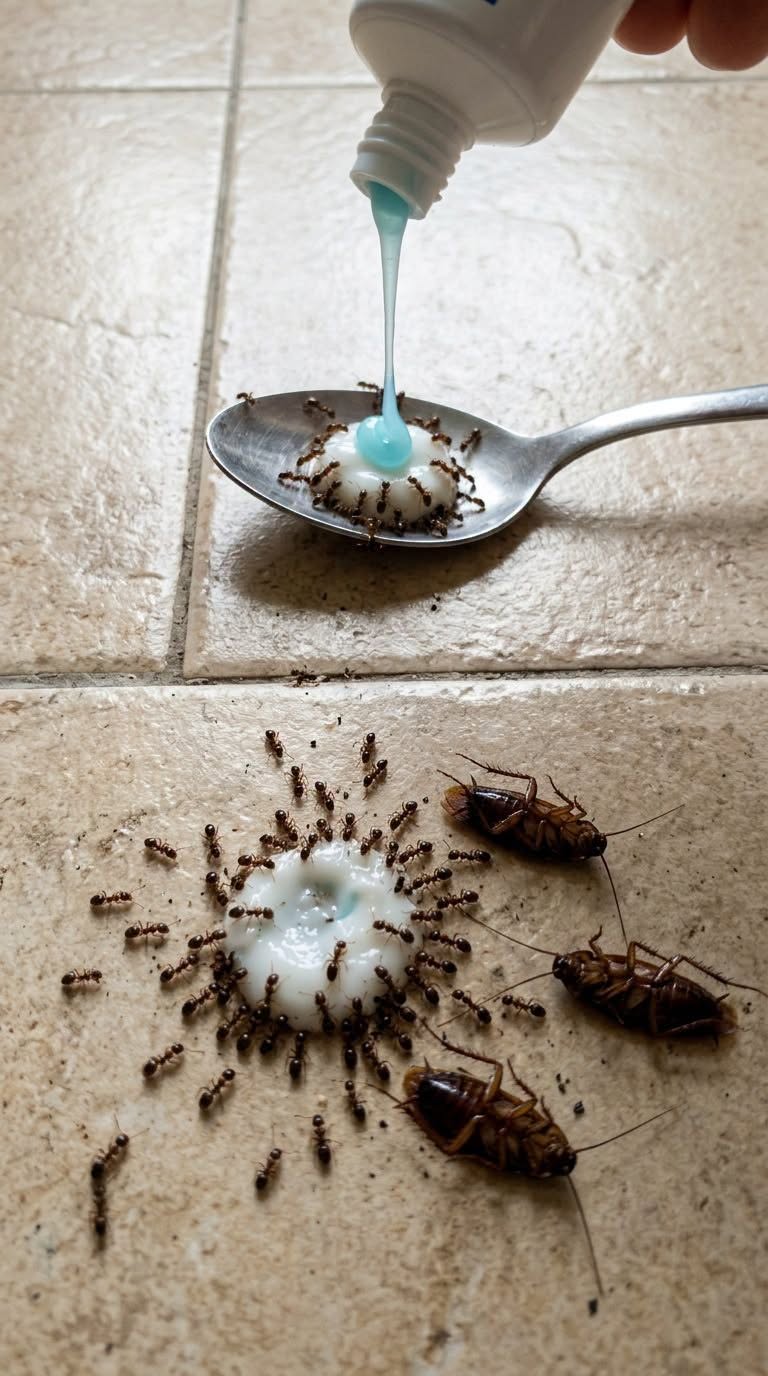
If you’ve spent any time scrolling through Facebook lately, you’ve probably seen home remedies that promise incredible results against household pests.
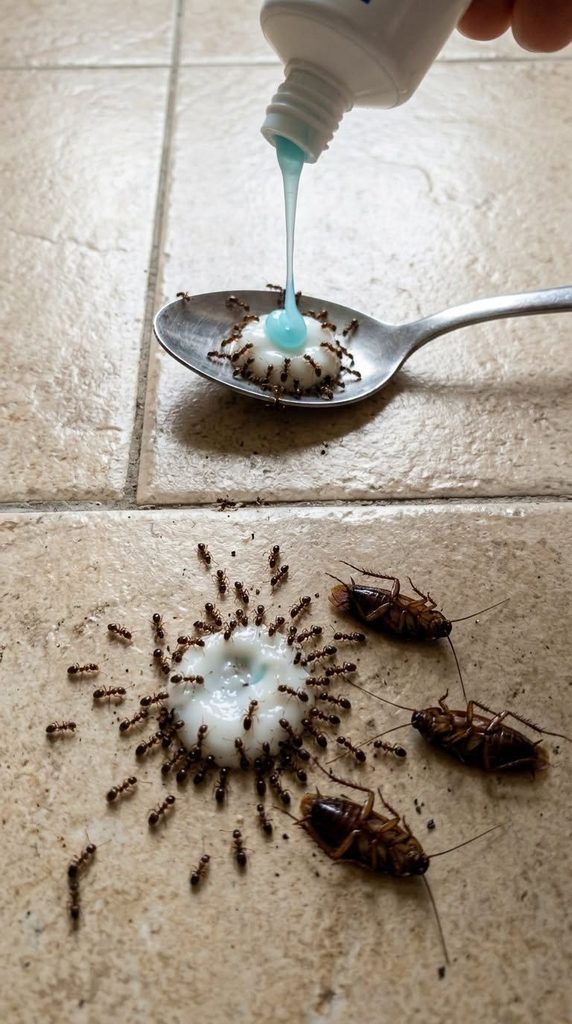
One popular image shows toothpaste or another paste-like substance placed on a spoon, surrounded by ants and cockroaches, with a tempting promise:
“Place this in your home for just one hour and say goodbye to flies, mosquitoes, and cockroaches.”
It sounds almost too easy.
No expensive pest-control products. No complicated treatment. Just something you probably already have in your bathroom or kitchen.
But does this viral trick actually work?
The answer is important, because while certain household smells or ingredients may temporarily affect insects, there’s no good reason to expect ordinary toothpaste on a spoon to eliminate a cockroach, mosquito, or fly infestation in one hour.
Fortunately, there are much more effective things you can do.
First, What Is the Viral Trick Supposed to Do?
Different versions of this hack use different ingredients.
Some show toothpaste.
Others combine toothpaste with:
- Sugar
- Baking soda
- Coffee
- Dish soap
- Vinegar
- Lemon
- Salt
The mixture is then placed on a spoon, plate, bottle cap, or piece of cardboard and left somewhere in the house.
The claim is usually dramatic:
“Insects will disappear within an hour.”
That’s where you should become skeptical.
Cockroaches, mosquitoes, flies, and ants are completely different pests with different behaviors, food preferences, breeding cycles, and hiding places.
A single homemade mixture is unlikely to solve all of them.
Why You Might Still See Insects Around the Mixture
Some household ingredients can attract insects simply because they contain sugar, food residue, moisture, or appealing odors.
That can make a viral video look convincing.
Imagine putting something sweet on the floor and filming several ants gathering around it.
It might appear as though you’ve discovered an incredibly powerful pest-control method.
But attracting an insect isn’t the same as eliminating an infestation.
That’s an important distinction.
What About Toothpaste?
Toothpaste is designed for cleaning teeth—not pest control.
Its ingredients vary considerably depending on the brand.
Some toothpastes contain strong flavors such as mint, which people sometimes assume automatically repel insects.
But even if a smell temporarily discourages an insect from approaching one particular spot, that doesn’t mean the pest has disappeared from your home.
It may simply move somewhere else.
More importantly, toothpaste doesn’t address the reasons pests entered your home in the first place.
The Real Secret to Controlling Cockroaches
Cockroaches don’t randomly choose a house.
They’re generally looking for three basic things:
Food
Crumbs, grease, garbage, pet food, and even tiny food residues can provide feeding opportunities.
Water
Leaking pipes, wet sinks, dripping faucets, and moisture beneath appliances can support cockroach activity.
Shelter
Cracks, cardboard boxes, clutter, spaces behind appliances, cabinets, and wall openings provide excellent hiding places.
Remove these resources and your home becomes far less attractive to them.
Step 1: Remove Food Sources
This is one of the most important things you can do.
At night:
- Wipe kitchen counters
- Sweep crumbs from the floor
- Wash dirty dishes
- Clean grease around the stove
- Seal food containers
- Empty or close garbage containers
- Avoid leaving pet food out overnight
Cockroaches are excellent scavengers.
They don’t need an entire plate of food.
Tiny crumbs can be enough.
Step 2: Remove Water Sources 💧
People often focus entirely on food and forget about water.
Check:
- Under the kitchen sink
- Around bathroom plumbing
- Beneath the refrigerator
- Around the dishwasher
- Under washing machines
- Near plant trays
- Around leaking faucets
Fix leaks whenever possible.
Dry wet surfaces before going to bed.
Removing accessible water can make your home much less hospitable to cockroaches.
Step 3: Find Where They’re Hiding
If you see one cockroach running across your kitchen, don’t just focus on where you saw it.
Ask:
Where did it come from?
Cockroaches commonly hide in dark, protected areas.
Check around:
- Refrigerator motors
- Stoves
- Cabinets
- Plumbing openings
- Baseboards
- Sinks
- Bathroom vanities
- Cardboard storage
- Small cracks and crevices
A flashlight can help you inspect these locations.
Step 4: Seal Their Entrances
Tiny openings matter.
Seal cracks around cabinets, baseboards, pipes, doors, and other potential entry points where appropriate.
Also inspect grocery bags, cardboard boxes, and packages before bringing them deep into your home.
Reducing hiding places and entry points is an important part of long-term pest management.
What About Cockroach Baits?
This is where the difference between a random homemade mixture and a purpose-designed pest-control product becomes important.
Cockroach baits are specifically formulated to attract and control cockroaches.
They can come as:
- Gel baits
- Bait stations
- Other labeled bait products
When used correctly, targeted baits can be part of an effective cockroach-control strategy.
But there’s one important rule:
Always follow the product label.
Keep pest-control products away from children and pets and use them only where the manufacturer says they can be used.
More product isn’t necessarily better.
What About Ants? 🐜
Ants require a somewhat different strategy.
If you see a trail of ants, wiping away the visible insects may provide temporary relief.
But the colony may remain elsewhere.
First clean up whatever food source attracted them.
Then watch where the trail leads.
Look around:
- Windows
- Doors
- Cracks
- Baseboards
- Kitchen cabinets
Seal obvious entry points when possible.
If ant activity continues, an appropriately labeled ant bait may be more useful than repeatedly spraying random household mixtures.
And Mosquitoes? 🦟
Mosquitoes are an entirely different problem.
A spoonful of toothpaste on your kitchen floor isn’t going to address mosquitoes breeding outside.
One of the most useful things you can do is eliminate standing water around your home.
Check:
- Buckets
- Flowerpot saucers
- Bird baths
- Gutters
- Containers
- Children’s outdoor toys
- Tarps
- Other objects that collect rainwater
Mosquitoes can use standing water for breeding, so reducing those sources is an important preventive step.
Also check window and door screens for holes.
What About Flies? 🪰
Flies usually require yet another approach.
Start by finding what’s attracting them.
Possible sources include:
- Uncovered garbage
- Overripe fruit
- Food residue
- Dirty drains
- Pet waste
- Compost
- Spilled beverages
Removing the breeding or feeding source is much more useful than trying to repel every adult fly individually.
Clean first.
Then prevent access.
Why “One-Hour Pest Remedies” Are So Appealing
Because they’re simple.
Imagine two headlines:
“Control cockroaches by cleaning food residue, repairing leaks, sealing cracks, monitoring activity, and using appropriate targeted treatments.”
Versus:
“Put THIS on a spoon and every cockroach disappears in one hour!”
Which one are people more likely to click?
Obviously the second.
But pest control rarely works like magic.
An infestation develops because pests have access to the things they need to survive.
Long-term control means removing those advantages.
Be Careful With DIY Chemical Mixtures
This is particularly important.
Don’t assume that two household cleaning products become more effective simply because you mix them together.
Randomly combining cleaning chemicals can be dangerous.
Use household cleaning products according to their labels and intended purposes.
The same principle applies to pesticides.
Never assume:
“If a little works, more will work better.”
Follow the instructions.
Don’t Spray Everything in Sight
When someone sees a cockroach, the immediate reaction is often to spray the entire room.
That’s not always the best approach.
Targeted pest management combined with sanitation and exclusion can be more sensible than unnecessarily covering large areas with pesticide.
The EPA recommends preventive measures first and notes that baits can be used as an initial chemical defense when appropriate, provided they’re used safely.
Try This Simple Nighttime Cockroach Check
If you suspect cockroaches but rarely see them during the day, try inspecting your kitchen after dark.
Wait until the room has been quiet.
Then enter with a flashlight.
Check:
- Under the sink
- Behind the refrigerator
- Around the stove
- Inside lower cabinets
- Near garbage containers
You can also use appropriately placed sticky monitoring traps to help determine where cockroach activity is concentrated.
The goal isn’t just to catch insects.
It’s to learn where they’re coming from.
Why Do Cockroaches Keep Coming Back?
You can kill several cockroaches and still see more a few days later.
Why?
Because visible insects may represent only part of the problem.
If food, water, hiding places, and entry routes remain available, the conditions that supported the pests haven’t changed.
That’s why successful pest control combines several methods.
This approach is often called Integrated Pest Management, or IPM.
Instead of relying on one “miracle” treatment, it combines prevention, monitoring, sanitation, exclusion, and targeted control when necessary.
A Better 7-Step Plan
Forget the mysterious spoon for a moment.
If you’re dealing with cockroaches or other household pests, start here:
1. Clean Food Residue
Remove crumbs, grease, spills, and dirty dishes.
2. Store Food Properly
Use closed containers whenever practical.
3. Control Garbage
Keep trash covered and remove it regularly.
4. Eliminate Moisture
Repair leaks and dry wet areas.
5. Reduce Clutter
Cardboard boxes and clutter can provide excellent hiding places.
6. Seal Cracks
Pay particular attention to openings around pipes, cabinets, walls, windows, and baseboards.
7. Use Appropriate Pest-Control Products When Necessary
Choose products specifically labeled for the pest you’re treating and follow every safety instruction.
When Should You Call a Professional?
Seeing one occasional insect doesn’t necessarily mean you have a serious infestation.
But consider professional pest-control assistance if:
- You regularly see cockroaches during the day
- Numerous insects appear every night
- You find egg cases
- Activity continues despite cleaning and baiting
- Several rooms are affected
- The infestation keeps returning
- You aren’t sure how to use pest-control products safely
A professional can identify the pest, locate likely hiding areas, and recommend an appropriate treatment strategy.
So, Does the Viral Spoon Trick Work?
Here’s the part many viral posts leave out:
There isn’t a scientifically established one-hour toothpaste trick that reliably makes flies, mosquitoes, ants, and cockroaches disappear from your home.
Some household substances may attract or discourage particular insects under certain conditions.
But that’s very different from eliminating an infestation.
And remember:
Cockroaches, mosquitoes, flies, and ants don’t behave the same way.
A method that affects one species may do absolutely nothing to another.
The Bottom Line
That viral picture certainly gets your attention.
And the idea of eliminating household pests with something already sitting in your bathroom sounds fantastic.
Unfortunately, pest problems usually don’t have a one-spoon miracle solution.
If you really want fewer insects inside your home, focus on what actually matters:
Remove their food.
Remove their water.
Eliminate hiding places.
Seal entry points.
Use appropriate traps or labeled baits when necessary.
And if the problem becomes serious, get professional help.
It may not sound as exciting as:
“Put this on a spoon and wait one hour.”
But when it comes to keeping unwanted guests out of your home, the less sensational approach is often the one worth trying. 🪳🦟🏠