Flushing the toilet after using it feels automatic.
You finish, reach for the handle, flush, wash your hands, and leave the bathroom. Most of us have been doing it our entire lives without thinking twice.
But you’ve probably seen the surprising claim online:
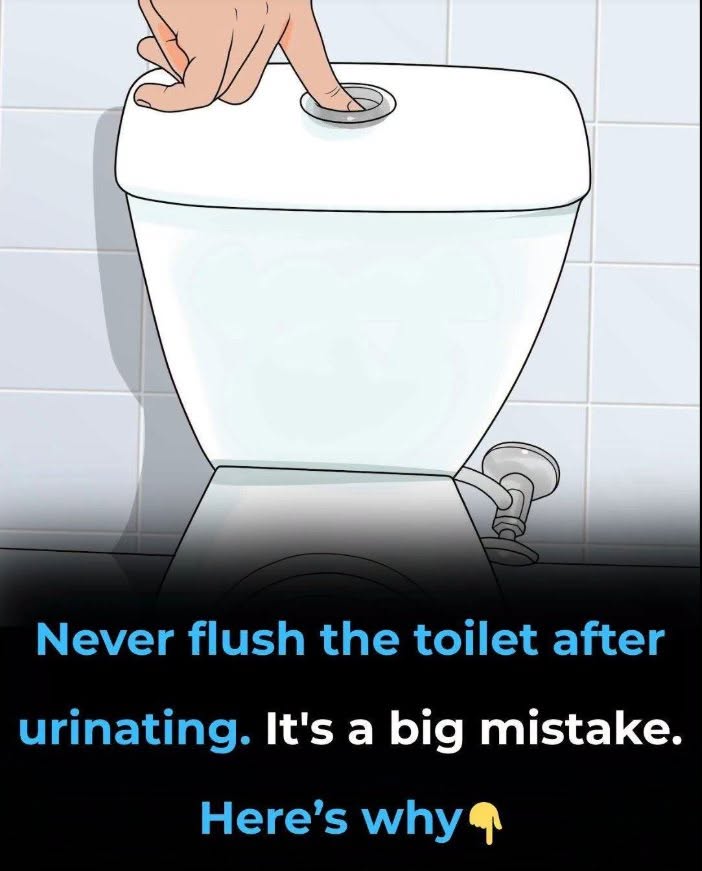
“Never flush the toilet after urinating. It’s a big mistake.”
It certainly sounds dramatic—but is there actually a reason behind it?
The answer is more interesting than the viral headline suggests.
There can be some benefits to not flushing immediately after every urine-only bathroom visit, especially when it comes to conserving water. But that doesn’t mean everyone should stop flushing altogether.
Here’s what you should know before changing your bathroom habits.
Why Would Anyone Not Flush After Urinating?
The main reason has nothing mysterious about it.
It’s about saving water. 💧
Every time you press the toilet handle, several liters of clean water can be used to carry away a relatively small amount of liquid waste.
If one person uses the bathroom several times per day, that can mean several flushes.
Now multiply that by everyone living in the house.
Then multiply it by 365 days.
Suddenly, those seemingly insignificant flushes represent a considerable amount of water.
That’s why some households choose not to flush after every single urine-only visit.
You’ve Probably Heard This Old Saying
There’s an old water-saving expression:
“If it’s yellow, let it mellow. If it’s brown, flush it down.”
The idea is straightforward.
Some people allow urine to remain temporarily in the toilet and flush after another bathroom visit rather than immediately using fresh water each time.
However, this is a conservation strategy—not a health rule.
There’s nothing inherently “wrong” with flushing after urinating.
How Much Water Does a Toilet Flush Use?
It depends heavily on the toilet.
Modern water-efficient toilets generally use much less water than older models.
But some older toilets can use several gallons of water with every flush.
Consider a hypothetical household with four people.
If each person makes several urine-only bathroom visits every day and flushes after each one, the number of flushes quickly adds up.
That’s why reducing unnecessary flushing can make a difference in households concerned about water consumption.
But there’s another side to the story.
What Happens When Urine Sits in the Toilet?
This is where the “never flush” advice becomes less appealing.
Urine isn’t simply colored water.
It contains water along with substances such as urea, salts, and other waste products eliminated by the body.
When urine sits in a toilet bowl for an extended period, microorganisms can act on components in it.
Eventually, this can contribute to an unpleasant ammonia-like smell.
So yes, skipping an occasional flush can save water.
But leaving urine sitting there all day?
Your nose may eventually tell you why that’s not always a great idea. 😅
It Can Also Make Your Toilet Harder to Keep Clean
Another potential problem is staining and buildup.
If urine repeatedly sits in the bowl for long periods, deposits may gradually develop, particularly when combined with minerals already present in the water.
You may begin noticing:
- Yellowish staining
- Mineral deposits
- Rings around the waterline
- Unpleasant odors
- More frequent cleaning needs
So saving water shouldn’t mean abandoning basic toilet maintenance.
If you decide to reduce flushing, regular cleaning becomes even more important.
But There’s Another Reason People Talk About Flushing
Water consumption isn’t the only interesting part of this discussion.
Have you ever wondered what happens when you flush?
Pressing the handle creates significant movement inside the bowl.
Research has demonstrated that flushing can generate tiny droplets and aerosols that move upward from the toilet.
This phenomenon is sometimes called a toilet plume.
You obviously can’t see most of these tiny particles with your eyes, which is why the idea surprises so many people.
Should You Close the Toilet Lid Before Flushing?
If your toilet has a lid, closing it before flushing is a reasonable habit.
A closed lid doesn’t create a perfectly sealed container, so it shouldn’t be considered a magical barrier against every microscopic particle.
But there is little reason to leave the lid wide open unnecessarily.
Afterward, wash your hands properly.
That’s one of the most important bathroom hygiene habits you can maintain.
What About Your Toothbrush? 🪥
This is where internet discussions sometimes become unnecessarily frightening.
You’ve probably seen posts claiming that flushing your toilet means your entire bathroom instantly becomes covered in dangerous bacteria.
Reality is more complicated than that.
You don’t need to panic every time someone flushes.
However, some basic precautions make sense.
Don’t keep toothbrushes unnecessarily close to the toilet.
Clean frequently touched bathroom surfaces regularly.
Keep the toilet reasonably clean.
And most importantly:
Wash your hands thoroughly after using the bathroom.
Simple hygiene habits are much more useful than becoming terrified of your toilet.
So When Might Skipping a Flush Make Sense?
Imagine this situation.
You’re at home.
You’ve only urinated.
The bathroom is used exclusively by your household.
Someone will probably use the toilet again relatively soon.
Everyone living in the home is comfortable with the practice.
In that situation, waiting until the next visit before flushing may be a simple way to reduce water consumption.
But there are situations where you should simply flush.
After a Bowel Movement
This one should be obvious.
Flush.
Trying to conserve water by leaving fecal matter sitting in the toilet isn’t a sensible strategy.
When You’re Using Someone Else’s Bathroom
Your personal water-saving habits shouldn’t become someone else’s unpleasant surprise.
When visiting another person’s home, respect their bathroom.
Flush normally.
In Public Bathrooms
Again:
Flush.
Shared facilities require different etiquette than your private bathroom at home.
When Someone in the Household Is Sick
If someone has a gastrointestinal illness or another contagious condition, cleanliness and sanitation become particularly important.
This isn’t the time to experiment with leaving waste sitting around.
When the Bathroom Starts Smelling
If you’re walking into the bathroom and immediately noticing an unpleasant urine odor, you’ve probably waited too long.
Flush the toilet.
Saving a little water isn’t worth making your bathroom unpleasant.
What About Flushing at Night?
Some people don’t flush after urinating during the night for another reason:
Noise.
In homes where bathrooms are close to bedrooms, flushing can wake a partner, baby, children, or other family members.
So some households choose to wait until morning.
Again, that’s a personal household decision.
If you’re doing this, flushing first thing in the morning and cleaning the toilet regularly can help prevent odor and buildup.
The Bigger Water-Wasting Problem You Might Be Ignoring
Here’s something interesting.
If you’re worried about the water used by flushing, there’s another toilet problem you should check:
A leaking toilet.
Have you ever heard your toilet suddenly refill even though nobody has used it?
That can indicate water is slowly leaking from the tank into the bowl.
Unlike one unnecessary flush, a leak can continue:
Hour after hour.
Day after day.
Week after week.
And because the water often flows quietly into the bowl, you may not realize it’s happening.
A Simple Way to Check for a Leak
You can perform a basic check at home.
Put a few drops of food coloring into the toilet tank.
Don’t flush.
Wait approximately 15–30 minutes.
Then look inside the toilet bowl.
If colored water has appeared in the bowl without flushing, water may be leaking from the tank.
If that happens, inspect the toilet components or contact a plumber if necessary.
Fixing a leak may save considerably more water than obsessing over an occasional flush.
Another Option: A Dual-Flush Toilet
If conserving water matters to your household, you don’t necessarily have to choose between:
Flush every time
and
Don’t flush at all.
Dual-flush toilets provide another solution.
These toilets typically offer one flushing option for liquid waste and a stronger one for solid waste.
That means you can still flush normally while using less water when a full flush isn’t necessary.
Modern water-efficient toilets can also significantly reduce the amount of water used compared with some older toilets.
Does Urine Need to Be Flushed Immediately for Health Reasons?
For a healthy household, there’s generally no universal rule saying that urine must disappear from the toilet immediately after every use.
But that doesn’t mean leaving it indefinitely is ideal.
Think of it as a balance between:
💧 Water conservation
🚽 Cleanliness
👃 Odor control
🧼 Hygiene
🏠 Household preferences
The best solution depends on the home.
What If Several People Share One Toilet?
This changes things.
If you live alone, you control your bathroom routine completely.
In a family of five?
Not so much. 😄
Before adopting a “don’t flush after urine” rule, consider everyone who uses the bathroom.
Some people may find it unpleasant.
Children may forget when they actually need to flush.
Guests certainly shouldn’t be expected to follow a rule they don’t know about.
A practical compromise is usually better than an extreme rule.
A Sensible Approach
If your goal is to conserve water without making your bathroom unpleasant, consider something simple.
At home, you might occasionally delay flushing after a urine-only visit when someone will use the toilet again shortly.
But:
Flush after bowel movements.
Flush when odors develop.
Flush when guests are present.
Keep the toilet clean.
Wash your hands after every bathroom visit.
Check your toilet for leaks.
That’s much more reasonable than following an internet headline telling you to “never flush.”
Why Viral Posts Make This Sound More Dramatic
“Sometimes you may not need to flush immediately after urinating” isn’t a very exciting headline.
But:
“NEVER flush after urinating—it’s a HUGE mistake!”
gets attention.
That’s how many ordinary household tips become viral.
A small piece of useful information gets transformed into an absolute rule.
The useful information here is real:
Every unnecessary flush uses water.
The exaggerated part is suggesting that flushing after urination is somehow automatically dangerous or a serious mistake.
It isn’t.
5 Bathroom Habits That Matter More
Rather than worrying excessively about whether every urine-only visit deserves a flush, focus on habits that have clearer practical benefits.
1. Wash Your Hands Properly 🧼
This should always come first.
2. Keep the Toilet Clean
Regular cleaning helps control odors, staining, and buildup.
3. Check for Leaks 💧
A continuously leaking toilet can waste water without you realizing it.
4. Consider Water-Efficient Fixtures
If you have a very old toilet, replacing it with a modern efficient model may reduce water use.
5. Keep Personal Items Away From the Toilet
There’s usually no reason for toothbrushes and other personal hygiene products to sit immediately beside the toilet.
So, Should You Flush Every Time You Pee?
Here’s the simplest answer:
You can—but you don’t necessarily have to.
If you’re at home and want to conserve water, occasionally waiting until another urine-only visit before flushing can reduce the number of flushes.
But “never flush after urinating” is unnecessarily extreme.
If urine sits too long, you may encounter odors, stains, and mineral buildup.
And in shared or public bathrooms, flushing is simply considerate.
The Bottom Line
The viral claim makes it sound like you’ve been using your toilet incorrectly your entire life.
You haven’t. 🚽
Flushing after urinating is not a “big mistake.”
However, it is true that every flush consumes water, so reducing unnecessary flushing can be one small conservation strategy.
The smartest approach isn’t to create a strict rule.
It’s to find a reasonable balance between saving water, keeping your bathroom clean, and respecting everyone who shares it.
And if you really want to reduce your toilet’s water consumption?
Before changing your entire bathroom routine, check whether your toilet is quietly leaking.
That tiny problem could be wasting more water than you realize. 💧🚽